Monday, December 6, 2021

The best poetry books of 2021


The best poetry books of 2021. Illustration: Maïté Franch


The best poetry books of 2021

Michael Rosen’s unflinching account of surviving Covid, a celebration of inner-city teaching and a fresh take on Shakespeare in the year’s standout collections


Rishi Dastidar
Mon 6 Dec 2021 09.00 GMT


Despite everyone’s hopes, the shadow of Covid-19 has been hard to escape this year. Michael Rosen’s account of his near death and subsequent recovery from the virus, Many Different Kinds of Love (Ebury), is one of the first of no doubt many reckonings with the pandemic. Rosen’s poems are supplemented by messages written by the NHS staff looking after him while he was in an induced coma. The book is unflinching, showing the ravages of being seriously ill – but hopeful and uplifting, too.


The crisis of climate change has seen poets reaching for new expressions to alter the narrative about the challenge we all face. Out of Time: Poetry from the Climate Emergency (Valley Press), edited by Kate Simpson, is the best eco-themed anthology to emerge this year, with poems that are dynamic, elegiac and hopeful. In a similar vein, Penelope Shuttle, in her wonderfully clarifying Lyonesse (Bloodaxe), paints a picture of mythic lands submerged under seas and the loss, personal and environmental, that follows.
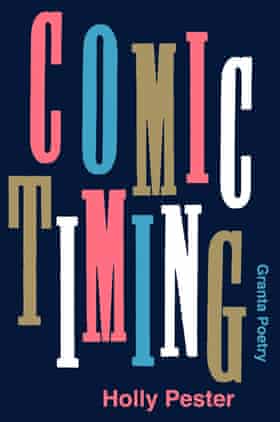
Comic Timing by Holly Pester (Granta) )

Two exceptional debut collections grapple with physical and economic dislocation. Comic Timing by Holly Pester (Granta) is astringent and acutely funny on the cost of living – and being alive: “I hope therapy is real I hope it’s healthy it is expensive.” Meanwhile Victoria Kennefick’s Eat Or We Both Starve (Carcanet) braids ruminations on hunger, the body and the past through a viscerally rich and meaty language: “I lick the wall as if it were a stamp, / it tastes of bones, this smelly city”.

All the Names Given (Picador), Raymond Antrobus’s richly inventive second collection, traces the history of his family name – “so anciently English that it has become foreign to itself”. Inspired by Deaf sound artist Christine Sun Kim, the book is studded with startling “caption poems” that explore how sound can be presented and represented on the page. In a similarly restlessly brilliant vein is Living Weapon


 by Rowan Ricardo Phillips (Faber), in which flights of fancy – sometimes literal – are grounded by a subtle and probing intelligence.
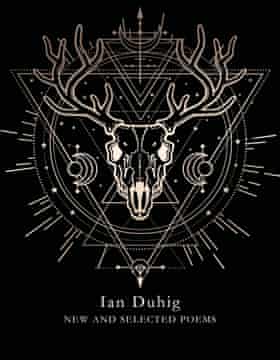
Ian Duhig’s New and Selected Poems

A generous mix of cosmic myth and earthy wit, Tishani Doshi’s fourth collection, A God at the Door (Bloodaxe), is wise and profound, with the lightest of touches: “You and I may never be butterflies, but we recognise one another / zoomorphic ancestor. We bow and reach for the invisible thing that beats.” Ian Duhig’s New and Selected Poems (Picador), meanwhile, is a wonderful career summary of one of our finest poets. It showcases his ability to blend the divine with the demotic, knowing salvation lies somewhere between the two; the newer poems sparkle, confirming that he remains in fine creative fettle.

Two more brilliant collections reminded us that formal dexterity is no bar to poems being utterly contemporary and delivering deep emotional riches. Kayo Chingonyi’s second book, A Blood Condition (Chatto & Windus), is one of the most arresting and beautiful set of poems of this or any year. His ability to blend music, grief and yearning is unmatched. And Hannah Lowe’s The Kids (Bloodaxe), inspired by her time teaching in an inner London sixth form, is a series of sonnets full of joy. The book is generous in its compassion, and in love with the idea of learning, in the classroom and outside it.

Kayo Chingonyi blends music, grief and yearning.
Kayo Chingonyi blends music, grief and yearning. Photograph: Richard Saker/The Observer

Considerations of the virtues of poetry, as well as its vices, can be found in A Vertical Art: Oxford Lectures (Faber), as delivered by Simon Armitage during his tenure as Oxford professor of poetry. Genially, sometimes waspishly, he expounds his belief in language as humanity’s most powerful tool, and poetry as the ultimate expression of its potential.

The year’s most pleasing books have been those that delivered the most unexpected delights. Marit Kapla’s Osebol (Allen Lane) renders the oral history of a small Swedish village since 1945 into verse. A variety of voices form a symphonic whole ruminating on seasons passing, people leaving and a way of life almost disappearing. Staying in the north, Maria Dahvana Headley’s radical translation of Beowulf (Scribe) turns the old epic into a rollicking tale for today, grabbing your lapels from its very first word, as Headley renders “hwæt” as “Bro!”

Finally, in the Forward prize-winning Notes on the Sonnets (Penned in the Margins), Luke Kennard takes Shakespeare to a house party you’d never want to attend. Through a cycle of anarchic, playful and despairing prose poems, he shows us the endless need we all have to connect: “If the dull substance of my thoughts were skin we’d walk along the skin-lined thoroughfare and pause under a fleshy, pulsating tree, I’d say, in all this hideous world you found me.” It’s a reminder of how poetry makes the world a touch less hideous.

THE GUARDIAN


Sunday, December 5, 2021

Selah Honorée by Fanonne Jeffers


Selah

by Honorée Fanonne Jeffers


after Margaret Walker’s “For My People”


The Lord clings to my hands
             after a night of shouting.
                           The Lord stands on my roof
             & sleeps in my bed.
Sings the darkened, Egun tunnel—
             cooks my food in abundance,
                           though I was once foolish
             & wished for an emptied stomach.
The Lord drapes me with rolls of fat
             & plaits my hair with sanity.
                           Gives me air,
             music from unremembered fever.
This air

                                         oh that i may give air to my people
                                         oh interruption of murder
                                         the welcome Selah

The Lord is a green, Tubman escape.
             A street buzzing with concern,
                           minds discarding answers.
             Black feet on a centuries-long journey.
The Lord is the dead one scratching my face,
             pinching me in dreams.
                           The screaming of the little girl that I was,
             the rocking of the little girl that I was—
the sweet hush of her healing.
             Her syllables
                           skipping on homesick pink.
             I pray to my God of confused love,
a toe touching blood
             & swimming through Moses-water.
                           A cloth & wise rocking.
             An eventual Passover,
outlined skeletons will sing
             this day of air
                           for my people—

                                         oh the roar of God
                                         oh our prophesied walking


KISS

Wampum by Honorée Fanonne Jeffers

Memphis Resurrection by Honorée Fanonne Jeffers

Dreams of My Father by Honorée Fanonne Jeffers

The Gospel of Barbecue by Honorée Fannonne Jeffers

Honorée Fanonne Jeffers / The Prophetess Sojourner Truth Discusses the Two Different Versions of Her Most Well-Known Speech, One Nearly Unknown and One Very Beloved Yet Mostly Untrue

Washita Battlefield National Historic Site by Honorée Fanonne Jeffers

Chorus of the Mothers-Griot by Honorée Fanonne Jeffers

Naming Ceremony by Honorée Fanonne Jeffers


Saturday, December 4, 2021

Honorée Fanonne Jeffers / Lost Letter #1: Phillis Wheatley, Boston, to Susannah Wheatley, Boston


Lost Letter #1: Phillis Wheatley, Boston, to Susannah Wheatley, Boston*

by Honorée Fanonne Jeffers


January 18, 1764

Dear Mistress:

Odysseus sailed the ocean like me
and Nymphs held him in their arms.
They are ladies like my yaay.

[i will burn this letter in the hearth you are
watching me as i smile i am a good girl i am]

I shall practice my lessons for you
and Miss Mary, pretend Master Nathaniel

does not yank my hair and tell me,
he’ll take a razor and shave me bald.
For you, God will scrub my skin—

but when might I see my yaay? I cannot
recall how she would say bird or baby

or potato in that other place.
Yaay needs to see that my teeth grew in,
that I am alive after my long journey.

[yaay come for me please i shall be a good
girl i have forgotten how to be naughty]

Today snow comes down. Outside,
a soul has slipped and fallen on the ice.
That’s what that crying means.

Your servant and child,
Phillis


* The word “yaay” here means “mother” in the Wolof language of Senegal and The Gambia of West Africa.


KISS

Wampum by Honorée Fanonne Jeffers

Memphis Resurrection by Honorée Fanonne Jeffers

Dreams of My Father by Honorée Fanonne Jeffers

The Gospel of Barbecue by Honorée Fannonne Jeffers

Honorée Fanonne Jeffers / The Prophetess Sojourner Truth Discusses the Two Different Versions of Her Most Well-Known Speech, One Nearly Unknown and One Very Beloved Yet Mostly Untrue

Washita Battlefield National Historic Site by Honorée Fanonne Jeffers

Chorus of the Mothers-Griot by Honorée Fanonne Jeffers

Naming Ceremony by Honorée Fanonne Jeffers


Friday, December 3, 2021

Blues: Odysseus by Honorée Fanonne Jeffers


Blues: Odysseus

by Honorée Fanonne Jeffers

How many sat underwater,
entangled by myth’s past tense,
before Neptune first raised his
beard in the direction of Ethiopia,
and after, Odysseus—
always living—
was saved by Homer’s tablet?
Centuries after that story was written,
in the land of Not Make Believe,
a crew of slave-ship sailors
threw one hundred and thirty-two
Africans into the Atlantic Ocean.
Heave-ho to souls.
And people. And laws. And kin.
But Odysseus lives. He always will,
Our Great White Hope—
before whiteness was invented—
this hero who longs for the wood’s sway.
Despite his tendency to chase tail—
sirens and sundry other
poppycock-drinking girls—
I want to be happy that Homer imagined
a sea housing pretty, forgiving Nymphs—
while somewhere else, a wheel dances
and someone else drowns.
Sharks should pass Odysseus by,
never imagining his taste.
The gods shouldn’t pull at his fate—
now angry, now benevolent.
I try hard not to blame that man:
We all deserve our Maker’s love.


Thursday, December 2, 2021

Honorée Fanonne Jeffers / Portrait of Dido Elizabeth Belle Lindsay


Dido Elizabeth Belle, 1779


Portrait of Dido Elizabeth Belle Lindsay, Great-Niece of Lord Mansfield, and Her Cousin, Lady Elizabeth Murray, c. 1779 (by unknown artist)

by Honorée Fanonne Jeffers


A Black came in after dinner and sat with the ladies...Lord M...calls her Dido, which I suppose is all the name she has. He knows he has been reproached for showing fondness for her...


From The Diary and Letters of His Excellency Thomas Hutchinson,
        August 1779


Dido moves quickly—
as from the Latin anime.

Breath or soul.
Beside her, the generations-free kin,

a biscuit figurine in pink.
Dido standing in irony—

the lowest are taller here—
Elizabeth should provide

an unkind contrast: pretty, blond,
pale in uncovered places—

but no.
The painter worships the quickened other.

Dido, his coquette of deep-dish
dimples, his careless, bright love.

Forget history.
She's a teenager.

We know what that means.
Cocky, stupid about reality.

No thought of babies—
feathers in her arms.

She might wave them, clearing
dead mothers from the air—

and surely, she's special—
her uncle dressed her with care,

hid her from triangles and seas
outside this walled garden.

Let her be.
Please.

No Dying Mythical Queen
weaving a vivid, troubled skin—

but Dido, full of girlhood,
and Elizabeth reaching

a hand. Behave, cousin,
she begs.

Don't run away from me.


Dido was the great-niece of William Murray, First Earl of Mansfield; as Lord Chief Justice of the King's Bench, he is responsible for the Somersett ruling (1772), which essentially outlawed slavery in England, though not in the colonies.


Honorée Fanonne Jeffers
Photo by Sidney A Foster


Born in 1967, Honorée Fanonne Jeffers received a BA from Talladega College and an MFA from the University of Alabama. She is the author of one novel, The Love Songs of W.E.B. Du Bois (Harper, 2021), and five poetry collections, including The Age of Phillis: Poems (Wesleyan University Press, 2020), winner of the 2021 Lenore Marshall Poetry Prize and recipient of the NAACP Image Award for Outstanding Literary Work for Poetry; and The Gospel of Barbecue (The Kent State University Press, 2000), selected by Lucille Clifton for the Stan and Tom Wick Poetry Prize. Jeffers has won awards and fellowships from the American Antiquarian Society, the National Endowment for the Arts, the Rona Jaffe Foundation for Women Writers, the Witter Bynner Foundation through the Library of Congress, and she was a 2021 USA Mellon Fellow. She won the Harper Lee Award for Alabama's Distinguished Writer of the Year, and in 2020, she was inducted into the Alabama Writers Hall of Fame. She is currently a professor of English at the University of Oklahoma.

POETS


Wednesday, December 1, 2021

Poetry Spotlight / 'Collected Poems' by James Wright


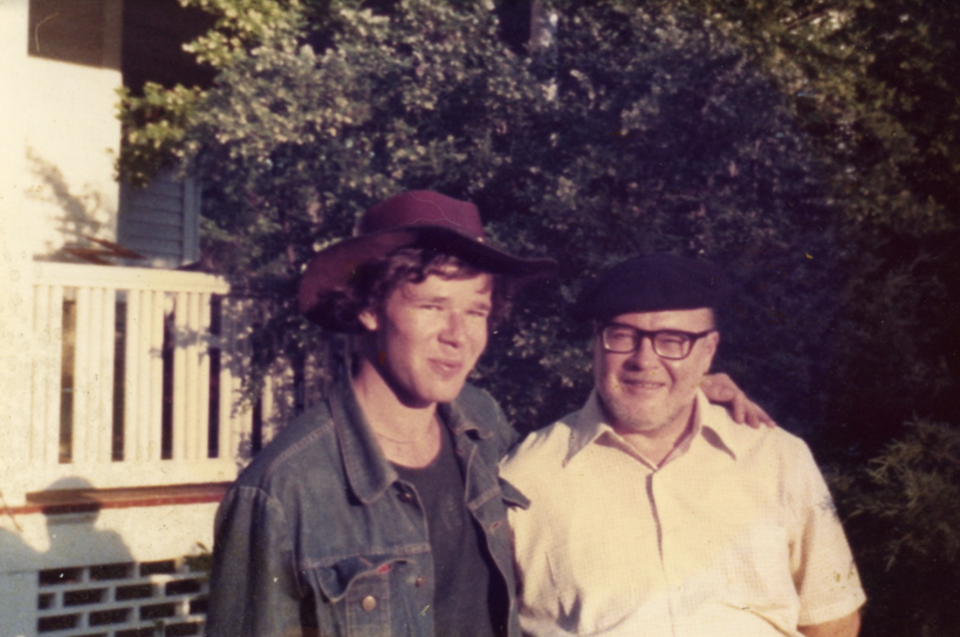
2004 Poetry winner Franz Wright (left) and his father, 1972 Poetry winner James Wright. (McSweeney's)

Poetry Spotlight: 'Collected Poems' by James Wright

In a collection celebrating its 50th anniversary this year, the 1972 Poetry winner offered ruminations on the long winters and daily routines of Midwestern working class life.

Fifty years ago, the publication of James Wright's "Collected Poems" helped augur the beginning of a new era in American culture.

In the fractious world of postwar American poetry, Wright was a neutral waystation. A close interlocutor of foundational deep image poet Robert Bly (whom Wright credited with rejuvenating his own poetics as he completed his Ph.D. under 1954 Poetry winner Theodore Roethke at the University of Washington in the late 1950s), Wright also found inspiration in the ecological encomiums of 1975 Poetry winner Gary Snyder and a range of modern European writers, including the fin-de-siècle Austrian Expressionist Georg Trakl and Generation of '27 lodestar Jorge Guillén.

Although his earliest work reflected such New Critical mentors as John Crowe Ransom (who mentored a G.I. Bill-funded Wright during his undergraduate studies at Kenyon College, the movement's spiritual home, in the late 1940s), this influence was long attenuated when a personality conflict with eminence grise Allen Tate played a key role in forestalling a tenured appointment at the University of Minnesota in 1963.

Working primarily in urban locales — Seattle, Minneapolis, an SRO in the pre-gentrified Upper West Side and later a rent-controlled apartment near Hunter College, where he was a full professor of English for much of his career — Wright shared a percipient eye for the travails and vicissitudes of the underclass with such contemporary New Yorkers as 1948 Poetry winner W. H. Auden and the singer-songwriter Lou Reed. 

But rather than situating his work in the bohemian dishabille of wartime Victorian Brooklyn or the intermedia demimonde of the 1960s, he often returned to his origins in the Midwestern working class, often filtered through the surrealist poetics and archetypes that remained a preoccupation. (In "In Response to a Rumor That the Oldest Whorehouse in Wheeling, West Virginia Has Been Condemned," Wright offered an encapsulation of this approach: "I do not know how it was/They could drown every evening/What time near dawn did they climb up the other shore/Drying their wings?") Through the elisions of his dream logic and in spare diction, Wright attained a timbral effect that was often wintral and — paralleling a major development in popular music — sinuously ambient.

By 1968 — a year before he contemplated returning to Ohio and taking hia own life, and within scraping distance of sobriety and his 1970s professional laurels — he had perfected this approach in such poems as "Outside Fargo, North Dakota," initially published in the February 1968 issue of Poetry.

"Along the sprawled body of the derailed Great Northern freight car/I strike a match slowly and lift it slowly," the narrator ruminates. "No wind." Here, the familiarity and tortured familiality of Roethke is thrust into the existential wind, the failure of an obsolescent technology (and limitations of another) rendered as a visceral portent amid the Apollo 1 fire of January 1967 and the golden age of Cold War weapons research. Yet this vision of near-eschatalogical immanence is offset by a modicum of human interaction — and the contentment of hope: "I nod as I write down good evening, lonely/And sick for home."

Led by frequent juror and 1964 Poetry winner Louis Simpson, the 1972 Poetry jury determined in their report of December 17, 1971 that Wright was a key figure of contemporary American poetry, ranking his collection above works by Tate, the venerable Harvard classicist Robert Fitzgerald, and 1983 Poetry winner Galway Kinnell, a friend of Wright: "[T]here has been a steady development from the traditional style and forms [...] to the experimental writing of recent forms. [...] [H]e has experimented with new forms and new uses of imagery."

And while Wright would succumb to tongue cancer  in 1980, his vignettes of quotidian transcendentalism would continue to influence many of his peers, including 1984 Poetry winner Mary Oliver, who commemorated her friend in "Three Poems for James Wright." (His son, Franz, also would receive the 2004 Poetry Prize before dying of lung cancer in 2015.)  

As the world grapples with a dark winter, Wright's work remains a reliquary for the soul. Read and listen to selected poems by Wright at the Poetry Foundation and the Academy of American Poets.

PULITZER