Kaneko Misuzu’s flights of imagination took her everywhere: from small things invisible to the human eye to the open skies and the vast cosmos beyond. At the same time, she was able to describe human emotions in language that was memorable and easy to understand, based on her keen observations of everyday life. An exploration of the humility and generosity of spirit that make Misuzu and her work so appealing.
Yazaki Setsuo remembers the fateful encounter he had with the writing of children’s poet Kaneko Misuzu and the long search that helped to bring her work back into the light after it had been forgotten for half a century.
A Fateful Encounter
The beginnings of serious Japanese writing for children date back to the early decades of the twentieth century. The fashion for writing dōyō, poetry and nursery rhymes that could be enjoyed by children and adults alike, is often dated to the publication of Akai tori (Red Bird), a children’s magazine, in July 1918. One young woman in particular shot across the scene at the height of the movement, producing numerous verses that earned her the praise of the poet Saijō Yaso as “the brightest star among all the young writers of poetry for children.” That woman was Kaneko Misuzu.
One hundred years after they were written, Kaneko Misuzu’s children’s songs and poems continue to resonate with readers of all ages. The poems embrace a forgiving, tolerant vision of the world: reminding readers that “we’re all different, and that’s just fine,” and urging us to have respect for the important things we cannot see.
It’s All Right to Be Yourself
Bird, Bell, and I
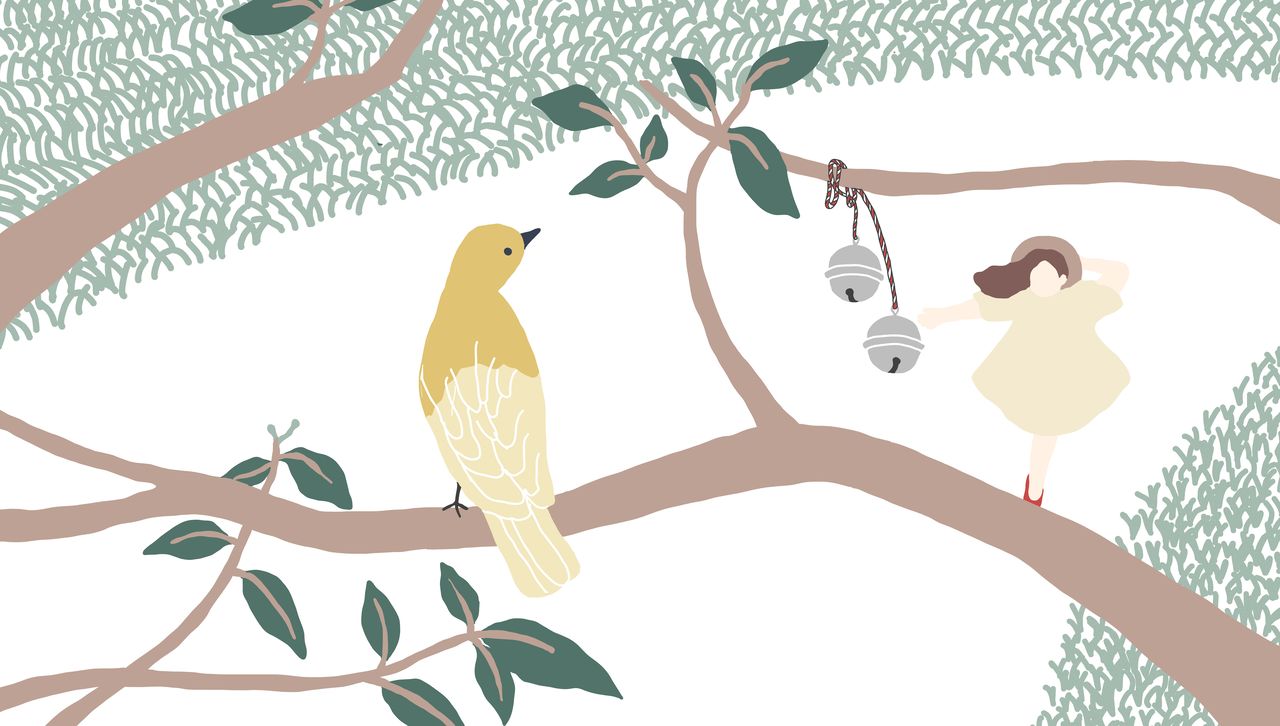
Even if I spread my arms wide, I can’t fly through the sky, but still the little bird who flies can’t run on the ground as fast as I.
Even if I shake my body about no pretty sound comes out, but still, the tinkling bell doesn’t know as many songs as I.
Bird, bell, and I, We’re all different, and that’s just fine.
(Translated by David Jacobson, Sally Ito, and Tsuboi Michiko)
This is one of Kaneko Misuzu’s best-known works. The poem conveys a message of tolerance and understanding, one that finds value in diverse ways of being: Everyone is different, but everyone has their own strengths. You are what you are. It’s all right to be yourself. All life on earth, including human beings, has its unique strengths and its own role to play. These differences make all lifeforms precious and unique. Everyone is perfect in their own way: the perfect version of their own unique self.
It is a vision of the world that is far removed from an egotistical, human-centered understanding.
My favorite part of the poem is the first line of the final stanza. The title of the poem in Japanese is “Watashi to kotori to suzu to” (Me, the little bird, and the bell) but the line in the poem itself reverses this order to refer to “suzu to kotori to, sorekara watashi” “the bell, the little bird, and me.” Not “me and you,” but “you and I”—this choice expresses an openness and acceptance of others, delighting in the differences that make each of us precious and unique. We’re all different, but we all have our special qualities.
Another important aspect of the poem is the way in which it focuses on the things we can’t do, and all the things we do not know: the speaker can’t fly like a bird, but then the bird can’t run as fast as she can along the ground. We are all champions within our own areas of expertise.
When we come into the world, we are helpless and ignorant creatures who can do nothing for ourselves. As our knowledge and abilities increase, we often start to discriminate between those who can do things and others who cannot.
Misuzu focuses first on the things that we can’t do, and only then reminds us of the things we can do and the types of knowledge we do possess. The poem reminds us that we all have our own stories, our own histories, our own accomplishments and experiences. We are all precious beings with our own unique gifts.
Unseen Things Are Still There
Stars and Dandelions
Deep in the blue sky, like pebbles at the bottom of the sea lie the stars unseen in daylight until night comes. You can’t see them, but they are there Unseen things are still there.
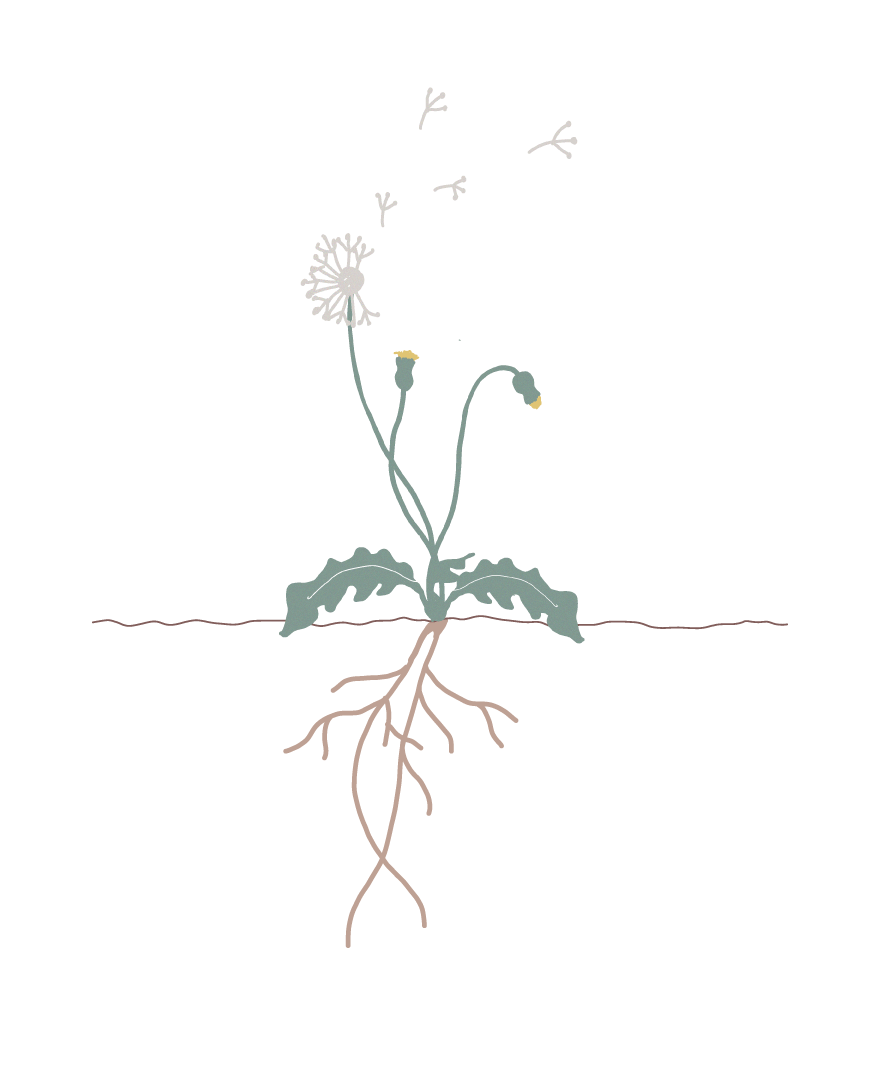
The withered, seedless dandelions hidden in the cracks of the roof tile wait silently for spring, their strong roots unseen. You can’t see them, but they are there. Unseen things are still there.
(Translated by David Jacobson, Sally Ito, and Tsuboi Michiko.)
Here, Misuzu reminds us of all the little things that lie beyond our sight in the world, encouraging us to break away from our tendency to focus only on the things we can see. There are hints here of the same sensibility we saw in “The Big Catch,” where she writes of the invisible sadness of the sardines beneath the waves, mourning their friends and relatives who have been caught in the fishermen’s nets.
As well as the visible things around us, our surroundings are also filled with invisible air. It is thanks to this air that we are alive. There are many things we can’t see: not because they don’t exist, but because—just like the stars during the daytime or the dandelions hidden high up in the rooftops—we forget about them or fail to notice them because of a lack of imagination and an inability to go beyond the surface and think more deeply about things.
The verse brings to our attention the things we had failed to notice before, spurring us to take stock and look properly at all these things that help us make us who we are.
The Important Things that Can’t Be Seen
Blanket of Snow
Snow on top, It must feel cold, The chill moon shining down.
Snow on the bottom, It must feel heavy, Hundreds of people on you.
Snow in the middle, It must feel lonely, No earth or sky to look at.
(Translated by D. P. Dutcher)
Reading this poem about a piled-up blanket of snow, I am moved by the way in which the poet does not see snow simply as an undifferentiated mass, but instead takes careful note of the three different layers of snow on top, bottom, and middle. Although other people might have come up with the conceit of the snow on the top and on the bottom, probably not many people had ever thought about the snow in the middle before.
Whenever I read this poem, I am reminded of the words of a village head I met once in Hokkaidō, where I had traveled to see the drift ice. He welcomed us to his village and then recited lines from the poem by heart.
“All my life, I’ve seen so much snow,” he told us. “And now I’m in my seventies. But until this year I had never once thought about the snow in the middle. I feel ashamed of myself for never having considered that which is truly important in all those years.” And he started to weep again.
His response drove me to reflect within myself about Misuzu’s children’s songs. I felt a voice within my heart asking insistently: like that elderly village head, had I too not lived my life without ever looking at what really matters in life?
Kaneko Misuzu’s poems pose the same probing question of anyone who reads them: “And what about you?”
Kaneko Misuzu
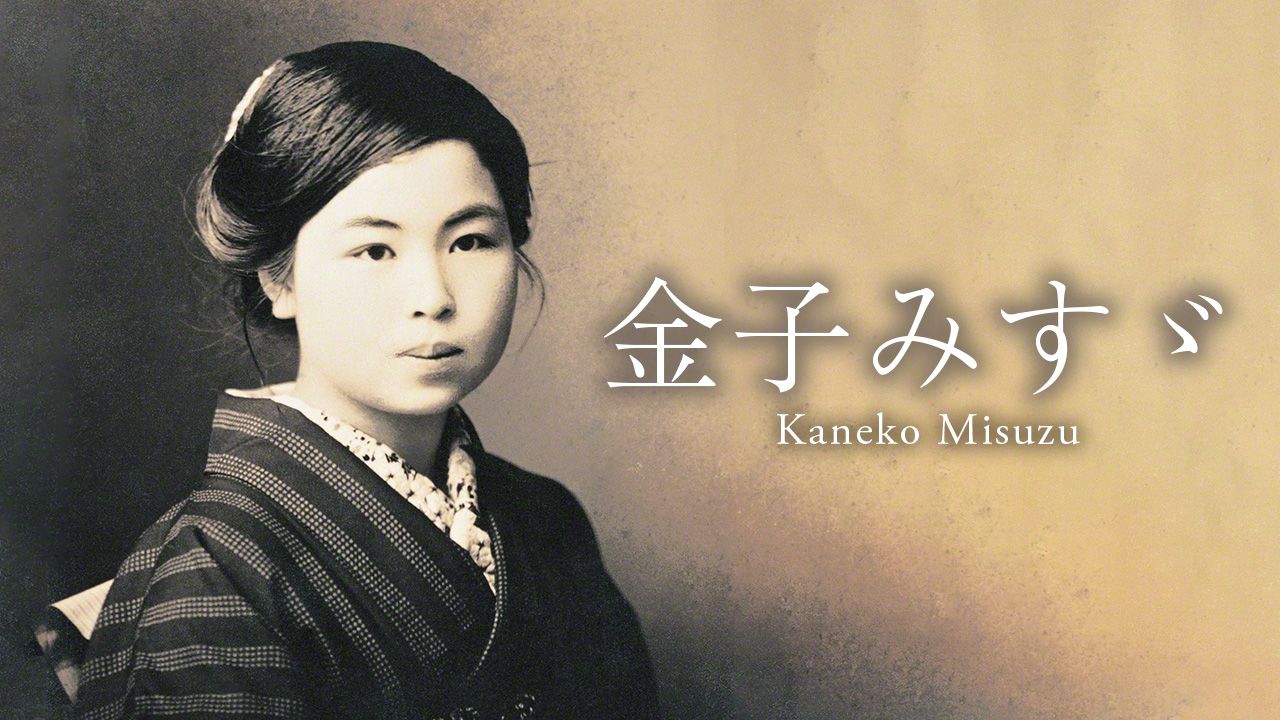
Kaneko Misuzu (real name Teru) was born in 1903 in the fishing port of Senzaki on the Japan Sea coast of Yamaguchi Prefecture. During a brief career as a writer, she became one of Japan’s most accomplished writers of poetry and songs for children. She died in 1930 at the age of just 26. After her death, her work fell into neglect for decades. The writer Yazaki Setsuo searched for traces of Misuzu for decades until finally discovering a manuscript containing 512 of her poems, which was published as a new edition of her complete works in in 1984.
Kaneko Misuzu’s flights of imagination took her everywhere: from small things invisible to the human eye to the open skies and the vast cosmos beyond. At the same time, she was able to describe human emotions in language that was memorable and easy to understand, based on her keen observations of everyday life. An exploration of the humility and generosity of spirit that make Misuzu and her work so appealing.
Auguries of Innocence
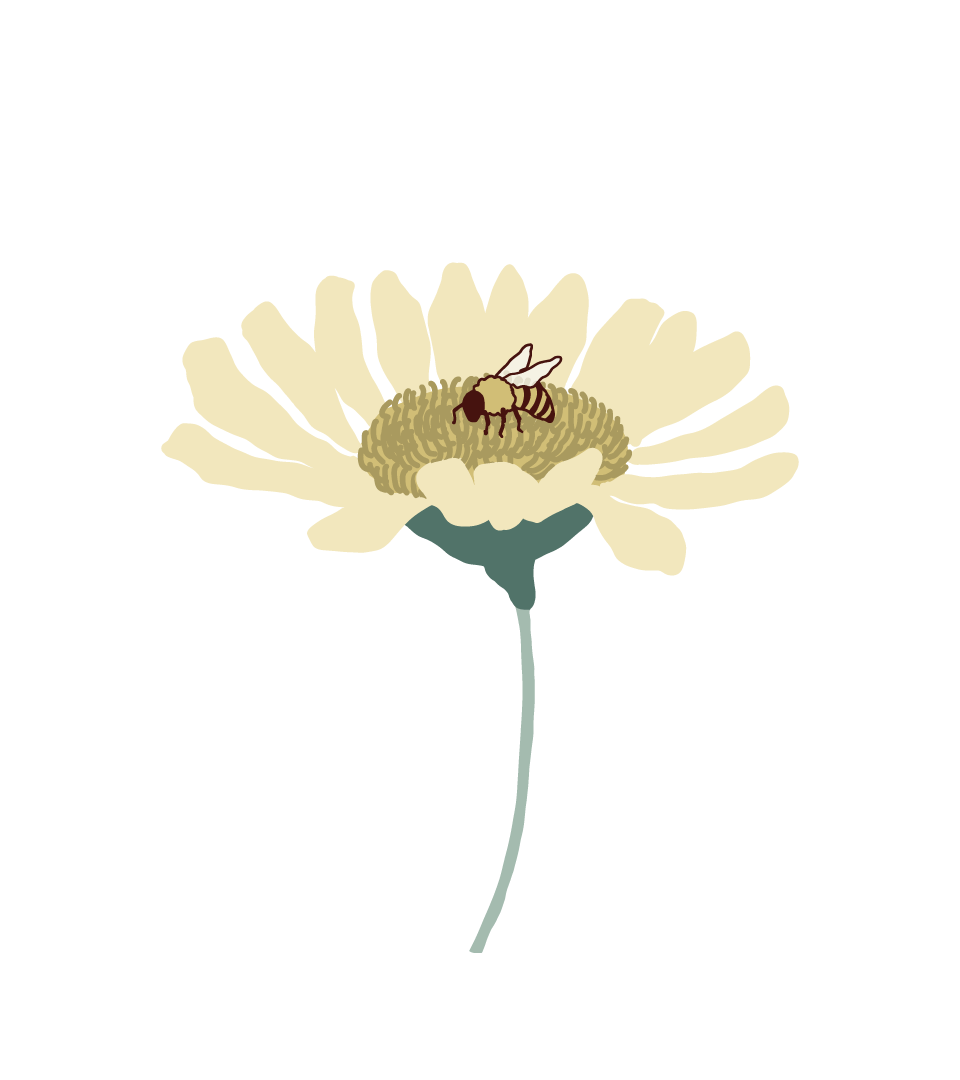
Bee and God
Bee is in the flower Flower is in the garden Garden is in the yard Yard is in the town Town is in Japan Japan is in the world
And, and then, God is in the tiny little bee.
(Translated by Sally Ito and Tsuboi Michiko.)
In “Bee and God,” God is not some distant, awe-inspiring supernatural being located far from our daily experience, but right here inside everything we see around us, including ourselves. It’s a happy, reassuring thought.
For Kaneko Misuzu, everything on earth—not just animals and plants, but lifeless things like stones and minerals as well—were part of a greater unity, living together and supporting one another to form a precious whole. This idea would have been impossible for someone who saw the world from an anthropocentric perspective.
once bent down to pick up the leaf of a persimmon tree that had fallen onto the ground in front of me. When I took the leaf in my hand, I was overcome by a strange sensation, as if I had suddenly been lifted up into the sky and were looking down on the scene from high above where I stood. Somehow, this single leaf contained an aerial photograph showing a great river, branching off into numerous streams as it gently flowed, and by its side the town, rendered silent by distance.
I might never have been moved by this strange moment of shifted perception if I had not encountered Misuzu’s lines about God and the bee. The idea that the whole is contained in its parts, as the parts are contained in the whole, was one that resonated with me. In that moment, I felt profoundly the power of its truth.
Human beings are just one part of life on earth—and yet so often people act as if they can do as they please, as if we are the only things that matter. Even when people have the best interests of the natural world at heart, they often speak of “caring for the environment.” But that is the wrong way of looking at it. The earth cares for us—that is the only reason why our species is still able to exist.
There’s apparently a saying in Native American cultures: “We do not inherit the Earth from our ancestors; we borrow it from our children.” I am reminded of this attitude of humility and respect whenever I read Misuzu’s poems, and of the importance of inscribing it in the hearts of all people—before it is too late.
All-Embracing Acceptance
Are You an Echo?
If I say, “Let’s play?” you say, “Let’s play!”
If I say, “Stupid!” you say, “Stupid!”
If I say, “I don’t want to play anymore,” you say, “I don’t want to play anymore.”
And then, after a while, becoming lonely
I say, “Sorry.” You say, “Sorry.”
Are you just an echo? No, you are everyone.
(Translated by David Jacobson, Sally Ito, and Tsuboi Michiko.)
What is the original echo but the call-and-response formed by the two beating hearts of a mother and her baby? “I’m here.” “You’re there.” “I’m happy.” “I’m happy too.” “I love you!” “I love you too!” It is through the closely matched antiphonal beating of these two hearts—separate but one, joined but apart—that we human beings are born into the world and begin our lives.
In this sense, an echo is most noble of human actions.
When children are small, surely all parents experience a child’s pain almost as their own, and echo the child’s cry of pain: “Ouch, that hurts,” almost as if they could feel the pain themselves. But how quickly we and the children grow, and before we know it we are putting ourselves first, voicing our own feelings rather than accepting the child’s pain and sadness as our own.
We no longer give that echoing murmur of sympathy: “Ouch, that hurts . . .” Instead, we try to argue with the pain: “It doesn’t hurt.” “Don’t cry.”
A child comes into the world trusting in the assurance of love from a unique mother and father. And yet now those parents no longer sympathize with the child’s pain but insist on seeing things from their own perspective. How does this make the child feel? And what becomes of these feelings of sadness and pain?
To love someone means to deal with them properly and to accept their pain and sadness as our own. This, I feel, is Misuzu’s message.
Living On in the Memories
Cocoon and Grave
A silkworm enters its cocoon— that tight, uncomfortable cocoon.
But the silkworm must be happy; it will become a butterfly and fly away.
A person enters a grave— that dark, lonely grave.
But the good person will grow wings, become an angel and fly away.
(Translated by David Jacobson, Sally Ito, and Tsuboi Michiko.)
“Actually, a silkworm doesn’t turn into a butterfly, even when it grows up and leaves its cocoon,” a little girl told me once after reciting these lines.
And she was quite right. Even if a silkworm reaches adulthood, it will never become a butterfly capable of fluttering high into the sky. And, of course, many silkworms never make it to adulthood. They are used for human purposes to produce silk, and never live to see the world outside their cocoons.
Perhaps this sad thought made Misuzu want to take pity on the silkworms, who die before their lives have even begun, allowing them to spread their wings as butterflies and soar into the sky.
Humans die too, after which they find themselves inside a dark and lonely grave. But unlike the silkworms, we at least have been born into the world and have tasted its wonders. And we can live on in the memories of the people we touched during our lives.
Misuzu talks of “good children” (ii ko) in her poem—but all of us are “good children” in the sense that we came into the world by inheriting the gift of life from our parents. And that is good enough for you and me. Good enough for all of us. Perhaps this thought can help to make the idea of dying less fearful.
After Misuzu’s death, her mentor, the poet Saijō Yaso, discussed these lines in his essay, “One night in Shimonoseki: Reminiscences of the late Kaneko Misuzu,” describing it as “probably her greatest masterpiece.”
I hope that this short introduction will help to bring Kaneko Misuzu and her work to the attention of more people around the world. If her work can bring to readers in other languages something of the enjoyment and nourishment it has given me over the years, nothing would make me happier.
(Originally published in Japanese. The English poems “Are You an Echo?” and “Cocoon and Grave” are from the book Are You an Echo? The Lost Poetry of Misuzu Kaneko, translated by David Jacobson, Sally Ito, and Tsuboi Michiko. Illustration by Moeko.)
Yazaki Setsuo. Born in Tokyo in 1947. Graduated from Waseda University. In 1982, won the Akai Tori Literary Award for his collection of children’s stories, Hoshi to sora no shita de (Beneath the Stars and the Sky). Unearthed lost manuscripts by Kaneko Misuzu, which were published in a new edition of her complete works. Has also founded a school in Nepal (named after Kaneko) and worked in medicine. Director of the Misuzu Kaneko Memorial Museum since 2003.