Showing posts with label Rachel Cooke. Show all posts

Wednesday, March 22, 2023

Philip Larkin / A canary in the coalmine of cancel culture

Philip Larkin


Philip Larkin: a canary in the coalmine of cancel culture

This article is more than 3 months old


Hull University in midwinter provided a perfect backdrop for a centenary lecture series on its most famous libraria

Rachel Cooke

Saturday 10 December 2022


I’m writing this column in Hull, where yesterday I spoke at Bad Habits of Expectancy, a conference at the university to mark the centenary year of Philip Larkin’s birth. It is all very exciting and strange. I have a student room, and this morning I ate my breakfast – properly buttered toast, for I am properly in the north – alongside a handful of bleary-eyed undergraduates in a place called the Pantry. Scarf trailing, I walk the campus, rather bleak in winter, and remember what it was like to be young. Where did all the years go? Larkin, of course, is the perfect soundtrack for this kind of melancholy.

I talked about Larkin and cancel culture: looking back, he was a canary in the coal mine, a sign of things to come. Others have spoken on Larkin and Auden, Larkin and national service (which he did not do), and Larkin and childhood (which famously bored him); Prof Esther Johnson of Sheffield Hallam University and her colleague Vicky Foster delivered a presentation about Hull’s once magnificent 1960s Co-op, a building that, even if it didn’t inspire it, brings to mind Here, Larkin’s gorgeous poem about the city (Cheap suits, red kitchen-ware, sharp shoes, iced lollies / Electric mixers, toasters, washers, driers).

Last night, we ate at Larkin’s Bar, marked by a metal toad, but whose menu consists of pasta and burgers rather than pilchards and tinned mandarins.

The conference will end with a tour of Larkin’s office within the Brynmor Jones library. Apparently, I should prepare myself for the sight of a pair of the poet’s spectacles on his (surprisingly large) desk.

The art of being daring

English painter Sir Stanley Spencer (1891 - 1959).
English painter Sir Stanley Spencer (1891 - 1959). Hull University Art Gallery houses some of his work in a collection started with just £300 in 1963. Photograph: John Pratt


I’d expected the office tour to be the climax of this – what to call it? – academic extravaganza of the lyrical and the quotidian. But for me, the highlight was drinks in the Hull University Art Gallery before dinner. What a place. Given the moribund state of our glorious nation, it’s painfully easy to forget about all the good things that are still available to us, and here is one. To think that I hadn’t even heard of it until now.

In 1963, with the help of an annual endowment of just £300, the university began building a collection, from scratch, of British art made between 1890 and 1940. To do such a thing must have seemed mad at the time, even if its curator was only to go after “the unfashionable and the inexpensive”. But the daring paid off. The collection is now of national importance and comprises more than 400 works by artists such as Ben Nicholson, Nina Hamnett, Walter Sickert, Stanley Spencer and Keith Vaughan. Entry is free and open to all. My highlight: Madrid Crowd (1931), a documentary painting from a news photograph by Sylvia Gosse, the daughter of the great Edmund Gosse and famously a pupil of Sickert’s.

Scents of an ending

The 130-year-old Fenwick store on London’s  Bond Street.
The 130-year-old Fenwick store on London’s Bond Street is to finally close its doors to customers in 2024. Photograph: Philip Sharkey/TGS Photo/REX/Shutterstock

In London, two of my most beloved shops are closing: I Camisa & Son, the legendary Italian deli in Soho, and Fenwick on Bond Street. Camisa I treasure for fresh pasta and fantastic sandwiches, while Fenwick has always screamed glamour to me, albeit of a fairly sensible kind. My Sunderland granny, the most well-turned out woman I ever knew, used to talk grandly of going “through to Newcastle” where Fenwick began its life and where she liked to shop. When I moved to London, aged 22, I quite naturally gravitated towards it even if I didn’t have any money to spend. I will miss stroking the camel coats and trying on the fanciful hats; the squirts of scent that kissed me a fond goodbye on my way out.

 Rachel Cooke is an Observer columnist

THE GUARDIAN


Saturday, April 24, 2021

'He returned to what he really was' / Clive James's daughter on his poetic farewell


Artist Claerwen James, aged three months, with father Clive. Photograph: Martin Pope


Interview

'He returned to what he really was': Clive James's daughter on his poetic farewell

Artist Claerwen James on growing up with an extraordinary father – and how she bonded with him in his final months when they compiled an anthology of his favourite verse

Rachel Cooke
Sunday 27 September 2020

Ten months before his death last year at the age of 80, Clive James underwent an eight-hour operation to remove a tumour on his face. Already very frail – he had been suffering from leukaemia for a decade – afterwards it took him almost a week to emerge fully into consciousness. “And even then, he was foggy,” says his daughter, the artist Claerwen James. “He couldn’t really see, which meant he couldn’t really read – and that had never been the case before.” For her father, this was not a small thing, whatever the size of his other problems. Words were his life raft.

But all was not lost. “The resource that he did have was the poetry he knew,” she says. “And he wanted to hear it. He’d recite a bit – sometimes, he’d have only a verse – and whoever was sitting with him would look up the next part, and read it to him. He loved this, and then he would often say a little about it. He’d tell us when he had first heard the poem, or point out which bit was most difficult to say.” Together, he and his readers got into a rhythm. “We started writing down all the poems he wanted to hear, and the relevant anecdotes, and in this way a manuscript began to emerge without him willing it.” If this felt at the time like a small miracle, it was also, in context, perfectly ordinary: “He was always working on something. There was literally never a moment when he wasn’t – and now, there was this. A pile of poems.”

At home again, the pile grew. “He went on adding to it. At first, he’d dictate. Then we got these enormous letters you stick on top of a computer keyboard, so he could type, if the font was blown up to the absolute max.” Clive had long thought of putting together an annotated anthology of poems “to get by heart and say aloud” – the idea had emanated, years before, from Claerwen’s mother, Prue Shaw – and now this notion became, through the haze of illness, a reality. He called it The Fire of Joy – the French expression feu de joie refers to a military celebration when a regiment’s riflemen fire one shot after another in close succession – and he would go on to finish it only a month before his death last November. Dedicated, in valedictory fashion, “to the next generation”, its lovely, consolatory epigraph is from Homer: “The race of men/Is like the generations of the leaves – /They fall in autumn to return in spring.”

Claerwen James at home in Cambridge with her cover art for her late father’s poetry anthology.
Claerwen James at home in Cambridge with her cover art for her late father’s poetry anthology. Photograph: Antonio Olmos/The Observer

For both father and daughter, this last project was a blessing, in the most complete sense of that word. In the last years of his life, Clive lived in the house adjoining Claerwen’s in Cambridge, a permanently open door connecting her kitchen to his sitting room, a realm that became his entire world at the end. (This is where we are now: Claerwen, my friend of more than 25 years, at one side of the long table at which he worked, and me on the other, the pair of us surrounded by his books, pictures and photographs.) And there, they made the book together. Even while he slept – he could work for only an hour a time – Claerwen was painting designs for its cover, one eye on her brush, the other on him. “The thing I brought to it was my ignorance,” she says, with a laugh. “But I think my ignorance was important! I was receptive. I had nothing, except my enthusiasm. The book isn’t for the poetry aficionado necessarily. It’s just him, picking the bits he loves best and talking about them in a straightforward, simple way – and I was helpful with that because I felt the things he thought were completely obvious were not at all completely obvious.

“The book is about how poetry sounds; the fact that it’s supposed to be said aloud. There were people who sat with him who were good at reading poetry, and knew a lot about it. But sometimes, it was me, and I don’t know anything about poetry, and I prefer not to read poetry aloud if I can possibly help it.” She pulls a face. “I find it embarrassing when other people do it, and poetry generally … I’m mostly a prose reader. Poetry feels like you have to be initiated, sufficiently romantic, and prepared to deal with the obscure. But then he would talk about it, and I would suddenly feel: ‘Oh, this isn’t a closed book, after all.’” Her father gave her rules when it came to reading aloud, encouraging commandments that can now be found at the beginning of The Fire of Joy. “They were really basic. Don’t go too fast. Don’t get ahead of yourself. Pause at the end of a line. If it’s a good poem, he thought, the rhythm somehow gives you the meaning: it springs out. I found this to be true when I read to him, and that discovery was incredibly moving to me.”

The book was a place in which they could get lost, just for a little while – though it was, for Clive, much more than a distraction. “It was partly that he needed to be making something. But also, he would have felt he had no identity if he hadn’t been. Doing this, he was still him.” What did he feel about her part in it? “Oh, I don’t know! I’ll cry if you ask me that. It was … lovely to do it together. It feels right now, because it is such an emanation of that time. It’s difficult, dying. It’s really hard. To the extent that it’s possible, we travelled that road together.” To be with someone in their last months and weeks is, she believes, to be given an immense gift. “It is a privilege, an enormous one. He was sort of incandescent, really. It felt like he had passed through something. At the end, you’ve passed through all the lies you tell yourself about what life is about, and what you might accomplish. You know what’s coming. He just appreciated everything in this astonishing way, and because I saw everything through his eyes, it was as though we were feeling the same things.”

I travelled to Cambridge to interview Clive a few weeks before he died. What struck me then, though he still had me collapsing into laughter, was that he was a better listener than of old. “Yes, listening was not his primary quality,” Claerwen says, drily. But she agrees. At the end, it was as if time had expanded, even as it was running out. “His world had shrunk to this room, and that terrace,” she says, looking towards the balcony. “He never went anywhere, he saw almost nobody, he could eat almost nothing – and yet, every aspect of his life was filled with meaning. The fact that there was an apple on that tree; whether it was rainy or sunny. Everything was extraordinary.” It was this sense of repletion – the limitless wonder to be found in the everyday – that made looking after him a privilege. “In our society, the fact that we put away the things we’re afraid of, so as not to look at them – and with a story about how it’s kinder, better, for professionals to do this [work for us]. I think it’s wrong. You don’t understand the shape of a life, if you don’t see the end of it.”

A portrait of Clive James by the Observer photographer Jane Bown.
A 1978 portrait of Clive James by the Observer photographer Jane Bown.

The shape of Clive James’s life was unlikely: for myriad reasons, in my mind’s eye, I can’t help but picture it as a boomerang. His Australian childhood was marked by loss after his father, Albert, who had survived a Japanese PoW camp during the war, was killed when the plane bringing him home crashed in Manila Bay – and it was this event that would go on to define his life; to create it, in a way. “It wasn’t only that he wanted to be happy, to make the most of life,” says Claerwen. “It was that he thought it was his absolute responsibility to do so; a duty. He’d been given something; someone else had sacrificed something – an entire generation had sacrificed something – so that he, and people like him, could live their lives.” The fact of his having been born in 1939 gave him a sense of proportion that stayed with him all his life. “He would think: this is bad; this is complicated and fraught with argument. But it’s also good, because we are in the realm of the lucky. He was not a despondent person, ever. He didn’t want to die. He was sad to go. But those were positive emotions. He wasn’t morbid. He never thought: poor me.”

The public perception of Clive James generally divides into two: there are those who think of him as a brilliant journalist – as the funniest critic ever to have written about television (a job he did at the Observer for 10 years) – and the author of a series of hilarious autobiographies (Unreliable Memoirs, Falling Towards England, May Week Was in June); and then there are those who remember him mostly as the presenter of prime-time chat shows, of series about weird foreign television, and of travelogues in which he goofed around in places like Las Vegas. But there was, and is, a third James, the author of books of poetry, of four novels, of high-minded essays and reviews, and even of a translation of The Divine Comedy (Prue Shaw is a Dante scholar; he once said that he never gave up trying to impress her). It was this third persona that he occupied, almost exclusively, in the last decade of his life, and it brought him full circle: literature was his first love, both in school and, later, at university in Cambridge where, having completed his second degree, he embarked on, but never completed, a Shelley PhD.

Poetry was injected into his veins at his school in Hurstville, Sydney, whose “supposedly playful regime” was, he writes in the introduction to The Fire of Joy, symbolised by a rule that every pupil had to recite a memorised poem before he was allowed to go home: “a fantastic combination of Parnassus and a maximum security prison”. At the University of Sydney, he met “actual living poets” during his first week – they were fellow students, of course – and by the second week, he, too, was wearing a long scarf and brothel-creepers, and carrying an armful of books by Ezra Pound: “I had decided to become a poet, although there was nothing bold about this decision, as it was already clear, even to me, that I was useless for anything else.” Claerwen remembers her parents reciting poetry to each other “on holiday, after dinner, walking along the beach, each of them supplying the lines the other couldn’t remember. Poetry was demotic in Australia – everyone knew The Man from Snowy River [by the Australian bush poet Banjo Paterson] – and it was also, then, where it was at. It was sexy.”

A familiar image of James mixing with celebrities – in this case Jerry Hall at the Bafta awards – from the 1990s.
A familiar image of James mixing with celebrities – in this case Jerry Hall at the Bafta awards – from the 1990s. Photograph: PA/PA Wire/PA Images

It’s this version of her father, she feels, that was the authentic Clive: the reader, and the romantic. “He was insanely romantic. I mean, absurdly so. It was that thing of the armour plating of being funny to protect you from the fact that you absolutely wear your heart on your sleeve.” And it was this Clive who was restored to those who loved him towards the end of his life. “He had so many miraculous escapes: he would get to the end of his treatment, and they would invent something new, he would try it, and it would stop him getting worse for a bit. But in my more mystical moments, when I’m trying to make meaning out of this, I feel he was … purified in some way – and I think he had quite a long way to go! I don’t think it’s good for people to be famous. I think it’s really bad for them. I think it makes them mad.” So his illness was, paradoxically, a recovery period, like rehab or something? “Yes, I do feel that. That he was returning to what he really was.” Did being ill give him permission to stop being the more famous Clive James? “Yes. It gave him permission to watch TV and write poetry, which is what he really liked doing.”

Among the poems he loved best that are in The Fire of Joy are verses by Keats (Ode on Melancholy), Shelley (Ozymandias), Yeats (An Irish Airman Foresees His Death); Clive thought Yeats was a “fool and buffoon in later life”, but a great, great poet) and his beloved Larkin (An Arundel Tomb). But there are surprises, too; obscurities. Wild Peaches by the high-born bluestocking American poet Elinor Wylie (“her technique was perfection”) and Craftsmen by Vita Sackville-West, which begins, unimprovably, with the line: “All craftsmen share a knowledge. They have held/ reality down fluttering to a bench” (as Clive writes, whatever you may feel otherwise about Sackville-West, the author of a poem “as good as this can never die”). But the one that he and Claerwen would, together, come back to most often was Dover Beach by Matthew Arnold. “I’d never read it before,” she says. “It really knocked me over. I was reading it to him, in this state of great anxiety, and we got to ‘its melancholy, long, withdrawing roar’… it’s an out-of-body experience. We were both quietly mopping up afterwards.”

Clive was not, perhaps, the easiest, most straightforward of dads. His ego was vigorously healthy. He could be selfish. There was bad male behaviour of the usual kind. But she would not have had any other sort of father. She will take his flaws, because they cannot be separated from his vividness: “If you’re robust enough to cope with the fallout, which can be considerable, your horizons are so much bigger. He was so much fun to be around. Everything was interesting. Everything was material. ‘Hmm, I’ll learn Arabic,’ he’d say. ‘Why not?’”

He widened her world. He made her feel she could do anything – and she duly did, swerving dramatically at one point in her life from science to art. (When she and I first met, she was a molecular biologist. But having finished her PhD, she got a place at the Slade School of Fine Art, where she graduated with a first, and suffice to say, I could not possibly afford one of her paintings now.) “My mother was always there, providing good sense and stability,” she says. “But my sense of what the world was, is, and can be – of what a person can accomplish, and in particular of what a person can teach themselves through the simple act of application – is so enormous because of my father, and I’m so grateful for it.” She smiles. “When I discover something new, he’s still the person I want to talk to about it.”

 The Fire of Joy is published by Pan Macmillan (£20) on 1 October.

THE GUARDIAN


Sunday, June 7, 2020

Clive James / The last interview


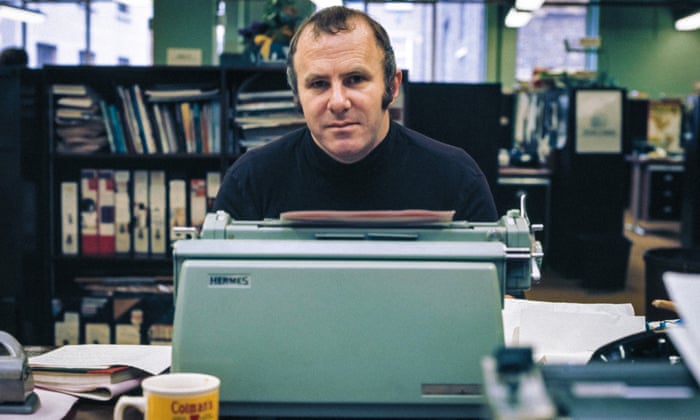
Clive James in 1977 at the offices of the Observer, where he worked as television critic.

Clive James: the last interview


Two months before his death, the broadcaster, poet and critic spoke about his own mortality

Rachel Cooke
Sunday 1 December 2019

J
ournalists shouldn’t interview people they know, or even (I think) acquaintances with whom they’re friendly. But in September I broke this rule, and went to Cambridge to talk to Clive James about his latest book.


The day before, I’d taken a call from his daughter, Claerwen James, the artist and my friend of more than 25 years. Clive was soon to publish a short book about Philip Larkin. He was pleased with it, and wanted to tell people about it. But he was also too ill, by this point, to see a stranger. Would I come? It would mean so much to him. I told her that I would.
I want to be clear. It is Claerwen who was, and is, my friend, not Clive. But still, he was a big and beloved figure in my life, and not only because she and I could spend hours at a time talking about our fathers in particular, and men in general. When I first met him, I was 25 and miserably toiling as a trainee in a Fleet Street newsroom. I knew no one, and nothing, and I was very shy, and thanks to these things – and the fact that he was a genius – I was a bit intimidated by him at first. Nevertheless, in those early years, he influenced me in all sorts of small but vital ways. I have a strong memory of an afternoon some time in about 1998. Claerwen and I walked into a room to find Clive listening to Joan Sutherland singing Bellini’s opera Norma. He was in a state that seemed to me to be close to sexual ecstasy: legs apart, head thrown back, a look of pure bliss on his face. I knew nothing of opera then, but as he translated her words for us – he sprang out of his chair to do this – I thought to myself: I’ll have what he’s having, thanks. That recording of Norma was the first opera I ever owned on CD, bought that very week. Clive’s enthusiasm, as bright and as powerful as a Klieg light, could make you want to read, listen to, watch or look at almost anything.
He was – this has already been said – very, very clever and very, very funny; he had a way of making you see that something could be both ridiculous and magnificent, and ever since I first learned this from him, I’ve always borne it in mind. He had, too, a sybaritic side that I adored. He could squeeze such pleasure from things. I’ve never seen anyone drink a bottle of Jacob’s Creek with so much enjoyment as him; it might as well have been Château Lafite in his glass. I thought of him, always, as deeply generous.
He noticed you, and what you were up to. Whenever, in later years, he was trying to get me to come to one of his book launches – I didn’t need much persuading – he would send me such sweetly beseeching emails. His “dazzlement division” needed me, he would insist. A certain kind of flirtation, like a certain kind of teasing, is a form of kindness, and for all that I did not take these messages too seriously (he was like this with everyone), that was how I received them: as kindnesses.
What I loved most of all, though, was to see him make Claerwen laugh. It’s my strongly held belief that a man who can make his own daughter – who is almost bound to be, however loving, a sceptic so far as her male parent goes – collapse into laughter is basically doing all right.
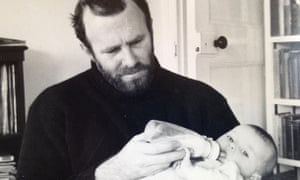
James with his baby daughter Claerwen, in a photograph taken by her mother, Prue Shaw.
James with his daughter Claerwen, in a photograph taken by her mother, Prue Shaw. Photograph: Courtesy of Claerwen James


On that day in September, he made us both laugh a lot. When I arrived, he was sitting in the thin autumn sunshine on the little balcony off his sitting room (a balcony that once overlooked the famous maple tree that was the subject of one of his late poems). He had grown a beard, and that, and his happy wave when I came in, made me think of Robinson Crusoe. I was shocked by the way his cancer had ravaged his face – contrary to reports last week, it wasn’t his leukaemia that killed him, but a metastatic squamous cell carcinoma; in other words, it was the Australian sunshine he absorbed in his youth that did for him in the end – but his eyes were refulgent, and he was so full of grace, and so intact in every other way. Somehow, he was the very essence of himself. It was heart-stirring to see, an almost numinous thing, though I knew he didn’t believe in God.

Larkin had always been a bond between him, Claerwen and me: we just think he is the Man. The book Somewhere Becoming Rain is a gathering together of everything Clive ever wrote about Larkin. It was Claerwen’s idea; she designed the cover, and it’s dedicated to her. On that day, we talked about Larkin first.
When he grew tired, we gossiped a bit. He and Claerwen were looking for a new box set to devour, and I recommended Succession. (She told me later how much he liked it.) Finally, we looked at a draft of The Fire of Joy, which will be published next year and is a collection of “roughly 80 poems to get by heart and say aloud”.
As I turned its pages, I was struck, all over again, by the astonishing range of his reading. Here were Auden and Keats and Wyatt. But here, too, were poets I’d never heard of. Clive read (in multiple languages) like his life depended on it – and perhaps it did, in a way. Words, to him, were as necessary as water. What follows is part of our conversation. At the time, I knew it would be our last, and yet it was so easy. Clive loved to have an audience – and I loved to listen.
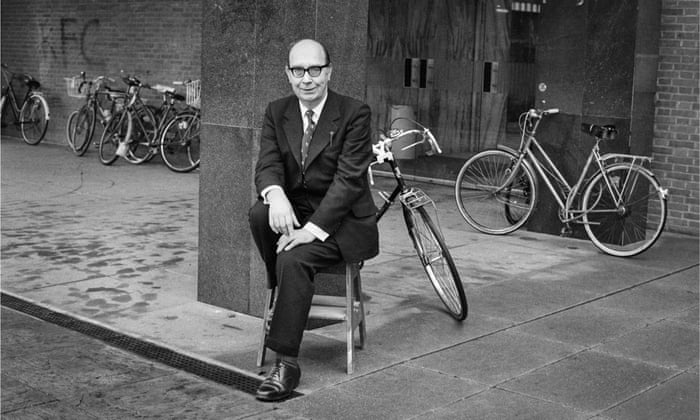
Philip Larkin, 1979.
Photograph: Jane Bown

Can you remember when you read Larkin for the first time?
The answer is yes, yes, yes – and yes. It was the cold winter of 1964. My landlord, a young publisher, said that if I really wanted to catch up with modern English poetry, I should read Philip Larkin. So I read The Less Deceived. Although I like to think that I brought a certain receptivity to the party – I was his ideal reader – I was knocked out straight away.
How did he make you feel?
First of all, the spoken rhythms were so wonderful. I still think he’s the tops in that way. Second, I knew exactly what the poems meant – and that’s what staggers me, still, about him. There can’t be many poets in any language who communicate with their readers on such a basic level. I went quietly mad for him.
I’d just arrived from Australia, and I wanted to tell him these things, so I wrote to him. I don’t know what drove me to be so crazy as to think he would have time to read a letter from me, let alone to answer it, which he did. Jesus Christ. It [my fandom] was akin to love. But [if you’re the poet] you don’t want too many lovers turning up.
By the time his last collection, High Windows, was published in 1974, you were in a position to review it. Was that a big deal for you?
Yes. The feeling was: this is history, and it’s happening to me. It’s an unbeatable thing, writing about art. It’s heaven.
Did it sadden you, what happened to Larkin’s reputation in the period after his letters came out in 1992, and his biography the following year? [Larkin stood accused of racism and bad behaviour to women.]
Yes. I could talk about this for ever, which is a bad sign. There were faculty members here in Cambridge saying we shouldn’t read Larkin. What the fuck does that mean? Who else are you recommending we don’t read?
My reaction was, and is, people shouldn’t do this. It’s scary. If you are sensitive to language at all, I can’t see how you can’t admire him on some level. The connection between poetry and morality somehow got firmly established in the English university system through [the critic] F R Leavis; poetry came to have to do with virtue.
Personally, I’ve always thought that English literary history suffers from its shortage of villains. It needs more bastards in the [John Wilmot, Earl of] Rochester mould. But that said, while Larkin shouldn’t have said those things, he was [outwardly] the model of a gentleman. It’s impossible to imagine him being rude, or even sharp to someone.
I think there are various big and obvious reasons why some people wanted to diminish him. One would be his enviable reputation. Another would be the fact that he just didn’t cooperate. He stayed in Hull. London literary life wasn’t for him.

That life was for you, though, wasn’t it?
Ha, yes. I enjoyed it, the whole business. The argy-bargy. The tangle. My rivals, even.
And Larkin’s poems sail on, don’t they?
Yes, and that’s the loudest thing to say. Though it could have been a near-run thing, they won through.
If we were on a desert island, what Larkin poems would we want?
First of all, I’d be trying to attract your attention. So it would be the romantic ones. But … we’re on a desert island! I’d already have your attention.
No, there are so many. I’d have The Whitsun Weddings, Aubade, Church Going, Mr Bleaney, Dockery and Son, To the Sea, An Arundel Tomb, At Grass – it’s fabulous – Next, Please. His range of evocation is unmatched since metaphysical times, and he has – people forget this – such a feeling for the countryside, puttering along in his very unpowerful car.
What about death? Larkin is preoccupied with it, and I wonder what you feel about that, now.
My family was marked by tragedy [James’s father, a prisoner of war in Japan, was later killed when a plane bringing POWs home crashed in Manila Bay]. But I, personally, have been marked by all the blessings. I’m giving thanks for life now, which isn’t much like despair, is it?
But Larkin was different. He knew it would end in silence, and he was afraid of the silence. He didn’t like the idea of not being here. I’m not like that – and my death might come as a relief to quite a few people. I’d rather like it not to hurt, that’s all.
Will you write another book?
Suppose I did another volume of memoirs…
Would you like to?
Yes, but I don’t think I have the energy. I’ve been hit in the face by a cricket bat at 1,000 miles an hour. I think the last round-up is here. But that’s OK. It would be bad manners to complain. I’ve had a lucky life, and I’m grateful for it.