Showing posts with label Matsuo Basho. Show all posts

Wednesday, August 20, 2025

Matsuo Bashō / An Artist Who Summarized the Beauty of Japan in Haiku While on a Life-Risking Journey


1644〜1694  

松尾 芭蕉 Matsuo Bashō


An Artist Who Summarized the Beauty of Japan in Haiku While on a Life-Risking Journey

9 August 2023

Do you know someone who is famous for haiku?  In Japan, there are several people that are famous for their haiku.  Among them, Matsuo Basho, who was active in the Edo period (1603-1867), is known worldwide for developing haikai, the original form of haiku.  

In this article, we will introduce who Matsuo Basho was and what his masterpiece “Oku no Hosomichi” (The Narrow Road to the Interior) is all about. 

The Life of Matsuo Basho 

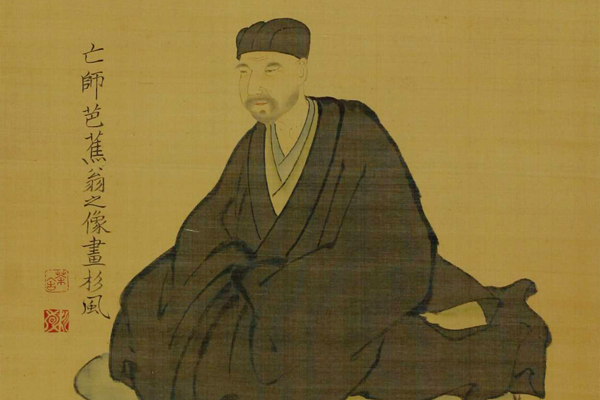
Matsuo Basho was a man of the early Edo period who perfected the art of haikai, from which haiku is derived.  His name “Basho” was his haiku pen name he made around 1680, and his real name was Munefusa Matsuo.  

He was born in 1644 into a farming family in Iga Province (present-day Mie Prefecture).  His father, Matsuo Yozaemon, was reportedly a prominent figure in the area.  However, his father died when he was 13 years old, and since he had many siblings, it must have been quite difficult.  

In 1662, at the age of 18, he began to serve Yoshitada Todo, a member of the Todo family that ruled Iga Province, and aspired to find employment.  In his late teens, he began to study haikai with Yoshitada under Kigin Kitamura, a haiku poet who was famous at the time.  

In 1666, at the age of 22, he left the Todo family when his lord Yoshitada died.  Due to losing all of his opportunities to be employed, he decided to pursue the path of haiku in earnest.  In 1674, at the age of 30, he was recognized by Kigin Kitamura for his haiku skills, and so he left his side to become independent.  Today, haiku has a traditional image, but at that time, it was still a new literary art form.  So he decided to live as an artist of a new genre.  

During his twenties, he was based in his hometown, and at the age of 32, he decided to move to Edo and set up his base of operations in the Nihonbashi area.  However, being famous in Edo was not so easy.  He could not make a living only by making haiku, and he also worked part-time as a civil engineer on the Kanda River.  He interacted with many haiku poets and published many works while teaching haiku to samurai and merchants in Edo.  He began to make a living by proofreading and editing the haiku they made.  

At the age of 37, Basho suddenly moved his base to Fukagawa.  While Nihonbashi was at the center of Edo, Fukagawa was on the east side of the Sumida River, an area that was originally the sea but was reclaimed and turned into residential land, so it was quite far from the center of Edo.  It was a frontier area with a lot of untouched nature that was not very accessible.  It seems that he moved there in search of a new place to free himself from the hassles of corrections and human relations to earn a living and create an environment where he could concentrate on his own creative activities.  

Incidentally, the name “Basho” also comes from the fact that when he set up his hermitage in Fukagawa, his disciple sent him a Basho plant, which he planted in his garden.  After this, he traveled all over Japan to write haiku and established Basho’s haiku style called “Shofu”, and became a highly accomplished artist.  

Then, at the age of 46, he embarked on the so-called “Oku no Hosomichi” journey.  This journey resulted in the composition of many of Basho’s masterpieces. He also succeeded in acquiring many disciples in the places he visited.  

And he died at the age of 51.  It is said that more than 300 of his disciples attended his funeral.  

Was He a Spy? 

A chronology of Matsuo Basho’s life reveals that he traveled much more than just the “Oku no Hosomichi”, and instead walked about 40 to 50 kilometers in a single day.  

This has led some to speculate that Matsuo Basho may have been a spy for the Edo Shogunate, keeping an eye on the feudal lords in various regions.  Since the journey along the “Oku no Hosomichi” was a strenuous one, covering 2,400 kilometers (miles) in approximately 150 days, there were assumptions made that Basho’s purpose in traveling was not simply to be an artist, but also to engage in covert activities.  

At that time, there were many customs checkpoints in various places, and yet Basho was able to come and go there smoothly and managed to finance his 150-day journey.  So we can think that there must have been some special exemption to solve the suspicion.  

There is a precedent of lawyers and other artists having been engaged in espionage activities while visiting various countries under the guise of creative activities even before the Edo period, so it is not unlikely that Basho may have been a spy as well.  Iga is also famous as a village of ninjas, but just because it is a place of secrecy does not mean that he was a ninja, as he was engaged in clandestine information-gathering activities.  And whatever the backstory, there is no doubt that “Oku no Hosomichi” is a masterpiece of travel writing in Japanese history.  

He was an avant-garde artist who constantly sought out new places and fresh scenery to create new expressions.  Among his haiku, the most famous one is known to be the haiku about frogs, “Furuike ya/ Kawazu tobikomu/ Mizu no oto” (The old pond. A frog leaps in. Sound of the water).  

The “Oku no Hosomichi” contains many of the haiku that Basho and his disciple, Sora Kawai, wrote during their travels throughout Japan.  The “Oku no Hosomichi” is Matsuo Basho’s masterpiece, but what exactly was it about?  The “Oku no Hosomichi” is a genre of travelogue that describes the actual itinerary of a journey.  It mainly travels from the Tohoku region to the Hokuriku region, including present-day Toyama and Ishikawa prefectures, and includes haiku written by Matsuo Basho at each location.  

About His Masterpiece: “Oku no Hosomichi”

The first part describes the background and motivation of why he decided to travel. In a nutshell, he says, “Travel is the best thing ever.”  

Basho’s trip to the “Oku no Hosomichi” was made in the year of the 500th anniversary of the death of the famous poet Saigyo.  So it is thought to be that it was a pilgrimage to a sacred place for him as well.  It is also said that the impressive opening sentences of the “Oku no Hosomichi” were influenced by a poem by a Chinese poet named Li Bai.  His pen name before he called himself Basho was “Momo Qing.”  The meaning of this name is “blue peach” which is a peach that is still immature, implying he is not up to Li Bai.  There is a respect that transcends time and borders.  

From the town of Edo where Basho lived, he had a clear view of Mt. Fuji. An ukiyoe series, called Fugaku Sanjūrokkei (Thirty-six Views of Mt. Fuji) by Katsushika Hokusai, is a collection of 36 iconic paintings of Mt. Fuji drawn from the Mannen Bridge at Fukagawa, which is just around where Basho lived.  These ukiyoe painted about 150 years after Basho’s trip depict how well you can see Mt. Fuji.  From Tokyo today, you cannot see Mt. Fuji unless you climb a tall building, perhaps when the weather is nice.  Basho wrote in his introductory paragraph that when he set out on his journey, he felt a bit anxious that he would not be able to see Mt. Fuji for a while.  

Basho spoke then that he did not know if he would make it back to Edo alive, for traveling in those days was risking his life.  It was in 1689, in the early Edo period when Matsuo Basho set out on his journey along the “Oku no Hosomichi.”  It was only in the late Edo period (1603-1867), when the peace of the country was firmly established, that ordinary people were able to make journeys such as the famous Tokaidochu Hizakurige(Foot Travelers along the Tokai-do Road) by Ikku JUPPENSHA.  

The route of the journey, the Oshu Kaido, was just being developed. At that time, there were very few inns for ordinary travelers, as the road was basically for samurai on their way to the capital.  In fact, if you read “Oku no Hosomichi”, you will find that he stayed not only in inns but also in private homes, temples, and mountain huts, and he also left a poem phrase “Nomi Shirami / Uma no Shito Suru / Makura Moto (Fleas, lice, a horse peeing near my pillow).”  It is quite harsh, isn’t it?  Of course, he had to carry all his own luggage and walk dozens of kilometers a day, so there were possibilities that he fell ill and died during the journey, and there was also the danger of being killed by bandits who were after the travelers.  

So, since he might not be able to come back, all of his close friends gathered together the night before and shared their farewells on the morning of his departure.  They saw him off until they could no longer see his back.  

When you know that the “Oku-no-Hosomichi” was a journey to prepare for death, the interpretation of the journey might change.  


JAPAN UP MAGAZINE


Sunday, August 25, 2024

“The Narrow Road Through the Hinterlands” / Walking with Bashō on a Journey of Invention

“The Narrow Road Through the Hinterlands”: Walking with Bashō on a Journey of Invention


Fukasawa Shinji

9 JUNE 2022
Matsuo Bashō’s masterpiece The Narrow Road Through the Hinterlands is a travel journal based on a five-month, 24,000-kilometer trek across Japan. The classic work, however, incorporates much literary invention, influenced by the writings of the past.
Almost a Work of Fiction

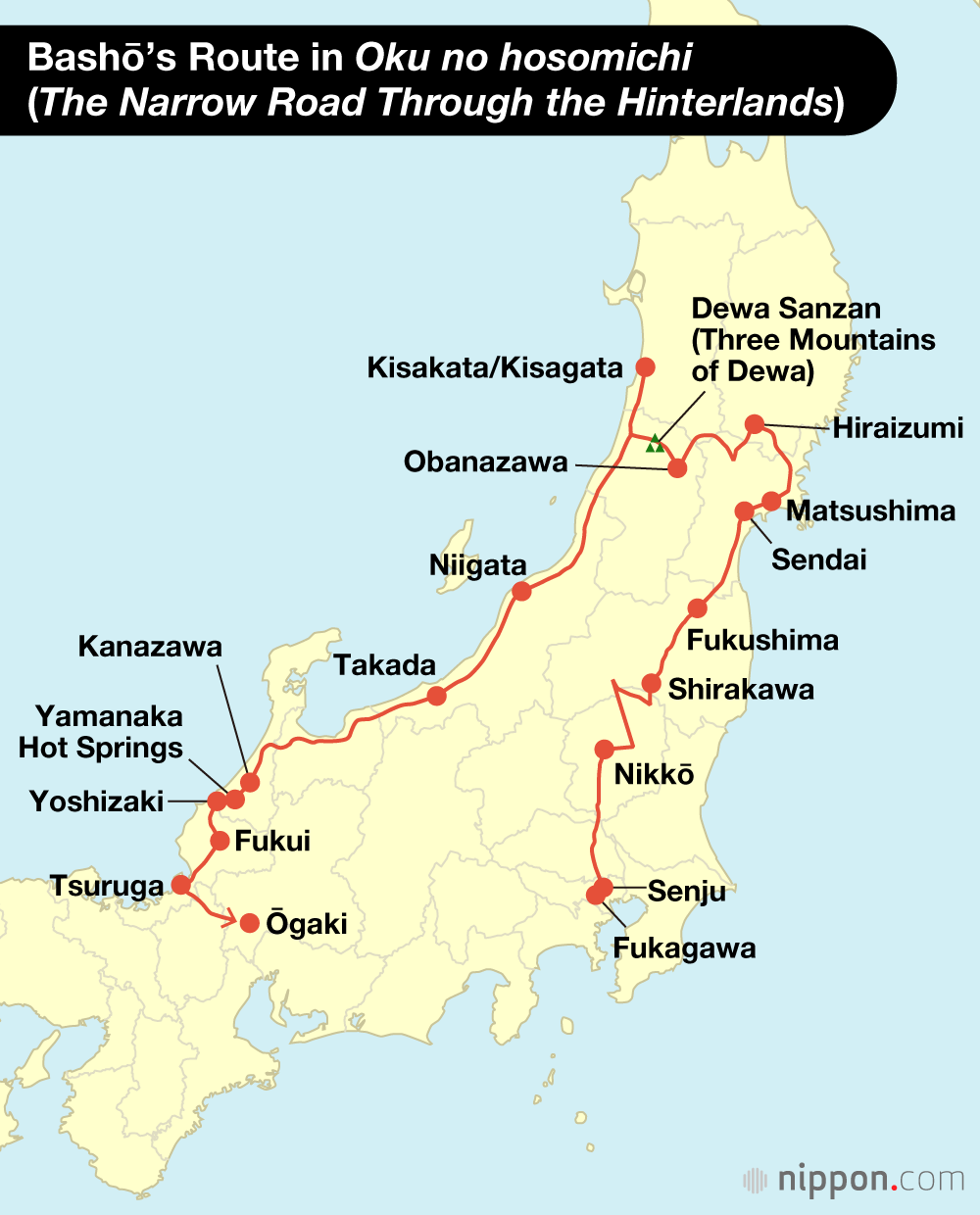
Matsuo Bashō was around 45 in May 1689 when he began the five-month journey across Japan that inspired the most famous of his travel journals: Oku no hosomichi (trans. by Steven D. Carter as The Narrow Road Through the Hinterlands). From his home in Fukagawa, Edo (now Tokyo), he traveled north to Hiraizumi in what is now Iwate Prefecture, then west and down the Sea of Japan coast, before finishing his trek at Ōgaki in what is now Gifu Prefecture.

For most of the trip, as far as Yamanaka Hot Springs, Bashō was accompanied by his disciple, known in the text as Kawai Sora (although the scholar Muramatsu Tomotsugu has shown his real name was Kasai Sora). He also traveled with the haiku poet Tachibana Hokushi from Kanazawa to just before Fukui. As well as visiting historic spots known for poetic associations or past battles, he wanted to meet poets, create linked verse together, and convey his version of haikai, the light, humorous literary genre that he played such a great part in shaping. Another motive was likely to have been that it was the five hundredth year since the death of Saigyō, a literary forebear Bashō much admired, who had similarly journeyed to Hiraizumi. There are frequent moments in the text where one can sense Bashō is deeply conscious of the earlier writer. He is believed to have edited the work into its final form from 1692, three years after the journey, to 1694, the year of his death.

From Sora’s diary, which gives an account of what took place on the expedition, it is apparent that The Narrow Road Through the Hinterlands contains much description that is different from what actually happened. While Bashō based his literary travel journal on the real journey, he incorporated many of his own original ideas. One might call it almost a work of fiction, and in this sense, it holds a distinctive place among Japan’s classic travel literature. Broadly, it makes use of the following three approaches.

1. A Focus on Time

The journey takes place from the end of spring to the end of autumn, and the work is highly focused on the seasonal transitions and annual observances during this time. The narrator is also frequently moved by realizing the passage of time when viewing items, sites, or customs connected to the distant past.

2. Use of Concepts from Nō Drama

There is a form of  called the mugen-nō (dream play) in which the shite or main character is a ghost appearing in the dream of the waki or supporting character. There are parts in The Narrow Road Through the Hinterlands where one senses the influence of dialogues with people no longer of this world.

3. The Traveler as a Follower of Saigyō

While the work has a first-person narrator, it is not stated that this is Bashō himself. Bashō molds the narrator as an admirer of Saigyō, who follows the earlier poet’s actions.

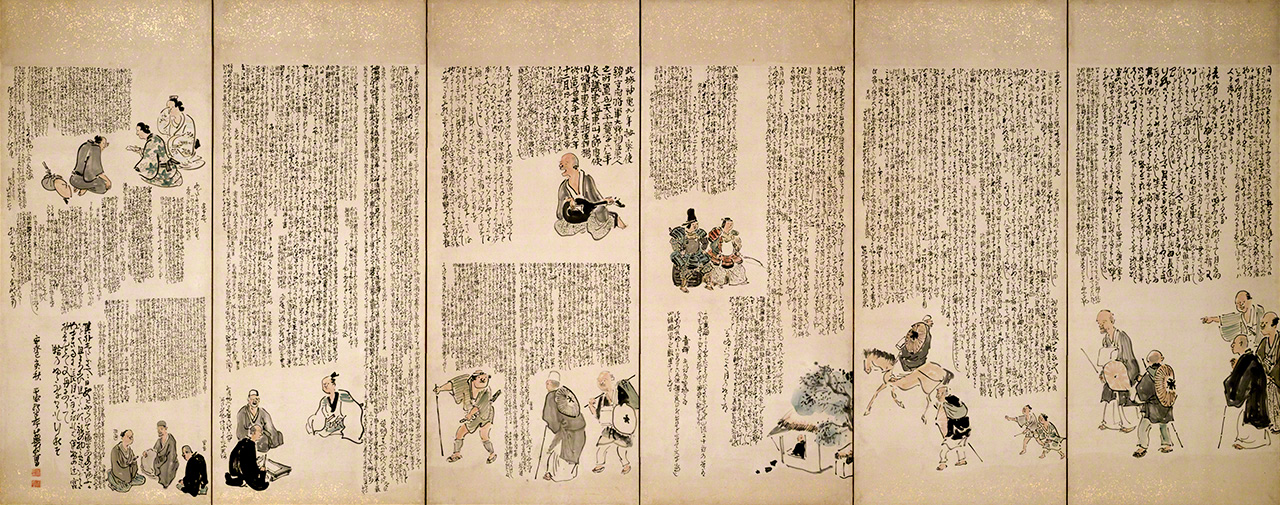
Yosa Buson, Oku no hosomichi-zu byōbu, 1779. Buson created this folding screen with the text of The Narrow Road Through the Hinterlands and pictures of its various episodes out of his esteem for Bashō. (Courtesy Yamagata Museum of Art, Hasegawa Collection)
Yosa Buson, Oku no hosomichi-zu byōbu, 1779. Buson created this folding screen with the text of The Narrow Road Through the Hinterlands and pictures of its various episodes out of his esteem for Bashō. (Courtesy Yamagata Museum of Art, Hasegawa Collection)

Traveling with Time

I will begin by considering the work’s opening.

The months and days are travelers through the ages, and so too are the years that come and go. For boatmen who spend their lives on the water and drivers who grow old leading their horses, every day is journeying, and journeying is their home. Many of the ancients died on the road, and I too, for some years, have been drawn to follow the wind like a wisp of cloud, unable to contain my wanderlust. I roamed along the coast . . .

There is a clear focus on time, as a concept likened to travelers, and more specifically as the traveling companion of the narrator. This “I” will go on to make note of the beginning of summer and autumn, as well as specific calendar festivals, including Tango no SekkuTanabataObon, and the night of the mid-autumn moon. He also views heirlooms left by Minamoto no Yoshitsune and his servant Benkei—who were driven north to Hiraizumi by the former’s half-brother Yoritomo, the founder of the Kamakura shōgunate—and goes to historic spots like the Konjikidō hall at the temple Chūsonji in Hiraizumi. Such connections to the past move him to tears.

Encounters with Ghosts

Next, I would like to look at the section in Takadachi, Hiraizumi, the battlefield where Yoshitsune and his followers were defeated. Incidentally, Saigyō journeyed to Hiraizumi while Yoshitsune was sheltering there.

Yoshitsune’s retainers made their stand here and won glory in combat, but the moment passed, and their glory turned to grass. “The state in ruins, mountains and rivers remain. Spring green grows on the fortress.” Setting down my hat, I forgot the passing of time, and wept.

夏草や兵どもが夢の跡
Natsu kusa ya tsuwamono-domo ga / yume no ato
Summer grasses,
all that remain of
warrior dreams

卯の花に兼房みゆる白毛かな 曽良
Unohana ni / Kanefusa miyuru / shiraga kana (Sora)
In the deutzia flowers,
I see Kanefusa’s
white hair
(poem by Sora)

This section shows a strong influence from the mugen-nō. It is written so that it could be read that the narrator forgets the passing of time in lamenting the past battle where Yoshitsune and his retainers were defeated. In that time, the warriors appear in his dream to recount the events of the battle to him, and when he wakes, all that remains are the summer grasses.

The passage also suggest that it was in a dream that Sora saw the white hair of the warrior Kanefusa from the losing army. Sora’s real-life diary does not include the haiku, which seems to have actually been Bashō’s later invention. In nō terms, if the narrator is the waki (supporting character), Sora is the wakitsure (supporting character’s companion), and both offer poems to those who fell in battle.

Praising Saigyō

The following passage, describing Bashō’s arrival in what is now Fukui Prefecture, is a good example of how the narrator is presented as a follower of Saigyō.

We crossed the border into Echizen, and over the Yoshizaki Inlet by boat, visiting the Shiogoshi Pines.

終宵嵐に波を運ばせて
月を垂れたる汐越の松  西行
Yo mo sugara / arashi ni nami o / hakobasete /
tsuki o taretaru / Shiogoshi no matsu (Saigyō)
All night
battered by
stormy waves,
moonlight in the falling drops—
Shiogoshi Pines
(poem by Saigyō)

This one poem conveys the place’s beauties in all its forms. To add anything would be like putting a sixth finger on a hand.

The poem here is, in fact, the work of another writer called Rennyo, and the idea that Saigyō wrote it is Bashō’s invention. Rennyo was a major Buddhist figure, and the moon symbolizes enlightenment. Thus, Bashō uses this poem in The Narrow Road Through the Hinterlands to show, through the moon, Saigyō’s accomplishment of Buddhist training, as well as the narrator’s desire to praise him.

Unfinished Business

Various versions of the text were produced before Bashō’s death in 1694. His handwritten manuscript is known as the Nakao version after its 1996 discoverer. The Sora version—so called as it was passed down through Sora’s family—is a faithful copy, which was further revised and polished. The Nishimura version, named after its owner, is a copy of the Sora version made by the calligrapher Kashiwagi Soryū at Bashō’s request, while another copy made by him is called the Kakimori version, as it is owned by Kakimori Bunko.

All of these are handwritten. Bashō apparently showed no intention to publish The Narrow Road Through the Hinterlands. What does it mean that he only left handwritten manuscripts? One reason may be the comparative value of rarity, which would be lost through printing many copies. There are many ways to interpret the situation, but I would suggest that Bashō saw the text as a work in progress, which he intended to further refine.

In the year of his death, Bashō took the Nishimura version back to his hometown in Iga Province (now Mie Prefecture), where he presented it to his older brother Matsuo Hanzaemon. It then passed to Bashō’s disciple Mukai Kyorai, and this version was published by Izutsuya in Kyoto in 1702. This was the basis for numerous later reprintings. It was long considered the only version, until various manuscripts were discovered in the twentieth century. The original Nishimura version was found in 1943, the Sora version in 1951, the Kakimori version in 1959, and the Nakao version in 1996. It was in 1943 that Sora’s diary emerged to give an alternate version of events. These discoveries have given fresh impetus to studies of Bashō’s classic.

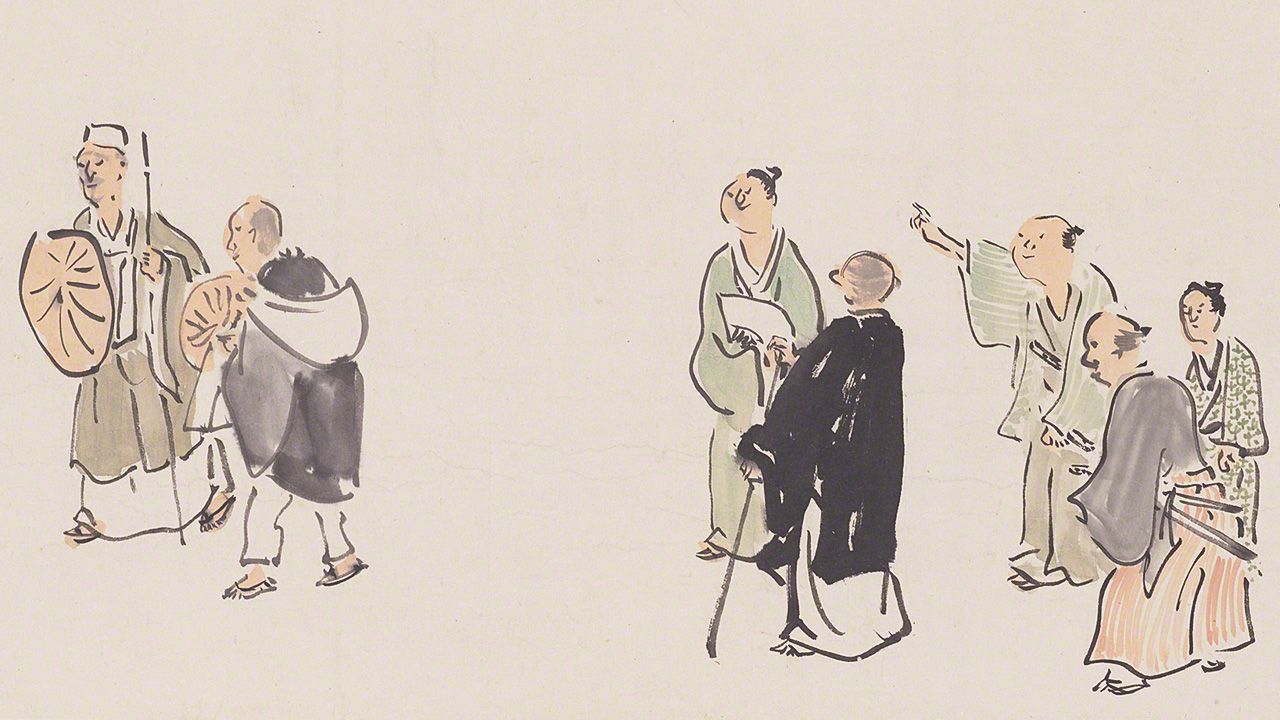
(Originally published in Japanese on April 20, 2022. Banner image: Yosa Buson, Shihon tansai oku no hosomichi-zu [Picture from The Narrow Road Through the Hinterlands in Light Colors on Paper], 1779. Buson’s illustration shows Bashō and Sora setting off from Senju in today’s Adachi, Tokyo. Courtesy Hankyū Culture Foundation/Itsuō Museum.)

NIPPON

Thursday, December 13, 2012

Matsuo Basho and others / Haikus


HAIKUS
Haiku 1
Miura Chora 

Get out of my road
and allow me to plant these
bamboos, Mr. Toad.

Haiku 2
Chiyo 

A morning glory
Twined round the bucket:
I will ask my neighbor
    for water.

Haiku 3
Matsuo Basho 

The old pond;
A frog jumps in:
Sound of water.

Haiku 4
Kobayashi Issa 
A dragonfly!
The distant hills
Reflected in his eyes.