Saturday, September 4, 2021

Mark Strand / My Mother on an Evening in Late Summer

Photo by Viccolya and Saida
MY MOTHER ON AN EVENING 
IN LATE SUMMER
by Mark Strand


1

When the moon appears
and a few wind-stricken barns stand out
in the low-domed hills
and shine with a light
that is veiled and dust-filled
and that floats upon the fields,
my mother, with her hair in a bun,
her face in shadow, and the smoke
from her cigarette coiling close
to the faint yellow sheen of her dress,
stands near the house
and watches the seepage of late light
down through the sedges,
the last gray islands of cloud
taken from view, and the wind
ruffling the moon's ash-colored coat
on the black bay.


2

Soon the house, with its shades drawn closed, will send
small carpets of lampglow
into the haze and the bay
will begin its loud heaving
and the pines, frayed finials
climbing the hill, will seem to graze
the dim cinders of heaven.
And my mother will stare into the starlanes,
the endless tunnels of nothing,
and as she gazes,
under the hour's spell,
she will think how we yield each night
to the soundless storms of decay
that tear at the folding flesh,
and she will not know
why she is here
or what she is prisoner of
if not the conditions of love that brought her to this.


3

My mother will go indoors
and the fields, the bare stones
will drift in peace, small creatures --
the mouse and the swift -- will sleep
at opposite ends of the house.
Only the cricket will be up,
repeating its one shrill note
to the rotten boards of the porch,
to the rusted screens, to the air, to the rimless dark,
to the sea that keeps to itself.
Why should my mother awake?
The earth is not yet a garden
about to be turned. The stars
are not yet bells that ring
at night for the lost.
It is much too late.

- See more at: http://www.poets.org/viewmedia.php/prmMID/15670#sthash.BAOOBWRe.dpuf


Read also
BIOGRAPHY OF MARK STRAND
Mark Strand / With Only the Stars to Guide Us
Mark Strand at John Cabot University
Mark Strand / The Art of Poetry
Mark Strand / The Everyday Enchantment of Music
Mark Strand / The Coming of Light
Mark Strand / Eating Poetry
Mark Strand / From the Long Sad Party
Mark Strand / My Mother on an Evening in Late Summer

Friday, September 3, 2021

The best recent poetry – review roundup


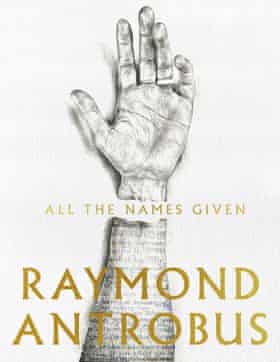
Raymond Antrobus explores love, marriage and brotherhood in All the Names Given. Photograph: Suki Dhanda

The best recent poetry – review roundup

All the Names Given by Raymond Antrobus; The Sun Is Open by Gail McConnell; Single Window by Daniel Sluman; The Kids by Hannah Lowe

Mary Jean Chan
Fri 3 Sep 2021 12.00 BST

All The Names Given

Raymond Antrobus’s second collection, All the Names Given (Picador), builds on themes in his award-winning debut, The Perseverance, including meditations on the d/Deaf experience. In this book, Antrobus brings history to bear on the present through references to poets ranging from William Blake to Kamau Braithwaite, exploring love, marriage and brotherhood, as well as colonial inheritance, racism, ableism and intergenerational trauma. In “Plantation Paint”, Antrobus responds to “Plantation Burial”, an artwork by the 19th-century painter John Antrobus, and wonders how one might make sense of a surname “so anciently English that it has become foreign to itself”. The speaker asks: “Tell me if I’m closer / to the white painter / with my name than I am / to the black preacher, / his hands wide to the sky, / the mahogany rot / of heaven”. These lyric poems are also linguistically innovative, spanning standard English, Jamaican patois and British sign language. Elsewhere, a sequence of caption poems inspired by Deaf sound artist Christine Sun Kim serves as an important riposte to the hegemony of our hearing-centric world:

[sound of strangers arriving]
[squirming in suit]
[sound of light between us]

Moving deftly between tenderness and violence, hope and grief, praise and lament, this is a deeply evocative collection that will linger in the reader’s mind.

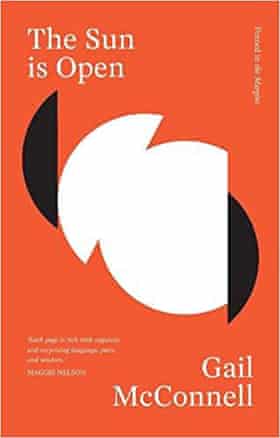
The Sun Is Open by Gail McConnell

Gail McConnell’s first full-length collection The Sun Is Open (Penned in the Margins) is a vivid exploration of the intricacies of grief surrounding a beloved father’s murder by the IRA in Belfast, 1984. These fragmentary and visually striking sequences cohere into prose poems and concrete poetry, some featuring lacunae or using found text to evoke an almost unspeakable loss. Through collage and quotation, McConnell enables the deceased to speak again, with entire lines lifted from her father’s undergraduate diary. After one such poem, the speaker verbalises the anti-lyric sentiment at the heart of this unique approach to elegy: “copy all this out / and I won’t have to address you”. While the lyric is aimed at an addressee, elegiac writing cannot hope to be heard by those who cannot respond. As Declan Ryan observed of Emily Berry’s Stranger, Baby: “An elegy is a want that can never be answered.” In this devastating yet immersive book, McConnell skilfully utilises juxtaposition, understatement and negative space to offer us an intimate work of poetic testimony.

Single Window by Daniel Sluman

Daniel Sluman’s third collection, Single Window (Nine Arches), is a book-length poem meditating on “the loneliness and fear experienced by disabled people living in Tory Britain”, drawn from his and his wife Emily’s experiences over the last five years. Using the seasons as a framing device, Sluman documents the painful minutiae of life lived indoors: “we count down the seconds / before our pills sing their gospel inside us”. Hours later, another bleak ritual: “all day we drink tea piled with sugar / & wake in yesterday’s clothes / to this piss-bright sunrise”. There is a luminosity to this world that is otherwise suffused with suffering, illustrated by intermittent photographs: a syringe next to a box of morphine sulphate, or a pair of crutches leant against a wall. Describing a carer’s visit to the house, the speaker confesses: “a middle-aged woman peels off our socks / & strips us layer by layer / like she’s fleecing sheep”, an act that requires precision as well as a practised but jarring detachment. Overall, an encounter with this book will leave one feeling “quiet / as a broken bone knitting back together”.

Hannah Lowe’s previous two collections, Chick and Chan, focused on her relationship with her Jamaican-Chinese father, alongside coming-of-age recollections. The Kids (Bloodaxe) marks a departure: an introspective book of modern sonnets, it offers a glimpse into her experiences of teaching in an inner-city London sixth form. The collection includes homages to her own teachers, and concludes with a sequence lovingly written for her young son Rory. In “Sonnet for the A Level English Literature and Language Poetry Syllabus”, Lowe conveys the combination of dedication and exasperation: “all summer term reading poems – / down in the mud / of words, wanting / the kids to hear what I heard – / breaking the poems apart, slapping / their parts to the board – ” Elsewhere, her work takes a more tender turn: “I find him balancing / a handful of bubbles back to bed. It is /so hot, and why have the birds stopped singing / darling? Who can sleep on a night like this?” This is a playful yet moving collection that will make the reader frown and laugh, sometimes both at once.


 Mary Jean Chan’s Flèche (Faber) won the 2019 Costa poetry prize.

THE GUARDIAN


Saturday, August 21, 2021

Naming Ceremony by Honorée Fanonne Jeffers


 Naming Ceremony 

by Honorée Fanonne Jeffers

VOICE


for Jerry Ward, Jr.


Shallow curve of the land
between master and owned
I have dismissed you until I come
upon kin     Since time my jaws
have collected accusations
from memory     No logic
grinding my teeth     I have not
been sold     The telling of the coppers
between fingers     (Skin)
I think that I have known freedom
This old story and yet I grieve
accented by our home
Your line reaching back
while I search for the cloth
of our mother’s  bodice
My line snapped     My mind
flying home at Ibo Landing
I think that I have known liberty in
the caverns I have lived in
Valley of Senegambia
Coast of Slaves    Gold    Ivory
(Loss)     The mud of the Bights
Benin     Listen to the talk
beaten by a man and his apprentice
a mortgaged youth     My body
lightened     mongreled currency
Biafra     beaten     Hear me
beaten down blood     free
unclaimed by garbled deity
My father’s call tricks
the music of stopped ears
The flesh of the young men is burning
One of us is Cain     the gardener
of perfidy     unblessed by lineage
the flesh of the young men is aglow


KISS

Wampum by Honorée Fanonne Jeffers

Memphis Resurrection by Honorée Fanonne Jeffers

Dreams of My Father by Honorée Fanonne Jeffers

The Gospel of Barbecue by Honorée Fannonne Jeffers

Honorée Fanonne Jeffers / The Prophetess Sojourner Truth Discusses the Two Different Versions of Her Most Well-Known Speech, One Nearly Unknown and One Very Beloved Yet Mostly Untrue

Washita Battlefield National Historic Site by Honorée Fanonne Jeffers

Chorus of the Mothers-Griot by Honorée Fanonne Jeffers

Naming Ceremony by Honorée Fanonne Jeffers


Wednesday, August 18, 2021

Allison Benis White / “Waldgeist,” “Sheathe,” and “Ignis Fatuus”


Allison Benis White

“Waldgeist,” “Sheathe,” and “Ignis Fatuus”


Waldgeist

The souls trapped
in the trees in Dante’s forest
of suicides can only speak
when their branches are broken
as they bleed.

What else is language
now but injury: why did you
break me?

Why did you leave me?

And relief: to bleed
in one place, for one reason,
to say I failed to live
sanely on earth
without you.


Sheathe

Even in the dream,
we lie awake in the
dark, side by side.

When I ask
if you’re dead, you say,
Alive in your mind.

And of the four truths,
I remember two: we are
alone, we will suffer.

It’s no wonder
we cannot sleep.

We cannot die,
your cool hand
in my hand, carved
from ivory or ice.


Ignis Fatuus

It is possible to be
lovely in the dark.

A few thin trees
leaning toward
each other.

In ghost or pale
light, my fingers
on my lips.

If to speak is to die,
I will whisper.

If to speak is to die,
I will make
trees of my hands—

I will say nothing
by shivering, I will
say everything.


Saturday, August 14, 2021

Chorus of the Mothers-Griot by Honorée Fanonne Jeffers


Chorus of the Mothers-Griot

by Honorée Fanonne Jeffers


for Phillis Wheatley (c.1753-1784)


[amnesiac wood]

[nostrils of girls]	        [who was bought]	        [uncle’s hand]
[guts on the air]	        [who was sold]		[defeated man]
[history’s charnel]	        [i say] 	                [trader’s silver]

                                [sailing knot to knot]

[naked in the corner]	[door of no return]	[sing the mutiny]
[in the slave house]	[sniff bougainvillea]	[who stands ashamed]
[i say]		 	[ready dawn’s kill]	        [naked in the corner]

                                [jealous sharks]

[i shall]			[who did]		        [i say]
[they did]		        [i’m here]		        [my name]
[who shall]		        [i say]		        [yes here]

                                [on the battlefield] 

[call woman]		[call america]		[call revolution]
[call the brother]	        [call myth]                  [i say] 
[call the auction]	        [call africa]		        [call revolution]

                                [in God’s name]

[is this called]		[is my mother]		[is my kin]
[i say]			[is this called]		[is some land]
[is my mother]		[and what] 		        [is this called]


	after Lucille Clifton


KISS

Wampum by Honorée Fanonne Jeffers

Memphis Resurrection by Honorée Fanonne Jeffers

Dreams of My Father by Honorée Fanonne Jeffers

The Gospel of Barbecue by Honorée Fannonne Jeffers

Honorée Fanonne Jeffers / The Prophetess Sojourner Truth Discusses the Two Different Versions of Her Most Well-Known Speech, One Nearly Unknown and One Very Beloved Yet Mostly Untrue

Washita Battlefield National Historic Site by Honorée Fanonne Jeffers

Chorus of the Mothers-Griot by Honorée Fanonne Jeffers

Naming Ceremony by Honorée Fanonne Jeffers


Wednesday, August 11, 2021

Washita Battlefield National Historic Site by Honorée Fanonne Jeffers


Washita Battlefield National Historic Site

by Honorée Fanonne Jeffers

for Chief Black Kettle & the Cheyenne People

I. 2016            
   that journey
 
i was tired
not ready for
a long drive
i live here now
my land here now
& the cheyenne
my new duty   
as i travel
i am afraid
carved country
in this part of  
oklahoma
my dark skin  
my kinky hair 
the worries      
the ugly
tales of travel
i am afraid
all this to write
some short history
for peace
at the battlefield
it’s near evening
no one here
to guide
through the bones
i must go alone
on one branch 
a flash 
cloth bundled  
a head  with
no features      
a jump in grass
no further
i should take off
my shoes
where they died
i walk down
the trail
the sounds
the horses
butterflies hop
they intone      
find that place  
where you walk 
this is where   
we wait woman    
           

II.  1864–68
   that time 

for years                      
the old ones                
waiting                        
an old story                 
an old people  
caution
a whisper         
hope & survive 
don’t be afraid            
just wait                       
the world         
has lasted        
this long          
a legacy           
we rely upon    
lists of treaties 
medicine lodge
black kettle      
a kind man
suffered power
for peace
i grieve this man
i grieve his wife
no words
to justify
definition
in suffering
i place my prayers
in spirit
in a gift
a bullet 
lost in blood    
pray before      
it talks to you   
what a man offered
left behind
children women
beaten by memory
the dawn
custer’s music
the warriors
point to trees
soldiers there  
a battlefield
quickly leave    
the offerings
for your tongue           
 

III.  1868
   that dawn

memory
i must respect
i must respect
the beginning
the beginning
the dawn
a mourning
a hot sun
of migration
in this place
stillness
before claiming
river through trees
& elders
surely know
broken vowels
sand creek
counseling quiet
faith in life
through waiting
then a massacre
black kettle
medicine woman later
stop asking me
to understand
to absolve soldiers
no words
no words
i claim
in testimony
buried inside
a memory
it speaks in books
it chides the truth
calm never lasts
i want peace
calm never lasts
i want peace
i can’t forget
custer’s music
the women
sing to children
do not forget 
a massacre 
remember 
tend to stories
find the words      


KISS

Wampum by Honorée Fanonne Jeffers

Memphis Resurrection by Honorée Fanonne Jeffers

Dreams of My Father by Honorée Fanonne Jeffers

The Gospel of Barbecue by Honorée Fannonne Jeffers

Honorée Fanonne Jeffers / The Prophetess Sojourner Truth Discusses the Two Different Versions of Her Most Well-Known Speech, One Nearly Unknown and One Very Beloved Yet Mostly Untrue

Washita Battlefield National Historic Site by Honorée Fanonne Jeffers

Chorus of the Mothers-Griot by Honorée Fanonne Jeffers

Naming Ceremony by Honorée Fanonne Jeffers