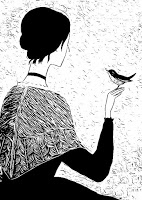
Lately baby, I've been thinking How good it was when you were here And it ain't the wine that I been drinking For once I feel my head is clear
But early this morning, when I opened up my eyes That old lonesome feeling took me by surprise I guess you meant more to me than I realized The love we had stays on my mind The love we had stays on my mind
And lately girl, I've been remembering The good times that we used to share My thoughts of you don't have an ending And memories of you are everywhere
But why should I tell you, it's not your concern You win some, you lose some Well I've lost and I've learned It's just that I'm so lonely With no place to turn And here at the end, I find Yes I do
The love we had stays on my mind Girl, if you were nearer If you had a mirror Maybe you…
Penning poetry for the one you love? Here are five basic rules by Britain’s former poet laureate
Andrew Motion Wed 11 Feb 2016
T
raditionally, love poems were written in sonnet form, but they don’t have to be. Find the form that suits what you are going to say. It could be a haiku or even a limerick. Be true, be forthright, and don’t get caught up in other people’s ideas of what being in love is like, or some inherited ideal of a love poem. Concentrate on the realities of the person that you are dealing with. Don’t disguise them as some kind of ideal – they are going to want to feel that’s my poem, that’s my expression, that’s what we did together.
Here are my five rules:
1 Speak from your heart. Poets have in their toolbox every trick of rhetoric and linguistic structuring - from alliteration to zeugma. The toolbox is there to be ransacked, but the strength of your feelings might be diverted if you get too tied up with technical stuff.
2 Simply to say “I love you” or “you’re beautiful” is not interesting. Remember William Carlos Williams’ advice about writing - there is no truth but in things. So be particular. Things have a fascination that abstractions don’t. A reader will be more likely to identify with your poem if there are references to personal situations or particular features - be it their body, attitude or behaviour.
3 A sense of humour is not at odds with passionate intensity. Catching the ridiculousness of a situation doesn’t betray the subject or misrepresent the strength of your feelings. And don’t shy away from flaws. The whole business of being attracted to people is connected to their imperfections.
4 Pay attention to rhymes and rhythms and the sound your words make. The sound of the thing is as important as the dictionary definition of the words.
5 Revise, revise, revise. Our first thoughts are almost never our best.
An only apparently informal riff on an only apparently straightforward concept of identity finds some sparky complications
Carol Rumens
Mon 2 Jul 2018 10.00 BST
Us
by Zaffar Kunial
If you ask me, us takes in undulations – each wave in the sea, all insides compressed – as if, from one coast, you could reach out to
the next; and maybe it’s a Midlands thing but when I was young, us equally meant me,says the one, ‘Oi, you, tell us where yer from’;
and the way supporters share the one fate – I, being one, am Liverpool no less – cresting the Mexican wave of we or us,
a shore-like state, two places at once, God knows what’s in it; and, at opposite ends my heart’s sunk at separations of us.
When it comes to us, colour me unsure. Something in me, or it, has failed the course. I’d love to think I could stretch to it – us –
but the waves therein are too wide for words. I hope you get, here, where I’m coming from. I hope you’re with me on this – between love
and loss – where I’d give myself away, stranded as if the universe is a matter of one stress. Us. I hope, from here on, I can say it
and though far-fetched, it won’t be too far wrong.
The relaxed vernacular of Zaffar Kunial’s newly published first collection, Us, may at first conceal the precision with which his poems search the vexations of identity. The reaches of the search are exposed most plainly in the knowingly titled Self-Portrait as Bottom. Like the title poem, the self-portrait references Tony Harrison’s 40-year-old sonnet diptych Them and [uz], in which the sneering literature teacher told the working-class pupil Harrison, “You’re one of those / Shakespeare gives the comic bits to: prose!”
Kunial’s speaker, unlike Harrison’s, doesn’t spit up furious “glottals”: more subtle and contemporary, he dispatches his gobs of spit “to a lab across the Irish sea” for the DNA ancestry test. The simply complex equation that he first announces, “50% Europe. / 50% Asia,” demands sub-divisions genetic and linguistic, leading to a surprising, tenuous ethnic link between the poet’s Kashmiri father and Midlands-born mother. Themes of disconnection are tacitly present in the title poem, this week’s choice.
“Waves” form a useful metaphor: the sea-like “undulations” of line one develop into the solidarity-asserting “Mexican wave” of stanza three. For the football supporter, such actions emphasise separation, too, “a shore-like state, two places at once” or a sense of solidarity cut in half: “… and, at opposite ends / my heart’s sunk at separations of us.”
“Us” means “me” in many English dialects: Kunial hears it in his native city, Birmingham, in the shout of mixed aggression and curiosity, “Oi you, tell us where yer from.” In Harrison’s Them and [uz], the pronoun symbolises attempts by the ruling “educated” class to exclude him, but it belongs to the future poet’s own dialect, and he’s able to seize the language back (“RIP RP”) with a mature, furious confidence not available to Kunial’s persona, whose sense of language rights is less clear-cut. All the same, a quietly intricate assertion of language possession has been set in motion, as modest little phrases like “the one” and innocent-looking prepositions such as “from” are slotted quietly into different facets of emphases.
Difference and familiarity deftly combine in the idiomatic, euphemistic “colour me unsure”. Now the waves, as hand signals or undulations, fail to breach distance: the water seems too wide. The speaker hasn’t given up, though: repetitions of “here” demonstrate Kunial’s delicate sense of nuance, as if “here” were no less complicated a verbal sign as “us”, as if it could be transformed into identity-grounding solidity. The rough-breathing alliteration of “hear” and “hope” gasps uncertainty without checking the smooth rhythmic flow. That image of two shores, two sides, rescues from unlocatable abstraction, the territory “between love and loss”. “Us” may be the uncertain location of coupledom as well as community, and here, too, the speaker may somehow be undone, given away like a missed goal, “stranded / as if the universe is a matter of one stress”.
Kunial’s puns are never mere play, and here the key word, “stress”, is cleverly chosen. “Us” as a concept creates stress for those who refuse or are refused belonging. That the single-syllable, two-letter English word could sum up and unite the universe is pressed on the speaker by some further excited vulnerability of doubt and desire (“I hope you’re with me on this”). A couple’s “us” seems to extend to the hope, at least, of a broader collective identity.
Thepronounhas meanwhile shed its italics. Even that typographical shift lends it a more neighbourly look. The resolution gracing this poem turns out to be temporary: the sequence immediately following on from Us, Ys (the last poem in the collection), painfully searches paths through childhood experiences of disconnection and separation. Us provides the collection’s title but not Kunial’s last word: the grit that originates and animates his calm and assured-seeming poems is identity, which consists of interestingly twisted strands of connection and disconnection. The two-letter word is less a sea-girt island than an undulating, wavily glittering continent. There’s a hopefulness about its utterance, even so.
The Greek observer of human folly refuses to be entombed by his latest translator's academic thoroughness
Paul Bailey
Fri 31 May 2013
W
hen Constantine Cavafy died on 29 April 1933, his 70th birthday, his work was little known beyond Greece and Alexandria, where he spent most of his life. In 1935, with the publication of the first substantial collection of his poems, he began to receive the critical attention his genius merited. His foremost, lasting admirer was another great Greek poet, George Seferis, who observed: "Outside his poetry Cavafy does not exist."
That was in 1946, when several of Cavafy's friends and acquaintances were still alive. Yet the remark is not a harsh one, because the artist he was referring to was the least self-assertive of men. He worked for 30 years as a civil servant in the ministry of irrigation, sometimes making extra money as a broker in the Alexandria stock exchange. His lovers, golden youths who needed money to buy clothes, have all disappeared into the nameless history that accounts for the majority of the human race.
He was fluent in three languages besides his own – English, French and Italian – and enjoyed reading detective stories when he wasn't immersed in the classic Greek and Latin texts that had captured his quizzical and ironic imagination from an early age. In his 60s, he described himself, aptly, as a "poet-historian" and a "poet-novelist".
Daniel Mendelsohn, the latest of his many translators, has had access to Cavafy's 30 unfinished poems and four fragmentary pieces. This beautifully produced book is therefore as complete an edition as one can expect. Mendelsohn's scholarship is formidable. He produces mini-biographies of the emperors, mystics and martyrs who populate the ancient civilisation Cavafy captures with such beguiling immediacy. No previous editor or translator has been so thorough. It could be said, with a certain accuracy, that Mendelsohn is a larger presence here than his unassuming subject. He takes slight issue with WH Auden, who said that Cavafy survives translation, as very few poets do. Auden counted the Alexandrian as one of his main influences, and knew what he was talking about. Mendelsohn argues that the poems are more lyrical, more musical in their original form. This may well be true, but it's not just a matter of coincidence that Cavafy's poetic voice sounds much the same in the renderings into French, by Marguerite Yourcenar, and the English versions of John Mavrogordato, Rae Dalven, and Edmund Keeley and Philip Sherrard.
Let me cite two versions of a single poem "One Night", which was started in 1907 and completed in 1916:
The room was cheap and sordid,
hidden above the suspect taverna.
From the window you could see the alley,
dirty and narrow. From below
came the voices of workmen
playing cards, enjoying themselves.
And there on that ordinary, plain bed
I had love's body, knew those intoxicating lips,
red and sensual,
red lips so intoxicating
that now as I write, after so many years,
in my lonely house, I'm drunk with passion again.
That was by Keeley and Sherrard, writing under the benign guidance of the foremost expert on Cavafy, George Savidis. And this is how Mendelsohn renders it:
The room was threadbare and tawdry,
hidden above that suspect restaurant.
From the window you could see the alley,
which was filthy and narrow. From below
came the voices of some laborers
who were playing cards and having a carouse.
And there in that common, vulgar bed
I had the body of love, I had the lips,
sensuous and rose-colored, of drunkenness –
the rose of such a drunkenness, that even now
as I write, after so many years have passed!,
in my solitary house, I am drunk again.
It could be that Mendelsohn is more accurate than Keeley and Sherrard, but it's their interpretation I prefer. Their ears are attuned to colloquial English, whereas Mendelsohn's aren't. "Having a carouse" is as ugly as it is daft. I can't recall ever having had one. They opt for "intoxicating", which suggests delirious happiness, rather than the unromantic "drunkenness" he uses. That interfering exclamation mark spoils the look as well as the felicitous melancholy of the poem, as Keeley and Sherrard understood. Their edition of the collected poems, published in 1975, remains unsurpassed.
Those dates of composition demand some explanation. It was Cavafy's habit to set down a few lines on a sheet of paper and then place the sheet in an envelope for future inspection. He stored these envelopes in his cluttered apartment, opening them when he felt capable of bringing the half-poems they contained to a satisfactory end. This was his lifelong method. Whenever a poem was finished, he showed it to a discerning friend, not an editor or a publisher. What seems so spontaneous, on the page is the result of years of rewriting and rethinking.
It was EM Forster, who befriended him in Alexandria during the first world war, who said of Cavafy that he stood "absolutely motionless at a slight angle to the universe". He remained thus, this acute observer of human folly, throughout his heroically ordinary life. He celebrates homosexual desire in a way his near-contemporary AE Housman never could. Housman escorts the living to death, but Cavafy restores the dead to moments of sublime liveliness. This new volume is top-heavy with Mendelsohn's knowledge, yet Cavafy refuses to be entombed academically. He flies free, in his straw hat and his dapper suit, from even the worthiest explication.
• Paul Bailey's Chapman's Odyssey is published by Bloomsbury
A member of the Spanish modernistas, Juan Ramón Jiménez published his first volume of poetry at the age of eighteen with help from the movement’s leader, Rubén Darío. Platero y yo (1917), a long prose poem about a man and his donkey, set near his birthplace of Moguer, Andalusia, made him popular in both Latin America and the United States. At the outbreak of the Spanish Civil War in 1936, Jiménez and his wife, the poet Zenobia Camprubí, fled the country. They began an itinerant life of exile that would lead them to Cuba, Florida, Washington D.C., and finally to Puerto Rico, where the couple settled in 1946. Jiménez remained there for the rest of his life, his lyrical and philosophical work influencing Puerto Rican writers such as Giannina Braschi, Manuel Ramos Otero and René Marqués. Among his best-known works are Sonetos espirituales (1916), Piedra y cielo (1919) and Voces de mi copla (1945). An advocate of what he called la poesía desnuda (naked poetry), Jiménez was awarded the Nobel Prize in Literature in 1956 for his poems “of high spirit and artistic purity”. He died two years later.
Identity and the construction/deconstruction of self was one of Jiménez’s most frequent subjects, especially in the collection Animal de fondo(1947), in which he explored the religious preoccupations that governed the last years of his life. He was also heavily influenced by the French Symbolists, including Valéry, Mallarmé and Rimbaud. Following their lead, he rejected naturalism and realism in favour of a poetry that could more easily accommodate dreams, visions and athletic leaps of logic. In “Elemental Creature”, for example, a seemingly disembodied voice speaks from what he calls “a depth / which is the sacred well of myself”, addressing a higher power that he alternately deems “you”, “Thou” and “god”. The point of the poem, however, is not to serve as a prayer, but rather to locate an awareness or “loving consciousness” beyond the physical. Jiménez insists that this god exists to connect the speaker not only to this higher plane, but also to himself: “You were, to make me think that you were you, / to make me feel that I was you, / to make me rejoice that I was I”. “Elemental Creature” refuses to offer the reader any certainties, even at the level of rhyme and metre, for as Jiménez wrote: “When one wishes to express something profound, one does not express it in jingles”. The poet, he suggests, must instead invent an entirely new language – more “elemental” – to address “the light of a conscience / greater than all the dreams”.
Elemental Creature
“My element is air” – I said –, “I am a creature founded on air” – over the earth –, now over the sea; having passed, like the air, through a sun which high above is carbon, my outer self, and illuminates with its coal my second compass of destiny.
But you, god, are also in this element and you see this light, from another sphere projected; Thou art and you are the great and small in me, in a proportion which is my own, infinite toward a depth which is the sacred well of myself.
And you were in this well before with the flower, the swallow, the bull, and the water; with dawn a carmine arrival of renovated life; with sunset a golden flight of glory. In this daily well you were with me, with me, boy, youth, man, and I was drowning not knowing you, I was drowning not remembering you. This well which was, just and nothing less than the centre of the earth and its life.
You were in the magic well the destiny of all destinies in sensuality beautiful aware that to enjoy in the fullness of loving consciousness is the greatest virtue transcending us.
You were, to make me think that you were you, to make me feel that I was you, to make me rejoice that you were I, to make me shout that I was I in the element of air in which I am, where I am creature founded on air, with wings stilled in the air, wings that move in the light of a conscience greater than all the dreams of eternities and infinities which are later, no more than I am now, of the air.
Juan Ramón Jiménez Translated by J. L. Gili (1957)
Peter Way at school 1941. Photograph courtesy Radleian Society
My hero:
My English Teacher by Andrew Motion
In his introduction and previously unpublished poem, the former poet laureate recalls how Peter Way, who died last month, nurtured his love of literature
Andrew Motion
Saturday 9 April 2016
I’ve yet to meet the writer who didn’t have an inspirational English teacher. Mine was Peter Way: Mr Way for five school years, then Peter for the next 40-odd. Our classroom paths first crossed when he began teaching me English at A-level in 1967. At that stage I had no great interest in literature (no one in my family had much time for books), and no expectation of going to university (no one in my father’s family had ever been); two years later, reading was at the centre of my life. This was his gift to me – and he gave it without ostentation, always speaking modestly and carefully, in such a way as to make poetry (in particular) seem an endlessly ingenious thing, but also as natural to the species as breathing. He lent me books from his own library, encouraged me to write my first poems, helped me to prepare for my university entrance and afterwards managed the transition from teacher/pupil to close friend/close friend. It’s no exaggeration to say that in certain ways he gave me my life – as I’ve also said in the poem that follows, which I wrote the day after his death on 30 March.
In Memory of Peter Way
My teacher, who reached down inside my head and turned the first lights on. Who gave me Keats to read, which turned on more. Who made me read. Who made me write. Who made me argue for the truth in things themselves. Who told me manners maketh man. Who let me question even the things he said himself were true. Who gave my life to me, by which I mean the things I chose and not inheritance. Who showed a quiet voice can carry far. Who took the gratitude I owed to him and changed it into friendship. Who was kind. My teacher, who died yesterday at peace – his hardest lesson and the last of these.
The poem, "Comin Thro the Rye," by Robert Burns is probably best known because of Holden's misinterpretation of it in The Catcher in the Rye. He tells his fantasy to his sister, Phoebe (he's the "catcher in the rye," rescuing children). The reference in The Catcher in the Rye has prompted writers and scholars to take a look at the source. Here's the complete text of the poem.
Comin Thro the Rye
O, Jenny's a' weet, poor body,
Jenny's seldom dry;
She draigl't a' her petticoattie
Comin thro' the rye.
Chorus:
Comin thro the rye, poor body,
Comin thro the rye,
She draigl't a'her petticoatie,
Comin thro the rye!
Gin a body meet a body
Comin thro the rye,
Gin a body kiss a body,[r] Need a body cry?
Gin a body meet a body
Comin thro the glen,
Gin a body kiss a body,
Need the warld ken?
Portrait of obe Postma from his collectionFan wjerklank en bisinnen(Drachten, 1957)
Obe Postma and Emily Dickinson’s bees
In 2018 Leeuwarden is not only capital of the province of Friesland, but also European Capital of Culture.
To celebrate this special year I shall be writing a series of blog posts on our holdings of Frisian literature throughout the year. As it happens today (29 March) is the 150th anniversary of the birth of one of Friesland’s best known and most prolific poets: Obe Postma.
He was the son of a farmer from Koarnwerd, Friesland. The Frisian landscape in which he grew up became his life-long inspiration for his poetry, even when he moved to Amsterdam to study mathematics and physics. He would never live in the countryside again, teaching mathematics and mechanics at the HBS (Higher Civil School) in Groningen for his whole working life. After retirement he moved to Leeuwarden, where he died in 1963.
A Frisian landscape: ‘Nieuwebrug ‘, oil on canvas by Bonne Dijkstra, reproduced in Sjouke Visser (ed.) Het Friese landschap (Harlingen, 1986) LB.31.b.309
Postma’s career as a poet took off relatively late, at the age of 34, but continued right up to his last days, spanning six decades. In 1918, at the age of 50, he published his first collection of poetry:Fryske Lȃn en Fryske Libben
Cover of Fryske Lȃn en Fryske Libben (Snits, 1918) 011557.l.33
His early career is characterised by poetry about the Frisian landscape, which earned him the accolade of ‘Poet of the Frisian Landscape’. Postma is sometimes seen as a ‘naïve’ and nostalgic, even ‘provincial’ poet, but this ignores the fact that he was deeply influenced by literature and philosophy, as well as by his scientific background. He knew what was going on in the world of poetry, both in Friesland and beyond. He combined a sharp eye for the simple day-to-day realities, such as a flower meadow, with a feeling for the sublime, with ‘beauty as living principle within the cosmos, the infinite that penetrates the finite, the absolute in the relative.’
Postma saw in Emily Dickinson a kindred spirit. He placed her alongside Elizabeth Browning, Christina Rossetti and Emily Brontë as one of the greatest female poets. Dickinson’s lack of sentimentality, her sober choice of words, range of subject matter, but perhaps most of all her love of nature appealed to him. In his literary notes Postma writes: ‘She has played a unique role in restoring to poetry those important characteristics of simplicity, sensuousness, and passion.’ Like no other poet Dickinson expressed most clearly his ideas about what ‘nature’ is and what ‘culture’. He writes that in order to grasp this, ‘ I need to go to Emily Dickinson’s bees.’
Above: Emily Dickinson’s ‘The Murmuring of Bees’, from The complete poems of Emily Dickinson (London, 1975) X.909/40625. Below: Obe Postma’s translation, ‘Ut Natûr’, from Samle fersen (Baarn, 1978) X.950.11642.
The British Library holds one anthology of Postma’s poems in English translation, published in 2004. ‘Easter Monday’ is an example of Postma’s early work in which he shows signs of his later philosophy, setting his senses wide open to the wider context in which his beloved Frisian landscape sits.
‘Easter Monday’, originally published in 1927, in De Ljochte Ierde (Snits, 1929) X.909/88993. Translated into English by Anthony Paul and published in What the Poet Must Know (Leeuwarden, 2004) YK.2006.a.1764.
Marja Kingma , Curator Germanic Collections.
References/further reading:
De dichters en de filosofen, ed. Philippus Breuker en Jan Gulmans. (Leeuwarden, 2008). YF.2009.a.25393
Emily Dickinson in leven en dood, ed. Philippus Breuker and J. Gulmans. (Leeuwarden, 2009) YF.2011.a.6038. I am particularly indebted to Albertina Soepboer’s article on Postma and Dickinson in this collection (pp. 62-75)
In útjefte ta gelegenheid fan de ûntbleating fan de búste fan de dichter en wittenskipsman Obe Postma (1868-1963) ed. Geart van der Meer, Jan Gulmans. (Ljouwert, 2014). YF.2017.a.9947