Sunday, October 10, 2021

Windows on the world / Pandemic poems by Simon Armitage, Hollie McNish, Kae Tempest and more


Windows on the world: pandemic poems by Simon Armitage, Hollie McNish, Kae Tempest and more


Six of the UK’s best poets reveal exclusive new work and reflect on the last year, losing relatives, long-distance relationships and ‘artistic claustrophobia’


Simon Armitage, Hollie McNish, Roger McGough, Kae Tempest, Jay Bernard and Raymond Antrobus
Sat 8 May 2021 09.00 BST

“The sky stretched thin…”

by Simon Armitage

The sky stretched thin
            over the frame
                        of day.

Downdraft and throttle -
             the air ambulance carving
                         its high yellow arc,

the millpond ronkled, jittery,
             wood pigeons rousted
                         out of the wood,

an embarrassed fox
             in its winter coat,
                         flushed from the copse.

Night hunched
             in the east, ready
                         to fill in the gaps.

I’m watching all this
             through
                         bullet-proof glass.

Simon Armitage

I was just about the busiest I’d ever been when lockdown arrived, so it was a huge change, and some of that’s been quite good for me. I’ve slowed down, I’ve caught up with a lot of deadlines. But from a creative point of view, everything has just become a little bit overfamiliar. I’ve written three poems about my Velux window. And there’s probably more to come.

Poet Laureate Simon Armitage.
 Photograph: Sarah Lee/The Guardian

“The Sky Stretched Thin” is typical of the kind of poem that I’ve been writing. It starts with a look out of the window in the morning and a bit of a sigh. “Here we go again.” On that day, there was an air ambulance, which ruffled the feathers of the environment around it and ruffled my feathers a bit, too. I saw it as a token of the emergency that’s going on, but also the fact that it’s slightly anonymised for a lot of people. There’s both a sense of something urgent happening and being somewhat detached from it.

What I’ve really missed are the chance encounters and accidental collisions and ear-wigging. The unexpected. I miss my friends, going out for a meal, a drink, getting on trains, seeing the world go past through the window. I miss giving readings and travelling: picking up different feelings and ideas and getting that chance to express yourself outwardly. Not being able to do that has become a kind of artistic claustrophobia.

-------

chasing ceremony/convincing myself

by Hollie McNish

i’ll not get to your funeral.
that’s fine.

i know you’ll not make mine.
you hate the fussing anyway.
your favourite colour’s yellow
not black.

on your street, when next door died
too soon before you did
neighbours clapped the passing hearse
as if the corpse were on a royal tour
you turned towards your daughters

here –
don’t you dare do that for me

hair cradled into rollers
each night until the night you left
still lifting life with curls

the laws do not allow me
to stand and watch a lifetime
exit puppet-show-sized curtains
as tears try to console each other
two metres apart;

the only good things
are the sandwich platters
afterwards, anyway,
and we can’t even have those

so i’ll celebrate you here
three hundred miles from home

wear that butter-coloured jumper
you once said made me pretty
wallow in self-pity
as if your loss is all my loss

let lips tremble all they want
eyes swell to embarrassed red
too obvious a grief to meet with any friends
even with the recommended
coffin space between us

no need for all that, huh?
who cares about it, right?
i already said i love you
so many times in life:

each time i said i love you;
each postcard that i sent;
each nightie that you lent me;
each evening that we wasted
watching prerecords of countdown
at a volume that i’m almost sure
has pierced some of my eardrum;
in refining just that splash of milk
to slightly hint your tea with
till you looked inside the cup again
and smiled, and said that’s perfect

Hollie McNish

Poet Hollie McNish
 Photograph: Murdo Macleod/The Guardian

My maternal grandmother died during the coronavirus pandemic. She was my last surviving grandparent and one of the people I’ve felt closest to on this small, spinning planet. As with many other people grieving loved ones, I watched her funeral on a live stream.

As the allotted time grew closer and a looped video of a calming waterfall assured me that my internet connection was working, I began panicking about what to wear, where in my house to sit, whether to have a glass of prosecco or a cup of tea, as if these decisions were important. I was watching it on my own. I wondered what other people across the world were wearing and eating at funerals now that no one could see them disrespecting traditions.

In the end, I stayed in tracksuit bottoms, put on a jumper I think she liked and sat on the couch eating a Tunnock’s wafer dipped in very sugary tea, listening to the story of her life whilst staring at a coffin and the back of my mum’s and auntie’s heads two metres apart above the top of wooden pews.

I also, half by accident, half because I was busy crying, forgot to switch off the live stream once the funeral was over. I assumed it would cut off by itself. So I also watched the cleaners disinfecting the crematorium, the local reverend and organ player taking off their jackets, unwrapping and eating sandwiches and chatting about the care home possibly reopening to visitors, and then I watched half of the next person’s funeral.

The speeches about my grandma were beautiful. Some of the lines from the reverend, such as, We would normally sing now, but because of the virus we are not permitted to sing in public or, Before we run out of streaming time, made it feel a little like a dystopian sci-fi film.

After the funeral ended, I watched my mum walking out of the building and all I wanted was to be there. I didn’t think I’d crave seeing other people’s faces in the flesh so much.

I made another cup of sweet tea and wrote some poems.

There’s a comfort I find in writing that I don’t get from much else: trying to find desirable words to frame thoughts on to a page; playing with metaphors; deciding which silences merit line breaks or commas or dashes or just a little more blank page all to themselves. Like moulding and carving clay. Like that scene in Ghost where Patrick Swayze sits behind Demi Moore and kisses her neck while she tries to make some sort of vase on her pottery wheel in the middle of the night because she can’t sleep.

I guess in this metaphor, Patrick Swayze’s hot, half-naked body behind me represents the comfort and excitement that the writing process gives, and the clay lump spinning in my palms is the scattered ideas, which at some point I can hopefully mould into whatever poetic shape I am able.

I really like the idea of poetry as pottery, but thinking about that particular scene more carefully, it is maybe not the best metaphor.

Demi Moore is actually a very skilled potter and when Patrick Swayze comes and sits behind her, he fucks up the vase she’s already almost completed so that instead of finishing her creation they end up rubbing wet clay into each other. Nonetheless, the thought of that scene is a nice tangent from grief and one which I think my gran would have approved of because she fancied Patrick Swayze as much as I did.

Writing is distraction and focus in one. It also seems a bit sick sometimes: selfish, self-centred, narcissistic. Like, That’s a good line about your grandma’s funeral, yeah, nice, Hollie, keep that bit in the poem.

Most of the poems I write are primarily for myself: to ease pain; to heal; to reorganise anger; to giggle; to think more clearly; to convince myself of feelings that maybe weren’t quite true; to have fun; to play with language; to imagine alternative realities; to wallow; to question; to reconsider; to remember; to give some sort of shape to things that overwhelm me.

Like death. Like birth. Like how it feels watching a funeral live-streamed into your living room. Like the desperate yearning I now have, to mould a pot out of a chunk of moist clay whilst being tousled from behind by a horny lover.

  • Slug by Hollie McNish is published on 13 May (Hachette)

-------

Seaside Staycation

by Roger McGough

We made it to the beach at 5am and set about our tasks.
Mine to erect the windbreaker using anti-bacterial masks
The kids to build sandcastles in a circle round our plot
While my wife dug out the trench then went to fetch the Rot.

(We call it Ruby, though the dog is a he,
as fearsome as a borrowed rottweiler can be.)

Safe in our bubble, no super-spreaders we,
Anti-social distancing we had down to a T.
Lying low on our lilos, the kids on their phones
Ruby barking at seagulls or gnawing at their bones.

At 8 a.m., music blaring, we were settled and prepared
To scare away the vanguard of the incoming herd.
The union jack fluttering marked our domain
When, at 8.15 precisely came the first drops of rain.

What began as a breeze turned into a gale
The spatter of raindrops, the staccato of hail.
A hurricane in a hurry came within reach
As clouds retched and vomited all over the beach.

The trench filled with water, the sandcastles subsided
When the windbreaker took flight, we took fright and decided
Enough was enough, so we lowered the flag
Wrapped it round our pasties and stuck it in the bag.

The car park, a marina with a single white boat
Our van as it happens, already afloat.
Seaside staycations? Never again.
The day after tomorrow we’re leaving for Spain.

  • Safety in Numbers by Roger McGough is published in November (Viking)

Roger McGough

Roger McGough
 Photograph: Roberto Ricciuti/Getty Images

I was looking forward to 2020. I’d been writing poems about the end of 2019, referring to things like bushfires, Trump and Brexit, thinking, “Well, let’s hope for something better in the new year.” I didn’t want to write poems about the pandemic, but there are things, inevitably, about that. “Seaside Staycation” is just about the idea of this Little Englander, claiming his corner. It’s all from my imagination – I can’t drive, can’t put tents up, we haven’t got a dog. But when I was a kid we’d always have “staycations”. We’d go to New Brighton for the day. My dad worked at the docks; if you had a week’s holiday, you’d repaint the bedroom.

I consider myself lucky. I’ve had time to revisit poems; I do a lot of walks and I jog. I mean, I dawdle, quickly. I’ve been looking forward to getting back to the pub and trying out poems on my mates. They’ll go, “Oh god, yes please Roger. Here we go again.”

-------

2020

by Kae Tempest

What scope is there for hope?
We wonder with our slogans worn like collars at the throat

Noah stood back from the boat
Drowning in the doubt that his own hands could make it float

Kae Tempest

Kae Tempest
 Photograph: Kae Tempest/Instagram

This poem came out of the year we’ve all had. It was longer. I realised these four lines were all the poem needed. Sometimes it takes writing the thing to know what it is you are trying to write.

-------

Text and Image

by Raymond Antrobus

Tabitha; y haven’t u told me u luv me
Raymond; I’m literally writing you love poems

you’re trying to send me a portrait
of a lady on fire but the link won’t load

so I don’t know what it shows
and you’re in the cinema rustling

in the dark and we think we aren’t
doing things the old way, our marriage

is new age, no more you complete me crap,
have your own life and I have my life

and it’s tricky and easy while we’re doing
long distance but how can I show you

my love is unfolding if my words
can’t reach you glowing and wild?

  • All The Names Given by Raymond Antrobus is published in September (Picador)

Raymond Antrobus

Raymond Antrobus
 Photograph: Suki Dhanda/The Observer

My wife, Tabitha, and I got married in April 2019. She is from New Orleans, so we moved there for a few months before I came back to London to sort my green card application. That was when the pandemic hit. We were separated for nine and a half months.

This poem came out of the text messages we were sending back and forth. We were really making an effort to schedule dates, to cook together or watch films. Being apart for so long wasn’t easy. Just before lockdown, Tabitha and I had made a plan to watch Portrait of a Lady on Fire when I was back in the US. Because I was stuck in the UK, she watched it without me and I caught up afterwards. I wrote this poem the next day.

When we were reunited, there was a nervousness – like, would we meet and realise that this wasn’t what we thought it was? It was the ultimate test, but we got to the other end.

I had a little debate about what to keep private and what to make public. But I had also filled out a form giving the US government permission to check everything in my emails and social media, to verify that we are in a real relationship. As we speak, I am about to go into my rescheduled green card interview and I have about 800 pages of all the text messages we’ve ever sent each other. When going through the immigration process, you are at the mercy of this machine. For me, this was a way to take some control. It is an antidote to be able to do something creative with a soulless process. Underneath all this stiff legal language is: two people love each other.

-------

Pollen

by Jay Bernard

I order flowers for my mother’s dead mother.
I remember my father’s father died too
but I do not send him any flowers.

Of what provenance
my mother’s crowd of keepers,
my father’s single room?

I light neither father candles
and grow more like them.
I disappear when too remembered.

-------

Jay Bernard

Jay Bernard
 Photograph: Alicia Canter/The Guardian

Two of my grandparents died in 2020. That’s life – life is death. My grandfather died first, in the first wave of care home deaths in April. Whether he got Covid and died, or something else, we’ll never know. Then my grandmother died in December, in Jamaica, at the age of 95; she made a good run of it. And this poem came from that. I wrote it around Christmas time and it came to me almost as is.

In the poem, you have these two masculine men – my grandfather and my father – and I light candles for neither of them, but I do send flowers for my grandmother. The question is: why is that? This is the emotional landscape that a lot of the men in my family occupy. You don’t send flowers, you don’t emote. And “I grow more like them” is about my own masculinity, which is never going to be fully recognised or accepted by these people. And yet, it is informed by them.

This year I’ve actually written more than usual. My collection Surge was published in 2019 but the pandemic cut its life in half. Usually there would be about 18 months of readings and taking the book on tour, but 2020 was a dead year. This had its drawbacks but also its benefits. I was able to start thinking about things that hadn’t made it into the book. Also, I wouldn’t show my work to people before, because that was quite scary in my mind. Now I feel more confident and entitled to do that. If the pandemic has taught us anything, it is: drop the perfectionism, because it’s not working for you, or for me.

I see this poem as being enabled by the moment. It’s like when you read war poetry, or any other work that is from a significant time. We know that XYZ was going on historically, but the poem is still that person’s day-to-day preoccupations. It is a shard of the grander, historical moment.

THE GUARDIAN


Saturday, October 9, 2021

'A poem about a dream' / Wendy Cope on Making Cocoa for Kingsley Amis


‘My books are accumulations’ … Wendy Cope. Photograph: Andy Hall

How I wrote

'A poem about a dream': Wendy Cope on Making Cocoa for Kingsley Amis

The poet on her early obsession with poetry, inventing her own struggling male poet and only realising the core theme behind her collection after it was published


Wendy Cope
Saturday 10 April 2021

K

ingsley Amis described writing poems as “a limited risk enterprise”. He thought, perhaps unfairly, that this was why Philip Larkin, after producing a couple of novels early in his career, stuck to poetry thereafter. You can waste a day or two producing a hopeless poem. A hopeless novel takes months or years of your life.

The Amis quotation has stayed with me because I only write short things: bits of journalism and poems. My books are accumulations.

When people ask how I began writing, I sometimes say that it was because I was too tired in the evenings to do anything except read and write. That’s not entirely serious or the whole truth. The stimulus of doing creative work with children had something to do with it, as did being in psychoanalysis, and living alone for the first time. With hindsight I believe that those are the reasons I became obsessed with poetry in the early 70s: reading it and writing it. I was in my late 20s.

For some years I was producing stuff that would never make its way into a book. The earliest poem that would end up in my first collection was a villanelle called “Lonely Hearts”, inspired by the lonely hearts column in Time Out. The second was another villanelle, “Reading Scheme”, a poem that arose directly from my work as a primary school teacher. Around 1983 I went part-time, so as to have more freedom to write.

A few of the poems in Making Cocoa were commissioned for BBC radio programmes, one or two were entries for competitions, and there are six or seven about my mostly unhappy love life. The book also includes the work of the invented poet Jason Strugnell. His poems are poor imitations of a number of his contemporaries, including Ted Hughes, Seamus Heaney and Craig Raine. He also wrote some Shakespearian sonnets bemoaning his fate as an unpublished bard.

And then there’s the title poem, the result of seeing Amis at a reception and wishing that someone would introduce us. He had written an article asking: “Why are there no young poets today who can use rhyme and metre?” “Why,” I thought, “doesn’t somebody tell him about me?” Hence “Making Cocoa for Kingsley Amis”, a poem about a dream.

When the book was published in 1986, I saw to my surprise that the miscellany did have a theme. The Strugnell parodies of male poets, the love poems about an affair with an older man, and one poem about my late father. Without realising it, I had written a book that was largely about father figures.

THE GUARDIAN


Friday, October 8, 2021

The Arch by Patricia Lockwood


The Arch

BY PATRICIA LOCKWOOD
Of all living monuments has the fewest
facts attached to it, they slide right off
its surface, no Lincoln lap for them to sit
on and no horse to be astride. Here is what
                                                 I know for sure:

Was a gift from one city to another. A city
cannot travel to another city, a city cannot visit
any city but itself, and in its sadness it gives
        away a great door in the air. Well
        a city cannot except for Paris, who puts
on a hat styled with pigeon wings and walks
through the streets of another city and will not
even see the sights, too full she is of the sights
already. And within her walk her women,
        and the women of Paris looking like
        they just walked through an Arch...

        Or am I mixing it up I think I am
with another famous female statue? Born
in its shadow and shook-foil hot the facts
slid off me also. I and the Arch we burned
to the touch. “Don’t touch that Arch a boy
we know got third-degree burns from touch-
        ing that Arch,” says my mother sitting
for her statue. She is metal on a hilltop and
so sad she isn’t a Cross. She was long ago
given to us by Ireland. What an underhand
        gift for an elsewhere to give, a door
that reminds you you can leave it. She raises
        her arm to brush my hair. Oh no female
armpit lovelier than the armpit of the Arch.


Thursday, October 7, 2021

Poem of the week / The Red Poppy by Louise Glück


Poem of the week: The Red Poppy by Louise Glück

This poem by the Nobel laureate is a fierce short parable about environmental devastation


Carol Rumens
Mon 23 Aug 2021 10.07 BST


The Red Poppy

The great thing
is not having
a mind. Feelings:
oh, I have those; they
govern me. I have
a lord in heaven
called the sun, and open
for him, showing him
the fire of my own heart, fire
like his presence.
What could such glory be
if not a heart? Oh my brothers and sisters,
were you like me once, long ago,
before you were human? Did you
permit yourselves
to open once, who would never
open again? Because in truth
I am speaking now
the way you do. I speak
because I am shattered.

THE GUARDIAN


Wednesday, October 6, 2021

Love After Love by Dereck Walcott


Love After Love 
by Dereck Walcott

The time will come
when, with elation
you will greet yourself arriving
at your own door, in your own mirror
and each will smile at the other's welcome,

and say, sit here. Eat.
You will love again the stranger who was your self.
Give wine. Give bread. Give back your heart
to itself, to the stranger who has loved you

all your life, whom you ignored
for another, who knows you by heart.
Take down the love letters from the bookshelf,

the photographs, the desperate notes,
peel your own image from the mirror.
Sit. Feast on your life.

Tuesday, October 5, 2021

Why winter is the perfect time for poetry


Why winter is the perfect time for poetry

Our pop culture expert on wallowing in the words of a stranger when things are dark and gloomy


Bim Adewunmi
Saturdady 23 December 2017


U

ntil school forced me, I do not remember consuming much poetry. Finally, I went beyond the pop culture nuggets of Auden and Larkin and the sonnets, and instead learned to dissect Heaney and Hughes and “conflict poetry” to the standards of an exam board. The curriculum tried: my first Walcott came in Year 10 or 11, and Love After Love is perhaps my favourite poem, still – but well, you know.

At least I learned a valuable lesson from reading the works of those many dead, white poets: I go to poetry to be moved. I know; it is a spectacular burden to place on a literary form. And yet when I first read, “We took turns to bury each other”, the opening line from Burial, a poem by South African poet Koleka Putuma, it felt to me like that burden weighed nothing at all.


https://www.youtube.com/watch?v=8dfq3C8GNrE
Koleka Putuma


Winter is the time for poetry. Nature gets dramatic at this time of year, and we attempt to match it as best we can. There is nothing better than wallowing in the words of a stranger when things are dark and gloomy and you feel a bit Bette Davis in Now, Voyager. When Putuma writes “(your silence is too loud for this noisy place)” in In Public, and the wind picks up outside, the feeling in my chest is something akin to flight. When I saw her perform her poem Water, a blistering take on stereotypes and the history of apartheid, I burst into tears.

Her poetry makes me feel angry and vulnerable, which can be good things, even when they’re not exactly welcome. Everything is subjective, of course. I hold to the romantic notion that certain poems come to us as and when we need them the most.


THE GUARDIAN

Sunday, October 3, 2021

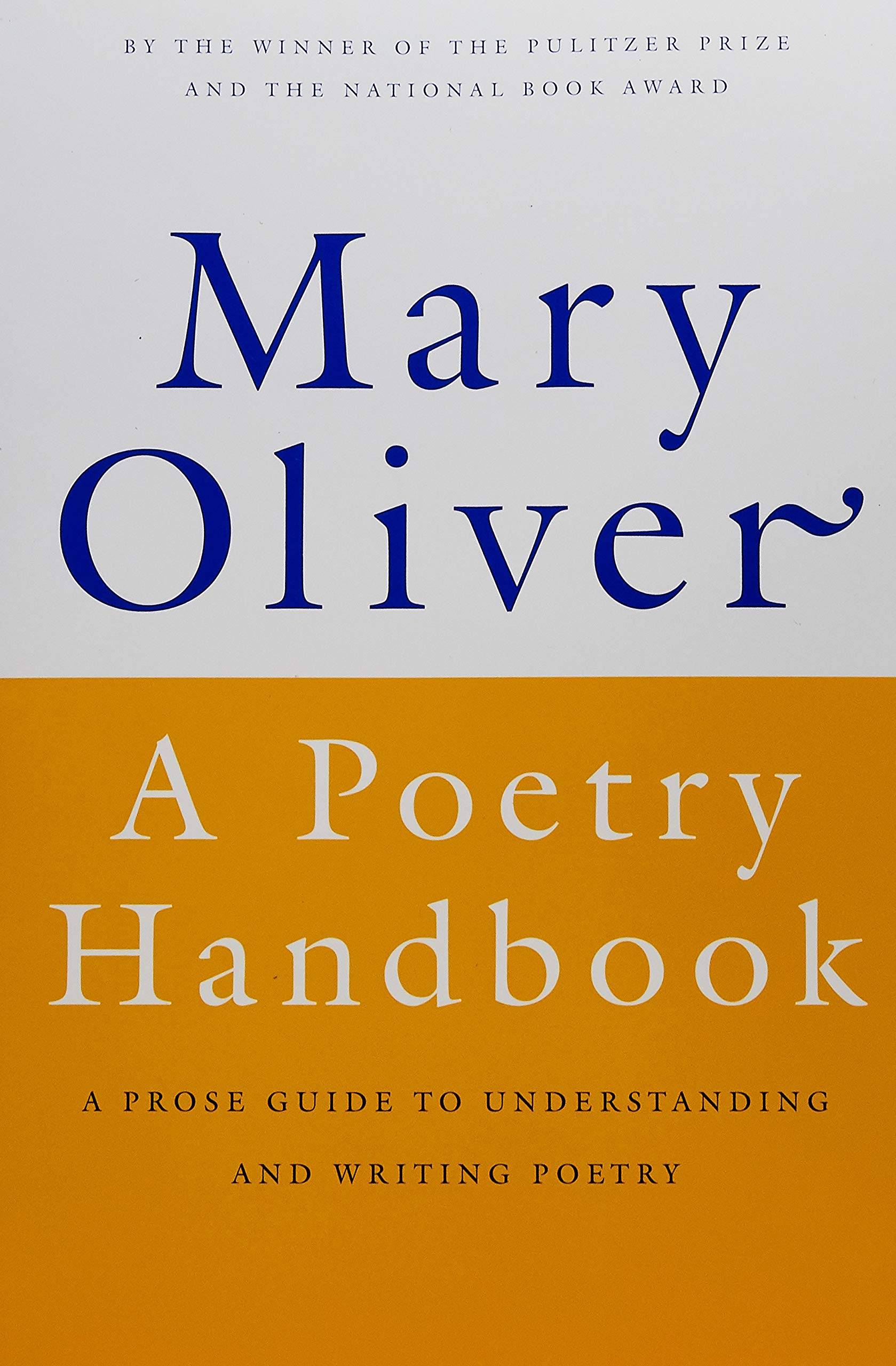
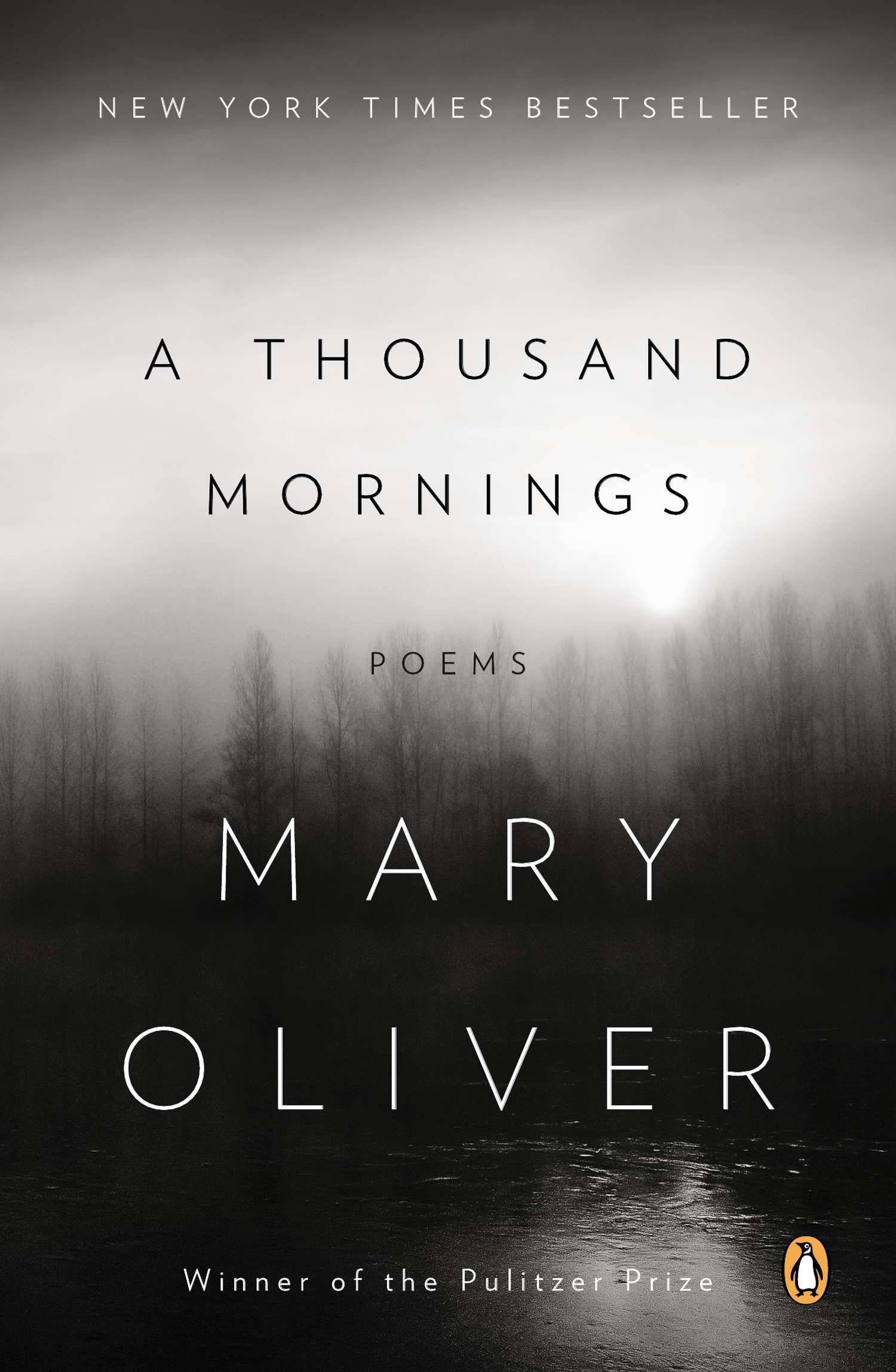
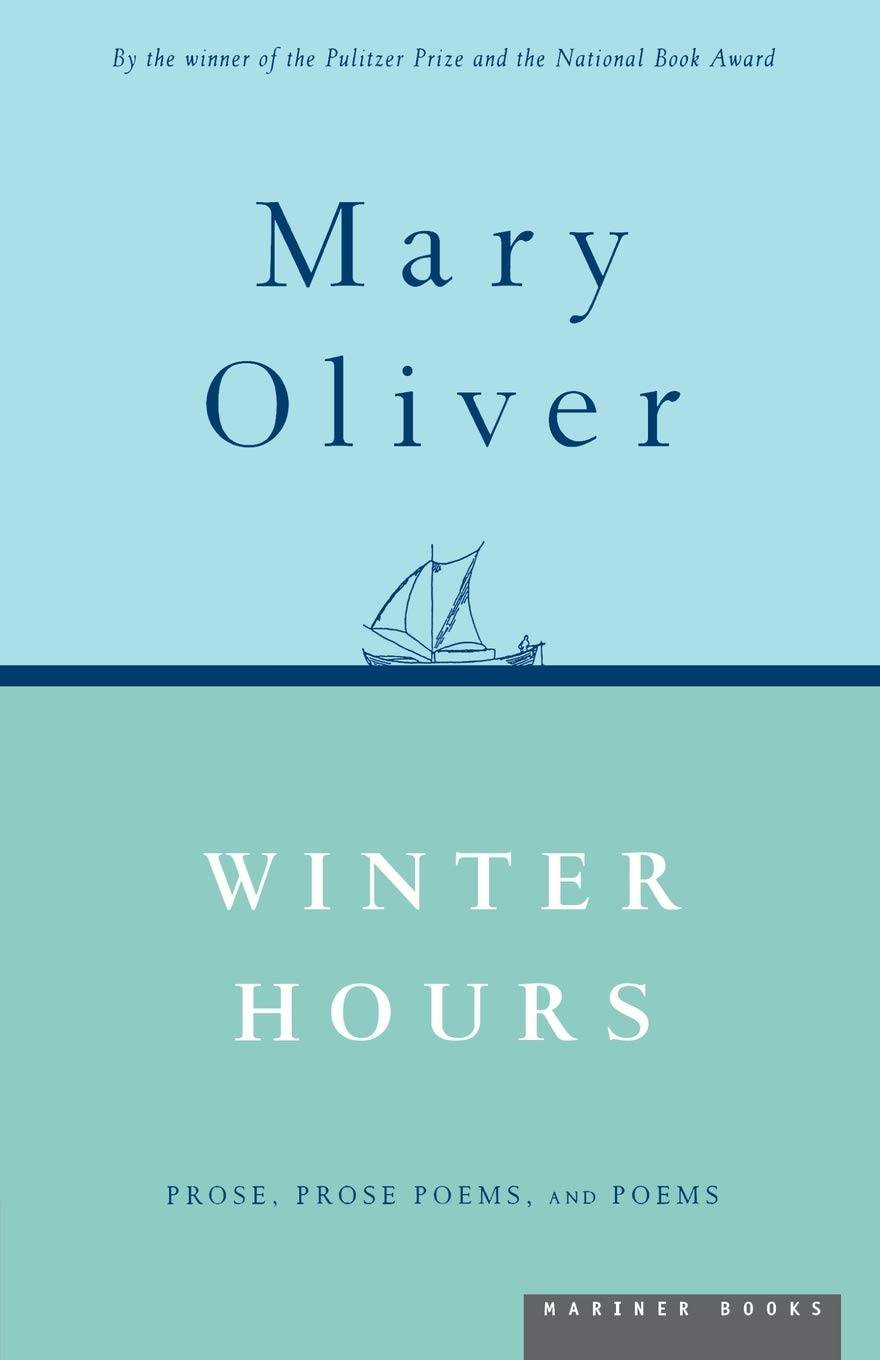
Why you need Mary Oliver’s poetry in your life right now


Mary Oliver


Why you need Mary Oliver’s poetry in your life right now

Rosalind Moran

9 February 2021


Your solo walks will never be the same after reading some nature-inspired poems by Mary Oliver

The solitary walk has become emblematic of lockdown life. Each day, millions slip their keys into their pockets and go their individual ways, looping through hollowed-out town centres and predictable streets and parks. Some wear headphones and listen to music or speak with invisible interlocutors. Others walk in silence, heads thrown back, finding relief in being temporarily alone with their thoughts.

Like many of us, I have found these past few months isolating—and although I enjoy my walks, I find I miss having the purposeful stride of a person with a destination. The straight lines of direct routes have been replaced by meandering circles. For this reason, among others, it has been a particular joy to rediscover the works of one of my favourite writers: the poet Mary Oliver.

Long before lockdowns turned solitary strolls into a mainstream hobby, Mary Oliver was a champion of the nature walk. Born and raised in Ohio, she grew up finding comfort in her own company, often slipping away from her difficult home into the shelter of nearby woods. As an adult, she spent most of her life in a small town on the Massachusetts coast, where she lived with her long-term partner, Molly Malone Cook. Oliver wrote poems from a young age; over the course of her life, she became one of America’s greatest and best-loved nature poets.

While over two years have passed since Oliver’s death, her work has, in some ways, never felt more current. Oliver led a deliberately quiet life. She saw beauty in detail and embraced the ritualistic nature of her wanderings, which took her to the same places again and again. Yet judging by the sense of wonder expressed in her poems, she never grew tired of the world around her, however familiar.

This lens through which Oliver understood her environment—and all those living within it— is part of what makes her work so comforting as well as inspiring, especially now. For Oliver, familiarity was no barrier to joy or discovery. Indeed, in many of her poems she addresses her readers directly, exhorting them to look, listen, or imagine. In “Look Again”, for instance, she celebrates the simple toad, “sweet and alive in the sun”: she highlights its gold-rimmed eyes, its warts like “little streams of jewellery”, and even remarks on its nimble digits, commenting “had anyone/ a piano small enough I think the toad could learn/ to play something.” Her poem “How Everything Adores Being Alive”, meanwhile, opens with a question of perspective: “What if you were a beetle?” she asks, “[…] and the whole world in front of you?” 

In this manner, Oliver invites readers to consider more closely and creatively what we perceive as normal or mundane, and to take pleasure even in transitory, fragile moments. Her poetry isn’t mawkish, either—a pragmatic awareness of predator and prey underpins Oliver’s writing, as evidenced in pieces like “White Owl Flies Into and Out of the Field”. “Maybe death isn’t darkness, after all,” muses Oliver as the white owl strikes, “but so much light wrapping itself around us —”

For all Oliver’s poetry frequently focuses on animals and nature, it is arguably the emotional wisdom and empathy present in her writing that has rendered it so loved. Poems like “Sleeping in the Forest” and “Wild Geese”, for example, combine Oliver’s signature reverence for nature with epiphanies about the individual dissolving into the wider world and thereby finding their place within it. “Wild Geese” in particular speaks to feelings of isolation with its famous lines “Whoever you are, no matter how lonely, the world offers itself to your imagination, calls to you […] announcing your place in the family of things.” One of Oliver’s most personal poems, “Flare”, meanwhile, is a gift to anyone seeking to move forward following conflict or loss.

I have found Oliver’s words particularly resonant during lockdown. Her writing opened a door to the outside world when I was self-isolating after a housemate tested positive for the coronavirus; her observations accompany me as I wander through subdued, frosty parks, encouraging me to admire the vivacity of the world even in the grey of a winter lockdown. Her poems are also bite-sized and accessible, making them perfect reading for shortened attention spans. 

Oliver’s writing is also inspiring for its commemoration of her almost 50-year relationship with her partner. Oliver and Cook were devoted to one another; however, as Oliver writes fondly in her poetry and prose collection Long Life, the pair “plagued each other with our differences.” Nevertheless, for all their divergent interests, Oliver ultimately describes their differences as a tonic. “The touch of our separate excitements is another of the gifts of our life together,” she concludes. With highlights including poems like “The Whistler”, which depicts the thrill of discovering new facets of a person even after living with them for decades, Oliver’s writing takes a compassionate view of interpersonal relationships—making for gentle, empathetic lockdown reading. 

Oliver once wrote “I don’t know exactly what a prayer is”—but that she did know was to pay attention. Indeed, she spent a lifetime cultivating a practice of perceiving the sacred in the ordinary, whether this involved carrying a snake into the garden or cupping a fieldmouse in the purse of her hands. Her writing thus evokes the senses and is perhaps most remarkable for its capacity to convey ecstasy and joy. 

“I walk in the world to love it,” she explains in Long Life. She adds to the reader, “You too can be carved anew by the details of your devotions.” 

In a time when the world often feels bleak or muted, hers is a voice I choose to listen to. 

READERS DIGEST

Saturday, October 2, 2021

I Don't Want to Live a Small Life by Mary Oliver


I DON'T WANT TO LIVE A SMALL LIFE
by Mary Oliver

I don’t want to live a small life. Open your eyes,
open your hands. I have just come
from the berry fields, the sun

kissing me with its golden mouth all the way
(open your hands) and the wind-winged clouds
following along thinking perhaps I might

feed them, but no I carry these heart-shapes
only to you. Look how many small
but so sweet and maybe the last gift

I will bring to anyone in this
world of hope and risk, so do
Look at me. Open your life, open your hands.


(Red Bird: Poems, Beacon Press, 2008)