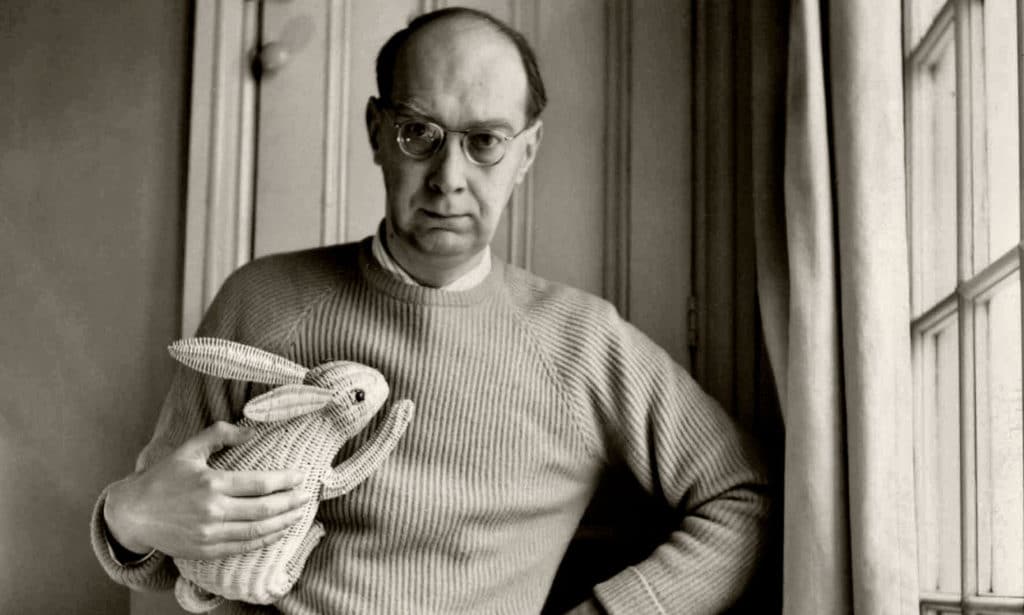
XXVI
by Philip Larkin
Philip Larkin / XXVI
This is the first thing
I have understood:
Time is the echo of an axe
Within a wood.


This is the first thing
I have understood:
Time is the echo of an axe
Within a wood.
 |
| Philip Larkin |
Hull University in midwinter provided a perfect backdrop for a centenary lecture series on its most famous libraria
Rachel Cooke
Saturday 10 December 2022
I’m writing this column in Hull, where yesterday I spoke at Bad Habits of Expectancy, a conference at the university to mark the centenary year of Philip Larkin’s birth. It is all very exciting and strange. I have a student room, and this morning I ate my breakfast – properly buttered toast, for I am properly in the north – alongside a handful of bleary-eyed undergraduates in a place called the Pantry. Scarf trailing, I walk the campus, rather bleak in winter, and remember what it was like to be young. Where did all the years go? Larkin, of course, is the perfect soundtrack for this kind of melancholy.
I talked about Larkin and cancel culture: looking back, he was a canary in the coal mine, a sign of things to come. Others have spoken on Larkin and Auden, Larkin and national service (which he did not do), and Larkin and childhood (which famously bored him); Prof Esther Johnson of Sheffield Hallam University and her colleague Vicky Foster delivered a presentation about Hull’s once magnificent 1960s Co-op, a building that, even if it didn’t inspire it, brings to mind Here, Larkin’s gorgeous poem about the city (Cheap suits, red kitchen-ware, sharp shoes, iced lollies / Electric mixers, toasters, washers, driers).
Last night, we ate at Larkin’s Bar, marked by a metal toad, but whose menu consists of pasta and burgers rather than pilchards and tinned mandarins.
The conference will end with a tour of Larkin’s office within the Brynmor Jones library. Apparently, I should prepare myself for the sight of a pair of the poet’s spectacles on his (surprisingly large) desk.

I’d expected the office tour to be the climax of this – what to call it? – academic extravaganza of the lyrical and the quotidian. But for me, the highlight was drinks in the Hull University Art Gallery before dinner. What a place. Given the moribund state of our glorious nation, it’s painfully easy to forget about all the good things that are still available to us, and here is one. To think that I hadn’t even heard of it until now.
In 1963, with the help of an annual endowment of just £300, the university began building a collection, from scratch, of British art made between 1890 and 1940. To do such a thing must have seemed mad at the time, even if its curator was only to go after “the unfashionable and the inexpensive”. But the daring paid off. The collection is now of national importance and comprises more than 400 works by artists such as Ben Nicholson, Nina Hamnett, Walter Sickert, Stanley Spencer and Keith Vaughan. Entry is free and open to all. My highlight: Madrid Crowd (1931), a documentary painting from a news photograph by Sylvia Gosse, the daughter of the great Edmund Gosse and famously a pupil of Sickert’s.

In London, two of my most beloved shops are closing: I Camisa & Son, the legendary Italian deli in Soho, and Fenwick on Bond Street. Camisa I treasure for fresh pasta and fantastic sandwiches, while Fenwick has always screamed glamour to me, albeit of a fairly sensible kind. My Sunderland granny, the most well-turned out woman I ever knew, used to talk grandly of going “through to Newcastle” where Fenwick began its life and where she liked to shop. When I moved to London, aged 22, I quite naturally gravitated towards it even if I didn’t have any money to spend. I will miss stroking the camel coats and trying on the fanciful hats; the squirts of scent that kissed me a fond goodbye on my way out.
Rachel Cooke is an Observer columnist


I Wanna Be Yours, a love poem that rhymes Ford Cortina with vacuum cleaner, has been a school text and a wedding staple. But now, thanks to TikTok and Arctic Monkeys, it has gone spectacularly global. So who was it written for?
Forget TS Eliot’s The Waste Land, Philip Larkin’s High Windows and Sylvia Plath’s Lady Lazarus. While those works may have more cultural heft, for sheer popularity no 20th-century British poem can touch John Cooper Clarke’s I Wanna Be Yours. In this love poem, to prove his devotion, an abject Clarke offers to metamorphose into everyday items: “I wanna be your vacuum cleaner, breathing in your dust / I wanna be your Ford Cortina, I will never rust.” The work became an irreverent favourite at weddings soon after being written in 1982, and its addition to the GCSE English syllabus in the 1990s brought it to a younger generation. One of those studying it was Alex Turner of Arctic Monkeys, who later said: “It made my ears prick up in the classroom, because it was nothing like anything I’d heard.” Turner eventually adapted it into the ballad that closes out the band’s most successful album, 2013’s AM.
Thanks in part to another new audience, teens finding it on TikTok, the band’s version of I Wanna Be Yours is now wildly, improbably popular: it will clock up its billionth stream on Spotify this week, having spent months on the platform’s Top 50 songs chart, not in the UK but globally. This slow ballad, with Clarke’s poetry referencing setting lotion and electricity meters, sticks out a mile next to K-pop and Puerto Rican reggaeton. Spotify says the song is most popular in the US, Indonesia, Mexico and Brazil; the band’s label Domino says the song’s popularity is particularly growing in India, the Philippines and Turkey. If it was previously Britain’s favourite wedding poem, it’s now quantifiably the world’s favourite British poem, full stop.
“Is that a lot?” says 74-year-old Clarke, when I tell him about the billion streams milestone. “An American billion is different to a British billion – and I don’t know what either of them is. But it’s a fuck of a lot of listens.”
I Wanna Be Yours was written as a “sweet counterpoint” to the punkier stuff Clarke had made his name with, some of which even hit the UK Top 40 in the late 70s: surrealist beat poetry, withering character studies, pissed-off social commentary. The poem appeared on his album Zip Style Method, recited over an echo-heavy, neo-doo-wop backing: imagine Roy Orbison if he was from Salford and had lost the will to sing. “That wasn’t my idea, I gotta be honest,” he says of his musical backings. “But I couldn’t think of an argument against it. ‘Who plays spoken word records more than once?’ And I kind of believed that at the time.”
He says I Wanna Be Yours is a “deeply felt romantic Valentine poem” and that he’s a natural romantic “to a sadistic degree”. But he splutters nervously when I ask about the woman it was written for: “There have been so many!” He argues that it wasn’t born out of romantic feelings anyway, but graft. “Inspiration is for amateurs – I’ve got a living to make! It’s an actual nine-to-five job, though obviously it spills over into the evening if you’re on one. You’ve got to put the hours in.”
The vacuum cleaner line opens the poem. “There were all kinds of new usurpers of the Hoover, so the term was already resident in the public imagination. I tapped into that. Then I thought, ‘What else is useful?’” The next line originally featured a Morris Marina. “I had a second-hand one at the time, but I thought, ‘Bit naff.’ It’s not got the clout of Cortina. Funny how some words are better than others.”

Later lines have Clarke offering to become a teddy bear, a coffee pot and an umbrella, and adding: “I wanna be your electric meter / I will not run out / I wanna be the electric heater / You’ll get cold without.” It is about, he says, “elevating yourself to the level of a commodity for the person of your desire. When you’re in love with somebody, you want to be useful to them, indispensable even.”
I Wanna Be Yours is perhaps so loved because it’s the polar opposite of playing hard to get – a feeling heightened by Clarke’s live readings of it, delivered with a relentless drive, like a man who’s rushed up to you with a fistful of petrol station daffodils. This is why it works at weddings, too: it’s the one place, particularly in eye-rolling, cynical Britain, where you can get away with saying this stuff – as wedding celebrant Claire Lawrence explains.
“If you Google ‘wedding reading inspiration’, I Wanna Be Yours comes up every single time,” says Lawrence, “amid a load of really quite slushy readings. It’s the alternative for people who don’t want to be too Hallmark card.” Older couples tend towards saying stuff about soulmates and eternity, but Lawrence says that with younger people, “the everyday is a theme that comes up a lot, the mundanity. Sitting with somebody having a cup of tea, doing the big shop.” I Wanna Be Yours, a love poem pledging eternal devotion that’s full of mundane detail, ticks both boxes. But, she warns, “it’s a hard one to read well. You’ve got John Cooper Clarke or Arctic Monkeys in the back of your head. You can’t just get your Uncle Philip to have a go at it – you need someone with chutzpah.”
Wedding planner Linzi Barford says the poem fits into broader trends, too: the Monkeys link makes it popular amid a current craze for music-festival-style weddings, while couples facing a cost of living crisis are rejecting tradition. “There are barns where every weekend you can pay £35,000 and get the same wedding as everyone else, with the same readings. People don’t want to do that.” Or if you do have a traditional wedding, complete with meringue-y dress, I Wanna Be Yours can be a neat bit of iconoclasm. “In the wedding industry,” says Barford, “there’s a huge thing about ‘your wedding, your way’. But we all know what it’s like with parents! So a reading is a way to stamp your own personality.”
It is to weddings what Always Look on the Bright Side of Life is to humanist funerals
Clarke says that when he stays in a hotel where there’s a wedding going on, quite often the couple will rush over and say they’ve just read his poem out. Occasionally he delivers it at weddings himself, for friends: “I get a dinner out of it. It is to weddings what Always Look on the Bright Side of Life is to humanist funerals.”
You probably wouldn’t play Arctic Monkeys’ version for your first dance though – it’s more funereal than marital. Turner’s steady delivery is very different to Clarke’s and he tweaks and adds lyrics – there’s a killer bit of changed emphasis when he sings “let me be the portable heater”, suggesting a love rival that isn’t there in the poem.
Clarke is utterly in love with the band’s version. On a prosaic level, it has made him “a lot of PRS”, referring to royalties, and has substantially boosted his profile: he’s touring sizeable UK venues this month. “I was never actually on the sausage” – rhyming slang for dole – “as this is what I do, this is my job, and sometimes I’m doing better business than others. But thanks to a great extent to the lads sticking me into the pop world again, everything has gone from strength to strength.”
More profoundly, Clarke sees Turner (who couldn’t contribute to this article while on tour in Asia) as a kindred wordsmith, and goes off on some fascinating songwriting analysis. On I Wanna Be Yours, the previously smooth Turner deliberately stumbles as he sings the wordy line “at least as deep as the Pacific Ocean”. Clarke says it’s the “humanising” moment of the song, one that shows you “nobody’s perfect” – and Turner does it through the rhythm and musicality of the words themselves, rather than with his singing voice. “When you use this MO, of putting too many words per line, you’re actually depriving yourself of the opportunity to inject soulfulness in the vocal delivery – your main concern is getting the language out there, making it fit,” Clarke says. “So there’s no extraneous baring of the soul.”
He compares Turner to Chuck Berry in this regard, citing a line from Berry’s Brown Eyed Handsome Man. “‘Way back into history, 3,000 years in fact, ever since the world began’ – he doesn’t need to put ‘in fact’ in there. But Chuck couldn’t bear to leave that gap. It makes it just that bit more intimate and conversational. That ‘in fact’ should fuck it up, but it doesn’t.” Another example from the same song: “‘Milo Venus was a beautiful girl, she had the world in the palm of her hand / lost both her arms in a wrestling match to meet a brown eyed handsome man.’ You couldn’t get a Rizla in there. Every millisecond is spoken for. Fantastic!”
When Arctic Monkeys played Earl’s Court for the release of AM, they invited Clarke along, and teed up their encore with I Wanna Be Yours. “Balloons falling from the ceiling: the big finish,” Clarke wistfully remembers. “And I was reading an interview in one of the papers with” – he says this next name with the reverence of a monk addressing a newly canonised saint – “Abbey Clancy, who was very enthusiastic about Arctic Monkeys’ new album, mentioning I Wanna Be Yours as her favourite track. It was a revelation that she was a fan of my work, without necessarily knowing about it. I was thrilled.”
The biggest thrill, though, is that I Wanna Be Yours has helped to lift up poetry itself. “Any work of art,” says Clarke, “that has any lasting, transcendent value – a painting that haunts you through life – you say it’s ‘poetic’. Unlike all the other arts, poetry is the one everyone gives a go. I believe everyone’s written a poem at some point. It’s the easiest, most accessible – a pen and a piece of paper and off you go. You don’t even have to be literate – you could record something. But it’s perceived as a minority of a minority who are interested in poetry. I don’t know why it’s got that reputation. Songs aren’t that far from poetry – as Alex has pointed out.”
 |
| Amy Key |
Amy Key was born in Dover and grew up in Kent and the North East. She now lives and works in London. She co-edits the online journal Poems in Which. Her pamphlet Instead of Stars was published by Tall Lighthouse in 2009, and her first collection, Luxe, was recently published by Salt. Amy is currently editing a new anthology of poems on female friendship Best Friends Forever, due from the Emma Press in November.
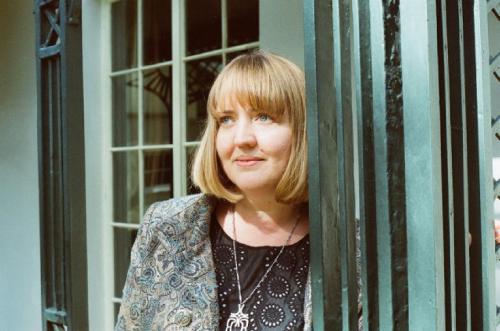 |
| Amy Key Photo by Travis Elborough |
“Luxe (Salt Publishing, 2013) is a magnificent spree in a bric-a-brac shop. A haul of pre-loved and glittering objets – pralines in a crystal bowl, a handful of tame ladybirds, a portrait in vinyl and cola-cubes – are artfully displayed on the poems’ shelves to represent the conflicts and connections of a fabulous circle of friends and lovers, those real, remembered and imagined.”
*
“”Layer your pulse/ onto my pulse,” she writes in ‘Brand New Lover’. “Dress me.” Only the reader knows if this is an order, an instruction or the sweetest sort of invitation. Read a copy of Luxe, keep it next to your fainting couch.”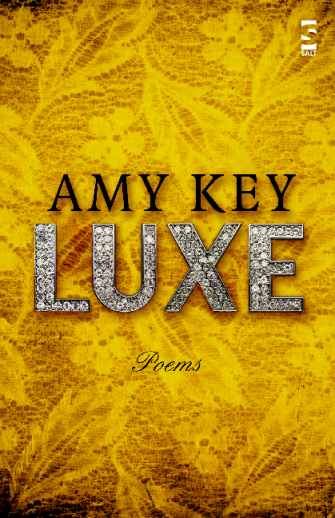
– Julia Bird
“This delicious selection is a chocolate-box assortment of the work of one of my favourite poets writing today. Her delicate, dextrous writing belies the raw truths she tells. There are many centres to her confections that only reveal themselves when you take a bite. In her words “Poem with peep toes … Poem to conceal some feelings in … Poem to avalanche in your heart”. I love Amy Key.”
– Lauren Laverne
“If we are living in the material world, I want Amy Key to be my material girl. She makes her pleats and flounces move; she crowds the surface with colour and texture right where it needs to be to draw the reader in like a bee to the velvet bell of the foxglove; or like the silverscreen beauty who eats bonbons from a satin box, she wills our gaze to take it all in and to crave more. These poems are worn on the body, and like all great ensembles, they show just enough; they are hot and memorable.”
– D.A. Powell
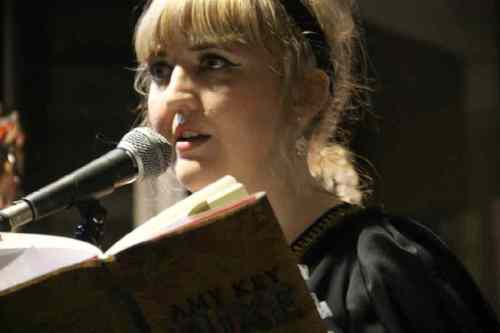
© Image by Martine Charalambou
You Ought To Be In Pictures
In my depression the energy goes everywhere. It’s diffused. And where it’s intense it’s in very short bursts. Enough to scrub the bathroom or change the sheets. Enough to write a poem. My book is as though I pressed play and record each time I had a burst.
Last night I posted lines from my iPhone notes disguised as Twitter and Facebook status updates to see if any of them stuck.
I read someone else’s poetry for the first time and worry that my book will be perceived as being derivative of their book.
Someone asks “What is your poetry about?” I am embarrassed and say “me” but I mean “being a woman”, I think. But then I really mean “my experience of being a woman”. Later I wonder if what I really mean is “what I want my experience of being a woman to be, distress included”. I’d asked the poet Kate Kilalea to read my book and respond to it. She said:
“Aside from all their purely poetic elements, what strikes me most about Amy’s poems is the kind of idea of woman-ness which they work with. It feels like what is happening is a kind of valorisation – as oppose to eroticisation – of feminine vulnerability, which is different from what I’ve seen before.”
This was an important moment for me. An embracing of the woman-ness. After all I had the comment “I can see why girls like your poems” ringing in my ears.
My poetry is endless recalibration of experience.
My poetry is a way of mind-mapping my insecurities.
It’s all mood board.
I’m struck by what Steve Roggenbuck says in his essay ‘toward a more flowing culture’:
“i want to be your poet … i want to inspire you and talk to you. in many cases, I really want to be your friend.”
This idea of friendship compels me.
In my poems am I trying to communicate more effectively with people in my life or who might be in it. To say “Look! I know I come across ‘this’ way, but here is something else I want to share”. This being able to talk without my physical persona intruding is something I need. There are so many ways into the truth of a person.
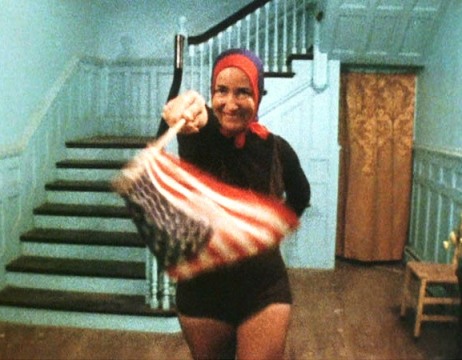
In the documentary Grey Gardens there is a scene where Little Edie performs to camera. She sings and dances to ‘You Ought To Be In Pictures’. I find this scene very touching. Little Edie is a star, but she’s no longer the ingénue, about to be discovered. In singing it she’s saying to the crew “Look at me. I could have been someone” but also “Tell me I still could be someone”. It’s the “Tell me I could still be someone” that affects me. In my poem ‘On Typing Paper Stolen From Her Employers She Proceeds To Evolve A Campaign’ I get at this idea:
Hopes should recede with age but this isn’t
a right seeming present!
[…]
My imagined future is a collapsed soufflé.
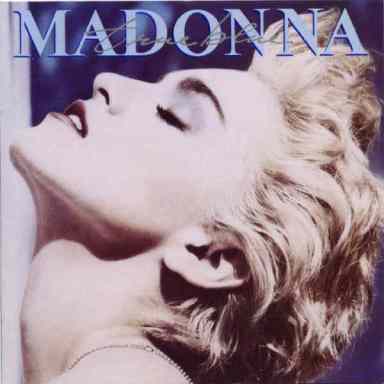
Never far away from dancing to ‘True Blue’ in the kitchen a grown-up’s face on. Never far from singing into the cassette. Singing into the dark. Hopeful someone will say what a nice voice you have. Never far away from maybe making it.
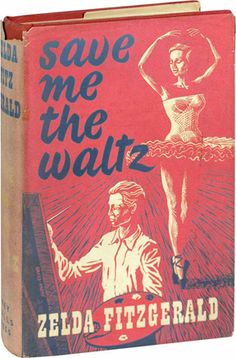
Just as Alabama, the main character in Zelda Fitzgerald’s Save Me The Waltz, in her hopeless pursuit of ‘making it’ as a ballet dancer feels that:
“[in] reaching her goal…in proving herself, she would achieve that peace which she imagined went only in surety of one’s self – that she would be able, through the medium of the dance, to command her emotions, to summon love or pity or happiness at will, having provided a channel through which they might flow”
I am my own delusional heroine. But I have to hope.
I am also forcing people to look at me. In my poem ‘Emotional State Seen Through A Pale-Haired Fringe’ I am, chronologically speaking, at the beginning of a deep depression. Unable to speak about it to anyone, just quietly falling apart, I write the poem where even:
[…] the at-boil kettle maddens the bully
of your memory, and no one there to see it blow.
Is it that I’m terrified of no one seeing me live? Is that the role poetry is playing?
I’ve often wondered if I write poetry because I’m scared of dying. I fear I’ve been negligent of my own fortune.
Inside I fritter soft as cinders.
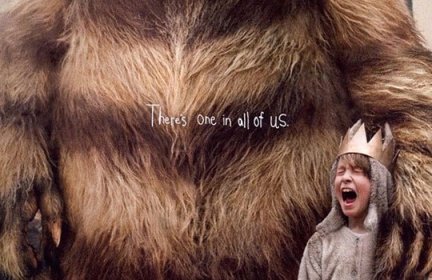
One of the recurring images in my poetry is of the lost child. The much loved children’s book Where The Wild Things Are was made into a film a few years ago and I became obsessed with it. And heartbroken by it, by the isolation of the boy and his imagination. I began to write a series of poems, inspired by the film and by the soundtrack to the film, written and performed by Karen O from the Yeah Yeah Yeahs. The poems turned out as childhood memoir and in implicating my siblings I found I couldn’t finish them. One has made the book – Igloo – and in it I try to express the self-imposed, necessary isolation of the child:
[…] Instead of talk,
we will have stronger thoughts.
This is both a resistance to talking – there are some things I cannot speak to the adults about but it is also a power I can have. The idea of having secrets that I can snap into being, like activating a glow stick appeals to me. The secret as super power and malevolent force.
I should really talk about love.
When I was in John Stammers’ group he asked me ‘what I wanted to be’. I told him I wanted to be ‘a great love poet’.
What I really meant was ‘I want to be loved’.
This was some years ago now. Truth is my experiences in and out of love haven’t been at all happy, but it seems to be all I can write about. Perhaps that’s the recalibration I mentioned earlier. A need to ‘right’ my love experience in poetry. In my poem ‘Your Year in Review’ I address myself:
[…] Your heart went rouge. Desire
kept in a gold compact, fell loose of its casing. Powder
went everywhere.
The sense that I make a mess of stuff can’t be escaped. But I lavish my attention on love less experienced, more felt. In absence of the grand, all-consuming Love Affair (in the presence of the paltry, ill-conceived ones) I act them out in poems. My nights pour into the absence of my One True Love. But I know:
Even this crochet blanket won’t
address the lack of requited laundry.
Really my ‘it would be better to be hurt than not have any love at all’ from my teenage diary is simply reworn as:
[…] rather a cupboard of cut-off ponytails than this! I want a life
that warrants excessive exclamation!
I suspect all the poems are just an attempt to neutralise my self-image.
PEONY MOON

