AM Cousins’s poetry has appeared in literary publications including The Stinging Fly, The SHOp and Poetry Ireland Review. Her work was highly commended in the Patrick Kavanagh Poetry Competition 2015, 2016 and 2019, and her poem Not my Michael Furey won the FISH poetry prize 2019. Anne is a regular contributor to RTÉ Radio 1’s Sunday Miscellany. She lives in Wexford town and her first collection of poetry is due to be published by Chaffinch Press in 2021.
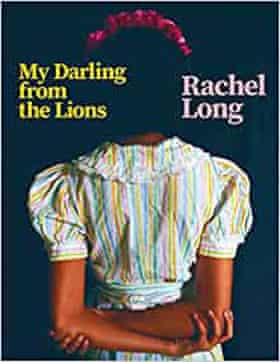
Rachel Long makes the unfamiliar feel perfectly natural in My Darling from the Lions. Photograph: Roberto Ricciuti
The best recent poetry – review roundup
My Darling from the Lions by Rachel Long; Moving House by Theophilus Kwek; Road Trip by Marvin Thompson;After Fame by Sam Riviere
Rishi Dastidar Sat 8 Aug 2020 12.00 BST
Rachel Long’s My Darling from the Lions (Picador, £10.99), nominated for the Forward first collection prize, is alive with a breathless energy. The founder of the Octavia Poetry Collective for Womxn of Colour, Long writes with keen wit and delight in rendering the world new; an estate is described as “built like Tetris”, afros become orbs, dolls become a means by which to write about identity with a refreshing verve. There is pain woven alongside the giddy sensuality and sharp precision too (“A diary / isn’t a diary till / you won’t show anyone”). She is especially good at making the unfamiliar feel perfectly right and natural: “And even though I was green / I was The Most Beautiful Woman in the World.” A book of “serious play”.
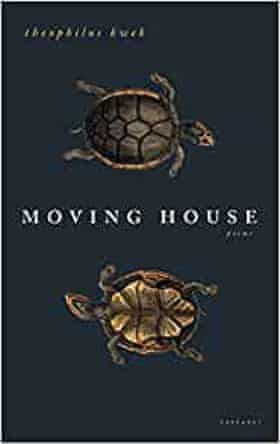
Moving House (Carcanet, £10.99), Theophilus Kwek’s first collection, is full of dislocations and is concerned with the difficulties of traversing through and between worlds: the living and the dead, the past and present, the UK and Singapore. His poems are keenly aware that the scariest place to exist is on the edges of a space, but the stately, serene pacing should not blind you to the keen political intelligence at work. Kwek calmly and consistently draws attention to the overlooked – domestic workers, soldiers killed in training, drowned refugees – in ways that ask, gently, how much you can and must care: “so the storms, / abundant, must send their ships elsewhere // to drop anchor beyond the locked heart / of the bay”.
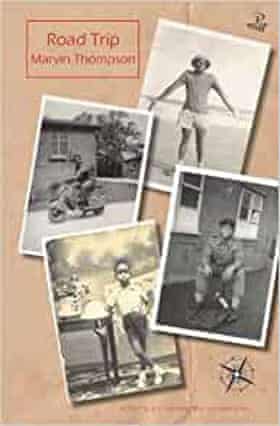
Another debut, Marvin Thompson’s Road Trip (Peepal Tree, £9.99), is an invigorating journey through complexities of black British family life. A ghost, perhaps his father, who served in the British army, returns to the poet, “‘re-born,’ // he told me, / ‘over and over’”, from the Peterloo massacre to Aden to Helmand. This imperial legacy is further explored as Thompson reports on bringing up his children in the Welsh countryside, worrying what happens if they “choose / to identify // as White / in a Britain // that will call them Black?” In “An Interview With Comedy Genius Olivier Welsh” a less than successful comedian wonders why his career hasn’t gone quite to plan. But what appears to be whimsy is actually a sharp weapon: “Maybe then, the truth’s just been revealed: / the Black part of me’s not funny at all.”
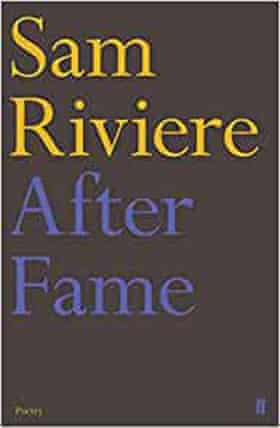
Following 81 Austerities and Kim Kardashian’s Marriage, Sam Riviere’s After Fame (Faber, £10.99) is the latest in his “process-derived” collections. This time his source material is the Roman poet and epigrammatist Martial, who first coined the term plagiarism. After Fame is a version of Martial’s Book I, sitting somewhere between machine translation, re-creation and remix. As Riviere (or is it?) puts it: “This volume aims to discover whether you can game a poem’s legislation from within.” However they have been created, these poems have a savage humour and satiric intent. Their effect is of a deadpan ghost come back to stand at the edge of a party, providing gobbets of acidic commentary on contemporary mores, while reminding us that little changes, especially when it comes to writers, and their vanity: “If you sign the petition / then I’ll remove my name / (the only reason you added your signature)”.
Edgar Allan Poe (1809-49) was born in Boston, the child of actors who died while he was very young. He was adopted by a Virginian gentleman, Mr. John Allan, who put him to school in England for five years, then in Richmond, and finally sent him to the University of Virginia. He remained there only a short time, and after finding that he disliked business, and publishing a volume of poems, he enlisted in the army. Mr. Allan had him discharged and placed him in West Point, from which he got himself dismissed. After that he supported himself in a hand-to-mouth fashion by writing for and editing newspapers and periodicals, living successively in Baltimore, Richmond, Philadelphia, and New York. The publication of his remarkable poem, "The Raven," in 1845, brought him fame, and for a short time he was a literary lion. But in 1847 his wife died, and his two remaining years were a gradual descent.
Poe's work falls into three divisions: poems, tales, and criticism. The poems are chiefly remarkable for the amazing technical skill with which haunting rhythms and studied successions of vowel and consonant sounds are made to suggest atmospheres and emotional moods, with a minimum of thought. In the writing of fiction, Poe is the great master of the weird tale, no writer having surpassed him in the power of shaking the reader's nerves with suggestions of the supernatural and the horrible. In these stories, as in the poems, he shows an extraordinary sense of form, and his effects are produced not merely by the violently sensational, but by carefully calculated attacks upon the reader's imaginative sensibilities.
In criticism Poe was, if not a scholarly, at least a stimulating and suggestive, writer, with a fine ear and, within his range, keen insight. His essay on "The Poetic Principle" is his poetic confession of faith. He makes clear and defends his conception of poetry; a conception which excludes many great kinds of verse, but which, illuminated as it is by abundant examples of his favorite poems, throws light in turn upon some of the fundamental elements of poetry.
It is worth noting that no American author seems to have enjoyed so great a European vogue as Poe.
THE POETIC PRINCIPLE
In speaking of the Poetic Principle, I have no design to be either thorough or profound. While discussing, very much at random, the essentiality of what we call Poetry, my principal purpose will be to cite for consideration some few of those minor English or American poems which best suit my own taste, or which upon my own fancy have left the most definite impression. By "minor poems" I mean, of course, poems of little length. And here in the beginning permit me to say a few words in regard to a somewhat peculiar principle, which, whether rightfully or wrongfully, has always had its influence in my own critical estimate of the poem. I hold that a long poem does not exist. I maintain that the phrase, "a long poem," is simply a flat contradiction in terms.
Clive James’s joyous farewell, David Bowie speaks to Simon Armitage – and sounds of the city from Caleb Femi
Rishi Dastidar Sat 28 Nov 2020 09.00 GMT
W
hile the pandemic might have stopped poets gathering physically, poetry itself is in good health. This year books of urgency and contemplation have jostled for attention, and striking new voices have emerged. Prime among these has been Will Harris, whoseRENDANG(Granta) won the Forward prize for first collection. Harris writes with a piercing clarity and intelligence, his voice warm as it crisply ruminates on big issues such as our shared cultures and identities, as well as more intimate moments.
Rachel Long’s My Darling from the Lions (Picador) is another debut that has illuminated the year, its wit and sensuality alive with a winning energy. With a similar verve, Seán Hewitt’s Tongues of Fire(Cape) braids together simple and economical descriptions of the natural world with scenes of tenderness, intimacy and ecstasy, graceful in its balance. The most vital first collection of 2020 is Poor(Penguin) by Caleb Femi. Combining startlingly inventive language with his own photography, the book is a pioneering tribute to the lives of the young black men he grew up with in south London. His devotion to celebrating a sense of now and what happens when this meets with death gives Poor an unexpected spiritual dimension; it makes you think of George Herbert in its intensity and importance.
Also intense is Caroline Bird’s Forward prize-winningThe Air Year(Carcanet). Her sixth collection is a centrifuge of careening energy, where riding love’s rollercoaster is also an opportunity for self-knowledge and acceptance, “blobs of miscellaneous optimism”. It is one of the most generous and open-hearted books of the year. Another title that gives shape to the ineffable is JR Carpenter’sThis Is a Picture of Wind(Longbarrow). It’s a digitally tinged pillow book full of staccato language inspired by John Ruskin’s “sky-bottling days”, Francis Beaufort’s wind scale and Luke Howard’s observations of clouds: “Matter invested with a luminous quality … The breath became visible.”
Natalie Diaz’s meditations on stolen land, stolen water and erased bodies in Postcolonial Love Poem (Faber) are equally luminous: “I am your Native, / and this is my American labyrinth.” Her language is rich and epigrammatic, its physicality enhanced by its unruffled cadences. Mining in similar territory, How to Wash a Heart (Pavilion) by Bhanu Kapil sharply explores what it is like to be permanently on edge when you feel like you are permanently a guest as an immigrant.
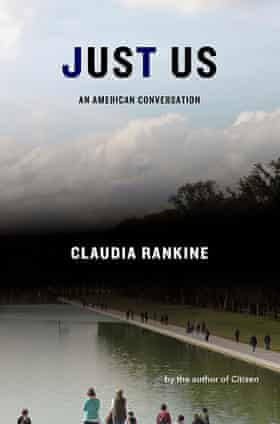
The lyric essay has proved vital in examining subjects often difficult or ignored. Notable in this regard is Just Us (Allen Lane) by Claudia Rankine, the follow-up to the award-winning Citizen. Subtitled “An American Conversation”, it’s an interrogation of how it might be possible for people to accommodate and make sense of our differences, in race, class and status. Rankine is as hard and unflinching on herself as she is on her interlocutors. Also using a mix of memoir, image and poetry is artist Abi Palmer in her debut, Sanatorium (Penned in the Margins). An account of her stay at a rehabilitation spa in Budapest, she brings the actuality of her physical pain vividly to life, communicating its texture viscerally and without pity.
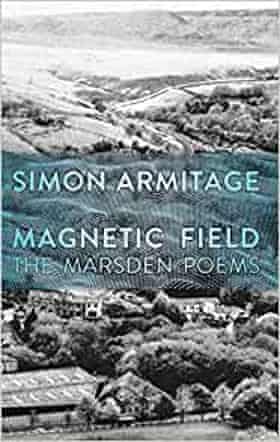
“‘Always had you pegged as a bit of a stop-at-home, curled up in your Yorkshire foxhole’,” says David Bowie from the dead to Simon Armitage in Magnetic Field: The Marsden Poems (Faber), a wide-ranging personal poetic topography drawn from throughout his career. It is a Rough Guide to the poet laureate and the village that formed and continues to inspire him. And if you are missing traversing a city in search of adventure, find solace in Hope Mirrlees’s Paris: A Poem (Faber). A neglected feminist modernist poem, and forerunner to TS Eliot’s The Waste Land, this is a journey of typographical and linguistic exuberance through the mourning cityscape of the French capital one day in 1919.
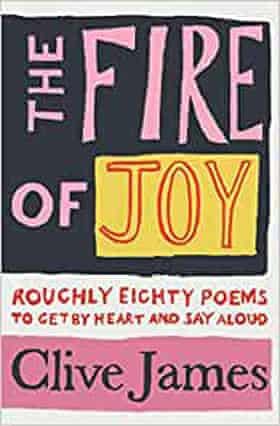
Finally, the last books from two of the most important poets writing in English came out this year. The Historians (Carcanet) by Eavan Boland, who died in April, zooms in with characteristic musicality and intelligence on what the stories that are often overlooked – those of women. Meanwhile, in The Fire of Joy (Picador), Clive James restated his belief that noise is the thing when it comes to poems, and the “fire of joy” it produces in those hearing and declaiming it. From Thomas Wyatt to Carol Ann Duffy, this valedictory volume features 80 poems he learned and loved, each accompanied by an essay to persuade us of their brilliance. Not that he could ever hide his. “I chose the right profession – poetry – and followed it to the end.”
• Rishi Dastidar’s latest collection, Saffron Jack, is published by Nine Arches.
It didn't behave like anything you had ever imagined. The wind tore at the trees, the rain fell for days slant and hard. The back of the hand to everything. I watched the trees bow and their leaves fall and crawl back into the earth. As though, that was that. This was one hurricane I lived through, the other one was of a different sort, and lasted longer. Then I felt my own leaves giving up and falling. The back of the hand to everything. But listen now to what happened to the actual trees; toward the end of that summer they pushed new leaves from their stubbed limbs. It was the wrong season, yes, but they couldn't stop. They looked like telephone poles and didn't care. And after the leaves came blossoms. For some things there are no wrong seasons. which is what I dream of for me.
Newly discovered poems by George Oppen, published as 21 Poems, nearly doubles the size of Oppen’s early and influential corpus, and happily, the poems themselves are fascinating.
September 1, 2017
In the summer of 2015, I went to Yale University’s Beinecke Rare Book and Manuscript Library with a difficult question. I had been researching the relationship between city life and conceptions of “the lyric” and was working on a chapter about the poet George Oppen’s Discrete Series (1934), a book that remains enigmatic even eighty years after its initial publication. A group of thirty-one short, mostly untitled poems that evoke the experience of modernity but prefer subtlety and syntactic contortion to direct emotional expression, Discrete Series received astonishing support upon release. Ezra Pound contributed a preface that concluded: “I salute a serious craftsman, a sensibility which is not every man’s sensibility and which has not been got out of any other man’s books.” William Carlos Williams wrote a glowing review of it for Poetry magazine, praising Oppen as “a ‘stinking’ intellectual” whose verse rests “on a craftsmanlike economy of means,” and went on to predict that Oppen’s work would push readers to remember that “poems are constructions.”
But their shared awe of Oppen’s craftsmanship was not broadly predictive. Oppen would not publish another book until the 1960s, and would not win the Pulitzer Prize until 1969. The poems in Discrete Series appear rather seamless and gnomic, leaving readers with few clues as to how to read them. For the most part, the poem sequence has been seen as a kind of momentary eruption rather than a slow accumulation of effort—a brief poetic apprenticeship before Oppen turned to political activism and chose not to write any poetry for almost twenty-five years.
As Oppen’s political convictions whisked him around the United States, then to France and Germany in the Second World War (where he was wounded), back to New York, and then to California, he came to the attention of the FBI. The first entry in his heavily-redacted file is dated 1941: “The subject was Kings County election campaign manager for Communist Party in 1936 elections. Voted Communist Party ticket in 1936….Subject not found and therefore not being considered for custodial detention.” Oppen couldn’t be found because he was already in Detroit, working as a pattern-maker in the Machinists Union, and then in Louisiana, where he received basic training.
FBI surveillance increased after he returned from the war until a dramatic confrontation with two agents in early 1950, at their home in Redondo Beach, led Oppen and his wife Mary to flee to Mexico. Whatever correspondence or manuscripts George had maintained from the 1930s were lost in the urgency of their departure, and as a result, there has been little in the way of surviving material to provide us with insight into what he was thinking and reading as he wrote Discrete Series. I visited the Beinecke with the hope that Pound and the poet Louis Zukofsky, both of whom were in correspondence with Oppen, would have discussed his early writings in their extensive exchange.
What I found was something far more exciting than I could have imagined: an early Oppen manuscript. “May have 32pp of poems by George Oppen for you,” Zukofsky had written Pound on March 6, 1930. Scholars have long assumed that the “32pp” to which Zukofsky referred comprised a draft of Discrete Series that had been lost, like the sheaf he sent to Charles Reznikoff in late 1933, now held in the Archive for New Poetry at the University of California, San Diego. But the assemblage Zukofsky sent Pound six weeks after he wrote that letter—an unbound sheaf of typewritten poems varying dramatically in voice and style, one per page, with the heading “21 Poems by George Oppen” handwritten in pencil on the first page—shows a larger, more dynamic body of work. Only one poem in the typescript can be found in Discrete Series—the final poem, “The mast”—but Oppen published (and tried to publish) these poems for several years after sending them to Pound, suggesting that elements of both collections coexisted for a period of time. In fact, the second, fifth, sixteenth, and twenty-first poems were originally published together as four sections of a different “Discrete Series.” These poems can be seen as precursors to Discrete Series in theme and approach. Oppen’s love for his young bride, his love of sailing, his skepticism about the impact of modern finance and technology on social life, are evident in both sets. Some of the earlier poems seem like the Imagistic experiments that readers might have expected from an acolyte of Pound, tempered with a Williams-esque fascination with everydayness (“One remembers the smell of warm paint”).
But there are also many differences between the two collections. Although Discrete Series includes several poems about seafaring, rural highways, and the metropolis, it rarely seeks to bridge the conceptual distance between these disparate living spaces. (Williams noted “the colors, images, moods [that] are not suburban.”) The work in 21 Poems, however, often seeks a resolution outside of the urban setting. As a whole, this earlier collection has a much greater breadth of tone and mood, and certain poems function in rhetorically theatrical ways that Discrete Series rarely allows. Some even read like burlesques of poetic clichés (“The moon rose like a rising moon”) or as critiques of cosmopolitan habits (“Your coat slips smoothly from your shoulders to the waiter: / How, in the face of this, shall we remember”). 21 Poems also includes more individuals who are identifiable beyond a spare “he” or “she” pronoun, some of whom are addressed with remarkable intimacy (“Here put your head, that desires nothing except familiarly”). These poems eagerly display a skeptical intelligence and turn to irony to comment on the scenes they describe. The first of the earlier sequence, which dramatizes the experience of giving birth, is by far the longest of Oppen’s early career. It is nearer a poem like “Parturition” by Mina Loy, who the Oppens would eventually meet in New York, than anything about fatherhood written by other male modernists. The poem shifts constantly between narration, exclamation, and query—the total effect more impressionistic than “objective.”
Advertisement
There has been a recent surge in Oppen scholarship, supported by published volumes of interviews (Speaking with George Oppen, edited by Richard Swigg), prose (Selected Prose, Daybooks, and Papers, edited by Stephen Cope), and reminiscences from the Oppens’ many friends (The Oppens Remembered, edited by DuPlessis). But this is the first publication of new material that precedes Oppen’s storied twenty-five years of silence between the publication of Discrete Series and his next book, The Materials, in 1962. 21 Poems nearly doubles the size of Oppen’s early and influential corpus, and happily, the poems themselves are fascinating. The simple act of sending them to Pound indicates Oppen’s ambition, as well as Zukofsky’s confidence in his younger friend’s work. When I first shared my find with one of my professors, he grabbed my shoulders and said, “Don’t get used to this feeling, David, it may never happen again.”
III
This a vacant lot; Impenetrable ground Of embedded stones, Bottle-glass. My shoes grow Dusty, not of soil.
No nor elsewhere. Simply This, and my dissatisfaction.
Between eyes and shoes, a plane, A spaced companionship, opposing This dust, and some immovable watchfulness.
IX
The revolving door swings load after load into the lobby; There is a sound of secrets, A scattering of feet, a crossing, recrossing. But now, with the sudden weight of prophecy, Incredibly caught stillness, The carpet level to the door. From outside, Short clatter of a street-car— a policeman’s whistle Barely heard. Now first visible, Steadily back and forth, Past and past the newsboy (straining, silent), Unvaryingly waiting, overcoated, Walks the doorman. As in a dark house A wicker chair cracks suddenly in the attic.
XV
One remembers the smell of warm paint: Bread and butter left on the wood step of the porch.
Round clouds above; Between, Everything very brightly Not there.
XX
So he stood on the island— over the sea Until creation was a cone with polished sides.
Starring— a man before a bill-board.
Looked to where the shallow-edged sea drew at a pebble, white Whole; pebble even nowhere. Emerged Clearly into solitude. He
Possibly saw creation
Barely curve the water,
Circumscribe his unshaping feet.
We, you and I, will go all over the world. Will feel minutely, adequately heavy as a curving kite-string from a hill. Fields, the porches of houses, the cornered ways of cities—
We will walk everywhere as at each step our toes spread on grass.
Heads above them, interval planed by chins.
On the island (if he smiled ever smiled)
Sank his feet slightly into sand. Filling nothing.
21 Poems by George Oppen, edited by David B. Hobbs, is published by New Directions.
George Oppen
George Oppen (1908–1984) was best known as one of the members of the Objectivist group of poets. He abandoned poetry in the 1930s for political activism, and later moved to Mexico to avoid the attentions of the House Un-American Activities Committee. He returned to poetry—and to the United States—in 1958, and received a Pulitzer Prize for his work in 1969.
David B. Hobbs
David B. Hobbs is a PhD Candidate at New York University, writing a dissertation about lyric modernism and the city. (August 2017)