Friday, November 26, 2021

Kawan Nahaee / Four Poems from Kurdist


Photo by Kawan Nahaee


Four Poems from Kurdist

by Kawan Nahaee


September 8, 2020
Translated by Jiyar Homer and David Shook


Both a poet and novelist in Kurdish and Persian, Kawan Nahaee has a significant audience on social media, where the poems he posts often engage with current events. This set of poems, like many of Nahaee’s, pair traditional images of eastern Kurdistan, located within the borders of present-day Iran, like the Brno-brand rifles popular in World War II and familiar to the children of peshmerga, and the music of Fetane Welîdî, with the latest news communicated on Twitter, like his poem that takes as its first two lines a direct quote from Donald Trump’s October 20, 2019, tweet about the United States military’s withdrawal from Rojava. In fact, it was the early-October drawdown of American troops from Rojava and the subsequent Turkish invasion of the region that prompted Nahaee to publish these poems and Jiyar Homer and I to translate them. In Sulaimani, near the border of Iran in eastern Iraqi Kurdistan, we felt the pressure of the political and military upheaval around us, with the protests in Iraq’s south continuing to grow and the situation to our west in Syrian Kurdistan deteriorating daily, but even with the popular sentiment against the Popular Mobilization Forces militias sponsored by Iran, we did not foresee the sudden escalation of regional and broader international conflict brought on by the US assassination by drone of Iranian major general Qasem Soleimani on January 3. Today, these poems describe and decry both conflicts as well as the Iranian state’s long-term persecution of its Kurds, which number 6–8 million. – David Shook


Homeland

I have put my homeland in a backpack
and I take it from country to country
I would like for all the world to see it
My friend says: Sheep’s cheese is the most delicious cheese
So I think of a train
Crossing it back and forth
Not over my friend
Over the homeland where I was born
Oh! You don’t know how nice it is to travel by train
I am thirty-three years old and it’s my first time to take a train
I still haven’t seen a plane up close
But the Chinese think that a ship is the only thing that can’t be eaten
You know what?
For some, their homeland is a ship and they put it to sea
For some, their homeland is a plane and they launch it
For some, like me, their homeland fits in a backpack
But my friend gets red in the face, insisting that
Sheep’s cheese is the most delicious cheese


Translated from the Kurdish


War Is a Jackass!

War is standing at the door
Mother closes the latch
My brother does his assignment
“Describe the War”
War scales the fence
The last time war came to our house
He took our slaughtered father with him
Oh war! We’re not afraid of you, Mother says
She says, We say welcome to the war
She says, Write, my boy
Write your essay with blood
With your brother’s blood
And write with the brush that dyed your sisters’ ringlets
We welcome you, war

War jumps into the house’s courtyard
Mother points father’s Brno at the war
War breaks his leg
War shrieks in pain
Mother points father’s Brno at the war
War opens the latch
And limps away
We laugh
Mother says, My boy, write your essay
While my brother laughs
He writes, War is a jackass
Mother closes the latch again
And she cleans my father’s Brno


Secured the Oil . . .

We have secured the oil
Bringing soldiers home!
Soldiers go back to your homes
And cry at your mother’s breast
And go to church
Confess to your father
And go back home again
And cry on your mother’s breast
This war is endless
So you’ll come back soon
And you’ll protect our oil fields
We have learned to protect ourselves
Go back to your homes
And sob on your mother’s breast


The Day after the War

Sleep my daughter
Calmly
When you wake up tomorrow
The earth will be a safer place
Sleep my daughter
Comfortably
When you wake up tomorrow
There will be no more war on earth
And the voice of Fetane Welîdî
will be the earth’s anthem
And every border will be erased from the map
Sleep my daughter
The day after the war will be a new day


Translated from the Persian

Kawan Nahaee is a Kurdish poet, novelist, and short-story writer. Born in 1982 in Bane, eastern Kurdistan, he earned his master’s degree in art and architecture at Sine University. His novel ‘پێشەوا قاقا پێدەکەنێ’ (Pêşewa bursts out laughing), written in Kurdish, came out in 2018. He has published two collections of poetry written in Kurdish: وتم باران، نووسیت چەتر (I said rain, you wrote umbrella) and بۆب ئێسپەنجی لە ڕۆژهەڵاتی ناوەڕاست (SpongeBob in the Middle East). His forthcoming collection جەنگ (War) will appear in both languages. He won first prize for Kurdish-language poetry at the Pîranşar Festival of Modern Poetry in 2016 and first prize for a short story at the Bane International Story Festival in 2015.

Jiyar Homer (@Jiyar_Homer) is a translator, editor, and language enthusiast in southern Kurdistan. He speaks Kurdish, English, Spanish, Arabic, and Persian. He is a co-editor and translator at the Kurdish literary magazine Îlyan. He was also a co-founder, co-editor, and translator for the Kurdish cinema magazine Cine-na. He has translated many works from the aforementioned languages into Kurdish and vice versa. His current projects include a co-translation with Alana Marie Levinson-LaBrosse of the short stories of Farhad Pirbal.

Poet David Shook’s most recent book-length translations include Jorge Eduardo Eielson’s Room in Rome, a finalist for the PEN Award. Their forthcoming books include a new translation of Mario Bellatin’s Beauty Salon and a collection of Spanish-language poetry, Atlas estelar.


WORLD LITERATURE TODAY


Wednesday, November 24, 2021

Mark Strand / Coming to This


Coming to This
We have done what we wanted.
We have discarded dreams, preferring the heavy industry   
of each other, and we have welcomed grief
and called ruin the impossible habit to break.


And now we are here.
The dinner is ready and we cannot eat.   
The meat sits in the white lake of its dish.   
The wine waits.


Coming to this
has its rewards: nothing is promised, nothing is taken away.   
We have no heart or saving grace,
no place to go, no reason to remain.
Mark Strand
Selected Poems
Alfred A. Knopf, 1990


Monday, November 22, 2021

Waiting for a train with Thelma Plum by Tony Birch


Waiting for a train with Thelma Plum

By Tony Birch

Penrith Station sits broken
as a grieving heart in pieces
the platform the waystation for
essentially low-paid vital workers
in the dead-days of iso-lation

we have little time for each other
and envy those slumbering at home
flannelette pyjamas sleeping in
enjoying raisin toast and warm Milo
fucking the day to Netflix and Zoom

on Penrith Station we’re in mourning
except for the Girl In Black providing life
in black boots black jeans and hoodie
black/red/yellow flag on her back
golden head-phones about to pounce

she moves raises an arm
fist clenched – ‘Hey! … Hey!’ –
Fuck That


Tony Birch is the author of Shadowboxing, Father’s Day, Blood, The Promise and Ghost River. He is currently research fellow in the Moondani Balluk Academic Centre at Victoria University.


OVERLAND

Sunday, November 21, 2021

Mark Strand / The Dreadful Has Already Happened


“The Dreadful Has Already Happened”

BY MARK STRAND
BIOGRAPHY
The relatives are leaning over, staring expectantly.   
They moisten their lips with their tongues. I can feel   
them urging me on. I hold the baby in the air.   
Heaps of broken bottles glitter in the sun.

A small band is playing old fashioned marches.   
My mother is keeping time by stamping her foot.   
My father is kissing a woman who keeps waving   
to somebody else. There are palm trees.

The hills are spotted with orange flamboyants and tall   
billowy clouds move behind them. “Go on, Boy,”   
I hear somebody say, “Go on.”
I keep wondering if it will rain.

The sky darkens. There is thunder.   
“Break his legs,” says one of my aunts,   
“Now give him a kiss.” I do what I’m told.   
The trees bend in the bleak tropical wind.

The baby did not scream, but I remember that sigh   
when I reached inside for his tiny lungs and shook them   
out in the air for the flies. The relatives cheered.   
It was about that time I gave up.

Now, when I answer the phone, his lips
are in the receiver; when I sleep, his hair is gathered   
around a familiar face on the pillow; wherever I search   
I find his feet. He is what is left of my life.
Mark Strand, “ ‘The Dreadful Has Already Happened’ ” from Selected Poems. Copyright © 1979, 1980 by Mark Strand. Used by permission of Alfred A. Knopf, a division of Random House, Inc.

Source: Selected Poems (Alfred A. Knopf, 1990)


Thursday, November 18, 2021

Poem of the week / An Autumn Sunset by Edith Wharton


Edith Wharton
by Edward Harrison May

Poem of the week

An Autumn Sunset by Edith Wharton

Best known for her fiction, the novelist was also an occasionally glorious poet, as this reflection on a fiery sky shows 


Carol Rumens
Mon 1 Sep 2014 11.16 BST


There's a faint Keatsian flavour to this week's poem, An Autumn Sunset, by the multi-talented American novelist Edith Wharton. "Some ancient land forlorn" echoes the Ode to a Nightingale's "faery lands forlorn", and the rich colouration and sturdy construction might seem Keatsian, too. But Wharton's vision, technique and range of vocabulary are clearly her own. Overall, the structure is more classically Ode-like than Keats's studies in the form, and the effect suggests a "back to basics" invigoration. It was first published in 1894, in Scribner's Magazine, and perhaps some spirit of the fin de siècle looms over it, too.

Wharton's variation of two-, three- and five-stress lines is melodically effective, and underlined by a fine ear for sonorities. The opening lines of her two stanzas chime alliteratively, while rhythmically setting up contrasted moods. "Leagured in fire," with a dactyl's heavy first stress, heralds the martial advance in the first stanza and "Lagooned in gold," gently iambic, introduces the more elegiac tone of the second. Adjectives cluster thickly, but there's no unplanned-for stasis. In the first stanza, the poet's camera pans over the sky, relishing the paradoxical movement of the storm-clouds "halting higher" (a distant but audible rhyme with "fire"), massing their forces only to be penned in. There's a telling pause when the long opening sentence itself "stands at bay" in line eight, and a further long sentence begins with a uniquely memorable personification, "Mid-zenith hangs the fascinated day … " That word choice, "fascinated", illustrates the novelist's gift for highlighting, by a word or phrase, a character's innermost response. The day, later a "wan valkyrie", is the character in this instance, and, like the speaker, like the reader, she is intently watching the elemental battle. The use of Norse rather than Greek mythology heightens this elemental quality. It's the valkyrie who, like a primitive Statue of Liberty, shines her torch in the penultimate line. But this creature's grimmer purpose is to "search the faces of the dead". Wharton's polysyllabic words – "fascinated", "wind-lustrated", "ensanguined" – extend the reach of her valkyrie's-eye view: they're almost visual effects.

In the gentler lighting of the next stanza, the "jetty promontories" seem to be symbols of mourning. Perhaps they resemble architectural "jetties" but they are also "jetty" in an allusion to jet, the black beads worn in Wharton's day to express grief. The ensuing Keatsian echo is lessened by the rhyme of "ancient land forlorn" with "uncomforted of morn". (Keats, of course, repeated "forlorn" in his following stanza, and who could follow that stroke of genius?) Perhaps Wharton is also remembering Matthew Arnold's Dover Beach when she writes: "The melancholy unconsoling fold / Of all things that go utterly to death … " But the flow of those two iambic pentameters could hardly be bettered, and "unconsoling fold" is an inspired, ambiguous pairing. As in stanza one, movement and stillness interact; note for instance the contrast between Time's ferrying and the "sailless sea" – a sea suggesting the terrible "painted ocean" of Coleridge's stranded Ancient Mariner.

The eight-line opening sentence parallels that of stanza one: this time, though, it will form a question, as will all the ensuing sentences, and the stanza's anguished rhetoric is allowed an extra seven lines. The caesura in line 12, after "miserable marriage", is an eloquent pause, alerting us to what might be personal in the metaphor. Imagination can't be cancelled, though: there are still "the sea's golden barrier and the black / Close-crouching promontories" and the speaker remains enticingly visible as "a shadow's shade". The plural lends the abstract nouns, "shames" and "glories", a private resonance, undisclosed and paining; then, in a new narrative twist, the speaker is revealed as one of a couple ("we") and the second person specifically addressed ("the coming of your feet".). Reunion with this person (husband? lover?) in the afterlife is proffered imaginatively as it's refuted. But framed by a question ("Nay, shall not / All things be there forgot … ") the refutation leaves a tiny opening. Despite – or because of – the violent and visceral imagery of dissolution ("So purged of all remembrance and sucked back / Into the primal void … "), it seems that post-mortem consciousness may be the real threat, and oblivion the more desirable alternative.

This ambivalence is just one sinew in the poem's intelligence. Wharton's most significant work was as a novelist, but she was clearly a gifted poet who had read widely and thoughtfully, and understood that a raid or two on the past is no shame, and may lead to moments of original glory.

An Autumn Sunset

    I
Leaguered in fire
The wild black promontories of the coast extend
Their savage silhouettes;
The sun in universal carnage sets,
And, halting higher,
The motionless storm-clouds mass their sullen threats,
Like an advancing mob in sword-points penned,
That, balked, yet stands at bay.
Mid-zenith hangs the fascinated day
In wind-lustrated hollows crystalline,
A wan valkyrie whose wide pinions shine
Across the ensanguined ruins of the fray,
And in her hand swings high o'erhead,
Above the waste of war,
The silver torch-light of the evening star
Wherewith to search the faces of the dead.

    II
Lagooned in gold,
Seem not those jetty promontories rather
The outposts of some ancient land forlorn,
Uncomforted of morn,
Where old oblivions gather,
The melancholy unconsoling fold
Of all things that go utterly to death
And mix no more, no more
With life's perpetually awakening breath?
Shall Time not ferry me to such a shore,
Over such sailless seas,
To walk with hope's slain importunities
In miserable marriage? Nay, shall not
All things be there forgot,
Save the sea's golden barrier and the black
Close-crouching promontories?
Dead to all shames, forgotten of all glories,
Shall I not wander there, a shadow's shade,
A spectre self-destroyed,
So purged of all remembrance and sucked back
Into the primal void,
That should we on that shore phantasmal meet
I should not know the coming of your feet?

THE GUARDIAN

Wednesday, November 17, 2021

Pantoum for Abdulfatah Hamdallah by Jessica Slote

Abdulfatah Hamdallah, whose body was found on Sangatte beach, near Calais.


PANTOUM FOR ABDULFATAH HAMDALLAH

by jessica slote

 
Drowned Sudanese refugee identified as Abdulfatah Hamdallah
Believed to have made Channel crossing after asylum refused in France
Drowned while trying to cross Channel in inflatable dinghy with shovels for oars
Risked dangerous crossing for better life than “horror” he used to live in


Believed to have made Channel crossing after asylum refused in France
Before setting out, told cousin in Calais that he might not see him again
Risked dangerous crossing for better life than “horror” he used to live in
French MP blames tragedy on UK policy: asylum claims must be made on British soil


Before setting out, told cousin in Calais that he might not see him again
Originally from West Kordofan, Sudanese state bordering on war-torn Darfur
French MP blames tragedy on UK policy: asylum claims must be made on British soil
Dropped out of school in 2014 to go work in Libya with his brothers


Originally from West Kordofan, Sudanese state bordering on war-torn Darfur
“thought it was meaningless to study; nothing to do in Sudan, that’s why he left”
Dropped out of school in 2014 to go work in Libya with his brothers
Two years in Libya working at car wash; made it to France via Italy; living rough in camps


“thought it was meaningless to study; nothing to do in Sudan, that’s why he left”
last words in Arabic on FB: “on palm of fate we walk, don’t know what’s written”
Two years in Libya working at car wash; made it to France via Italy; living rough in camps
Hundreds of messages of condolence under post, after his body was found


last words on FB in Arabic: “on palm of fate we walk, don’t know what’s written”
Drowned while trying to cross Channel in inflatable dinghy with shovels for oars
Hundreds of messages of condolence under post, after his body was found
Drowned Sudanese refugee identified as Abdulfatah Hamdallah


Jessica Slote is a writer and performer, co-founder of Loretta Auditorium, a collaborative of theatre artists. Her book, Loretta Auditorium Presents The Body of Loretta, published by Fly By Night Press, NYC.

The Body of Loretta: Three Plays on The Pornography of Power, Free Will on the Free Market, and Arousal in the Public Realm. Part memoir of a life in the experimental theatre scene of New York City’s Lower East Side in the 1980s-90s; part account of the collective creation of three plays in three cities—NYC, Berlin, and Napoli; and the three plays of the Loretta trilogy.

TRIBES


Monday, November 15, 2021

Spiritual Experience by Cristina Peri Rossi


Spiritual Experience
By Cristina Peri Rossi
Translated by Diana Decker

She told me that she was looking for a spiritual experience
a very serious thing
in the world there were some two thousand religions
without taking into account the sects

but she wanted something else
“I want a spiritual experience”
she told me

I believe that I hadn’t had that
I had had war experiences
and revolutions sensorial experiences
musical experiences work experiences

unless we consider that being in ecstasy in front of a Turner or
Caspar David Friedrich shipwreck

was a spiritual experience

unless reading J.G. Ballard
or Vallejo’s poems
were spiritual experiences

I had also had several experiences with sunsets
splendid in the port of Santa Maria
the Southern light, the brilliant light of the South,

but she told me that it wasn’t about any of that
it wasn’t about the sadness that Chopin’s études caused me
or Satie’s Gymnopédies which now are in the cell phones

she told me it was something else

Then she went to India
and I didn’t follow her
because I have seen much misery in this world

without reaching the necessary degree of spirituality

She spent some two years in India
and when she returned she was slimmer
How are you doing? she asked me
The usual, I answered

I write a bit read some play mahjong in the internet

sometimes a car hits me

but in general, I continue without having spiritual experiences
so I asked her how had it been in India
and she answered that well
very well
she had had a spiritual experience

-she said-

that turned all orgasms
frivolous and ridiculous

I thought that for that it wasn’t necessary to go to India
it was enough having reached menopause.


Sunday, November 14, 2021

Prayer by Cristina Peri Rossi


Cristina Peri Rossi

Prayer


Deliver us, Lord,

from meeting

years later,

with our great loves.


Miss Calypso / Maya Angelou's Life in Music


MISS CALYPSO: MAYA ANGELOU’S LIFE IN MUSIC


May 28, 2014

This short piece by Dee Lockett appeared in Slate.

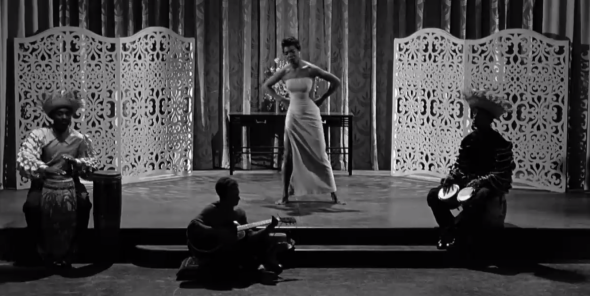
“Music was my refuge. I could crawl into the space between the notes and curl my back to loneliness,” the revered poet and activist, Maya Angelou, who died Wednesday at age 86, once described her relationship with songwriting. As the former U.S. Poet Laureate and the author of a classic memoir, she’ll likely be remembered most for her writing, but Angelou’s talents extended well beyond the written and spoken word. In fact, in the early 1950s—a decade before her first published writing—Angelou started out as an aspiring dancer and singer who slowly gained a following from her performances in local San Francisco nightclubs.

And in 1957, at the height of the calypso movement—a style popularized by Harry Belafonte—Angelou recorded her first and only album, Miss Calypso. In it, she covers Nat King Cole’s “Calypso Blues” and Louis Jordan’s “Run Joe,” using her deep vibrato to create a simmering fusion of jazz and Afro-Caribbean rhythms. The album even partly inspired her first feature film, Calypso Heat Wave, in which she both starred and sang. Though short-lived, Angelou’s music career also included songwriting credits for the legendary B.B. King on two tracks he recorded for the Quincy Jones-produced soundtrack to Sidney Poitier’s For Love of Ivy.

As we reflect on Angelou’s life and her words, it’s worth taking a few minutes at least to get acquainted with the music she left us with as well.

Friday, November 12, 2021

The Passion by Cristina Peri Rossi


The Passion
by Cristina Peri Rossi
Translated by Diana Decker

We emerged from love
as if from an aerial catastrophe
We had lost our clothes
our documents
I was missing a tooth
and you had lost track of time
Was it a year as long as a century
or a century as short as a day?
Among the furniture
around the house
broken rubble:
glasses photos torn books
We were survivors
of a collapse
of a volcano
of raging waters
And we parted with the vague feeling
of having survived
though we didn’t know what for.


Thursday, November 11, 2021

To Live Twice by Cristina Peri Rossi


To Live Twice
by Cristina Peri Rossi
Translation by Arturo Desimone


Memory is an overlife.
While I lean to kiss you
to caress your bosoms
I think of the overlife that shall supervene me
in your memory

I will live beyond my years
in the seam of your neck so white
as the lunar glow
one evening, in Calella,
in the month of August,
year: two thousand and six,

I will live beyond my years
in your memory of a nocturnal woman
who, from the cot, gazes
at the window through which a city like a Richard Estes painting
flickers its lights on and off
between the billboards of Banks and of Safe-houses
cars and offices 

I will live beyond my years
in your memory  
of the woman who, in loving me loves herself within my love 

and you will remember the feather crest 
with which you covered your nakedness 

and the bottle of water fallen in the midst of kisses
and the glow of your muted television
which blankly illuminated our bodies
darkening them at times
like under-eyelid-halfmoons in the middle of the skin
Memory is an overlife
As I lean to kiss you
I know I live doubly
the time of this lukewarm autumn night
on which I caressed you by my hands
with my fingers with thoughts and with my voice
and the double-life and your memory
in which we loved
beyond time itself
in the middle 
in the middle of an illuminated 
and silent city
which does not sleep

because we held the vigils
we kept the vigils of enjoyment
the vigils of love.


Wednesday, November 10, 2021

Dana Weekes / Where Do We Bleed?


Dana Weekes


WHERE DO WE BLEED?
by Dana Weekes


ink no longer courses, no longer paces
races for my existence 

but ours. seeping through 
pages, parchments, photographs

canvases cloth 
fabric, above the fold

headlines. news sometimes.
at times. oftentimes skewed. 

ink shedding in cursive      p r i n t      typed
drawn, sketched, etched. molded prototypes —

tested insights. scripted – scriptures, gospel 
the gospel – proverbs.

ink waxed, candlelight
vigils burning

night after night
after night.

ink drops, colors – the blues 
transferred onto eulogies, the cries of 

lullabies. notes dangling
on a score, beats

records, 4/4 measure, off the cuff
on the tongue

chants – volumes, decibels, pitches
throats sore, bruised

in crowds, on corners
in harmony and discord.

ink penned in pulpits and pews, on pillows
dare we dream. yes! on pillows ink 

can narrate the theme, when polaris 
seems to have lost all her gleam.

ink dripped, poured, splattered.   breath 
to the suffocating – cated, dead 

by knees and needs never bent to pray 
godspeed.

grandma, the ancestors buried 
at sea, warned – forsooth, foreseen. 

ink flecked, rubbed
smudged, diluted as if a stain 

defying erasure, impermanence
time and time again

passed on, received by you 
and me – we

but what is ink good for 
when our existence is never believed?


FUND IN PRAYER

My child, why uproot these seeds? From that first vociferous cry, I knew you.  
In the color fields, with Gilliam painting to Coltrane’s Giant Steps, I drew you. 

They stay on their grind with plastic butter knives and salivation. Spitting 
papercut thin lines, from razors beneath their tongues, to construe you. 

Yes you! Panting perpetually towards noxious constellations given proper 
names. “But by whom,” asked Morrison. Where is the light that comes through you?

Baker, Chisholm, Anderson – My Country, ‘Tis of Thee. The gospel still
must be sung – tucked in lullabies and eulogies of fragility. It is true you                           

must keep the force of Baldwin on your lips. Smith’s woo in your hips. Lorde’s 
diction of luxury at your fingertips. And, Dana, let the world catch up to you.


TRIBES