Showing posts with label Maya Angelou. Show all posts

Friday, October 2, 2026

A Brave and Startling Truth by Maya Angelou


A Brave and Startling Truth
BY MAYA ANGELOU

We, this people, on a small and lonely planet
Traveling through casual space
Past aloof stars, across the way of indifferent suns
To a destination where all signs tell us
It is possible and imperative that we learn
A brave and startling truth

And when we come to it
To the day of peacemaking
When we release our fingers
From fists of hostility
And allow the pure air to cool our palms

When we come to it
When the curtain falls on the minstrel show of hate
And faces sooted with scorn are scrubbed clean
When battlefields and coliseum
No longer rake our unique and particular sons and daughters
Up with the bruised and bloody grass
To lie in identical plots in foreign soil

When the rapacious storming of the churches
The screaming racket in the temples have ceased
When the pennants are waving gaily
When the banners of the world tremble
Stoutly in the good, clean breeze

When we come to it
When we let the rifles fall from our shoulders
And children dress their dolls in flags of truce
When land mines of death have been removed
And the aged can walk into evenings of peace
When religious ritual is not perfumed
By the incense of burning flesh
And childhood dreams are not kicked awake
By nightmares of abuse

When we come to it
Then we will confess that not the Pyramids
With their stones set in mysterious perfection
Nor the Gardens of Babylon
Hanging as eternal beauty
In our collective memory
Not the Grand Canyon
Kindled into delicious color
By Western sunsets

Nor the Danube, flowing its blue soul into Europe
Not the sacred peak of Mount Fuji
Stretching to the Rising Sun
Neither Father Amazon nor Mother Mississippi who, without favor,
Nurture all creatures in the depths and on the shores
These are not the only wonders of the world

When we come to it
We, this people, on this minuscule and kithless globe
Who reach daily for the bomb, the blade and the dagger
Yet who petition in the dark for tokens of peace
We, this people on this mote of matter
In whose mouths abide cankerous words
Which challenge our very existence
Yet out of those same mouths
Come songs of such exquisite sweetness
That the heart falters in its labor
And the body is quieted into awe

We, this people, on this small and drifting planet
Whose hands can strike with such abandon
That in a twinkling, life is sapped from the living
Yet those same hands can touch with such healing, irresistible tenderness
That the haughty neck is happy to bow
And the proud back is glad to bend
Out of such chaos, of such contradiction
We learn that we are neither devils nor divines

When we come to it
We, this people, on this wayward, floating body
Created on this earth, of this earth
Have the power to fashion for this earth
A climate where every man and every woman
Can live freely without sanctimonious piety
Without crippling fear

When we come to it
We must confess that we are the possible
We are the miraculous, the true wonder of this world
That is when, and only when
We come to it.


Sunday, September 27, 2026

All Time 100 Nonfiction Books / 005 / I Know Why the Caged Bird Sings by Maya Angelou


All-TIME 100 Nonfiction Books 

005

Politics and war, science and sports, memoir and biography — there's a great big world of nonfiction books out there just waiting to be read. We picked the 100 best and most influential written in English since 1923, the beginning of TIME ... magazine

I Know Why the Caged Bird Sings by Maya Angelou

The first in a series of autobiographical works, I Know Why the Caged Bird Sings is the most famous and acclaimed book by Maya Angelou, a poet, memoirist and civil rights activist who grew up in the South during the 1930s and California in the 1940s. Published in 1969, the story spans her childhood from age 3 to 17, following young Maya and her older brother Bailey as they bounce from their parents’ care to their grandmother’s and back again. Maya struggles not only with feelings of chronic displacement and insecurity but also a series of heartbreaking challenges: insidious racism, molestation and rape. Caged Bird was nominated for the National Book Award and is still beloved for its revolutionary depiction of what it meant to be young, female and black in America.


TIME


Friday, September 25, 2026

Maya Angelou / When Great Trees Fall


When Great Trees Fall
by Maya Angelou

When great trees fall,
rocks on distant hills shudder,
lions hunker down
in tall grasses,
and even elephants
lumber after safety.

When great trees fall
in forests,
small things recoil into silence,
their senses
eroded beyond fear.

When great souls die,
the air around us becomes
light, rare, sterile.
We breathe, briefly.
Our eyes, briefly,
see with
a hurtful clarity.
Our memory, suddenly sharpened,
examines,
gnaws on kind words
unsaid,
promised walks
never taken.

Great souls die and
our reality, bound to
them, takes leave of us.
Our souls,
dependent upon their
nurture,
now shrink, wizened.
Our minds, formed
and informed by their
radiance,
fall away.
We are not so much maddened
as reduced to the unutterable ignorance
of dark, cold
caves.

And when great souls die,
after a period peace blooms,
slowly and always
irregularly.  Spaces fill
with a kind of
soothing electric vibration.
Our senses, restored, never
to be the same, whisper to us.
They existed.  They existed.
We can be.  Be and be
better.  For they existed.


Wednesday, September 23, 2026

Maya Angelou / Voices in the lower register


Maya Angelou


Voices in the lower register

Roberta Clarke
May 30, 2014

There are times when words are not enough, cannot express the insult to the soul of humanity. Such it is for the gang rape and hanging of those teenage girls in India; such it is for the stoning to death of Farzana by her unrepentant father; such it is for the girls of Nigeria, still missing. Such it is for the daily killing of women in the Caribbean.

Saturday, September 19, 2026

The Rumpus Interview with Maya Angelou

Maya Angelou


The Rumpus Interview with Maya Angelou

BY
WHITNEY MACKMAN
5 SEPTEMBER 2014


“Whitney, who’s your person?” I clenched my hands together under the desk. It was my turn to report which author I hoped to interview for professor Carolyn Hembree’s assignment. I knew I had picked a long shot, but I had to believe.

Thursday, January 22, 2026

The dream and hope of the slave


Maya Angelou

The dream and hope of the slave
May 29, 2014 by Roberta Clarke

Maya Angelou lived a long, lovely life, full of daring, accomplishment and acclaim. I did not know that her grandfather was a Trinidadian.

Still I Rise was the first poem in my under-educated literary life that moved me with its direct relevance to my own life  as a descendant of enslaved peoples and perhaps more so, because it so expressed the exuberant defiance which black women need (ed) to leap over sexism and marginalisation. It has that poem of its time resonance,  full of  black feminist power vibes.

Tuesday, October 11, 2022

Jamaica feels the sting of Maya Angelou's passing


maya-angelou-learning-quotes-wallpaper

JAMAICA FEELS THE STING OF MAYA ANGELOU’S PASSING

May 29, 2014

“No sun outlasts its sunset, but will rise again, and bring the dawn.” Those were the words of Maya Angelou as she responded to the news that her dear friend and South African president, Nelson Mandela, passed last year. The potent words have now resurfaced as news of Angelou’s passing spread throughout the world, Shereita Grizzle reports for Jamaica’s Gleaner.

Her global influence is undeniable and since yesterday’s announcement, there has been an outpouring of tributes for a poet who wrote her way into the hearts of many.

Yesterday, key players from the local poetry industry reacted to the news of Angelou’s death.

President of the Poetry Society of Jamaica, Tommy Ricketts, likened Angelou to Jamaica’s Louise Bennett saying the two were “cut from the same fabric” having the ability to influence and change things irrespective of the circumstances. “Maya is so much to anyone who writes; she’s like the poet laureate of the African Diaspora. She made people realise that they could be anything they wanted to be and despite how much she went through, she overcame the obstacles with a smile just like Miss Lou,” he said. He went on to encourage persons to read Angelou’s work especially her autobiography, I Know Why the Caged Bird Sings, because it has a timeless message that inspires.

“It is one of the most defining pieces of literature and everyone should read it.”

Kwame Dawes, director and co-founder of the Calabash International Literary Festival scheduled for this weekend, said Angelou was one of the poets the festival sought but never got the chance to book because of time. Making reference to her United States presidential inauguration poem, Dawes said Angelou had the “ability to write a poem of technical skill and public appeal – a combination that eludes so many poets.”

Great literary voice

He describes her death as a major loss for the global writing community.

“Maya Angelou taught those of us who have embraced writing as a career the sense of possibility by the way she walked in the world proudly as a writer and as a poet. She will be missed, and the Calabash International Literary Festival Trust celebrates her life and legacy as a great literary voice of our time,” said Dawes.

Professor Mervyn Morris also commented on Angelou’s passing stating that in addition to her undeniable skill with the pen, she was a great performer.

“She was the kind of poet that her whole audience could understand. She had a wonderful, mesmerising voice and with minimal use of her body, had great stage presence.”

Mentioning that Angelou was a personal friend of Miss Lou, Morris said the two, although similar, had different ways of delivery.

“Maya’s normal mode of delivery was drama, Miss Lou was more focused on comedy and making people laugh, but they both aimed to inspire.”

Poet Kei Miller said her loss will be felt around the world as she knew how to connect with her audience.

“Her poetry was not interested in showing off her huge talents as a poet, but in communicating to her audiences – both white and black. Fans of Angelou will remember her, not only as a writer, but an inspiring public speaker with a deep and compassionate wisdom.”

Angelou was 86.

REPEATING ISLAND


Monday, October 10, 2022

Maya Angelou / A Phenomenal Woman with a Caribbean Connection


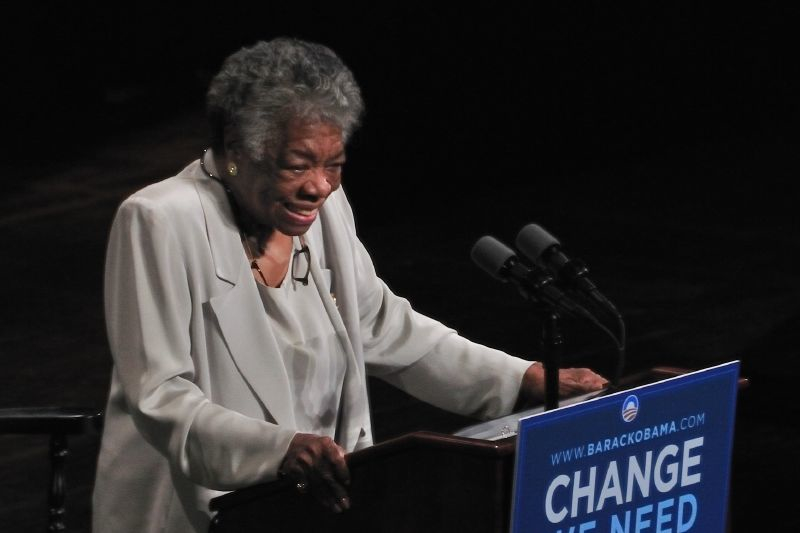
Dr. Maya Angelou, speaking at The Carolina Theater, Greensboro, North Carolina, September, 2008. Image by Talbot Troy, used under a CC license.


Maya Angelou: A Phenomenal Woman with a Caribbean Connection


Written byJanine Mendes-Franco
Posted 1 June 2014 22:33 GMT


Maya Angelou has been noticeably written and tweeted about since her death on May 28. Her passing resonates quite deeply in the Caribbean – and not only because of the potency of her words – the author also had West Indian roots (her maternal grandfather was Trinidadian). Regional bloggers have been processing their grief over the loss by sharing what her life and writing meant to them.

In honour of Angelou's Caribbean connections, Repeating Islands republished a post which originally appeared in Slate magazine, detailing the author's stint as a singer, when she recorded her first and only album, entitled Miss Calypso.

Some bloggers were not even aware of Angelou's West Indian ancestry until her death. What's the idea? said as much in her post, The dream and hope of the slave:

Maya Angelou lived a long, lovely life, full of daring, accomplishment and acclaim. I did not know that her grandfather was a Trinidadian.

Still I Rise was the first poem in my under-educated literary life that moved me with its direct relevance to my own life as a descendant of enslaved peoples and perhaps more so, because it so expressed the exuberant defiance which black women need (ed) to leap over sexism and marginalisation.

Roberta, the blogger, went on to quote excerpts of the poem, saying:

It is a poem of such triumph ‘Out of history’s shame, I Rise…’

Now, I am thinking of the last line, ‘I am the dream and the hope of the slave’ as the region struggles with inequalities and with discrimination, especially against the LGBT community. That we would wish to perpetuate laws that make criminals of people who love other people of their own sex seems far enough away from the dream of emancipation. Can we not remember that slavery was also justified in the name of religion?

On Facebook, Nicholas Laughlin echoed the same sentiment, referring to a statement the author had made five years ago:

‘To love someone takes a lot of courage,’ she said. ‘So how much more is one challenged when the love is of the same sex and the laws say, “I forbid you from loving this person?”‘

–Maya Angelou, interviewed by the New York Times, May 2009

Since everybody with a pulse is rushing to memorialise Maya Angelou today, and with the Bain affair still weighing heavy on my mind, it seems a good moment to recall her thoughts on a question of justice the Caribbean is struggling with.

What's the idea? also viewed Angelou's advice as incredibly relevant when it comes to the global issue of violence against women and girls:

In her Ode to the UN, Maya Angelou ends with these words:

When we come to it
We, this people, on this wayward, floating body
Created on this earth, of this earth
Have the power to fashion for this earth
A climate where every man and every woman
Can live freely without sanctimonious piety
Without crippling fear

When we come to it
We must confess that we are the possible
We are the miraculous, the true wonder of this world
That is when, and only when
We come to it.

Some netizens, especially on Twitter and Facebook, reposted quotes by Angelou that resonated with them. Trinidadian blogger Kris Rampersad bade Angelou a simple farewell:

Thank you for sharing your mind and emotions and the spirit and the power with us Maya Angelou. So many women drew energy from you…

Raquel Cepeda, a US-born writer with Dominican roots, recounted the one occasion she literally ran into Maya Angelou:

Once, when I was about 19 or 20, I darted past Bloomingdale’s in New York, running late to something—I forget—and literally ran into a large, imposing figure walking out of the shop as I sprinted by. I felt as if I had ran into a brick wall. As I stood there in a daze, rubbing my nose, I heard this majestic voice say every-so-slowly, ‘Child, slow down. Where on earth could be more important than being with your self right now?’ My knees started to wobble when I realized this person was Maya Angelou. She glided off, in that regal way of hers, before I could fix my lips to apologize. And that’s why there’s a nod to her book, I Know Why the Caged Bird Sings, which I had just read around that time in the title of my book Bird of Paradise… I wish I could have told her that in person, but alas, I never ran into her again.

And Still I Rise, a St. Vincent and the Grenadines-based blog that was named after one of Angelou's poems, honoured her this way:

We first met in the pages of ‘I know why the caged bird sings’ and from that moment you became one of my heroines…You taught me so much by your words both written and spoken on my place in history, the beauty of my womanhood and the spirit that rises despite the obstacles. Thank you, Thank you, phenomenal woman you!

The blogger, like many others, also quoted one of Angelou's most stirring poems, ‘When Great Trees Fall’:

And when great souls die,
after a period peace blooms,
slowly and always
irregularly. Spaces fill
with a kind of
soothing electric vibration.
Our senses, restored, never
to be the same, whisper to us.
They existed. They existed.
We can be. Be and be
better. For they existed.

Trinidadian diaspora blogger Afrobella felt like “[her] heart was being squeezed in a fist” when she learned, from her Facebook feed no less, of Angelou's death. She explained that she had been asked to write a piece on the author's legacy for a Trinidad and Tobago daily:

In that piece I compared Maya to Mount Rushmore or the Giant Sequoia trees, like the ancient leatherback turtles that return to Trinidad’s beaches to nest, like Trinidad’s most popular beach, Maracas. I mean that in the sense that Maya Angelou seemed to belong to us, she seemed ancient and eternal. It’s impossible to imagine her not here to dispense wisdom, to recite a poem that rattles our hears and resonates in our spirits. We never thought she’d go away.

To Afrobella, the impact of Angelou's life was so staggering, “it [was] easy to feel dizzy and overwhelmed:

So instead of going broad and speaking about her in grandiose and sweeping terms, I want to get very specific and focus on one particular way that Maya Angelou touched me. Her poem, Phenomenal Woman, helped to change my life.

For someone in my age bracket — there never was a time before Phenomenal Woman. For us, there was never a time when there were these indelible, unforgettable, undeniable words intended to uplift, celebrate and triumphantly proclaim that we are beyond beautiful, we are worthy of desire and admiration from ourselves as well as others. That it isn’t just about how we’re built, it’s about who we are and how we carry ourselves in the world.

In that poem Maya defined herself, but she also helped to define a generation to come. Black women around the world grew up knowing those words, knowing that we too were or at least could be phenomenal women.

We who are 35 or younger, never knew a time when Maya Angelou’s words weren’t there to lift us up. We were blessed to be born into a world where she was a constant.

The blogger, Patrice Grell-Yursik, ended her tribute by quoting the poet herself:

In her own words, ‘when a poet dies something hopeful in the national psyche disappears.’ I know I’m not the only one who’s already feeling the void.

Thank you, Maya Angelou. Thank you for speaking for us. Thank you for sharing with us. Thank you for being with us for as long as you were able. Thank you for everything you gave to us, you gave the world so, so much. Thank you for teaching us, for shaping us and for leaving us a legacy to live up to.


GLOBAL VOICES


Sunday, November 14, 2021

Miss Calypso / Maya Angelou's Life in Music


MISS CALYPSO: MAYA ANGELOU’S LIFE IN MUSIC


May 28, 2014

This short piece by Dee Lockett appeared in Slate.

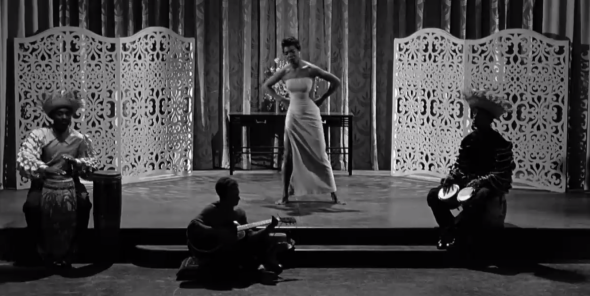
“Music was my refuge. I could crawl into the space between the notes and curl my back to loneliness,” the revered poet and activist, Maya Angelou, who died Wednesday at age 86, once described her relationship with songwriting. As the former U.S. Poet Laureate and the author of a classic memoir, she’ll likely be remembered most for her writing, but Angelou’s talents extended well beyond the written and spoken word. In fact, in the early 1950s—a decade before her first published writing—Angelou started out as an aspiring dancer and singer who slowly gained a following from her performances in local San Francisco nightclubs.

And in 1957, at the height of the calypso movement—a style popularized by Harry Belafonte—Angelou recorded her first and only album, Miss Calypso. In it, she covers Nat King Cole’s “Calypso Blues” and Louis Jordan’s “Run Joe,” using her deep vibrato to create a simmering fusion of jazz and Afro-Caribbean rhythms. The album even partly inspired her first feature film, Calypso Heat Wave, in which she both starred and sang. Though short-lived, Angelou’s music career also included songwriting credits for the legendary B.B. King on two tracks he recorded for the Quincy Jones-produced soundtrack to Sidney Poitier’s For Love of Ivy.

As we reflect on Angelou’s life and her words, it’s worth taking a few minutes at least to get acquainted with the music she left us with as well.

Tuesday, December 11, 2018

My hero / Maya Angelou by her publisher Lennie Goodings


My hero: 

Maya Angelou

by her publisher Lennie Goodings


The late author's UK editor remembers a funny, gracious, kind, demanding, delightful and wise human being – and writer of one of the world's great autobiographies

BIOGRAPHY

Thursday 29 May 2014

Maya Angelou was one of the world's most important writers and activists. She lived and chronicled an extraordinary life: rising from poverty, violence and racism, she became a renowned author, poet, playwright, civil rights' activist – working with Malcolm X and Martin Luther King – and memoirist. She wrote and performed a poem, "On the Pulse of Morning", for President Clinton on his inauguration; she was given the Presidential Medal of Freedom by President Obama and was honoured by more than 70 universities throughout the world.


Maya Angelou and Lennie Goodings at Maya's 70th birthday party


I last saw her at the beginning of this month in her home in Winston Salem, North Carolina, and though she obviously wasn't entirely well, she was very much her larger-than-life self: funny, gracious, kind, demanding, delightful and wise. Our conversation ranged over Michelle and Barack Obama, for whom she held huge respect; her "daughter" Oprah; her son and grandchildren, and my family. She talked about James Baldwin and Malcolm X, and we ate pancakes and then, later, wonderful spare ribs. We laughed and we drank. At the time I thought how blessed I am, and now I know I was.

Her first book, I Know Why the Caged Bird Sings is one of the best memoirs I have ever read. Almost like a novel, it takes the reader into a time and place – 1930s Stamps, Arkansas, the segregated southern US town where her grandmother ran the general store – that is never to be forgotten. It was first published in America by Random House in 1969. Angelou said that Bob Loomis (who was her editor in America for 40 years) asked her many times to write her life story – she was convinced he was put up to it by "Jimmy" Baldwin – and she demurred until finally he said: "Well, it's hard to write a good autobiography." "I will start tomorrow," came her answer.

It was hugely acclaimed in America, but when it was shown to British publishers in the 1970s, according to Maya, they said that British people wouldn't care about a young black girl growing up in the American south in the 1930s. So no British edition appeared. In the mid 1980s Ursula Owen, then editorial director of Virago, visited Random House US, where the rights director suggested she have a look. Owen knew immediately it was for us.

I was the publicity director at the time and, soon after, a seriously crazily typed letter from Jessica Mitford arrived for me. She was going to make it her business to tell the world about her great friend and this book! We wondered how these two women had become friends – and we later discovered that they were devoted to each other. Jessica, claimed Maya, came once to her rescue to face down the Ku Klux Klan, saying she was Maya's mother. I copied parts of her letter to send to all the press and the response was immediate.

Then Maya came to London. Well, that is just too tame a description. In our tiny office, 6ft Maya sang and danced and laughed her way into our lives. She recited her poem "Phenomenal Woman" in our office. We were astonished and thrilled – and very much awed.

So it was that 15 years after the first US publication, we published I Know Why the Caged Bird Sings in a Virago paperback. Maya appeared on Afternoon Plus. It was a heartfelt, bold interview, and Maya talked about the part in her book where she is raped at eight and how she became mute until literature coaxed her back into speaking. The TV switchboards were jammed; the reviews and features that followed were stunning. Maya beamed straight into British hearts. 

I don't think we quite knew what we had. Our first print run was around 8,000 paperbacks and was sold out before publication. We printed another cautious 8,000. Today, the Virago edition of I Know Why the Caged Bird Sings has sold more than 600,000 copies, and it's still selling year on year, month on month. It's on courses, reading lists and remains, to my mind, one of the world's great autobiographies. We went on to publish all Maya's works: six more volumes of autobiography, her poetry, essays and cookbooks.

She brought us bestsellers but, more than that, she brought us a reminder that the human need for dignity and recognition is a gift easily given to one another, but frighteningly easy to withhold. Maya's fierce belief was that each of us has a deep worth – a simple yet profound fact. She was an indomitable force, famed for her spirit and style, courage and laughter. 

In 2009 she wrote: "My life has been long, and believing that life loves the liver of it, I have dared to try many things …" She was a wonderful teacher: "You may not control all the events that happen to you, but you can decide not to be reduced by them … Do not complain. Make every effort to change things you do not like … Be certain that you do not die without having done something wonderful for humanity."

She did that, many times over.

THE GUARDIAN


Friday, November 16, 2018

Maya Angelou / Alone


ALONE
by Maya Angelou
BIOGRAPHY

Lying, thinking
Last night
How to find my soul a home
Where water is not thirsty
And bread loaf is not stone
I came up with one thing
And I don't believe I'm wrong
That nobody,
But nobody
Can make it out here alone.

Alone, all alone
Nobody, but nobody
Can make it out here alone.

There are some millionaires
With money they can't use
Their wives run round like banshees
Their children sing the blues
They've got expensive doctors
To cure their hearts of stone.
But nobody
No, nobody
Can make it out here alone.

Alone, all alone
Nobody, but nobody
Can make it out here alone.

Now if you listen closely
I'll tell you what I know
Storm clouds are gathering
The wind is gonna blow
The race of man is suffering
And I can hear the moan,
'Cause nobody,
But nobody
Can make it out here alone.

Alone, all alone
Nobody, but nobody
Can make it out here alone.


Sunday, June 17, 2018

Maya Angelou and me / Adapting her memoirs brought me eye to eye with an icon


Maya Angelou


Maya Angelou and me: adapting her memoirs brought me eye to eye with an icon


She lived a sensational life – but it was her assumption of her equality that made Maya Angelou radical, as I rediscovered when turning I Know Why the Caged Bird Sings into radio drama

Patricia Cumper
Wed 13 jun 2018


I
’ve been adapting novels and plays for radio for well over a decade. And I’ve adapted wonderful work: Beloved, The Darker Face of the Earth, Small Island, The Color Purple. But adapting the work of Maya Angelou for BBC Radio 4 was the first time I dramatised a memoir. I am used to ferreting out the intentions of the writer between the lines of a play and among the events in a novel. With Maya Angelou’s memoirs, she was right there in front of me, looking me in the eye. It is a bold adapter who wouldn’t feel intimidated. It would also be a foolish one who didn’t grab the opportunity to bring her words to the ear.

The intimacy of radio meant that having Maya’s words spoken by a narrated version of herself was a given. Without the distraction of visuals, life in the deep south during Jim Crow, the characters hustling on the streets of postwar San Francisco, a teenaged Maya driving over the Mexican border having never driven before, and her life as an expat in Ghana can all be imagined and savoured. But there were decisions to be made about which moments would take to being dramatised, which ones should be reported, and which should not be included in this adaptation. I can’t tell you how difficult it was to make these omissions.

Some adaptations involve giving the audience a series of glimpses of the core events in the story and tying them together as best you can. Others are like producing the best line drawing you can achieve from your observations of an oil painting. About halfway through the process of recording the episodes of Maya’s first and most famous volume, I Know Why the Caged Bird Singsit occurred to me that what we were producing this time, in great and careful detail, was a quilt: a stitching together of vivid scraps of the story of her life to create a representation for the audience that we hoped was both complex and subtle.
An adaptation is not a purely academic exercise. It can also be a deeply emotional experience. There are huge recognisable commonalities between the historical black American and Caribbean experiences: the transatlantic slave trade and its aftermath, discrimination, racism, learning to exist and thrive in societies where the financial and social structures are biased against progress. These are also societies that created cultures that protected, strengthened and uplifted themselves; that created new musical and dance forms, that blended languages, that invested in passing on a body of rich folk wisdom, that transformed religious worship from obedience to resistance. I was born and raised in the Caribbean. I recognised these aspects of Maya’s story.

As a black woman, she spoke directly to me about everything from body consciousness (I, too, am tall and gap-toothed) to the difficulty in negotiating relationships with black men. She pulled no punches in describing the choices she made in her life. Born Marguerite Annie Johnson, she was raised by her grandmother, raped by her mother’s boyfriend, was a teenage mother, worked as a short-order cook, a waitress, a dancer, a brothel madam and a prostitute – all before she was 20. Sensational as all that sounds, there is not a word of self-pity in her memoir. Compassion for her youthful self, perhaps, but never self-pity. Instead, what shines through is her powerful intellect and incredible talent, her ability to observe the world around her and to look inside herself with the same compassionate objectivity.
There is also a grand and dangerous idea at the centre of her work. She grants herself what the world around her was unwilling to: equality. It is what Beyoncé does when she performs the Black Power salute at the Super Bowl. It is what Childish Gambino does when he creates a video in which he personifies his country in This Is America. When Stormzy calls the government to account, or David Lammy lambasts the Home Office treatment of the children of the Windrush generation. Angelou is part of the wellspring from which these public figures drank. They have assumed their equality and not waited for it to be granted to them.
Maya Angelou in 2008.
Pinterest
 ‘She pulled no punches’ … Maya Angelou in 2008. Photograph: Gerald Herbert/AP
Quotes from Maya Angelou pop up on my Twitter feed at regular intervals. She is very quotable. The story of how Marguerite Annie Johnson became famous worldwide, forged careers as a memoirist and poet, singer and composer, civil rights activist, lecturer and public speaker, and downright national and international treasure, is well known and gives hope to many from all backgrounds and persuasions. She is inspirational. Her death was mourned worldwide. Her work, though absolutely rooted in place and time, is timeless in its celebration of our common humanity. My job was to find her in the pages of her books, to help put her words into the mouths of some of the UK’s leading actors, and not to look away from the fierceness of her gaze. To instead bring the audience into the celebration of the human spirit in all its complexity and glory that drives and defines the words of Dr Maya Angelou.