Monday, August 31, 2026

Claudia Rankine / ‘The invisibility of black women is astounding’


Poet Claudia Rankine: ‘The invisibility of black women is astounding’

This article is more than 11 years old

The writer asked friends for their experiences of everyday racism and turned them into the award-winning Citizen. Here she talks about the power of making private anecdotes public


Paula Cocozza

Monday 21 June 2015


W

hen Serena Williams was contesting the US Open in 2012, the American poet Claudia Rankine watched from the stands, engaged in a parallel skirmish of her own. She had taken her nine-year-old daughter to the final. They were sitting next to a white American. “And the guy,” Rankine says in surprise, “is cheering for the other player, not for Serena. So I say to him: ‘Are you American?’ And he says: ‘Yes.’ And I say: ‘So why are you cheering for the player from Belarus and not Serena Williams?’”

Wednesday, August 26, 2026

Rebecca Perry / Interview


Rebecca Perry
INTERVIEW


Ahead of our Poetry Prize, which closes 30th June, we spoke to judge Rebecca Perry about prizes, publication and what she’ll be looking for from this year’s entries.

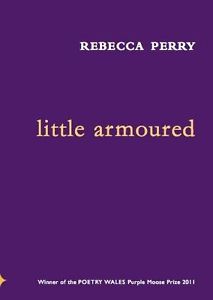
Rebecca, It’s lovely to have you as a judge, particularly as your 2012 pamphlet little armoured was published by Seren after winning the Poetry Wales Purple Moose Poetry Prize. What was your reaction to winning the Prize and how did it help you in your development as a poet?

Monday, August 24, 2026

Two Poems by Rebecca Perry

Rebecca Perry

Her pamphlet, little armoured (Seren), won the Poetry Wales Purple Moose Prize and was a Poetry Book Society Choice

Friday, August 14, 2026

Stone Fruit by Rebecca Perry


Stone Fruit

by Rebecca Perry

A collection of three distinct parts, the poems in Rebecca Perry's Stone Fruit nonetheless speak across their many common preoccupations: memory, grief, the fallibility of the physical form, our connection to and place in the world, natural and otherwise.

Friday, August 7, 2026

Osip Mandelstam

Osip Mandelstam

Osip Emilyevich Mandelstam (1891-1938), the great modern Russian poet, essayist, and translator was born in Warsaw in 1891. In 1897, the family moved to Saint Petersburg. He received his formal education in the Tenishev School, in part at the Sorbonne in Paris and at the University of Heidelberg in Germany, but never took an academic degree. He knew English, French, and German perfectly.