Showing posts with label The Guardian. Show all posts

Wednesday, December 20, 2017

Unseen JRR Tolkien poems found in school magazine


The 1936 annual of Our Lady’s School in Abingdon, Oxfordshire.
Photograph by Our Lady’s School

Unseen JRR Tolkien poems found in school magazine

Two works by the Lord of the Rings author discovered in the 1936 annual of Our Lady’s School in Oxfordshire

Alison Flood
Tuesday 16 February 2016 12.34 GMT


Two poems by JRR Tolkien, in which The Lord of the Rings author writes variously of “a man who dwelt alone/beneath the moon in shadow”, and of the “lord of snows”, have been discovered in a school magazine in Abingdon, Oxfordshire.
Believed to have been written while Tolkien was professor of Anglo-Saxon at Oxford University, the poems were found in the 1936 annual of Our Lady’s School in Oxfordshire. The discovery was made when the US Tolkien scholar Wayne Hammond contacted Our Lady’s headteacher, Stephen Oliver. Hammond had found a note from Tolkien in which The Hobbit author mentioned that he had published two poems in a magazine he named as the Abingdon Chronicle.
Hammond realised this was Our Lady’s school magazine, and got in touch with Oliver. Initially, the latter could not locate the correct edition of the magazine, and passed Hammond on to the archives of the Sisters of Mercy, who had founded the school in 1860.
“Then, while preparing for an event for former pupils of the school, we uncovered our own copy and I saw the two poems Mr Hammond had been looking for. My excitement when I saw them was overwhelming. I am a great Tolkien fan and was thrilled to discover the connection with the school,” said Oliver.
The first poem, The Shadow Man, is an early version of a poem that Tolkien went on to publish in his 1962 collection The Adventures of Tom Bombadil. It tells of “a man who dwelt alone/ beneath the moon in shadow”, who “sat as long as lasting stone,/and yet he had no shadow”. When “a lady clad in grey” arrives, he wakes, and “clasped her fast, both flesh and bone;/and they were clad in shadow”.
The second, Noel, is a Christmas poem, albeit one set in scenery that would not be out of place in Middle-earth. “The hall was dark without song or light,/The fires were fallen dead,” writes Tolkien, going on to portray “the lord of snows”, whose “mantle long and pale/Upon the bitter blast was spread/And hung o’er hill and dale”.
The school is now planning to show the poems at an exhibition about its history. “Both poems are very atmospheric and imbued with an air of mystery. I was very moved when I first read them,” said Oliver.
“Noel is a beautiful and unusual take on the Christmas story, set in a wintry landscape. The focus is on Mary, which may be why Tolkien wrote the poem for the school magazine, given that we are dedicated to Our Lady. The Shadow Man is also a very beautiful story, about two people finding each other and thereafter casting only one shadow – it feels like a poem about marriage. The Shadow Man is incomplete until a woman comes to him and relieves his loneliness.”
Oliver is confident the poems “will be enjoyed by lovers of Tolkien everywhere”. Fans of the novelist have been given a wealth of previously unpublished material to enjoy in recent years, from last year’s release of his retelling of the Finnish epic poem The Story of Kullervo, to the unfinished Middle-earth story The Children of Húrin. David Brawn, Tolkien’s publisher at HarperCollins, said that some unpublished poetry had been included in the revised edition of The Adventures of Tom Bombadil in 2014, and that “there is often scope to add rare material to future revised editions”.

THE GUARDIAN


Sunday, January 1, 2017

Rare JRR Tolkien poem The Lay of Aotrou and Itroun to be republished

Tolkien

Rare JRR Tolkien poem The Lay of Aotrou and Itroun to be republished

Early version of Galadriel in The Lord of the Rings can be seen in this take on a medieval Breton ballad, out of print for 70 years
Alison Flood
Thursday 14 July 2016 11.54 BST

A poem “from the darker side of JRR Tolkien’s imagination”, which hints at an early version of the elf queen Galadriel from The Lord of the Rings, is due to be published for the first time in more than 70 years this November.
Tolkien’s The Lay of Aotrou and Itroun, which was published in 1945 in literary journal The Welsh Review and has been out of print ever since, is a lengthy poem in the tradition of the medieval lay, inspired by the Celtic legends of Brittany. It tells of a couple who are desperate for a child. Aotrou visits a witch “who span dark spells with spider-craft, / and as she span she softly laughed”. She gives him a potion and his wife bears twins. But riding through the forest, he meets the witch again. Now transformed from a “crone” into a beautiful woman, the Corrigan – a generic Breton term for a person of fairy race – says he must marry her or die.
He refuses and dies three days later. His wife then dies of grief. “And if their children lived yet long, / or played in garden hale and strong, / they saw it not, nor found it sweet / their heart’s desire at last to meet.”
HarperCollins, which will publish the poem along with Tolkien’s other poems about the Corrigan on 3 November, called it “an important non Middle-earth work to set alongside his other retellings of existing myth and legend”. These include The Story of Kullervo, a teenage Tolkien’s retelling of a Finnish epic poem, and his 200-page poem The Fall of Arthur.
According to Humphrey Carpenter’s biography of the author, the earliest manuscript for The Lay of Aotrou and Itroun (Breton for “lord and lady”, explains Carpenter) is dated September 1930.
HarperCollins said: “The sequence shows the Corrigan’s increasingly powerful presence, as she takes an ever more active role in the lives of Aotrou and Itroun … She would finally emerge, changed in motive and character but still recognisable, in The Lord of the Rings as the beautiful and terrible Lady of the Golden Wood, the Elven queen Galadriel.” It added that the poem comes “from the darker side” of Tolkien’s imagination.
In the poem, the Corrigan’s voice is described as “cold / as echo from the world of old, / ere fire was found or iron hewn, / when young was mountain under moon”, echoing the cold beauty of Galadriel.
Tolkien scholar Verlyn Flieger, a professor emerita at the University of Maryland, is editing and introducing the new edition, which also includes a new preface from Christopher Tolkien. Flieger called it “dark, powerful, compelling, a significant departure from the Tolkien we think we know”.
It is derived, said Flieger, “from a well-known folkloric tale-type of the human who strays into the Faerie world and who pays the price, such as the ballads of Tam Lin and Thomas Rhymer”. Although there are Irish and Welsh versions of the story, she says that Tolkien’s version is closest in subject matter to the Breton ballad Lord Nann and the Corrigan, which the author owned a copy of.
With a flurry of “new” works by Tolkien released over the last decade, from 2007’s Middle-earth story The Children of Hurin, to the 2014 release of his translation of Beowulf, The Lay of Aotrou and Itroun “is worthy of publication now for several reasons”, said Flieger. “First, it is a fine example of Tolkien’s poetic power and his ability to handle different verse forms – in this case the octosyllabic rhyming couplets of French romance, which he also used for The Lay of Leithian from his own legendarium.” The Lay of Leithian is a long poem telling the story of Tolkien’s Middle-earth characters Beren and Lúthien.

The Lay of Aotrou and Itroun, said Flieger, vividly shows the author’s interest “in paganism and in the dark side of what he called Faerie, the perilous realm or Otherworld of enchantment.” She said it will also give Tolkien’s readers “his most developed example of a folklore archetype I will call The Dark Lady, the beautiful but malevolent fay or fairy who preys upon humans, and thus foreshadows his Guinevere, described as ‘fair as fay-woman in the world walking for the woe of men’.”
In his JRR Tolkien: Author of the Century, Tom Shippey writes that the poem is animated by the question of how far a believing Christian could go “in dealings with pre- or non-Christians”. While the poem is derived from a late Breton ballad, he writes, “what seems original to Tolkien is the poem’s stern morality”, because in Tolkien’s version the death of Aotrou “is deserved, or at least prompted by [his] attempt to sway Providence by supernatural forces”.
“Aotrou’s sin lay not in submitting to the Corrigan,” he writes. “It lay in having any dealings with her at all.”


Sunday, July 3, 2016

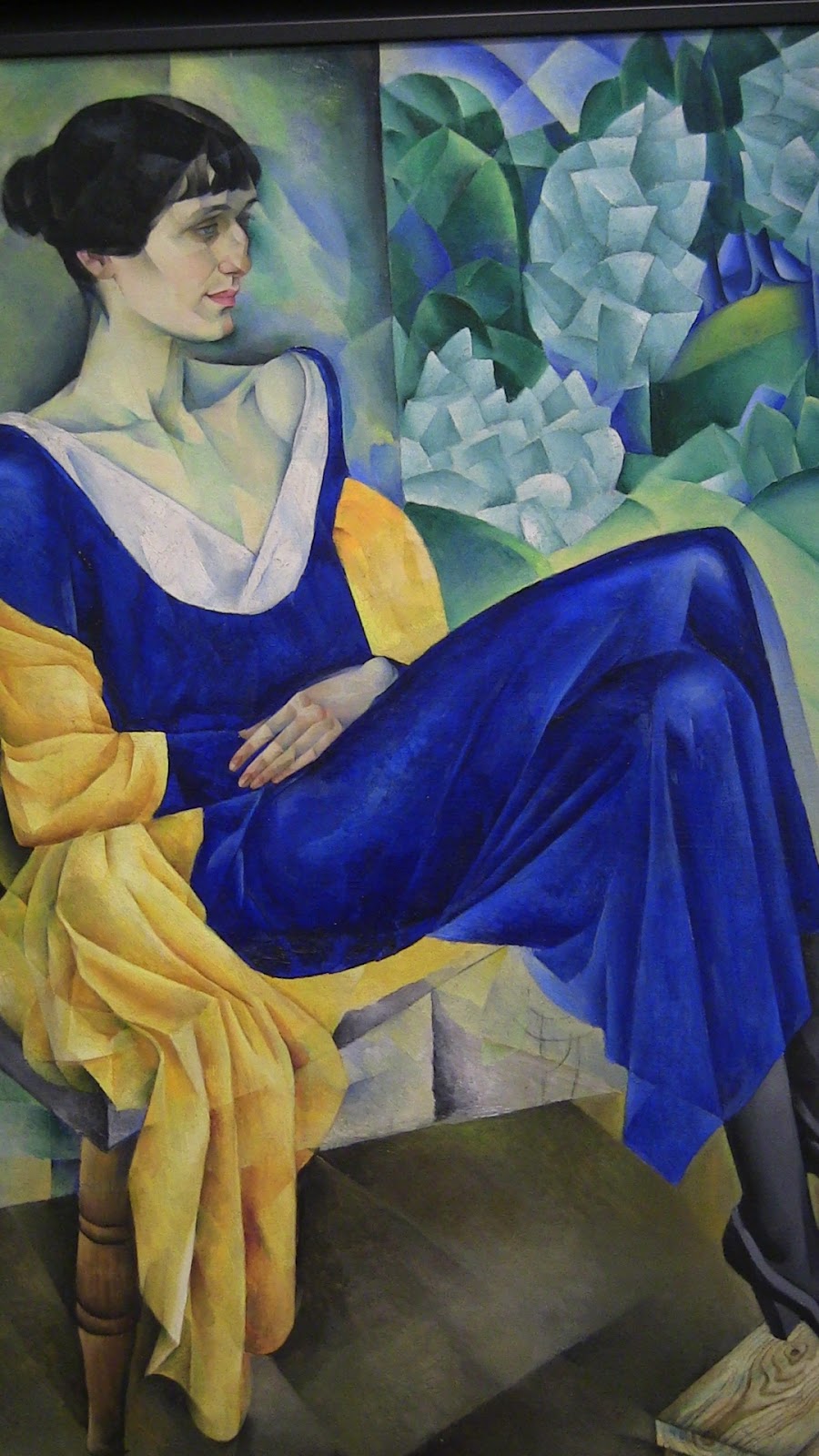
Anna Akhmatova / Our lady of sorrows


Anna Akhma-tova


Our lady of sorrows


Elaine Feinstein tells how poet Anna Akhmatova, whose son was in the Gulag, spoke for millions of Russians of their hell under Stalin in Anna of All The Russians


Neal Ascherson
Sunday 31 July 2005 00.46 BST


Anna of All The Russians: The Life of Anna Akhmatova
by Elaine Feinstein
Weidenfeld & Nicolson £20, pp322

When people remember Anna Akhmatova, they do so extravagantly. Josef Brodsky, one of the circle of young poets who adored her when she was old, said: 'In conversation with her, or simply drinking tea or vodka, you became a Christian, a human being in the Christian sense of the word'.
Anatoly Nauman, another in that circle, remembered that after meeting her he was 'stunned by the fact that I had been in the presence of someone with whom no one on earth had anything in common'. Isaiah Berlin, throwing himself on his hotel bed after spending a day and a night talking to her in Leningrad, exclaimed: 'I am in love, I am in love!'
Elaine Feinstein, author of this biography, calls her 'one of the greatest poets of Russian literature ... she became the voice of a whole people's suffering under Stalin ... an iconic figure for all those whom the Soviet regime repressed ...' This status was confirmed for ever when Andrey Zhdanov, Stalin's cultural rottweiler, excommunicated her in 1946 as 'half nun, half whore, or rather both nun and whore with her petty, narrow private life, her trivial experiences ...'
But icons are difficult to write about critically. How good a poet was she really? To me as a non-Russian, her contemporary Marina Tsvetaeva seems as a writer to be richer and more astonishing. I know Russians who now dismiss Akhamatova as 'a minor poet'. But how do you separate the passionate response to her verse, a response which has itself become part of Russian history, from the quality of that poetry?
Anna Akhmatova was born in Odessa in 1889 (her father was called Gorenko, but she took the more glamorous name of a Tatar ancestor). Brought up in and near St Petersburg, she became one of the young writers and performers who met in the 'Stray Dog' cellar in the years before the First World War. Mayakovsky, Mandelstam and many other men and women who were to be her friends for life went there. Akhmatova - tall, black-haired, with huge grey eyes - read poems about painful love.


Before she was 30, she was famous. The writer Kornei Chukovsky said her first book, Evening, 'accompanied the next two or three generations of Russians whenever they fell in love'.
In 1910, she married the poet and explorer Nikolai Gumilev. By the time of the revolution, seven years later, the marriage had come apart, but Gumilev's arrest and execution in 1920 on fictional charges of anti-Bolshevik conspiracy devastated Akhmatova. By now, she had begun the nomadic, chaotic existence which lasted most of her life. It brought her shabby rooms in old palaces, torn silk dressing gowns, a procession of momentary or semi-permanent lovers, semi-starvation ('a horrible skeleton dressed in rags', as one visitor saw her in 1919), tuberculosis and guilt. 'I brought destruction to those I loved.'
There were several times when both her current lover and her son, Lev Gumilev, were in the Gulag (the son survived; the lover, Nikolay Punin, died in the camps) But Akhmatova never left Russia, or thought of doing so. And, with only a few interruptions, the poetry kept coming.
Caught in the siege of Leningrad in 1941, she was one of the few writers chosen to be flown out. In spite of her political views, Stalin recognised that she was worth saving. But in 1946 Akhmatova was denounced ('harlot and nun') by Zhdanov. She became an 'unperson', dangerous to everyone she met. Lev Gumilev was rearrested and released only in 1956, three years after Stalin's death. Only in 1957 was Akhmatova rehabilitated. But nobody had forgotten the poet who had given them courage in awful times, and the last 10 years of her life were spent in glory, if not exactly in comfort, in a dacha of her own near Leningrad surrounded by friends.


A great deal of Feinstein's biography is taken up with careful attempts to decipher Akhmatova's 'relationships'. These were multiple and often simultaneous. Nobody's love life looks simple under bright light, but the emotional life of Russian intellectuals - then, as now - was as disorderly as a London teenager's floor. Wisely, Feinstein also disentangles Akhmatova's friendships, the human bond which many Russians consider more important and lasting than sexual love. Most of her male intimates let her down, but her women friends stood by her. What society today can produce friends as wonderful as Lydia Chukovskaya?
It was Chukovskaya who stood with her all those days and nights of frost, queuing outside prisons to hand in parcels. Akhmatova had food and clothes for Lev, bound for somewhere beyond the Arctic Circle. Chukovskaya took packages for her husband, not knowing that he had long ago been shot.
In one of those terrible queues, a girl recognised Akhmatova and whispered: 'Can you describe this?' Akhmatova replied: 'I can.' Out of that grew, gradually, her tremendous poem cycle, Requiem. Once, when young, she had written the lines which lovers quoted to one another. Now she provided words which thousands of men and women repeated under their breath, as they suffered, feared and waited.
As Feinstein writes, Akhmatova always considered that she had been 'appointed by God to sing of this suffering'. Even after her brilliant looks had faded, she was vain and - for someone with such good friends - strikingly indifferent to anyone else's problems.
As a conventional wife or mother, she was terrible. Her son, in the labour camps, deluded himself that she did not care how long he stayed there and that she was exploiting his fate to make her own poetry. (The embittered Lev Gumilev grew up to be the ultra-nationalist historian who reintroduced mystic racialism into post-Soviet education.) As a poet, her unambiguous language, like Pushkin's but almost always narration in the first person, does not translate easily into English, and can occasionally seem trite. But we know that for millions across the generations those words in Russian rang true.
Elaine Feinstein's achievement is to show us the life of an extraordinary woman in gleaming fragments, and to demonstrate, through so many witnesses, how she was worshipped.


Monday, March 28, 2016

Philip Larkin is far from forgotten in Hull


 The Philip Larkin statue at Hull Paragon station.
Photograph: Alamy

Philip Larkin 

is far from forgotten in Hull


Letters
Monday 7 December 2015 19.38 GMT


What a pity that Mike Godwin (Letters, 3 December) spent the 30th anniversary of Philip Larkin’s death on a lonely pilgrimage to Larkin’s grave in Cottingham. If only he had thought a bit about it, he might have found his way to the Brynmor Jones Library at the University of Hull, where Larkin was librarian for 30 years. There he would have discovered more than 150 members of the Larkin Society, including his biographer James Booth and his formidable secretary Betty Mackereth, enjoying wine and food in their annual celebration of the great poet, surrounded by a wonderful exhibition of Larkin photographs.
As chair of Hull City of Culture 2017, I was invited to speak about “Larkin in the light of 2017”, and did so with the assistance of my cherished first edition copy of  The Whitsun Weddings. The night was a joyous and totally unforlorn occasion, held in the building he loved. I suspect Larkin would have revelled in it. Next December, we shall all be at Westminster Abbey for the unveiling of Larkin’s plaque in Poets’ Corner. I suggest Mike Godwin comes along.

Rosie Millard
Chair, Hull City of Culture 2017


Wednesday, December 30, 2015

Unknown poems by Katherine Mansfield found in a Chicago library

Katherine Mansfield
Illustration by Triunfo Arciniegas

Unknown poems 

by Katherine Mansfield 

found in a Chicago library


‘I couldn’t believe my eyes’ says Mansfield scholar as she uncovers a cache of ‘literary gold’

Cameron Robertson
Thursday 11 June 2015 10.00 BST


Nearly 30 unknown poems by Katherine Mansfield have been discovered in a US library, giving fresh insight into the writer’s most painful and difficult period, the evidence for which she had later destroyed.
Gerri Kimber, senior lecturer in English at the University of Northampton and chair of the Katherine Mansfield Society, made the discovery at Chicago’s Newberry Library in May this year. The collection’s significance had remained undetected until now because it was marked with a name similar to the New Zealand-born writer’s previously published poems.
“I had already looked at the Newberry’s Mansfield collection, and the folder said, ‘The Earth Child and other poems’. The poem ‘The Earth-Child in the Grass’ (its full title) had been published already,” said Kimber, who was attending a conference about Mansfield. “I had three days to spare so I wanted to go through every single thing the Newberry has pertaining to Mansfield. I thought, ‘I don’t recognise this one. Or this one. Or this one …’ I couldn’t believe my eyes!”

Kimber, series editor of the Collected Works of Katherine Mansfield, soon realised the folder in fact contained 26 unpublished poems (alongside a further nine that had been published already), two handwritten letters from Mansfield to a publisher, Mansfield’s calling card, and an auction dealer’s sale entry for the entire collection.
“Between 1909 to 1911 she destroyed as much personal material as she could find, I think because she was embarrassed and possibly ashamed of much of her conduct,” said Kimber. “We know she once smoked hashish with Aleister Crowley, had one – possibly two – abortions, as well as a traumatic stillbirth alone in Bavaria in June 1909, and an intense affair with a Polish émigré Floryan Sobieniowski, and then another affair when back in England in 1910, with young schoolmaster William Orton. This was a really difficult time for her. She was addicted to Veronal [barbiturates], and experimenting with life, her sexuality, all sorts. You could call this period hedonistic. As a result, uncovering any material from this period is literary gold for Mansfield scholars.”
In 1909, Mansfield was sent to Bavaria by her mother who believed a bizarre water treatment would turn her daughter away from lesbianism, explained Kimber. “I think her mother didn’t know that Katherine was pregnant and, while she was in Bavaria, she gave birth to a stillborn child.”
Mansfield stayed in Bavaria for another six months and Kimber says elements of the writer’s love affair with Sobieniowski are chronicled in this unpublished poetry. “Some of these poems are directly written for or about him,” said Kimber. “For example, number XXII begins, ‘In the swiftly moving sleigh / We sat curled up under the bear skin rugs / And talked of the dangers of life’, it is almost certain that this sleigh ride depicts Mansfield and Floryan. I do think these remarkable poems are going to offer new biographical detail.”
The business card in the folder also notes the writer’s name as “Katharina Mansfield”, a Slavic-influenced version that Kimber said Mansfield had signed on documents discovered previously, but no such calling card was known to exist.
The newly discovered poems represent a lost collection by Mansfield. The folder’s two letters, dated 8 November 1910 and 15 January 1911, chronicle her failed efforts to persuade publisher Elkin Mathews to print the poems. The second letter is written in a tongue-in-cheek style, pleading with the publisher to put her out of her misery on whether her material will be accepted or not. But the manuscript was never published and, if Mansfield did receive a note of rejection, it has not survived.

Katherine Mansfield’s follow-up letter to Elkin Mathews
Photograph: Courtesy the Newberry Library, Chicago


Handwritten by Mansfield to Elkin Mathews, the second letter reads:
Dear Mr. Mathews
May I hear from you soon the fate of my poor ‘Earth Child’ Poems – I really am worrying about her immediate future – yea or nay.
Love her or hate her, Mr. Mathews, but do not leave her to languish!
Sincerely yours
Katharina Mansfield
“It’s an amusing letter,” said Kimber. “She’s saying, ‘Look, I’ve sent you my manuscript. Are you going to do something with it or are you not? Let me know’, he may have sent her a rejection slip. Authors tend to bin them because they’re too painful to hang on to. She probably binned that, but he held on to the manuscript with these poems.”
The material was later put up for auction and subsequently bequeathed them to the Newberry library in 1999.
Although further research will be carried out, Kimber and the Newberry Library have no doubts the material is authentic. “It took a researcher [Kimber] with considerable knowledge of Mansfield’s published poems,” said Martha Briggs, the Newberry’s Lloyd Lewis curator of modern manuscripts, “and the patience to look carefully at what most people assumed was a manuscript copy”
“Although they’ve been catalogued,” said Kimber, “I don’t think any experienced Mansfield scholar has gone through them and realised what they had in their hands.”

The UK-based scholar thinks that these unpublished poems would have possibly earned Mansfield early recognition as a poetry writer.

Kimber said: “These poems show her early maturity as a poet. They could have been a lovely little book that could have enhanced her reputation and set her off on the road to being a poet, not just a short-story writer. But Elkin Mathews clearly didn’t like them, so they didn’t get published. As well as Mansfield being one of the most famous modernist short-story writers, I believe there is a case to be made for reassessing her as a poet.”
Despite her “hedonistic” behaviour of that period, kimber said “there are some really lovely poems, full of metaphors about children and love”.
“There’s a very touching poem about her beloved grandmother. I would say they are as good as any other poems she would go on to write,” she said.
In 1911, Mansfield went on to loosely fictionalise her adventures in Bavaria with her first published collection of short stories, In a German Pension.
Children’s writer Jacqueline Wilson, most famous for her Tracy Beaker series, is patron of the Katherine Mansfield Society and has loved Mansfield since she read The Doll’s House as a child, being engrossed by the “truth and sharpness” of the story.
“I admire Gerri’s diligent and patient scholarship, and it’s wonderful that she’s discovered a thick folder of Katherine’s unpublished poems. I can’t wait to read them all,” said the former children’s laureate. “The one extract I’ve seen looks fascinating.”
The poems will be available to the public in the Newberry Library and made available online. Next year, the final volume of the Collected Works of Katherine Mansfield – The Diaries and Miscellany – will publish the new poetry collection in full for the first time.
Mansfield died in 1923 aged 34 following a haemorrhage, in Fontainebleau, France, where she was also buried. Mansfield’s second husband, John Middleton Murry, went on to publish much of her work following her death.


Saturday, December 12, 2015

Poet Sarah Howe named young writer of the year

Sarah Howe
Photo by Hayley Madden


Poet Sarah Howe named young writer of the year

Half-Chinese author’s debut collection Loop of Jade, exploring her dual heritage, praised by judges as ‘a work of astonishing originality’


Alison Flood
Friday 11 December 2015 12.38 GMT

Sarah Howe has been named young writer of the year for a “luminous” first collection of poetry exploring her dual English and Chinese heritage, Loop of Jade.
Howe, 32, was named winner of the Sunday Times/Peters Fraser and Dunlop young writer of the year award on Thursday night. The £5,000 prize, won in the past by Zadie Smith, Robert Macfarlane and Simon Armitage, is for the best piece of fiction, non-fiction or poetry by a British or Irish writer aged 35 or under.
This year, Howe was the only poet to be shortlisted, with her collection competing with Sunjeev Sahota’s Booker-shortlisted novel The Year of the Runaways, Ben Fergusson’s Betty Trask award-winning historical novel The Spring of Kasper Meier, and Sara Taylor’s Baileys-nominated The Shore.

Andrew Holgate, judge and Sunday Times literary editor, said the choice of Howe was “unanimous”. “From the strongest of shortlists, they selected Loop of Jade by Sarah Howe as a work of astonishing originality, depth and scope,” he said, praising her “luminous” work.
“She is a writer always conscious of language. These are poems that are sensuous, subtle, and full of immediacy and resonance,” added Holgate.
Howe, who was born in Hong Kong to an English father and a Chinese mother, told the Guardian that she was astonished to win. “The three other books were so extraordinary that I was just enjoying being shortlisted,” she said.
Loop of Jade is her first collection, and was previously shortlisted for the TS Eliot prize, and for the Forward prize for best first collection. She spent 10 years writing it, and it has “quite a strong narrative strand running through it”.
“A lot of the poems are telling the story of my mother, who was an abandoned baby in China, almost certainly given up because she was a girl. That story is entwined with the story of my own childhood in Hong Kong,” she said. “It’s told quite elliptically and in fragments – poetry is good at that, and that’s the way the story was told to me. I heard about my mother’s story in fragments.”
Her mother, she added, is pleased about the success of Loop of Jade. “I think she’s really proud; we have glancing conversations about it, where I ask a question and she answers a different question. But she tells everyone about it.”
With her win, following poet Andrew McMillan’s triumph in the Guardian first book award for his collection Physical, Howe said that “poetry seems to be having a bit of a moment in the national consciousness”.
For National Poetry Day this year, Howe’s poem Relativity was recorded by Stephen Hawking. “They say / a flash seen from on and off a hurtling train / will explain why time dilates like a perfect / afternoon,” he read, asking: “If we can think / this far, might not our eyes adjust to the dark?”
Novelist Sarah Waters, a former winner of the prize who joined Holgate along with Sunday Times chief fiction reviewer Peter Kemp on the judging panel, said that Howe was “a significant literary talent, a very special writer indeed”.