Showing posts with label Anna Akhmatova. Show all posts

Sunday, August 13, 2023

Poem of the week / In the Evening by Anna Akhmatova


‘You are alone with your love’ … detail of Amedeo Modigliani’s sketch of Anna Akhmatova,
drawn during their brief love affair.


Poem of the week: In the Evening by Anna Akhmatova

Translated by the late Richard McKane, this strikingly love-deprived love poem is a fine example of the author’s intense focus on personal experience


Carol Rummers
Monday 17 April 2017


In the Evening

There was such inexpressible sorrow
in the music in the garden.
The dish of oysters on ice
smelt fresh and sharp of the sea.

He said to me ‘I am a true friend!’
He touched my dress.
There is no passion
in the touch of his hands.

This is how one strokes a cat or a bird,
this is how one looks at a shapely horsewoman.
There is only laughter in his eyes
under the light gold of his eyelashes.

The violins’ mourning voices
sing above the spreading smoke:
‘Give thanks to heaven:
you are alone with your love for the first time.’

***

Josef Brodsky, a close friend to Anna Akhmatova in her later years, extolled her reclamation for poetry of the territory of the 19th-century Russian novel. This seems to me exactly right about the early verse, and helps us imagine how fresh, perhaps even revolutionary, it would have seemed to her original readers.

Akhmatova was to evolve, over her long, embattled but intensely patriotic writing life, into a poet of witness. Richard McKane, who translated this week’s poem, wrote: “It is my belief that the Akhmatova poems of the 30s and 40s will become the texts of poetry under repression.” If there’s rather more unhappy competition to represent repression than this allows, it reminds us of the continually searing power of Akhmatova’s major, innovative works such as Requiem. Her strongest focus is nonetheless constant throughout her writing: personal experience, whatever the sociopolitical contexts.

An Acmeist from the beginning, Akhmatova avoids symbolism and excess in a poem that might easily succumb to both. Her small, astute observations of human behaviour and concrete, everyday details are neatly laced, in the original, by strain-free rhymes. Crisply metrical in Russian, poems such as In the Evening are merciless to translate into English. There are few metaphorical ambiguities in which to hide. The translator reproduces the rhyme scheme at his or her peril, and the skippy rhythms at risk of mortal humiliation. McKane’s choice of simple diction and a free-verse line retaining the stanzaic structure, is quietly astute.

In the Evening comes from Akhmatova’s second collection, Rosary (Chetki, 1914). While a popular success, it earned her some abusive literary criticism that later gave ammunition to Andrey Zhdanov, Stalin’s culture minister, who characterised her as “half nun and half whore”.

There’s little of the “nun” in the openly frustrated eroticism of In the Evening. Akhmatova was three years married to the poet Nikolai Gumilyov: the marriage didn’t last. He’s not necessarily the figure in the poem, though he distinctly reminds me of the husband imagined in another sardonic poem, He Loved Three Things Alone … In the aesthetic elegance of the garden setting, the male admirer of In the Evening seems the perfect expression of aesthetic refinement without warmth.

The initial emphasis on the violin music seems to lend the whole piece cinematic qualities. McKane picks up on the specifying word “such”, often sacrificed in other translations, and its colloquial force as an intensifier helps realise a voice – and a means of accepting the seeming exaggeration of “inexpressible sorrow”. The strings fade down but seem to continue, sotto voce.

The male speaker may not be lying when he describes himself as “a true friend”: the poem resists judgment. Still, there’s an implied dissonance between his claim and what the speaker desires – expressive “passion”. He is handsome (if that brief mention of the gold eyelashes is indicative) and appreciative of his companion’s beauty, but fatally amused by their roles in the romantic scenario.

I like the repetition of “touch” in the second stanza. Sometimes, even for the poetry translator, opportunity knocks and a limitation in the new language becomes a strength. The Russian words are related but distinct. The English tells us more forcibly that the lover would touch the woman’s body with no more passion than he would admiringly feel the fabric or tailoring of a dress.

The cat, the bird, and the “shapely horsewoman” in the next stanza, are all aestheticised objects, animal potency subdued in an appreciation that implies subjugation. They’re stroked now, not merely touched. The paradox is that the reader is pressed to share the same viewpoint. We see and stroke these creatures, too. And then, in the last clever “stroke” of stanza three, the aesthete himself becomes objectified.

In our imaginary film sequence, the strings fade up again. And what they “sing” is cruelly mocking, in this context. They are addressing other lovers, more passionate, less critical, luckier than the protagonist and her partner. No such consummation awaits our leading characters. The evening sours and saddens: this is a love-deprived love poem, with a possible hint of darkening political weather, too, in the image of “spreading smoke”. Again, the plain word-choice works best. The Russian verb, “to spread”, can also be translated as “to creep”. The less metaphorical choice evades personification or confusion with the (slightly) serpentine male character. Akhmatova’s poetry cannot always sound understated in English, but, as usual, McKane tactfully mutes the strings wherever possible. The original Russian can be compared here, alongside a different translator’s interpretation.

This version of In the Evening is from the Selected Poems by Anna Akhmatova, translated and edited by McKane. The selection was originally a slimmer volume, published by Penguin/OUP in 1969. Although aimed at the general reader, the edition McKane revised and expanded for Bloodaxe 20 years later (most recently reprinted in 2016) includes interesting textual notes, a thoughtful, glasnost-haunted introduction, and translations of some of the poet’s vivid short prose.

McKane died in December 2016. He was both a poet and an accomplished translator from a number of languages, pre-eminently Russian and Turkish. His premature death signifies a sad narrowing of literary horizons in the UK.


THE GUARDIAN


Tuesday, March 29, 2022

Books and writers / Anna Akhmatova


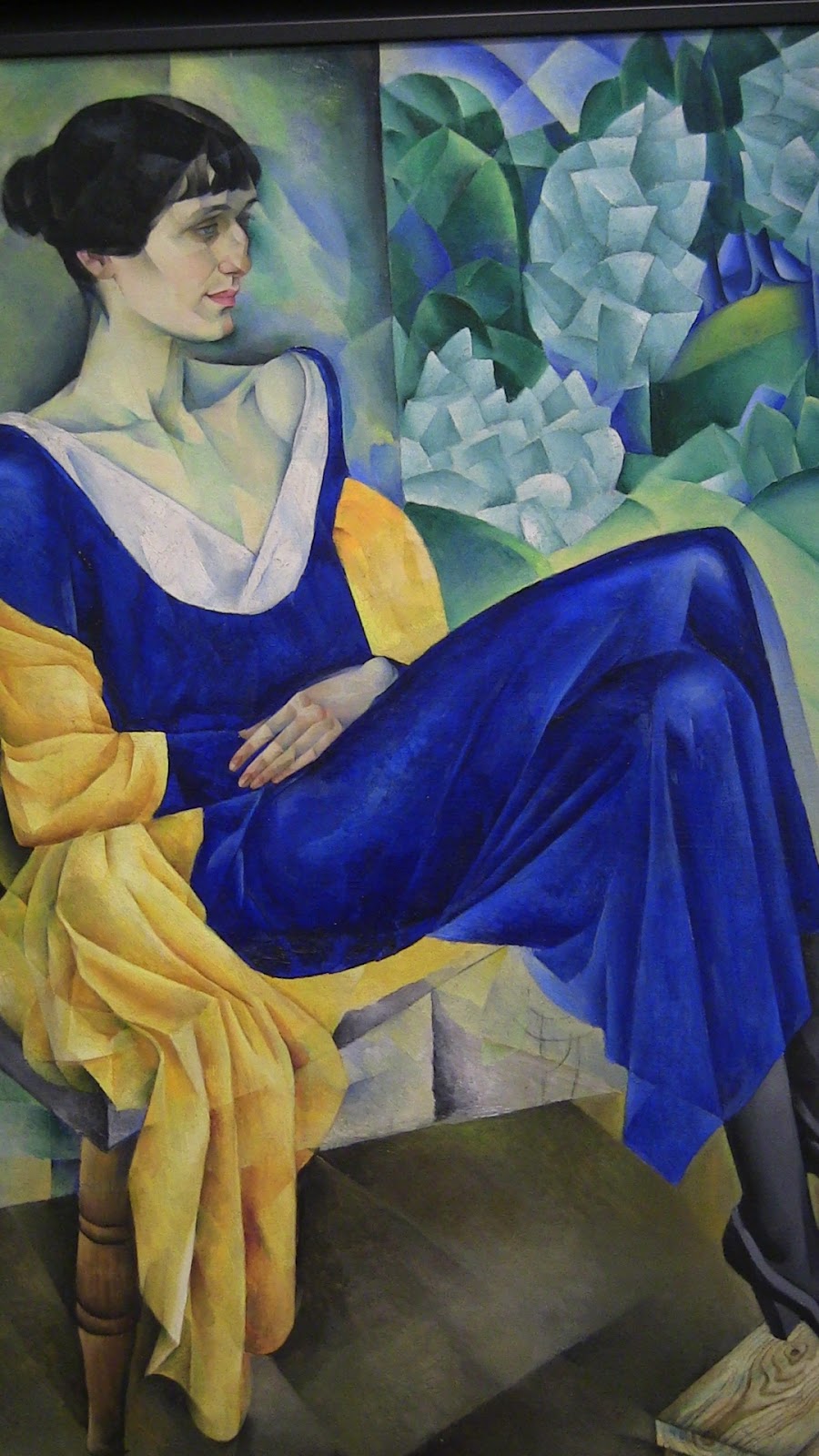
Anna Akhmatova


Anna Akhmatova
(1889-1966) 
Pseudonym of Anna Andreyevna Gorenko


One of the greatest Ukrainian poets of the 20th-century, who became a legend in her own time as a poet and symbol of artistic integrity. Anna Akhmatova's work is characterized by precision, clarity, and economy. She wrote with apparent simplicity and naturalness and her rhyming was classical compared to such radical contemporary writers as Marina Tsvetaeva and Vladimir Mayakovsky.

No foreign sky protected me,
no stranger's wing shielded my face.
I stand as witness to the common lot,
survivor of that time, that place.
(in Requiem)

Anna Akhmatova was born Anna Gorenko in Bolshoy Fontan, near Odessa, Ukraine, the daughter of a naval engineer. She began writing poetry at the age of 11, and adopted a pseudonym to allay her father's fears that as a"decadent poetress" she would dishonour the family. The pseudonym was the Tatar name of Akhmatova's great-grandmother. When she was sixteen, her father abandoned his family. Akhmatova attended a girls' gymnasium in Tsarskoe Selo and the famous Smolnyi Institute in St. Petersburg. She continued her studies in Kiev in Fundukleevskaia gymnasium (1906) and in a law school (1907) before moving to St. Petersburg to study literature. Among her teachers were the poet, dramatist and essayist Innokenty Annensky (1856-1909), who influenced her deeply.


Anna Akhmatova

At the age of 21 Akhmatova became a member of the Acmeist group of poets, whose leader, the poet and literature critic Nikolai Gumilyov she married in April 1910, in a church near Kiev. Nikolai was also friend of Annensky, and from Tsarskoe Selo. Nikolai, three years her senior, had fallen in love with Akhmatova when she was just fourteen. Akhmatova become "Gumi-lvitsa" (Gumi-lioness) and her husband was "Gumi-lev" (Gumi-lion).

Sunday, July 3, 2016

Anna Akhmatova / Our lady of sorrows


Anna Akhma-tova


Our lady of sorrows


Elaine Feinstein tells how poet Anna Akhmatova, whose son was in the Gulag, spoke for millions of Russians of their hell under Stalin in Anna of All The Russians


Neal Ascherson
Sunday 31 July 2005 00.46 BST


Anna of All The Russians: The Life of Anna Akhmatova
by Elaine Feinstein
Weidenfeld & Nicolson £20, pp322

When people remember Anna Akhmatova, they do so extravagantly. Josef Brodsky, one of the circle of young poets who adored her when she was old, said: 'In conversation with her, or simply drinking tea or vodka, you became a Christian, a human being in the Christian sense of the word'.
Anatoly Nauman, another in that circle, remembered that after meeting her he was 'stunned by the fact that I had been in the presence of someone with whom no one on earth had anything in common'. Isaiah Berlin, throwing himself on his hotel bed after spending a day and a night talking to her in Leningrad, exclaimed: 'I am in love, I am in love!'
Elaine Feinstein, author of this biography, calls her 'one of the greatest poets of Russian literature ... she became the voice of a whole people's suffering under Stalin ... an iconic figure for all those whom the Soviet regime repressed ...' This status was confirmed for ever when Andrey Zhdanov, Stalin's cultural rottweiler, excommunicated her in 1946 as 'half nun, half whore, or rather both nun and whore with her petty, narrow private life, her trivial experiences ...'
But icons are difficult to write about critically. How good a poet was she really? To me as a non-Russian, her contemporary Marina Tsvetaeva seems as a writer to be richer and more astonishing. I know Russians who now dismiss Akhamatova as 'a minor poet'. But how do you separate the passionate response to her verse, a response which has itself become part of Russian history, from the quality of that poetry?
Anna Akhmatova was born in Odessa in 1889 (her father was called Gorenko, but she took the more glamorous name of a Tatar ancestor). Brought up in and near St Petersburg, she became one of the young writers and performers who met in the 'Stray Dog' cellar in the years before the First World War. Mayakovsky, Mandelstam and many other men and women who were to be her friends for life went there. Akhmatova - tall, black-haired, with huge grey eyes - read poems about painful love.


Before she was 30, she was famous. The writer Kornei Chukovsky said her first book, Evening, 'accompanied the next two or three generations of Russians whenever they fell in love'.
In 1910, she married the poet and explorer Nikolai Gumilev. By the time of the revolution, seven years later, the marriage had come apart, but Gumilev's arrest and execution in 1920 on fictional charges of anti-Bolshevik conspiracy devastated Akhmatova. By now, she had begun the nomadic, chaotic existence which lasted most of her life. It brought her shabby rooms in old palaces, torn silk dressing gowns, a procession of momentary or semi-permanent lovers, semi-starvation ('a horrible skeleton dressed in rags', as one visitor saw her in 1919), tuberculosis and guilt. 'I brought destruction to those I loved.'
There were several times when both her current lover and her son, Lev Gumilev, were in the Gulag (the son survived; the lover, Nikolay Punin, died in the camps) But Akhmatova never left Russia, or thought of doing so. And, with only a few interruptions, the poetry kept coming.
Caught in the siege of Leningrad in 1941, she was one of the few writers chosen to be flown out. In spite of her political views, Stalin recognised that she was worth saving. But in 1946 Akhmatova was denounced ('harlot and nun') by Zhdanov. She became an 'unperson', dangerous to everyone she met. Lev Gumilev was rearrested and released only in 1956, three years after Stalin's death. Only in 1957 was Akhmatova rehabilitated. But nobody had forgotten the poet who had given them courage in awful times, and the last 10 years of her life were spent in glory, if not exactly in comfort, in a dacha of her own near Leningrad surrounded by friends.


A great deal of Feinstein's biography is taken up with careful attempts to decipher Akhmatova's 'relationships'. These were multiple and often simultaneous. Nobody's love life looks simple under bright light, but the emotional life of Russian intellectuals - then, as now - was as disorderly as a London teenager's floor. Wisely, Feinstein also disentangles Akhmatova's friendships, the human bond which many Russians consider more important and lasting than sexual love. Most of her male intimates let her down, but her women friends stood by her. What society today can produce friends as wonderful as Lydia Chukovskaya?
It was Chukovskaya who stood with her all those days and nights of frost, queuing outside prisons to hand in parcels. Akhmatova had food and clothes for Lev, bound for somewhere beyond the Arctic Circle. Chukovskaya took packages for her husband, not knowing that he had long ago been shot.
In one of those terrible queues, a girl recognised Akhmatova and whispered: 'Can you describe this?' Akhmatova replied: 'I can.' Out of that grew, gradually, her tremendous poem cycle, Requiem. Once, when young, she had written the lines which lovers quoted to one another. Now she provided words which thousands of men and women repeated under their breath, as they suffered, feared and waited.
As Feinstein writes, Akhmatova always considered that she had been 'appointed by God to sing of this suffering'. Even after her brilliant looks had faded, she was vain and - for someone with such good friends - strikingly indifferent to anyone else's problems.
As a conventional wife or mother, she was terrible. Her son, in the labour camps, deluded himself that she did not care how long he stayed there and that she was exploiting his fate to make her own poetry. (The embittered Lev Gumilev grew up to be the ultra-nationalist historian who reintroduced mystic racialism into post-Soviet education.) As a poet, her unambiguous language, like Pushkin's but almost always narration in the first person, does not translate easily into English, and can occasionally seem trite. But we know that for millions across the generations those words in Russian rang true.
Elaine Feinstein's achievement is to show us the life of an extraordinary woman in gleaming fragments, and to demonstrate, through so many witnesses, how she was worshipped.