Friday, November 3, 2023

The best recent poetry / Review roundup


Ishion HutchinsonVisions of war … Ishion Hutchinson. Photograph: Eamonn McCabe
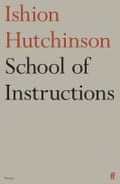
School of Instructions Ishion Hutchinson


Review

The best recent poetry – review roundup

School of Instructions by Ishion Hutchinson; The Wrong Person to Ask by Marjorie Lotfi; Housebreak by Shareen K Murayama; Cowboy by Kandace Siobhan Walker; Incubation: A Space for Monsters by Bhanu Kapil

Rebecca Tamás
Friday 3 November 2023

School of Instructions by Ishion Hutchinson (Faber, £12.99)

This visionary work of memory, elegy and loss captures the experiences of West Indian soldiers who fought for the British in the first world war. The collection weaves together the terrors of war with the terrors of imperialism, using dizzyingly original language and brutally impactful rhythms to create a tapestry of suffering, courage and struggle: “Frostbitten mud. Shellshock mud. Dungheap mud. Imperial mud … Caliban mud. Cannibal mud.” These experiences filter into the book’s second narrative, the life of Godspeed, a schoolboy living in Jamaica in the 1990s. Hutchinson subtly outlines the ways in which colonial force was perpetuated by language, English culture thrust into young minds with its own kind of violence: “Godspeed skulled elocution day … and so missed the shrieking out of ‘And then my heart with pleasure fills, / And dances with the daffodils.’ Bayonet fighting amid the cactus hedges …” The collection sings of those who “have no memorial who are perished as though they had never been” – reanimating their lives within the deathless, vivid fabric of poetry.

The Wrong Person to Ask by Marjorie Lotfi

The Wrong Person to Ask by Marjorie Lotfi (Bloodaxe, £10.99)

Lotfi’s imagistically rich debut collection moves from her childhood in Iran, where her family were uprooted by the revolution, to her youth in America and her current home in Scotland. Lotfi is sensitively attuned to the painful dislocation of self that can come from moving between different nations – “In my dream she asks me to say it again, / Lotfi, spell it out, before turning me away … I push through the exit / and walk home in rain to a house / that isn’t mine, in a country that isn’t mine.” Again and again her radiant language turns over the loss of family intimacy and identity caused by political upheaval and violence: “Ask about Ameh, her arms around my skinny frame, / or how I can have forgotten Farsi and the sound / of her voice bidding me each night to let the day go.” Lotfi’s book mourns these losses and separations, while at the same time rendering the possibilities of a capacious, multifaceted sense of belonging: “And what is home if not the choice – / over and over again – to stay?”

Housebreak Shareen K Murayama Bad Betty,

Housebreak by Shareen K Murayama (Bad Betty, £10)
A book of many griefs, personal and intimate as well as political and societal. The poet’s loss of her mother, first to dementia and then to death, is explored with arresting dark humour and piercing clarity: “I tell myself I’m not going to write another dead mom poem. / Nevertheless she arrives, promptly. In a care home fisted with careless bags of food or a spam musubi. / A comfort offering in reverse.” The book also addresses the trauma caused by hate crimes against Asian-Americans during the pandemic: “How you failed at making yourself smaller / in the pocket of your seat on your way to work this morning … nasty people should stay in fucking Asia.” Yet in the face of pain and prejudice, it remains fierce and bristling with life: “I have faith in folktales, like my grandmother’s story. / Anyone could be saved or eaten. Their tongues cut out.”

Cowboy by Kandace Siobhan Walker (Cheerio, £11)
This debut is hilarious, moving and dazzlingly new. Running through topics as varied as love, gentrification, neurodivergence, gender, queerness, death, life in the internet age, low wage jobs and capitalist exploitation, these poems create a gloriously sharp picture of modern millennial life and struggle: “Communism was cool again, Instagram was attractive. / Students were in occupation. Sad boys were novelties, / sad girls aspirational.” Walker’s greatest strengths are her beautifully odd imagery (“Nighttime’s religious core is wherever you / touch me; I’m absolutely dolphins. I’m molten”) and the mordant, painfully dark humour of her poetic voice. “What a beautiful day to have a miscarriage! … / There’s the beginning of you. I bleed / through my pyjamas – there’s the end.” Cowboy marks the entry of a significant and exciting new voice into British poetry.

Incubation: A Space for Monsters by Bhanu Kapil

Incubation: A Space for Monsters by Bhanu Kapil (Prototype, £12)
This hybrid work of poetry and prose from the TS Eliot prize winning author is as fresh, dangerous and thrilling as the open road followed by protagonist Laloo, a cyborg traveller who is both girl and mother, immigrant and settler. Laloo hitchhikes through the bewitching yet hostile American landscape, reflecting on her own complicated pasts in England and India, and her fractured relationship with herself. She is searching for the transformation or escape that journeying might provide: “I didn’t want to go home … A beautiful hazard: to go and keep going.” In these capacious and innovative poems of global shift and radical monstrosity, it is the brilliant potency of Kapil’s images that holds the threads of the narrative together: “At the highway exit, the hitchhiker is all bones and a red T-shirt in the ruby red tail lights … Cars whizzing by in a frenzy of rubies and diamonds.”

THE GUARDIAN


Saturday, October 28, 2023

Marigold and Rose by Louise Glück review – the babies’ tale

Louise Glück


Review

Marigold and Rose by Louise Glück review – the babies’ tale

The Nobel prize-winning poet’s first novel is a subversive, sophisticated vision of the first year in the lives of twin girls

Louise Glück, Nobel prize-winning poet, dies at 80

Fiona Sampson
Friday 25 November 2022

When the American poet Louise Glück was awarded the Nobel prize for literature in 2020, the Swedish Academy commended her “voice that with austere beauty makes individual existence universal”. They might have added that she makes the individual female experience universal, joining it to the canon of male mythology in ways even her titles make clear. The Seven Ages, from 2001 – a stunning reflection on human destiny – was preceded by both The Triumph of Achilles (1985) and Ararat (1990), for example, and followed by Averno (2005), named after the traditional site of the entrance to hell. While her earlier work explores family psychodrama, these books portray the emotional violence of mid-life. In 13 poetry collections and two volumes of essays, Glück’s emotional intelligence never surrenders to cosy consolation, yet the writing remains exquisitely beautiful.

Monday, October 23, 2023

Louise Glück / A poet who never shied away from silence, pain or fear


Louise Glück.

‘At the end of my suffering / there was a door’ … Louise Glück. Photograph: Susan Walsh


Louise Glück: a poet who never shied away from silence, pain or fear

Her work included long periods in which she wrote nothing – and when she did write, she had little sense that it was hers

 Louise Glück, Nobel prize-winning poet, dies at 80


Colm Tóibín

Tuesday 17 October 2023


L

ouise Glück was reticent, careful about what she said. She could be distant. There was always a sense that her real life was lived in dreams and memories, in her imagination, in her time alone. With students, sometimes she suggested that they try silence, not working at all. That, she believed, might be best for someone who was writing the wrong poems or producing too much.

Sunday, October 15, 2023

First fiction work by Nobel prize-winning poet Louise Glück to be published in UK

Louise Glück


First fiction work by Nobel prize-winning poet Louise Glück to be published in UK

This article is more than 1 year old

The 64-page ‘prose narrative’ Marigold and Rose: A Fiction – about twins in the first year of life – will be published in October


Sarah Shaffi
Thursday 25 August 2022

The first work of fiction by American poet and Nobel laureate Louise Glück is to be published in the UK later this year.

Louise Glück, poet and Nobel laureate, dies at 80


Louise Glück


Louise Glück, poet and Nobel laureate, dies at 80

Acclaimed American poet and Nobel laureate in literature Louise Glück has died at the age of 80.

She received a Nobel in 2020, becoming the first American poet to win the honour since TS Eliot more than 70 years earlier.

Saturday, October 14, 2023

Louise Glück, Nobel prize-winning poet, dies at 80


Louise Glück


Louise Glück, Nobel prize-winning poet, dies at 80

Pulitzer prize winner and former US poet laureate was known for her sharp, austere lyrical work


Adrian Horton

Friday 13 October 2023


Louise Glück, the Nobel prize-winning author and a former poet laureate of the United States, has died at the age of 80.

Friday, October 6, 2023

Pablo Neruda / Always


Always
By Pablo Neruda


I am not jealous
of what came before me.

Come with a man
on your shoulders,
come with a hundred men in your hair,
come with a thousand men between your breasts and your feet,
come like a river
full of drowned men
which flows down to the wild sea,
to the eternal surf, to Time!

Bring them all
to where I am waiting for you;
we shall always be alone,
we shall always be you and I
alone on earth,
to start our life!


Sunday, September 24, 2023

Pablo Neruda / The Condor


Pablo Neruda
El Cóndor


The Condor
Translated by Thayne Tuason

Yo soy el cóndor, vuelo
sobre ti que caminas
y de pronto en un ruedo
de viento, pluma, garras,
te asalto y te levanto
en un ciclón silbante
de huracanado frío.

I am the condor, I fly
above you that walks
and suddenly in a ring
of wind, pen, claws,
I assault you and lift you
in a whistling cyclone
of hurricane-like cold.

Y a mi torre de nieve,
a mi guarida negra
te llevo y sola vives,
y te llenas de plumas
y vuelas sobre el mundo,
inmóvil, en la altura.

And to my tower of snow,
to my black den
I’ll take you and live alone,
and you are filled with feathers
and you fly over the world,
still, in the height.

Hembra cóndor, saltemos
sobre esta presa roja,
desgarremos la vida
que pasa palpitando
y levantemos juntos
nuestro vuelo salvaje.

Female condor, we jump
on this red prey,
we tear up the life
that passes beating
and lift together
our wild flight.

Pablo Neruda 

Los versos del capitán (1952) 

Saturday, September 23, 2023

Pablo Neruda / The Question


The Question
By Pablo Neruda

Love, a question
has destroyed you.

I have come back to you
from thorny uncertainty.

I want you straight as
the sword or the road.

But you insist
on keeping a nook
of shadow that I do not want.

My love,
understand me,
I love all of you,
from eyes to feet, to toenails,
inside,
all the brightness, which you kept.

It is I, my love,
who knocks at your door.
It is not the ghost, it is not
the one who once stopped
at your window.
I knock down the door:
I enter your life:
I come to live in your soul:
you cannot cope with me.

You must open door to door,
you must obey me,
you must open your eyes
so that I may search in them,
you must see how I walk
with heavy steps
along all the roads
that, blind, were waiting for me.

Do not fear,
I am yours,
but
I am not the passenger or the beggar,
I am your master,
the one you were waiting for,
and now I enter
your life,
no more to leave it,
love, love, love,
but to stay.


Friday, September 1, 2023

Robert Graves / Reluctant War Poet


Robert Graves


Robert Graves, Reluctant War Poet

Review: Charles Mundye, ed., 'Robert Graves: War Poems'


Aaron MacLean
February 3, 2017

If it wasn't exactly the book that made him famous, the sales of Goodbye to All That certainly made possible Robert Graves' uncontainable and eccentric maturity—complete with the house in Majorca—and the means by which to ensure that his poetic art consisted not just of a "technical mastery of words" but a "particular way of living and thinking." A century after the events this autobiography depicted, it is still easy to see why it sold so well: it was and is an uncommon book. Narrated throughout in Graves' chiseled, ironic prose, it consists of unequal parts abject horror (the young Lieutenant Graves in a shattered wood robbing dead Germans of their great coats so that his men can have blankets, dodging clouds of undissipated gas as he goes), dishy amusements (T.E. Lawrence conspiring with Graves at Oxford to kidnap the Magdalen College deer), and frank sexuality—scandalous sexuality, at the time of publication in 1929.

What it doesn't contain much of is poetry, or accounts of the writing of poetry. The reader knows that he is scribbling the stuff throughout, but Graves the autobiographer keeps such business off stage. Despite this, moments essential to Graves' poetry and poetic career can't help but attract attention, like his first encounter with Siegfried Sassoon, who in 1915 was serving as another young lieutenant in his regiment, the Royal Welch Fusiliers. Inasmuch as Graves' account of this conversation involves Sassoon criticizing some drafts of poetry Graves shows him as being too "realistic," and showing Graves some embarrassingly sentimental verses in return, the moment falls squarely into the category of "dishy." Indeed, Sassoon was so upset at gossipy elements of the memoir, which he attributed to a bid for sales, that he was able to have the first edition suppressed, and subsequent editions revised.

Sassoon of course then saw heavy combat and began to write the brutally realistic war poetry that, in death, has remained the principal source of his fame, along with his own fictionalized memoirs. The same thing did not happen to Graves, who, despite almost always being counted among "the war poets," did not depend on membership in that club to maintain his reputation. This may be because Graves went on to be, well, Graves: controversial outsider and author of more than a hundred books including novels, translations, historical inquiries into the foundations of myth and religion, and of course poetry, most of which did not take war as its subject.

It may also be due to the fact that Graves actively resisted the status of "war poet." Charles Mundye, editor of a new collection of Graves' war poetry, outlines in a long and worthwhile introduction how Graves went so far as to suppress a fair amount of the writing he did in France, stating in 1941 that such work had been "too obviously written during the war poetry boom." Reading through the new edition, what is most striking is the heterogeneity of this young man's work. There are poems here that could easily be mistaken for something written by any other contributor to said boom—conventional war poems, if you will, combining the genre elements of horror and ironic reversal, and heavily influenced by the prevailing Georgian style. Graves' sonnet "Limbo" opens in the trenches, where "After a week spent under raining skies, / In horror, mud and sleeplessness" and where the dead bodies of fellow soldiers are stacked to build up the parapet,

…then one night relief comes, and we go
Miles back into the sunny cornland where
Babies like tickling, and where tall white horses
Draw the plough leisurely in quiet courses.

There are poems that have principally to do with poetry, like "Free Verse" and "John Skelton." There are also poems that clearly foreshadow Graves' interest in what he would term the "Old Religion"—the folk tales and rituals of England and Wales (Jack the Giant-killer, Lob, and so on) that, along with other European traditions, he came to believe transmitted the remnants of an Indo-European matriarchal ur-cult. Tied to such mystical concerns is the recurring theme of ghosts, as when, in "The Morning Before the Battle," Graves' narrator encounters his own wraith before him in a garden, and finds the fruit he has been eating "to clotted blood / Was transubstantiate…"; or when, enjoying a hearty dinner well behind the lines, a group of fusiliers is surprised to see their dead comrade Corporal Stare swagger up the street,

Just like a live man—Corporal Stare!
Stare! Killed last May at Festubert.
Caught on patrol near the Boche wire,
Torn horribly by machine-gun fire!
He paused, saluted smartly, grinned,
Then passed away like a puff of wind…

This last poem corresponds to the account in Goodbye to All That of a Private Challoner, whose ghost Graves claims to have seen. ("Corporal Stare" is a clear case of poetic license: much easier to work with, rhythmically and metrically, than "Private Challoner.") Having been killed in May at Festubert, Challoner "looked in at the window" where Graves and his fellow soldiers were enjoying a celebratory meal, "saluted, and passed on," leaving as his only trace a smoking cigarette on the street, as in the poem.

Written more than ten years after the fact, one has to wonder what role the act of writing the poem about Stare had distorted the memory of the actual "encounter" with Challoner—memories, especially those born of trauma and stress, are unstable concoctions, and the creative act has a way of looping back and flavoring the well of recollection with its own inventions. One also wonders whether or not a broader version of this concern had something to do with Graves' resistance to being seen as a "war poet," and his skepticism of the "war poetry boom," as he put it. The way that this school—Sassoon, Owen, Thomas, Winters, and so on—interpreted their own condition had quickly become the accepted way to understand the experience of modern war. It is probably fair to say that it remains the accepted way through to the present, even if later generations of war artists lacked much of the cultural equipment that the original set brought to bear. However true—and there was a lot of truth to it—such a dominant interpretation has a way of being a straitjacket, of containing honest impulses, and twisting them to what readers expect in a "war poem." And in life, let alone in poetry, Robert Graves did not intend to be contained.

THE WASHINGTON FREE BACON