Friday, August 23, 2024

A Poet for All Seasons: Yosano Akiko and Same-Sex Love


Japan’s Literary Treasures

A Poet for All Seasons: Yosano Akiko and Same-Sex Love

Janine Beichman

10 August 2021


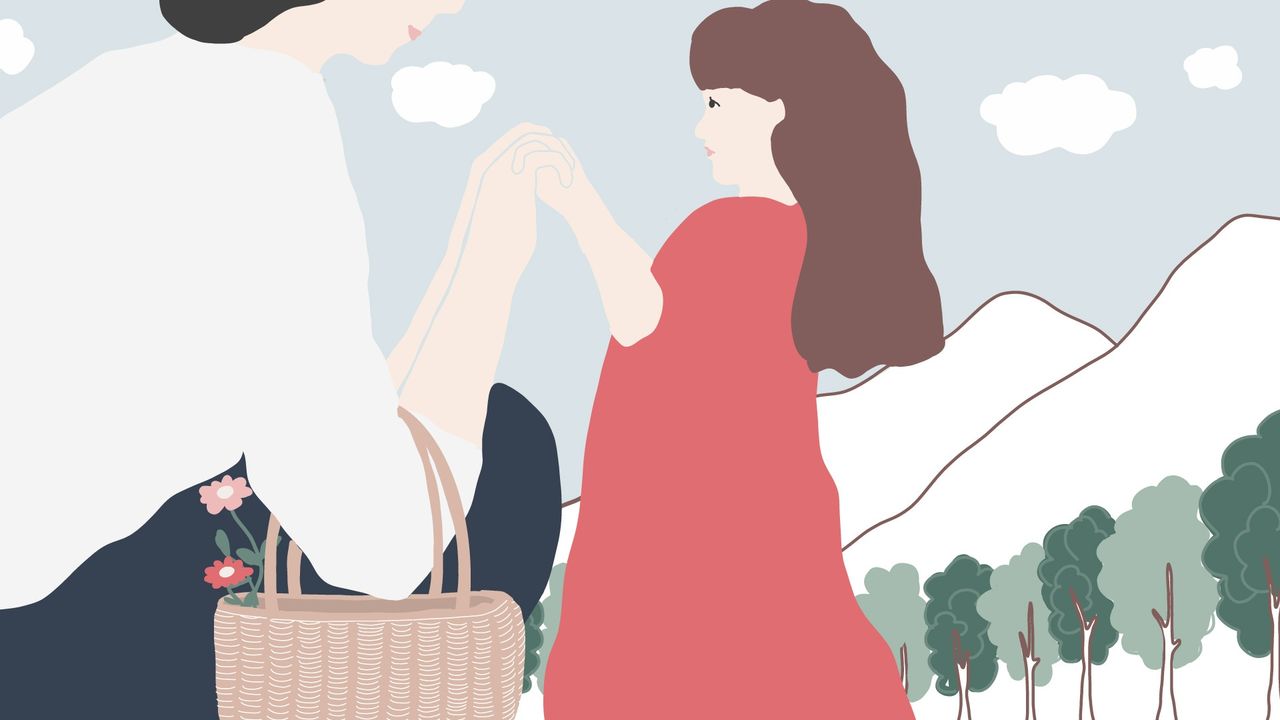
Poet Yosano Akiko’s painfully honest and moving account of her passionate crush on a classmate at her school for girls raises questions about how love and sexuality are viewed in different eras.


A Passionate Crush

Was Yosano Akiko queer? That was the question a poet friend, seemingly influenced by a website listing possibly queer poets, asked me a few months ago. For my friend, who told me she is queer herself (as in sexually fluid, able to love a man or a woman), the answer was of personal importance.

Readers who conflate the poems with the life have long indulged themselves by weaving stories about Akiko’s sexuality, but I set most of those aside long ago. Even where “evidence” was adduced it always proved to be more smoke than fire. My friend’s inquiry, though, was asked in all seriousness, and the personal urgency inspired me to look into the question more deeply. Among Akiko’s uncollected essays I found the intriguingly titled “Same-Sex Love: An Autobiographical Interlude” (“Dōsei no ai jiden no issetsu,” 1917). This painfully honest and moving account tells of Akiko’s passionate crush on a classmate at the Sakai School for Girls during her early adolescence. Here I will introduce it and then return to the question with which I began.

Akiko begins, as she often does in her essays of this time, by discussing the etymology of a word, in this case omesan. People were now choosing to write this term for an intimate relationship between two girls with the kanji for “male” and “female,” but she objects to this, insisting (on the authority of a contemporary girl student she knew) that it was an abbreviation of omedetai, “fortunate,” derived from the envy others felt for the couple’s happiness. “To write it with the kanji for ‘male’ and ‘female,’” she declares, “makes a word about something innocent into one that expresses something repulsive to even think of.” In other words, Akiko is insisting on the asexual purity of same-sex love between girls, and fighting the orthography which would suggest that such love had an erotic component.

The conflation of romantic friendship with sexual passion under the single heading of homosexual love arrived in Japan in the late nineteenth century, when the works of Richard von Krafft-Ebing were translated, and those who kept up with developments in modern thought, as Akiko did, were well aware of the theory that same-sex love was a sexual perversion. By objecting to writing ome with the kanji for male and female, she is putting her foot down and refusing to let the word mean a lesbian relationship. At the same time, she stakes out a territory for this purely spiritual same-sex love that is even more intense than that of erotic heterosexual love, and then, without any pause, enters into her own personal story:

“I am of the firm belief that love between adolescent girls is not a form of sexual perversion. I also know that this love between girls comes with feelings even more intense than those of love between men and women. I had a friend like that once. One usually hears that in such relationships the love is equal on both sides, but with us, it was eight parts on my side and but two on hers. It’s obvious now of course, but even then I fully realized that my love was completely irrational.

“My friend—let’s call her M—was the same age as me. She did not come from an old family but was the daughter of what was then called in Sakai a ‘house of means,’ which today would be called nouveau riche. My love for her continued passionately for three years, from the time I was fourteen to when I was sixteen.” (Note that in her essay she uses kazoe-doshi—the traditional means of counting age, in which a child is counted as 1 upon birth and gains another year of age every January 1—and says 15 to 17; in fact, Akiko was born in December, so she might have been even younger, that is, 13 to 15.)

Big-City Glamor

What attracted Akiko was M’s connection to Osaka, the closest large city to Akiko’s hometown of Sakai, and the site of many wistful dreams of freedom and beauty from Akiko’s childhood. M wore her hair in the Osaka style, and decorated it with lovely ribbons. This attracted Akiko’s attention and admiration, and made her wonder if M and Osaka people often met. And this speculation, she writes, “was the beginning of my love.”

It turned out that M was intimately acquainted with the big city and had many stories to tell about Osaka people and their doings. At first, Akiko wondered if she was merely relaying what she had heard, but then she realized that M “was reporting what she herself had seen,” and she became even more smitten, for Osaka was a city of tremendous glamor for Akiko.

She continues: “The girls who had grown up in the dim dark streets of old Sakai almost never got excited when they heard about the wonderful ways of city people. I looked forward to being near M in the ironing room [they were in the same sewing class] and started to think up excuses to go there when I knew she would be using it. I also liked that the things M made were always new kimono for herself using the finest silk.

“In those years, I never felt envy for others, but I would think of someone else’s happiness and good fortune as my own and use it as fodder for the fantasies I wove, so during the time I sat there silently sewing, the lovely striped and patterned kimono that M sewed gave me many dreams. I was so happy when we began to sit together at lunch in the school cafeteria. We also began to walk home from school together. If I happened to notice M as I walked to school in the morning my heart would beat so quickly. Then one day she suggested that we both wear our hair to school in shimada style, and I was in ecstasies. But then she told me that because our plan had leaked out to another one of her best friends, we would have to give it up, in order not to hurt the other friend’s feelings. Instead, she said, she would do her hair in shimada style one week and then I could do mine in shimada style the next, so only the two of us would know.

“But instead of doing as she said, I did my hair in shimada style on the same day as her. I did it on purpose, to make the other friend jealous. And then how miserable I was when M hated me for it!

“One day after school let out, I was waiting for M in the corridor at the bottom of the stairs so that we could walk home together, when another friend came and told me that M said she would be late so I should go home ahead. Hardly knowing what I was doing, I rushed up the stairs. In tears, I said to M, “You and your other friend can go home together later on!” Even now I think I have never felt as intensely jealous as I did then, even in my seventeen years of marriage.”

An Impossible Friendship

Many questions could be raised about Akiko’s feelings, their egocentricity, their possessiveness, and so on, but Akiko herself goes on to introduce the most interesting one: How could a girl like her, so intellectual, so ambitious, so well-read, waste her time on an impossible friendship with someone so much her inferior, for whom pretty ribbons and celebrity gossip were the stuff of life? Here is how she explains it:

“It may be hard to believe that the person I was then could have been satisfied with talking about what happened to be in style at the moment or gossiping about Osaka theater and actors. To explain I need to describe my complicated psychological condition at the time. On one hand, I well knew that the things I talked about as one of the best friends of the girl I’ve called M were trivial and insignificant. I had been a voracious reader of new books and old, with a tremendous hunger for knowledge, since I was eleven or twelve [12 or 13 in the original kazoe-doshi]. A passion for learning burned in me like fire. When I was at school, the one fear that obsessed me was that the moment my love for learning became known to M, we would have to part. For the sake of my love for M I accepted becoming a foolish young woman.

“Among passionate loves there must be those that are not as irrational as mine was. Mine resembled a man who pretends to be uncultured when enjoying himself with a geisha. And yet I loved her passionately, to a degree that surprises me even today.”

The woman who was capable of writing this painstaking and poignant account of her adolescent self is still often dismissed as someone who, after her first daring collection of poetry, became the embodiment of the good wife and wise mother. This essay puts paid to that, as do her many poems and essays about the ups and downs of her enduring marriage to Yosano Tekkan (Hiroshi), the love of her life.

A Paradox?

But to return to the question with which I began: Was Akiko queer, that is, did she ever experience passionate erotic love for a woman? On the evidence of this essay, I would say no. The reason is that at the essay’s beginning she explicitly states that by same-sex love between women she does not mean sexual love, that is, lesbianism, which she calls a perversion. But while insisting on this, she also states that nonsexual love can be stronger than the sexual love between a man and a woman. To our modern eyes, this is a paradox, and this paradox is, I think, the most important part of her essay.

Akiko grew up at a time when romantic friendship between women was commonplace and well documented in Japan, Europe, and America. In fact, it still exists, but has gotten lost among a dizzyingly varied taxonomy of sexualities, from the strict binary of male-female to the pansexual. Akiko herself, as if foreseeing the demise of gender as a binary concept, once wrote:

“Is not the distinction made between men and women up until now too superficial and based only on one part? There are men among us who in their facial features, their skin, the timbre of their voice, and even their disposition and feelings are like a woman. And conversely there are women who in all those things are like a man. That is to say, I think that there must be a significant number of men equipped to bear children and also of women who possess the talent to be a writer, a teacher, a farmer, or a philosopher. If we did the necessary theorization and experiments we might discover that distinguishing between men and women only on the basis of their roles in reproduction is a mistake.”

To call Akiko queer is to impose our ideas of love on her. Akiko lived during a period when the view of romantic friendship between women was changing from acceptance to rejection. In her 1981 classic Surpassing the Love of Men, Lillian Faderman wrote of how “the supposedly liberalized twentieth-century view of sex”  created its own rigidity. With the sex drive identified as the foremost instinct, “the enriching romantic friendship that was common in earlier eras is thought to be impossible.”

In our sex-obsessed age, it may be hard to imagine an asexual attachment that surpasses the love of men in its intensity, but Akiko’s essay is about that reality. Often Akiko seems wonderfully contemporary or at least modern, but in this area she is not.

Or is she? It may be that she has put her finger on something that is universal and unchanging, whether or not current mores name it. As always, Akiko honestly narrating her emotions teaches us about ours.

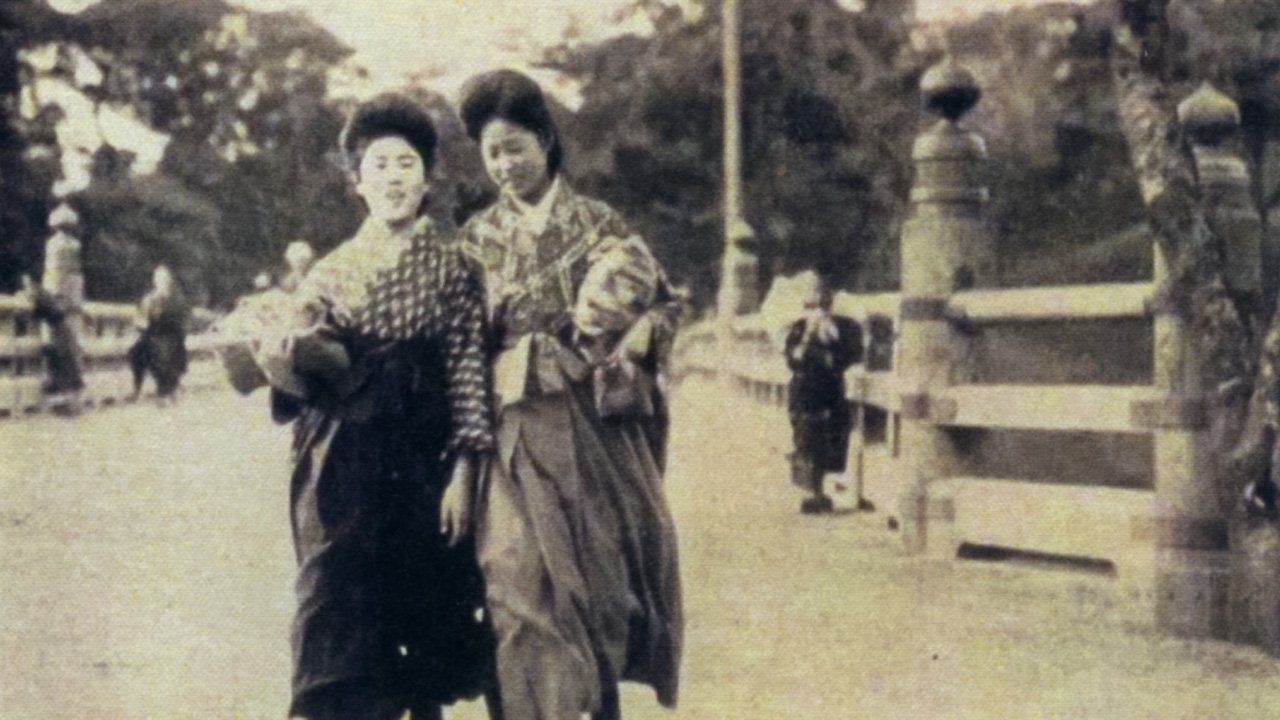
(Originally written in English. Banner photo: Two young Taishō-era women walk across Tokyo’s Benkei Bridge. From Shōjo Gahō, December 1913.)


Janine Beichman

Scholar, translator, and poet. Professor emerita at Daitō Bunka University. Author of the Nō play Drifting Fires. Books include Masaoka Shiki: His Life and Works, Embracing the Firebird: Yosano Akiko and the Rebirth of the Female Voice in Modern Japanese Poetry, and Beneath the Sleepless Tossing of the Planets: Selected Poems, a translation of poetry by Ōoka Makoto for which she received the Japan-US Friendship Commission Prize for the Translation of Japanese Literature. Her most recent publications are the 2021 Well-Versed: Exploring Modern Japanese Haiku, a translation of Meiku no yuen by the haiku poet Ozawa Minoru, and the 2022 This Overflowing Light: Rin Ishigaki Selected Poems, her translations of Ishigaki Rin’s poetry. Her work has been supported by awards from the National Endowment for the Arts and America PEN, among others.


NIPPON


Thursday, August 22, 2024

Kaneko Misuzu / Finding God in a Little Bee


Lost and Found: Children’s Poet Kaneko Misuzu

Kaneko Misuzu: Finding God in a Little Bee


Yazaki Setsuo


Kaneko Misuzu’s flights of imagination took her everywhere: from small things invisible to the human eye to the open skies and the vast cosmos beyond. At the same time, she was able to describe human emotions in language that was memorable and easy to understand, based on her keen observations of everyday life. An exploration of the humility and generosity of spirit that make Misuzu and her work so appealing.


Auguries of Innocence

Bee and God

Bee is in the flower
Flower is in the garden
Garden is in the yard
Yard is in the town
Town is in Japan
Japan is in the world

And, and then, God
is in the tiny little bee.

(Translated by Sally Ito and Tsuboi Michiko.)

In “Bee and God,” God is not some distant, awe-inspiring supernatural being located far from our daily experience, but right here inside everything we see around us, including ourselves. It’s a happy, reassuring thought.

For Kaneko Misuzu, everything on earth—not just animals and plants, but lifeless things like stones and minerals as well—were part of a greater unity, living together and supporting one another to form a precious whole. This idea would have been impossible for someone who saw the world from an anthropocentric perspective.


once bent down to pick up the leaf of a persimmon tree that had fallen onto the ground in front of me. When I took the leaf in my hand, I was overcome by a strange sensation, as if I had suddenly been lifted up into the sky and were looking down on the scene from high above where I stood. Somehow, this single leaf contained an aerial photograph showing a great river, branching off into numerous streams as it gently flowed, and by its side the town, rendered silent by distance.

I might never have been moved by this strange moment of shifted perception if I had not encountered Misuzu’s lines about God and the bee. The idea that the whole is contained in its parts, as the parts are contained in the whole, was one that resonated with me. In that moment, I felt profoundly the power of its truth.

Human beings are just one part of life on earth—and yet so often people act as if they can do as they please, as if we are the only things that matter. Even when people have the best interests of the natural world at heart, they often speak of “caring for the environment.” But that is the wrong way of looking at it. The earth cares for us—that is the only reason why our species is still able to exist.

There’s apparently a saying in Native American cultures: “We do not inherit the Earth from our ancestors; we borrow it from our children.” I am reminded of this attitude of humility and respect whenever I read Misuzu’s poems, and of the importance of inscribing it in the hearts of all people—before it is too late.

All-Embracing Acceptance

Are You an Echo?

If I say, “Let’s play?”
you say, “Let’s play!”

If I say, “Stupid!”
you say, “Stupid!”

If I say, “I don’t want to play anymore,”
you say, “I don’t want to play anymore.”

And then, after a while,
becoming lonely

I say, “Sorry.”
You say, “Sorry.”

Are you just an echo?
No, you are everyone.

(Translated by David Jacobson, Sally Ito, and Tsuboi Michiko.)

What is the original echo but the call-and-response formed by the two beating hearts of a mother and her baby? “I’m here.” “You’re there.” “I’m happy.” “I’m happy too.” “I love you!” “I love you too!” It is through the closely matched antiphonal beating of these two hearts—separate but one, joined but apart—that we human beings are born into the world and begin our lives.

In this sense, an echo is most noble of human actions.

When children are small, surely all parents experience a child’s pain almost as their own, and echo the child’s cry of pain: “Ouch, that hurts,” almost as if they could feel the pain themselves. But how quickly we and the children grow, and before we know it we are putting ourselves first, voicing our own feelings rather than accepting the child’s pain and sadness as our own.

We no longer give that echoing murmur of sympathy: “Ouch, that hurts . . .” Instead, we try to argue with the pain: “It doesn’t hurt.” “Don’t cry.”

A child comes into the world trusting in the assurance of love from a unique mother and father. And yet now those parents no longer sympathize with the child’s pain but insist on seeing things from their own perspective. How does this make the child feel? And what becomes of these feelings of sadness and pain?

To love someone means to deal with them properly and to accept their pain and sadness as our own. This, I feel, is Misuzu’s message.

Living On in the Memories

Cocoon and Grave

A silkworm enters its cocoon—
that tight, uncomfortable cocoon.

But the silkworm must be happy;
it will become a butterfly and fly away.

A person enters a grave—
that dark, lonely grave.

But the good person
will grow wings, become an angel
and fly away.

(Translated by David Jacobson, Sally Ito, and Tsuboi Michiko.)

“Actually, a silkworm doesn’t turn into a butterfly, even when it grows up and leaves its cocoon,” a little girl told me once after reciting these lines.

And she was quite right. Even if a silkworm reaches adulthood, it will never become a butterfly capable of fluttering high into the sky. And, of course, many silkworms never make it to adulthood. They are used for human purposes to produce silk, and never live to see the world outside their cocoons.

Perhaps this sad thought made Misuzu want to take pity on the silkworms, who die before their lives have even begun, allowing them to spread their wings as butterflies and soar into the sky.

Humans die too, after which they find themselves inside a dark and lonely grave. But unlike the silkworms, we at least have been born into the world and have tasted its wonders. And we can live on in the memories of the people we touched during our lives.

Misuzu talks of “good children” (ii ko) in her poem—but all of us are “good children” in the sense that we came into the world by inheriting the gift of life from our parents. And that is good enough for you and me. Good enough for all of us. Perhaps this thought can help to make the idea of dying less fearful.

After Misuzu’s death, her mentor, the poet Saijō Yaso, discussed these lines in his essay, “One night in Shimonoseki: Reminiscences of the late Kaneko Misuzu,” describing it as “probably her greatest masterpiece.”

I hope that this short introduction will help to bring Kaneko Misuzu and her work to the attention of more people around the world. If her work can bring to readers in other languages something of the enjoyment and nourishment it has given me over the years, nothing would make me happier.

(Originally published in Japanese. The English poems “Are You an Echo?” and “Cocoon and Grave” are from the book Are You an Echo? The Lost Poetry of Misuzu Kaneko, translated by David Jacobson, Sally Ito, and Tsuboi Michiko. Illustration by Moeko.)


Yazaki Setsuo

Yazaki Setsuo. Born in Tokyo in 1947. Graduated from Waseda University. In 1982, won the Akai Tori Literary Award for his collection of children’s stories, Hoshi to sora no shita de (Beneath the Stars and the Sky). Unearthed lost manuscripts by Kaneko Misuzu, which were published in a new edition of her complete works. Has also founded a school in Nepal (named after Kaneko) and worked in medicine. Director of the Misuzu Kaneko Memorial Museum since 2003.


NIPPON


Wednesday, August 21, 2024

Waiting for Form / How Robert Frost made poetry modern


A black-and-white photograph of Robert Frost standing outside, surrounded by plants and rocks.
Photograph by Louis Untermeyer. Courtesy of the Spinelli Archives, Plymouth State University.

Waiting for Form

How Robert Frost made poetry modern.


BY TYLER MALONE

Originally Published: diciembre 11, 2023

I. A Lover's Quarrel

In the cemetery outside Old First Congregational Church in Bennington, Vermont, among other stone markers that “doubtless bear names that the mosses mar,” is a long, rectangular gravestone embossed with seven names: those of poet Robert Lee Frost; his wife, Elinor Miriam White; and five of their six children. Their daughter Irma, committed to a mental institution in 1947, is the only one not buried with them.

Thursday, August 15, 2024

Robert Frost / “Mending Wall”


Robert Frost standing in a meadow during 1957 visit to the Gloucester area of England, where he lived with his family in the 1910s. (Photo by Howard Sochurek/The LIFE Picture Collection via Getty Images)

Robert Frost standing in a meadow during 1957 visit to the Gloucester area of England, where he lived with his family in the 1910s. (Photo by Howard Sochurek/The LIFE Picture Collection


Robert Frost: “Mending Wall”


How a poem about a rural stone wall quickly became part of debates on nationalism, international borders, and immigration.


BY AUSTIN ALLEN

Originally Published: agosto 20, 2019

Are borders necessary or regressive? Are humans naturally driven toward greater connection and cooperation, or does some old, mistrustful instinct always hold us back? These are among the questions that haunt the edges of “Mending Wall” like shade in a springtime pasture. This early Robert Frost masterpiece first appeared in the book North of Boston (1914), and its tale of a wall dividing neighbors’ properties has been read both literally and figuratively ever since. With understated wit and a knack for crafty symbolism, Frost casts a cold eye on the real and figurative walls that divide us.

The poem’s narrative is simple—or seems so. The speaker and his neighbor meet in spring to repair the stone wall between their properties. Reviewing the damage that weather and hunters have caused, the speaker begins with a reflection:

Something there is that doesn’t love a wall,
That sends the frozen-ground-swell under it,
And spills the upper boulders in the sun;
And makes gaps even two can pass abreast.

He doubts whether this particular wall is even necessary, dryly reminding his neighbor that their lands don’t need partitioning: “My apple trees will never get across / And eat the cones under his pines, I tell him.” The neighbor counters with a proverb: “Good fences make good neighbors.” Half-amused, half-provoked, the speaker “wonder[s] / If I could put a notion in his head” and force him to question his unthinking maintenance of the wall. But the speaker says nothing further, and the neighbor, pleased with his comeback, repeats it.

Because the neighbor gets the last word, it’s possible to read “Good fences make good neighbors” as the poem’s straightforward message. A more complex reading, alert to Frost’s ironic style, would side firmly with the speaker. In this view, the speaker nurses a healthy suspicion of barriers that serve no clear purpose; he is open to communication and new ideas, wary of anything that arbitrarily divides people: “Before I built a wall I’d ask to know / What I was walling in or walling out, / And to whom I was like to give offense.” By contrast, the neighbor is a creature ruled by habit and cliché. The ending provides a good deal of evidence for this reading:

                                ... I see him there
Bringing a stone grasped firmly by the top
In each hand, like an old-stone savage armed.
He moves in darkness as it seems to me,
Not of woods only and the shade of trees.
He will not go behind his father’s saying,
And he likes having thought of it so well
He says again, “Good fences make good neighbors.”

“He moves in darkness” implies the darkness of ignorance, and the passage as a whole casts the neighbor as stubborn, incurious, trite in speech, and crude in manner. He repeats his comeback out of self-satisfaction, and he keeps repairing the wall—estranging his fellow human beings—out of rigid traditionalism. So unflattering is this portrait that it’s tempting to stop our reading there. It would be easy, in that case, to frame the poem as a tidy allegory of tolerance versus intolerance, openness versus repression, rationality versus irrationality, and so on.

But Frost is a poet who weaves ironies within ironies, and his poem beckons us toward even more-nuanced readings. Poet-critic Lawrence Raab finds shades of gray within the speaker’s attitude:

The poem doesn’t begin with “I hate walls” or even “Something dislikes a wall.” Its first gesture is one of elaborate and playful concealment, a calculated withholding of meaning. Notice also that it is the speaker himself who repairs the wall after the hunters have broken it. And it is the speaker each year who notifies his neighbor when the time has come to meet and mend the wall. Then can we safely claim that the speaker views the wall simply as a barrier between human contact and understanding?

True: the speaker acknowledges having “made repair” before even mentioning the neighbor, and when new gaps appear in the wall, he “let[s his] neighbor know beyond the hill.” He may not love the wall, but he actively collaborates in its preservation. Here we should note that Frost may not be voicing the poem as himself. He may be judging both speaker and neighbor, dramatizing their perspectives without fully embracing either.

Can we identify his own stance? As Raab points out, the “Something” that undermines walls in winter is frost; perhaps the poet Frost was punningly aligning himself with anti-wall forces. And everything in the poem indicates that, practically speaking, this wall is useless:

Spring is the mischief in me, and I wonder
If I could put a notion in his head:
“Why do they make good neighbors? Isn’t it
Where there are cows? But here there are no cows.

But what about the breezy comparison of wall-mending to “another kind of out-door game, / One on a side”? Two outdoor players with a barrier between them—this sounds a little like tennis, and Frost was a casual tennis player who used the sport in a famous metaphor about verse. The poet Rachel Hadas offers the following:

As an occasion for craft, besides being a guarantee of privacy, the wall is also crucial. Frost often compared free verse to playing tennis without the net—a remark which no one has ever interpreted as an attack on nets.

The wall in “Mending Wall” imposes an arbitrary limit. But like the rules of a game or poetic form, such limits can spark creativity and connection—as Hadas puts it, “the joint maintenance of form for its own sake ... so that wall-making also becomes ‘a time to talk.’” Hadas agrees with critic Richard Poirier: “[I]f fences do not ‘make good neighbors,’ the ‘making’ of fences can.”

Beneath all these layers of criticism there is Frost’s own commentary. In an author’s note in North of Boston, Frost wrote that the poem “takes up the theme where A Tuft of Flowers [sic] in A Boy’s Will laid it down.” He is referring to “The Tuft of Flowers” from his previous (1913) volume, especially to that poem’s closing lines:

‘Men work together,’ I told him from the heart,
‘Whether they work together or apart.’

The “him” is a fellow farmer who has mowed a field where the speaker now “turn[s] the grass.” Though the neighbor never appears in this poem, there’s a real sense in which the speaker is “work[ing] together” with him—in a shared field, on a shared project. Upon discovering a beautiful tuft of flowers his neighbor’s “scythe had spared,” the speaker feels an even deeper sense of communion with him, a shared delight in the “work” of appreciating the world. Although the speaker utters the final lines in solitude, they come “from the heart.”

If “Mending Wall” takes up the same theme without variation, then wall-mending must be a form of bonding, the joint renewal of something worthwhile. (As Raab reminds us, “the phrase ‘mending fences’ means to restore communication and neighborliness.”) But the tart, even sardonic tone of “Mending Wall” makes us feel the theme has shifted. Here the neighbors’ isolation seems greater and their bond weaker, even though they’re communicating face to face. More seems to be at stake than the rewards of work or the fun of an “outdoor game.”

*          *          *

Frost made a few other remarks about “Mending Wall” over the years. In his old age, he said it had been “spoiled” by being “applied.” This claim suggests a wistful desire to wall off the poem from real-world influence. Are we bound to respect that divide, or can we poke holes in it?

From the outset, the poem has been hard to separate from politics. Frost published it in England during the first year of World War I, a time of fierce European border disputes. Though we can’t reduce it to a political allegory, its ambivalence about boundaries does make a particular kind of sense in that context. For one thing, the poem’s apparent stakes are so low that we feel it must be hinting at something else. (Few readers care about rural stone walls, but many care deeply about lines on the map.) For another thing, the poem’s physical details—a wall dividing land, two landowners who cultivate different trees—make for easy geopolitical analogies. (Picture neighboring countries with different industries.) Even the poem’s season is balanced, like uncertain diplomatic relations, between a freeze and a thaw.

Frost doesn’t rail against artificial boundaries, but he does urge us to think before imposing them, to ask “What [we are] walling in or walling out.” If his true subject is global affairs—say, isolationism versus internationalism—his commentary is more memorable for being sly.

This restrained approach drew little controversy before the world wars, when Frost was a largely unknown writer. But by the height of the Cold War in the 1960s, Frost was an institution, and “Mending Wall” faced pressure to declare its allegiances. In particular, the 1961 construction of the Berlin Wall—part of the “Iron Curtain” dividing capitalist Western from communist Eastern Europe—brought the poem fresh attention from both sides. For the Soviet Union, according to Raab, the “detachable statement” about good fences served as a rationale for rigid defenses. For Americans, according to Grzegorz Kosc in The Transatlantic Sixties (2013), the idealistic interpretation was self-flattering:

Though Frost warned against easy readings of the poem and explained that it locked together a nationalist and a “one-worlder” in an irresolvable tension, “Mending Wall” spoke to Americans as an unequivocally “wall-tearing” poem, expressing the universalist ideology of brotherhood of mankind that the West arrogated to itself...

Despite his warnings, Frost himself tried to serve the cause of tension reduction. President Kennedy, for whom he’d read a poem at the 1961 inauguration, sent him on a 1962 goodwill visit to the USSR that included a meeting with the Soviet premier, Nikita Khrushchev. (Kosc calls this the “Frost-Khrushchev summit.”) Although the poet did his earnest best—charming the premier despite ill health, reading “Mending Wall” in Moscow—he could not allay the tensions that soon fueled the Cuban Missile Crisis.

This wasn’t his first foray into poetic diplomacy. A 1961 State Department trip had taken Frost to the divided city of Jerusalem, where, as biographer Henry Hart recounts, the poet offered the first line of “Mending Wall” to a group of kids who asked him to write something for them. Hart claims that “He could just as easily have written, ‘Good fences make good neighbors,’ since he also believed in the necessity of walls”—but he didn’t, in fact, choose that line. Moreover, according to Kosc, Frost exclaimed about Israel-Palestine divisions: “Stones and stones, and walls and walls, and barbed wire, wire, wire. The shame of it! That barbed wire was invented in America!” The poet died in 1963 without seeing any of these conflicts resolved.

The Berlin Wall lasted until 1989, when its fall amid a groundswell of protest and a broader Cold War thaw seemed to herald a victory for internationalism. In a landmark speech two years earlier, President Reagan had urged his Soviet counterpart, Mikhail Gorbachev, to “tear down this wall.” History swings unpredictably; in 2016, a different Republican captured the White House with the slogan, “Build that wall!” The new president, an extreme nationalist determined to block migration from Central America, pledged to impose a coast-to-coast barrier between the United States and Mexico. Though construction of the physical wall soon stalled, border patrols turned back southern refugees en masse or confined them in dire conditions. Predictably, as Alexander Nazaryan reported during the 2016 campaign, “both supporters and detractors” of this new nationalism “have used Frost’s poem to their ends.”

And so, a poem from 1914 now holds a pocket mirror to international relations since 1960. But then, it has always glanced back at the history of human borders, barriers, and fortifications from Jericho onward. It seems doomed to perpetual relevance; the Washington Post recently quoted it in an article with the plaintive title “Walls are the foundation of civilization. But do they work?” At the same time, it seems designed to frustrate message seekers. Nazaryan calls it “a gorgeous act of equivocation”:

“Mending Wall” ends on the conviction about good fences making good neighbors. ... You know that the narrator doesn’t believe this, so why does he let it stand? Because some do not love walls, but others do, and always have. Hence the wall in Berlin, but also Hadrian’s Wall and the Great Wall of China.

This echoes one of Frost’s own late-life comments:

I could’ve done better for them probably, for the generality, by saying

Something there is that doesn’t love a wall,
Something there is that does.

Why didn’t I say that? I didn’t mean that. I meant to leave that until later in the poem. I left it there.

The aging Frost also reflected, “Maybe I was both fellows in the poem.” Frost’s qualifiers—“probably,” “maybe”—make mischief all over again. So ambiguous is “Mending Wall” that it seems to play games with us, volleying us first toward one interpretation, then another.

Still, words are never fully ambiguous, however poets might wish otherwise. “Something there is” in the poem’s rhetoric, some quiet subsurface pressure, that profoundly undermines the act of wall-making. Consider that “Good fences make good neighbors” really was a dusty proverb: it had appeared in the Dwights American Magazine, and Family Newspaper as early as 1846. This puts it at a quadruple remove from Frost’s own sentiments: it’s filtered through the speaker, the neighbor, the neighbor’s father, and whatever source the father got it from. Notice, too, that it ends on an unstressed syllable, making it less emphatic than “Something there is that doesn’t love a wall” or the even stronger

            ‘... Something there is that doesn’t love a wall,
            That wants it down.’

Those last two iambs, propelled by the line break, ring with authority.

Of course, the speaker chooses not to speak these lines aloud. Yet even that context might argue for their deeper truth. They seem to well up from the speaker’s intuition, carrying a “notion” he espouses but can’t or won’t express. If the tension between these men is unresolved, perhaps it’s not because their points are equally valid but because one knows more than he’s willing to say.

Regardless, the “notion” is expressed to us instead. The speaker puts it in our heads. Here is a powerful implicit retort to the closing line: as far as genuine connection is concerned, this wall has not “ma[d]e good neighbors” of the two men. Repairing it may be a bonding ritual, but even as the speaker participates, he says little, dislikes his neighbor’s mindset, and saves his real thoughts for another audience.

In confiding to us, he does not denounce walls; he doubts them. Doubt is what makes “Mending Wall” a poem and not an editorial—not the kind of writing with obvious applications. But it’s also what makes “Mending Wall” a subversive classic rather than a scrap of yesterday’s news.


POETRY FOUNDATION