Monday, August 7, 2023

Philip Larkin’s Photography


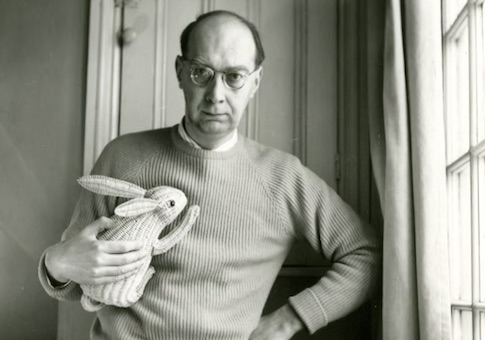
Philip Larkin / Courtesy of the estate of Philip Larkin
CULTURE
Philip Larkin’s Photography

Review: Richard Bradford, ‘The Importance of Elsewhere: Philip Larkin’s Photographs’


November 20, 2015

In a poem he wrote in 1953 about perusing a photo album that belonged to Winifred Arnott—one of the many objects of his frequently anticlimactic erotic pursuits—Philip Larkin had this to say about the art of picture taking:

But o, photography! As no art is,
Faithful and disappointing! That records
Dull days as dull, and hold-it smiles as frauds,
And will not censor blemishes
Like washing-lines, and Hall’s-Distemper boards,
 
But shows a cat as disinclined, and shades
A chin as doubled when it is, what grace
Your candor thus confers upon her face!
How overwhelmingly persuades
That this is a real girl in a real place,
 
In every sense empirically true!

The narrator’s words are nonsense, of course—or at best true only in their most narrow, uninteresting sense. If you frame a photo such that it includes a washing-line and do nothing to manipulate the image, then you’ll indeed get a photo that includes a washing-line. But photography offers manifold opportunities for manipulation, in every sense.

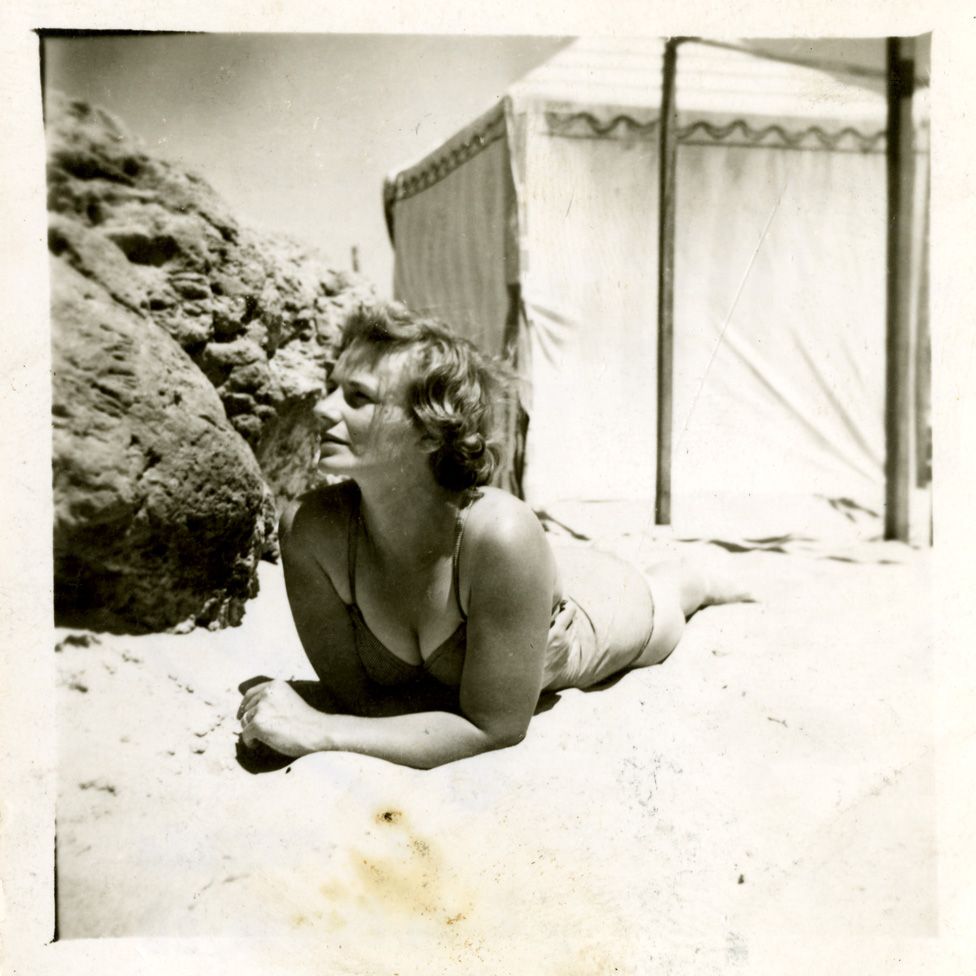
So does poetry. Andrew Motion, Larkin’s first biographer, reported that Winifred provided a fact check for Larkin’s poetic license in a letter she wrote in 1986: "[T]here were in fact two albums not one, there’s not a picture of me wearing a trilby hat (though there is one of me in a beret and moustache for Rag Week). On the other hand, I’m afraid to see, there’s definitely my double chin, he got that right. And there’s also one of me bathing …"
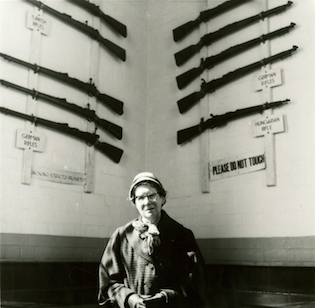
Larkin's mother Eva / Courtesy of the estate of Philip Larkin

That photo—tame by today’s standards, but sufficiently exciting for Larkin to joke sweatily in the poem, "So I am left … To wonder if you’d spot the theft/Of this one of you bathing …"—is included in The Importance of Elsewhere, a selection of Larkin’s photography (the poet was what you could call a "serious amateur") accompanied by biographical material by Richard Bradford. It is no overstatement to say that this selection is dominated by women, from Eva, the mother on whom Larkin doted, to the dizzying series of ladies he chased and occasionally even obtained. Besides Winifred, here we see Ruth and Jane, Patsy—a South African who happened to be married—Judy, Betty (Larkin’s longtime secretary), Maeve, and, of course, Monica Jones.

Larkin photographed them all, and there are some awkward implications conveyed here: Bradford illustrates how Monica, Patsy, and another woman as yet unidentified by scholarship were all snapped by Larkin in the room he rented in Belfast while working at Queen’s—and all in very similar poses. As in life, so in these photos: Monica is a considerable force. The longest serving of Larkin’s girlfriends, she carried on with him from his twenties to his final ambulance ride, despite numerous physical and emotional infidelities.

Loathed by Larkin’s intimate Kingsley Amis, who preferred ditzier girls who didn’t occupy his friend’s best attentions, she found herself cruelly (and unfairly) pilloried in Lucky Jim as the histrionic, louche Margaret Peel. But far from hysterical, Monica—Oxford educated like Phili, and a University lecturer in English—was devoted and possessed considerable character. She was also the only one of Larkin’s women who had the capacity to appreciate just what he was achieving.

It is remarkable that she also had the humanity to stress that none of those achievements were necessary grounds for her admiration. Consider this letter, included by Bradford, written by Monica after she heard Philip reading the bleak, ironic (evergreen commentary on a Larkin poem, that) Mr Bleaney on the BBC in 1955:

Mr Bleaney sounded so very like you – yr catalogue of the room’s shortcomings! Like you & like me – I smiled at the radio as if I were smiling at you as it was read. And I like your poetry better than any that I ever see – oh, I am sure that you are the one of this generation! I am sure you will make yr name! … Oh Philip – I don’t know what to say. You will believe me because you know it doesn’t make any difference to me whether you are or not, I shouldn’t think any less of your value if yr poems seemed to me bad & if everyone said so…

Monica’s presence in these photographs—intelligent, self-possessed, witty, often sad—gives some credit to Larkin’s line about "a real girl in a real place": she looks exactly as you would expect such a woman to look, and here one can see her grow from a young, newly appointed lecturer who has dressed for a date—and who has an obvious crush on her photographer—to a woman at the wrong end of middle age, wearing a house dress and staring out a window (something that comes up from time to time in Larkin’s poems) with a featureless expression.

For all the voyeuristic pleasures of these photographs, I can’t recommend putting too much trust in the commentary. Bradford’s control of detail in his earlier full-dress biography of Larkin was described by one critic at the time as "sketchy," and I cannot report that the situation is different here—nor does Bradford appear to have been much aided by his present editors.
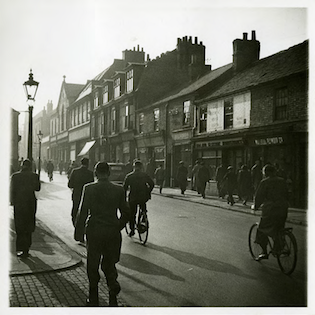
Fans of Leicester City on their way to the club ground / Courtesy of the estate of Philip Larkin

The problems begin when the author of the book’s foreword is alternatively described as Mark Hayworth-Booth or Mark Haworth-Booth, depending on which page you happen to encounter his name. (I believe that the latter is correct.) Turning to the text itself, at one point Bradford says of Larkin, "He wrote in Further Requirements…" This is, at best, embarrassingly imprecise. Further Requirements, a collection of miscellaneous short prose, was published years after Larkin’s death; Bradford is referring to one piece included in that collection.

Such imprecision doesn’t inspire one to allow much benefit of the doubt when one sees, on pages that face one another, two photographs of Monica described as being taken three years apart, even though her hair, jewelry, glasses, and overall presentation appear to be identical. Finally, for a book about photographs taken by someone who, though an amateur, was nonetheless devoted to his hobby, it is nowhere clear that Bradford has anything to say about, well, photography.

The text is at its best when it directly treats the connections between the photographs and Larkin’s literary work, of which there are many: lonely churches and rail lines abound here. But too often the words seem meant to fill space, usually with information one could find in Bradford’s earlier book, or indeed in the more recent (and quite good) biography by James Booth. There is a really fine book to be got out of the relationship between Larkin’s photography and poetry. Someone should write it.


FREEBEACON


Saturday, August 5, 2023

Philip Larkin's photographs / New exhibition opens in Hull


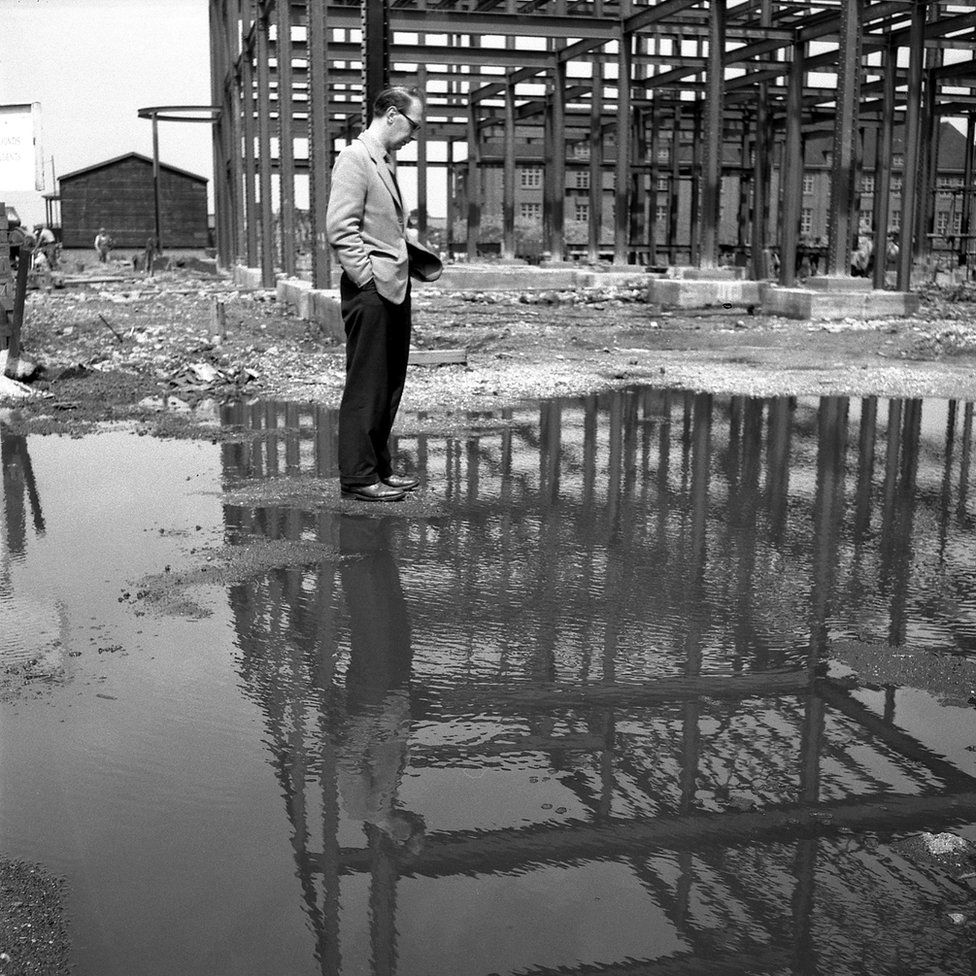
IMAGE SOURCE,THE ESTATE OF PHILIP LARKINImage caption,
Philip Larkin took nearly 6,000 photographs, including this self-portrait


Philip Larkin's photographs: New exhibition opens in Hull


3 DECEMBER 2015
  • Publishe33 December 2015

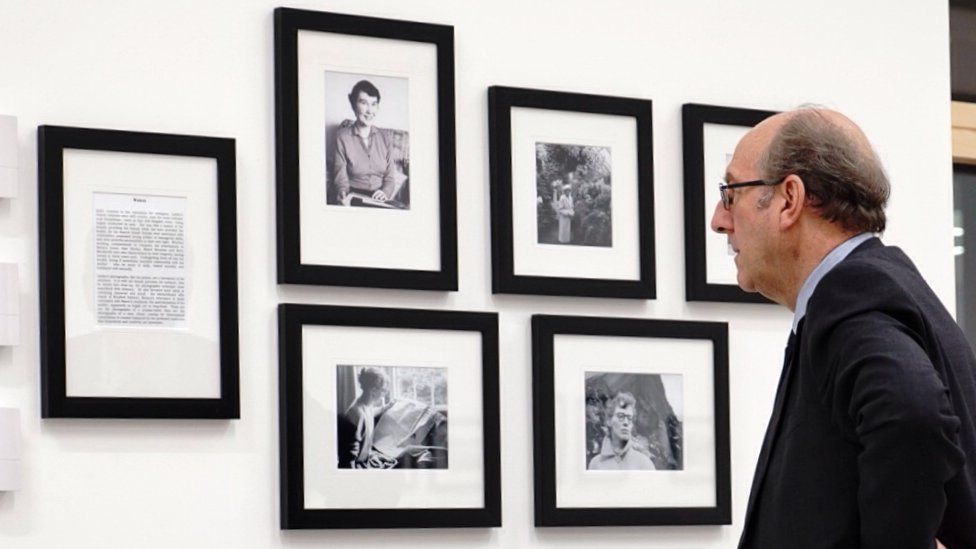
More than 100 photographs taken by acclaimed poet Philip Larkin have gone on display at The University of Hull.

The exhibition at the Brynmor Jones Library, where Larkin was librarian for 30 years, includes images of his female companions, friends and self-portraits.

It shows the poet, who took nearly 6,000 photos throughout his life, was an accomplished amateur photographer.

The university said it captured "a unique glimpse into Larkin's life".

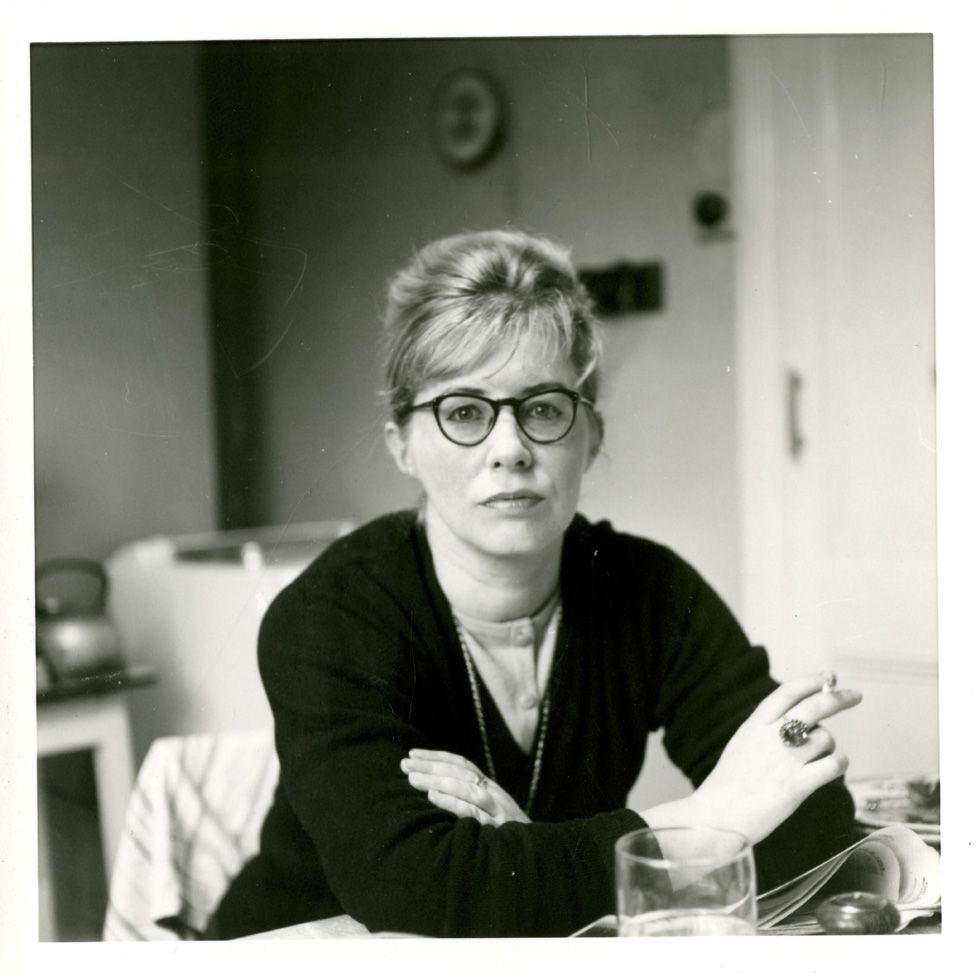
Philip Larkin's photograph of Monica JonesIMAGE SOURCE,THE ESTATE OF PHILIP LARKIN
Image caption,
Several photographs feature Monica Jones, who had a long relationship with the poet

The exhibition, which runs until 23 December, follows the publication of a new book by Richard Bedford looking at Larkin's photographic work.

It also features family snaps of his childhood, portraits of literary friends, as well as familiar views of Hull and the East Riding and other landscapes.

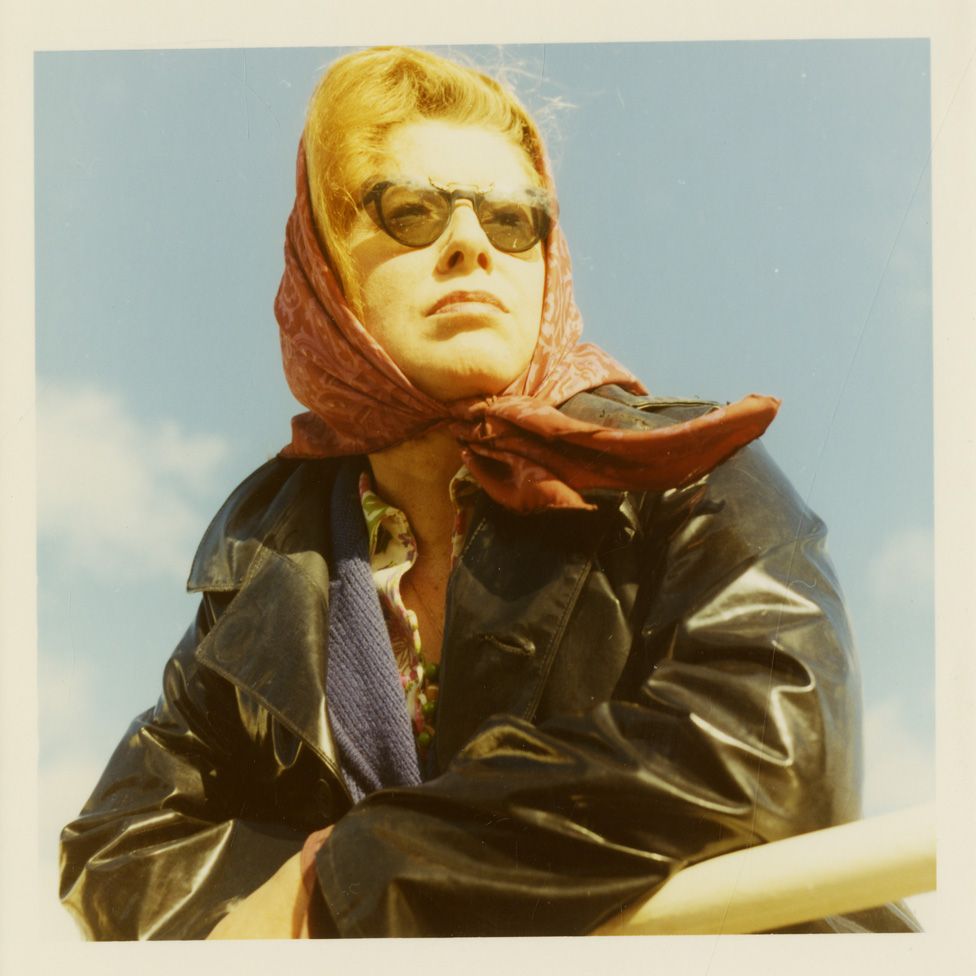
Hilly AmisIMAGE SOURCE,THE ESTATE OF PHILIP LARKIN
Image caption,
Some of the photos are holiday snaps, including this one of Kingsley Amis' wife Hilly

University Librarian Dr Richard Heseltine said: "As one of the university's most eminent librarians, Philip Larkin is a prominent part of the university's cultural heritage.

"It is an unmissable opportunity to come along to see another side of one of the most celebrated poets of our time.

"The photographs offer a unique glimpse into Larkin's life, his interests and even subjects which informed some of his poems."

A photograph belonging to Philip LarkinIMAGE SOURCE,THE ESTATE OF PHILIP LARKIN
Image caption,
Philip Larkin's photos, including this one of his lover Monica Jones, showed he was an accomplished amateur photographer as well as a poet
Man looking at Philip Larkin's photographs on a wallIMAGE SOURCE,THE UNIVERSITY OF HULL
Image caption,
The exhibition at the university's Brynmor Jones Library, where Larkin was librarian for 30 years, runs until 23 December


Tuesday, August 1, 2023

Philip Larkin / England’s most miserable genius?


Philip Larkin

Philip Larkin: England’s most miserable genius?

Philip Larkin remains one of Britain’s most controversial – and loved – poets. His colleague James Booth looks back.
James Booth
1 December 2015

T

Thirty years after his death, the poet Philip Larkin is finally to be awarded a memorial in Westminster Abbey’s ‘Poets’ Corner’ – that revered shrine to British writers. Chaucer, Dickens and Tennyson are buried there, while many others – Shakespeare, Keats and Wilde included – have been memorialised. 

After the posthumous publication of his letters, Larkin’s reputation was marred by accusations of misogyny and racism – but this did little to damage his stature as a writer. In 2003, a survey taken by the Poetry Book Society named him the nation’s best-loved poet of the last 50 years. 

His relatively small but brilliant body of work, from The Whitsun Weddings to High Windows offers a distinctive flavour of post-war England. But what was Larkin’s own attitude to his country?

‘Contrarian spirit’

The word 'England' appears in Larkin’s mature poetry only four times. “My God”, he wrote in a letter, “surely nationalism is the surest mark of mediocrity!” In The Importance of Elsewhere, the prospect of return to England from five years in Ireland fills him with apprehension. There he felt “welcome” since his “difference” was expected and allowed. “Living in England has no such excuse,” he wrote. Back among his own 'customs and establishments' he would be required to conform.

Books are a load of crap – Philip Larkin

And of course he did conform. Official photographs show him in 1961, as librarian in full academic garb, proudly looking on as the Queen Mother opened the new library in Hull into which he had put so much work. The volume of essays on librarianship published in his honour after his death attests to a distinguished career. But he was a 'poet-librarian', and as far as the poet was concerned “Books are a load of crap”. And in any case: “Beneath it all, desire of oblivion runs.”

Larkin's view of the nation's customs and establishments is ambiguous. He would dissolve in tears listening to the Armistice Day ceremony on the radio. But in November 1950, in sheer bloody-mindedness, he refused to buy a poppy. He wrote to his mother: “no particular reason, except that the hags are so confident when they approach you”. 

In a letter he called The Trees ‘bloody awful tripe’

This contrarian spirit extended to his poetry. He was aware that the emotional uplift of The Trees would make it a popular poem. “Last year is dead” the leaves seem to say: “Begin afresh, afresh, afresh.”  But in a letter he called the poem ”very corny”, and after the workbook draft he added the comment: “bloody awful tripe”.

Larkin may have enjoyed acting up to his conservative public image, sitting po-faced in photographs by an ENGLAND road sign (Credit: Lucy Izzard)

Larkin may have enjoyed acting up to his conservative public image, sitting po-faced in photographs by an ENGLAND road sign (Credit: Lucy Izzard)

He may have enjoyed acting up to his conservative, curmudgeonly public image, sitting po-faced in photographs by an ENGLAND road sign. But his poetry is not provincially English; it is universal with an English flavour. “I suppose the kind of response I am seeking from the reader is, Yes, I know what you mean, life is like that; and for readers to say it … not only in England but anywhere in the world.” The pure lyric vocabulary of The Trees makes it an easy poem to translate.

The Whitsun Weddings may evoke a particularly English social scene, but the 'frail travelling coincidence' of the train journey, and the bustle on the platforms, speak to readers across cultures:

  … fathers had never known
Success so huge and wholly farcical;
The women shared
The secret like a happy funeral;
While girls, gripping their handbags tighter, stared
At a religious wounding.

The ‘other Poet Laureate’

Larkin was never Poet Laureate. Many felt he should have been offered the position in 1972, but John Betjeman was preferred. In 1982 Larkin asserted that “poetry” and “sovereignty” are both “very primitive things”. “I like to think of their being united in this way, in England”. The Laureate is, of course, appointed directly by the monarch, though since Wordsworth stipulated as a condition of his acceptance that he not be required to memorialise royal events (what Larkin referred to as “bloody babies”) this has not been compulsory.

Larkin was aware that the emotional uplift of The Trees would make it a popular poem but he later called it ”very corny” (Credit: Lucy Izzard)

Larkin was aware that the emotional uplift of The Trees would make it a popular poem but he later called it ”very corny” (Credit: Lucy Izzard)

By the time Betjeman died in May 1984 Larkin was only months from his own death, and could only decline the position when it was offered to him. He wrote wistfully to Kingsley Amis: “the thought of being the cause of Ted's being buried in Westminster Abbey is hard to live with”. 

Ted Hughes became Laureate and in due course, as Larkin forecast, he was commemorated with a memorial in Westminster Abbey, in 2011. Many raised their eyebrows at this. Alan Bennett wrote in his diary: “Though Hughes fits the popular notion of what a poet should be, many more of Larkin's writings have passed into the national memory.” 

Larkin called himself ‘an agnostic, I suppose, but an Anglican agnostic, of course’

Now, a little late, Larkin is to join Betjeman and Hughes in Poets' Corner. Since Anglicanism is, for the present, the state-established religion, this honour is in the gift of the Dean of Westminster, and Larkin's installation will take the form of a religious service. Is this entirely inappropriate? Larkin called himself “an agnostic, I suppose, but an Anglican agnostic, of course”. 

A little late, Larkin is to join John Betjeman and Ted Hughes in Poets' Corner in Westminster Abbey (Credit: Getty Images)

A little late, Larkin is to join John Betjeman and Ted Hughes in Poets' Corner in Westminster Abbey (Credit: Getty Images)

He loved the country churches which knit the English landscape together. In his only positively charged poetic use of the word 'England', in Going, Going, he deplores pollution and urban sprawl: “And that will be England gone, / The shadows, the meadows, the lanes, / The guildhalls, the carved choirs.” But, eloquent though this poem is, he derided it in a letter as “thin ranting conventional gruel”. What really moved him about churches was not nostalgia for an archaic England, but the fact that “so many dead lie round”.

Larkin’s atheism was unflinching, courageous

That 'agnostic' was a polite evasion. His atheism was unflinching, courageous. He commented on the Bible: “It's absolutely bloody amazing to think that anyone ever believed any of that. Really, it's absolute balls.” For Larkin religion was a “vast, moth-eaten musical brocade / Created to pretend we never die.” We may wish that the clasped hands on the Arundel tomb could 'prove' that “What will survive of us is love”. But this is an 'almost true' 'almost-instinct'. He wrote in the margin of his workbook: ' “Love isn't stronger than death just because statues hold hands for 600 years”. 

He was touched deeply only by love, death and ‘being alive, in the flesh’

Larkin's was the purest of lyric sensibilities: always here, always now. He was touched deeply only by the existential fundamentals: love, death, and “being alive, in the flesh”: “the million-petalled flower of being here”. His fear of extinction is harrowing: “Not to be here, / Not to be anywhere, / And soon; nothing more terrible, nothing more true.” Larkin is the laureate of a post-Christian, secular England; and it is much to the credit of the Dean that he has granted him space in this Anglican sanctum. But the English/British cultural establishment has long been a patchwork of compromises between contradictions. Larkin's fellow atheists AE Housman and Percy Bysshe Shelley are already there, waiting for him to join them. 

If you would like to comment on this story or anything else you have seen on BBC Culture, head over to our Facebook page or message us on Twitter.

This story is a part of BBC Britain – a series focused on exploring this extraordinary island, one story at a time. Readers outside of the UK can see every BBC Britain story by heading to the Britain homepage; you also can see our latest stories by following us on Facebook and Twitter.


BBC