Friday, March 17, 2023

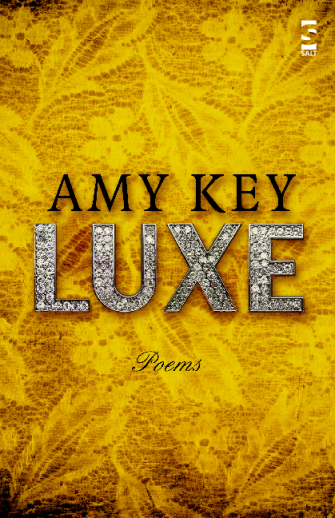
Amy Key’s Luxe


Amy Key

Amy Key’s Luxe

 
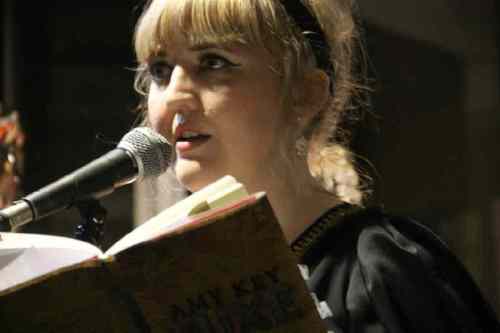
Amy Key was born in Dover and grew up in Kent and the North East. She now lives and works in London. She co-edits the online journal Poems in Which. Her pamphlet Instead of Stars was published by Tall Lighthouse in 2009, and her first collection, Luxe, was recently published by Salt. Amy is currently editing a new anthology of poems on female friendship Best Friends Forever, due from the Emma Press in November.
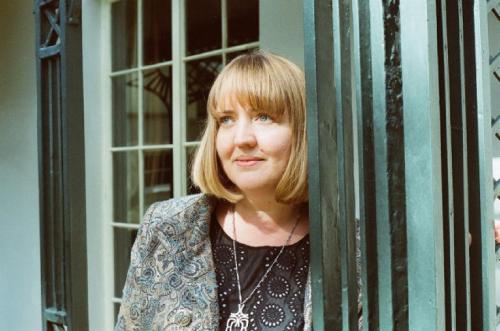
© Image by Travis Elborough
Amy Key
Photo by Travis Elborough


Luxe (Salt Publishing, 2013) is a magnificent spree in a bric-a-brac shop. A haul of pre-loved and glittering objets – pralines in a crystal bowl, a handful of tame ladybirds, a portrait in vinyl and cola-cubes – are artfully displayed on the poems’ shelves to represent the conflicts and connections of a fabulous circle of friends and lovers, those real, remembered and imagined.”


“”Layer your pulse/ onto my pulse,” she writes in ‘Brand New Lover’. “Dress me.” Only the reader knows if this is an order, an instruction or the sweetest sort of invitation. Read a copy of Luxe, keep it next to your fainting couch.”Luxe.jpg
– Julia Bird


“This delicious selection is a chocolate-box assortment of the work of one of my favourite poets writing today. Her delicate, dextrous writing belies the raw truths she tells. There are many centres to her confections that only reveal themselves when you take a bite. In her words “Poem with peep toes … Poem to conceal some feelings in … Poem to avalanche in your heart”. I love Amy Key.”

– Lauren Laverne


“If we are living in the material world, I want Amy Key to be my material girl. She makes her pleats and flounces move; she crowds the surface with colour and texture right where it needs to be to draw the reader in like a bee to the velvet bell of the foxglove; or like the silverscreen beauty who eats bonbons from a satin box, she wills our gaze to take it all in and to crave more. These poems are worn on the body, and like all great ensembles, they show just enough; they are hot and memorable.”

– D.A. Powell


© Image by Martine Charalambou

© Image by Martine Charalambou


You Ought To Be In Pictures
 
 
In my depression the energy goes everywhere. It’s diffused. And where it’s intense it’s in very short bursts. Enough to scrub the bathroom or change the sheets. Enough to write a poem. My book is as though I pressed play and record each time I had a burst.

Last night I posted lines from my iPhone notes disguised as Twitter and Facebook status updates to see if any of them stuck.

I read someone else’s poetry for the first time and worry that my book will be perceived as being derivative of their book.

Someone asks “What is your poetry about?” I am embarrassed and say “me” but I mean “being a woman”, I think. But then I really mean “my experience of being a woman”. Later I wonder if what I really mean is “what I want my experience of being a woman to be, distress included”. I’d asked the poet Kate Kilalea to read my book and respond to it. She said:

“Aside from all their purely poetic elements, what strikes me most about Amy’s poems is the kind of idea of woman-ness which they work with. It feels like what is happening is a kind of valorisation – as oppose to eroticisation – of feminine vulnerability, which is different from what I’ve seen before.”

This was an important moment for me. An embracing of the woman-ness. After all I had the comment “I can see why girls like your poems” ringing in my ears.

My poetry is endless recalibration of experience.

My poetry is a way of mind-mapping my insecurities.

It’s all mood board.
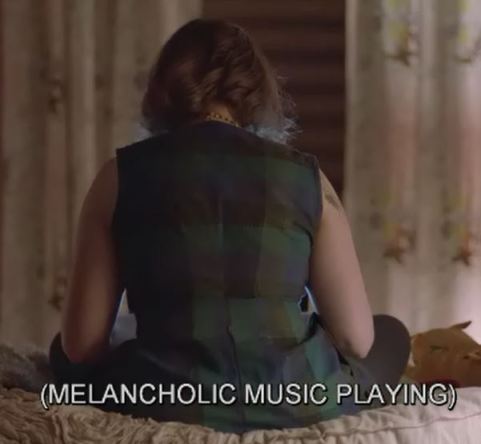


Girls 
 
 
I’m struck by what Steve Roggenbuck says in his essay ‘toward a more flowing culture’:

“i want to be your poet … i want to inspire you and talk to you. in many cases, I really want to be your friend.”

This idea of friendship compels me.

In my poems am I trying to communicate more effectively with people in my life or who might be in it. To say “Look! I know I come across ‘this’ way, but here is something else I want to share”. This being able to talk without my physical persona intruding is something I need. There are so many ways into the truth of a person.
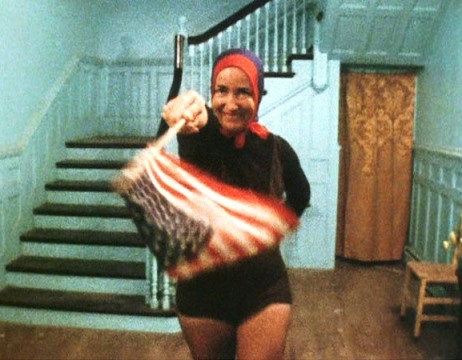


Grey Gardens 
 
 
In the documentary Grey Gardens there is a scene where Little Edie performs to camera. She sings and dances to ‘You Ought To Be In Pictures’. I find this scene very touching. Little Edie is a star, but she’s no longer the ingénue, about to be discovered. In singing it she’s saying to the crew “Look at me. I could have been someone” but also “Tell me I still could be someone”. It’s the “Tell me I could still be someone” that affects me. In my poem ‘On Typing Paper Stolen From Her Employers She Proceeds To Evolve A Campaign’ I get at this idea:

          Hopes should recede with age but this isn’t
          a right seeming present!

          […]

          My imagined future is a collapsed soufflé.

Never far away from dancing to ‘True Blue’ in the kitchen a grown-up’s face on. Never far from singing into the cassette. Singing into the dark. Hopeful someone will say what a nice voice you have. Never far away from maybe making it.
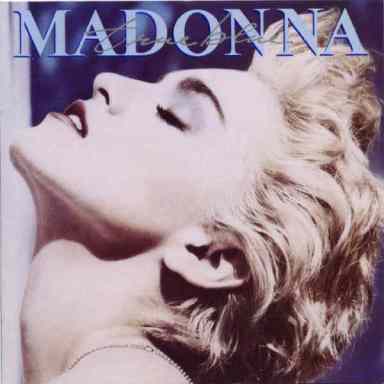


True Blue 
 
 
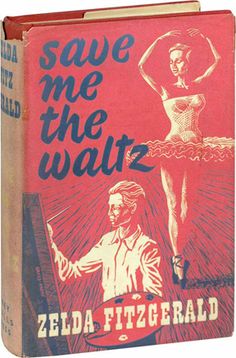
Just as Alabama, the main character in Zelda Fitzgerald’s Save Me The Waltz, in her hopeless pursuit of ‘making it’ as a ballet dancer feels that:

“[in] reaching her goal…in proving herself, she would achieve that peace which she imagined went only in surety of one’s self – that she would be able, through the medium of the dance, to command her emotions, to summon love or pity or happiness at will, having provided a channel through which they might flow”

I am my own delusional heroine. But I have to hope.


Save Me The Waltz 
 
 
I am also forcing people to look at me. In my poem ‘Emotional State Seen Through A Pale-Haired Fringe’ I am, chronologically speaking, at the beginning of a deep depression. Unable to speak about it to anyone, just quietly falling apart, I write the poem where even:

          […] the at-boil kettle maddens the bully
 
          of your memory, and no one there to see it blow.

Is it that I’m terrified of no one seeing me live? Is that the role poetry is playing?

I’ve often wondered if I write poetry because I’m scared of dying. I fear I’ve been negligent of my own fortune.

          Inside I fritter soft as cinders.



Where the Wild Things Are 
 
 
One of the recurring images in my poetry is of the lost child. The much loved children’s book Where The Wild Things Are was made into a film a few years ago and I became obsessed with it. And heartbroken by it, by the isolation of the boy and his imagination. I began to write a series of poems, inspired by the film and by the soundtrack to the film, written and performed by Karen O from the Yeah Yeah Yeahs. The poems turned out as childhood memoir and in implicating my siblings I found I couldn’t finish them. One has made the book – Igloo – and in it I try to express the self-imposed, necessary isolation of the child:

          […] Instead of talk,
 
          we will have stronger thoughts.

This is both a resistance to talking – there are some things I cannot speak to the adults about but it is also a power I can have. The idea of having secrets that I can snap into being, like activating a glow stick appeals to me. The secret as super power and malevolent force.


Peckham 
 
 
I should really talk about love.

When I was in John Stammers’ group he asked me ‘what I wanted to be’. I told him I wanted to be ‘a great love poet’.

What I really meant was ‘I want to be loved’.

This was some years ago now. Truth is my experiences in and out of love haven’t been at all happy, but it seems to be all I can write about. Perhaps that’s the recalibration I mentioned earlier. A need to ‘right’ my love experience in poetry. In my poem ‘Your Year in Review’ I address myself:

          […] Your heart went rouge. Desire
          kept in a gold compact, fell loose of its casing. Powder
          went everywhere.

The sense that I make a mess of stuff can’t be escaped. But I lavish my attention on love less experienced, more felt. In absence of the grand, all-consuming Love Affair (in the presence of the paltry, ill-conceived ones) I act them out in poems. My nights pour into the absence of my One True Love. But I know:

          Even this crochet blanket won’t
          address the lack of requited laundry.

Really my ‘it would be better to be hurt than not have any love at all’ from my teenage diary is simply reworn as:

          […] rather a cupboard of cut-off ponytails than this! I want a life
          that warrants excessive exclamation!

I suspect all the poems are just an attempt to neutralise my self-image.

PEONY MOON


Wednesday, March 15, 2023

High Voltage by Amy Key


High Voltage
by Amy Key

 
Just as I woke, you stomped into my head
and I thought of everything that makes me admire you:
not just your sass and nerve (although
it does deserve an explicit mention ), but how
Neverland it is to spend time with you, like a pop-up theme park –
each day abundant with vivid wants,

like how you’re era-less, confident as a portrait,
inconsolably hungry, you talk easy as an adult –
seems even your glamour isn’t at the top of my list,
admiration being such an intimate reckoning of a

friend. If I can’t say it now, when?
Oh, there’s nothing ordinary about decadent warmth
real as foxgloves and glow sticks and winter birds,
did I tell you how much I want you to dance with me?
 

From Luxe (Salt Publishing, 2013).


Wednesday, March 8, 2023

The Damned by Roddy Lumsden


The Damned

BY RODDY LUMSDEN
Kitten curious, or roaring down drinks   
in Soho sumps, small hours tour buses,   
satellite station green rooms, or conked   

out in the bathtubs of motorway hotels,   
there you were, with muck-about kisses,   
sharking for the snappers, before hell   

opened up for you and weeping sores   
of after fame appeared, the haphazardry   
and dwindling after three limelit years,   

recognized with catcalls, wads of spit,   
a nightclub fist, the scant camaraderie   
melts fast, like your flat on Air Street,   

the Lhasa Apso pups, the wraps and lines   
of chang, the poster pull-outs, fake tan   
smiles. It’s paunch and palimony time   

on Lucifer’s leash. But for a madcap few   
who cling, thin soup, one pillow Britain   
is simmering with hatred, just for you.


Monday, March 6, 2023

Loners by Jean Follain


Loners

BY JEAN FOLLAIN
TRANSLATED BY RODDY LUMSDEN
The door-latch is always stubborn
beyond it dozes a beast
tinged by the fire
they know who is walking
the curve of the road
by their footsteps alone
glance at the fancy lamp
hanging from the sooty ceiling
a green and speckled plant withers
a child who has wandered cries
beneath a long low sky
and at last the snow comes on.

Translator’s Note: “Loners” by ​Jean Follain

The thinkers of Scotland have wasted much energy trying to decide whether Scots is a language, a group of intermingled dialects, a parallel tongue, or a species of English. Poets using Scots generally either opt for a particular dialect or an expansive, inclusive language which incorporates words from all dialects and often curious words which have fallen from common use (in which Scots is especially rich). Our great Modernist Hugh MacDiarmid used the term Plastic Scots for the latter, somewhat inauthentic approach, while W.N. Herbert, the finest poet currently writing in Scots, prefers the term Elastic Scots. But the concept is nothing new—Robert Fergusson, the poet and influence on Burns who died tragically young in 1774, used a version of Scots which included old Scots words he picked up from Allan Ramsay as well as the dialects of his home town Edinburgh and those of Fife and Angus, where he was educated, and Doric words from around Aberdeen which he picked up from his relatives.

Some find this form of Scots contrived, and it would be if you employed it for everyday conversation, but for poetry it can be engrossing and charming, and authenticity is not the foremost consideration. I had a few reasons for choosing to translate Jean Follain. There is, of course, a long history of collaboration between French and Scots—the Auld Alliance. My forebears, the Lumisdaine family, came over from France around 1100. Also, Follain’s adjective-heavy combination of stark image and rural life suits Scots.

Although I grew up in a household full of Scots words, writing in this mode usually means having dictionaries at hand, and an online English-Scots resource for quick ideas. I made use of a French dictionary on occasion but worked mainly from French straight into Scots, making the English version afterwards. The chief problem in translating Follain is his near lack of punctuation, which I feel needs to be replicated, retaining the proper ambiguities and avoiding unwanted new ones. I have been less exact in parts than other translators—the first line of “Solitaires” is strictly “Always their door opens badly”—and since it is in my nature to seek music, I have made more use of sonics, especially rhyme, than in the French.

Originally Published: March 27th, 2008

POETRY FOUNDATION


Saturday, January 28, 2023

Joshua Bennett / Spoken Like a True Poet


A collage that features Amiri Baraka, Nikki Giovanni, and a crowd of listeners. Cut-out headlines read: "Impact of the Community," "Truth is on its way," "we're all in this together," and "radical dreams time to become."

Spoken Like a True Poet

In Joshua Bennett’s history of spoken word, poetry is alive and well thanks to a movement that began in living rooms and bars.

BY STEPHEN KEARSE

Early in Spoken Word: A Cultural History (Knopf, 2023), Joshua Bennett assures the many parties keeping vigil over poetry that the ancient art remains alive and well in the United States. “Spoken word is the best possible rejoinder to anyone claiming that poetry in this country is dead or not relevant to younger generations,” he writes. The curiously evergreen and SEO-friendly question of whether poetry matters has been posed so often this millennium that, in 2014, the Los Angeles Review of Books responded with an essay titled “How Much Does ‘Does Poetry Matter’ Matter?

Although the late literary critic Harold Bloom disparaged slam—a competitive form of spoken word—as “the death of art” in 2000, its attitude, aesthetics, and techniques seeped into films, TV shows, music, and other art forms around the world. Bennett details this global footprint in Spoken Word, but he never treats his tour of the genre, which he defines as verse crafted to be performed for an audience, as a victory lap. For him, spoken word isn't interesting because it won the culture war against stuffy academics and their dusty canons; the value of spoken word lies in how it reared and continues to nurture its own culture. And in his view, that heritage of autonomy and aegis should shape how people understand it.

Bennett, a repeat slam champion who writes poetry and criticism, has intimate knowledge of his subject but approaches it with humility and imagination. He threads research, interviews, autobiography, and close readings of poems and related texts into a nonlinear jaunt through the spoken word archives. Perhaps in deference to prior books, such as Cristin O’Keefe Aptowicz’s Words in Your Face (2007) and Susan B. A. Somers-Willett’s The Cultural Politics of Slam Poetry (2009), he does not attempt an exhaustive account. He’s more interested in highlighting the genre’s radical and communal roots and views history as a means of rekindling that rebellious upbringing. “I hope to reclaim the political ethos and persistent dreaming of a moment that is both part of our shared past and still among us,” he writes, alluding to the legacy of activism in spoken word circles. Even readers who don’t share Bennett’s political investment in spoken word will appreciate his use of our and us, which underscores the welcoming spirit of his project. At its core, his history invites readers to appreciate spoken word's myriad contributions to the arts, community organizing, and self-expression. Its culture, as he shows, surrounds everyone.

***

Bennett opens the book with an anecdote about performing at the Obama White House in 2009, when he was a junior in college. He nimbly details the sights and sounds of each leg of his journey from the University of Pennsylvania to Pennsylvania Avenue: the hip-hop and dancehall blaring in the hallways of his dorm establish his immersion in the rhythms of Black music and Black speech. His nervous recitation of his poem aboard Amtrak captures the constant practice performing well requires; the soundcheck and a cipher with other poets and performers convey the easy camaraderie of the scene. The attendees, which include Bennett’s family and luminaries such as Spike Lee, demonstrate the diversity of spoken word audiences.

By the time Bennett performs “Tamara’s Opus,” a work about his once-ableist relationship with his deaf sister, he has quietly laid out the breadth of the world of spoken word as well as the thesis of his book. “At its heart, spoken word is a social form,” he argues. “It demands engagement and requires an audience of listeners in order to function.” That social dynamic imbues spoken word with political power, but Bennett never says the form is inherently radical, noting that oral poems can be as whimsical or slick as they are militant. Though he admits the political thrust of the poets he studies, in his view, the genre is defined by the spaces it creates and connects through readings, competitions, workshops, and the simple act of congregating. The thrill of the book is how expansive his idea of space is, a mode captured in the opening anecdote’s sinuous movement from private to casual to formal settings.

Bennett organizes the book into meaty but digestible chapters on the Nuyorican poetry movement, the birth of slam, and spoken word’s new life on social media. Though he devotes ample time to marquee names such as Paul Beatty and Patricia Smith and storied institutions such as the Nuyorican Poets Cafe in New York, the Green Mill Cocktail Lounge in Chicago, and the Brave New Voices festival, he treats these as concourses rather than terminuses. Within every famous space or career, he finds bridges, footpaths, and portals that connect the art to social movements and to the world around it. The result is an account of spoken word that’s compact but wide-ranging.

The Nuyorican Poets Cafe is the first major stop. Beginning in 1973, the late poet and Rutgers professor Miguel Algarín hosted regular readings, workshops, and hangouts in his Lower East Side living room, gatherings that Bennett describes as “some combination of a rent party and a rehearsal for the future world.” The attendees—mostly poets and playwrights Algarín knew—read their work, critiqued each other, and chatted. “More than anything, there was a lot of talking going on,” poet Sandra Maria Esteves tells Bennett. She doesn’t romanticize the space, though, noting that some of the men in attendance patronized the women. “I was not silenced. I spoke my mind. That got me in a lot of trouble with a lot of people,” she says with a mix of pride and mischief.

That defiant and playful sensibility was a calling card of the group’s poetry and Nuyorican art, which was taking shape in Algarín's apartment, at other local venues such as New Rican Village and El Museo del Barrio, and in the lived experiences of second- and third-generation Puerto Ricans then coming of age in New York City. Straddling the cultures and languages of their island and city homes, the Nuyoricans turned their alterity into art, an ethos Victor Hernández-Cruz distilled in a 1975 interview: “Because of the position I am coming from, my mission is to change the English language into what I am.” By 1975, Algarín’s gatherings were so popular that he rented a pub across the street. That move allowed performers and listeners from beyond Algarín’s orbit to drift in, an accessibility that changed the salon into a public forum. After three years of packed weekly shows at the pub, Algarín used state and federal grants to buy a building in his neighborhood, thus giving the cafe a permanent home.

By this point, the cafe featured performances by established writers such as Allen Ginsberg, William S. Burroughs, and Amiri Baraka. Bennett seizes this overlap to thread the links between the Nuyoricans, Beat poetry, the Black Arts Movement, and hip-hop, which had been fomenting since Algarín first assembled people in his living room. Jumping back in time, Bennett details the short-lived Black Arts Repertory/Theater School that Baraka founded in Harlem in 1965. The school was open for only a year because of infighting among staff and a racist disinformation campaign that tanked public funding, but Bennett dwells at length on its ambitions. The BARTS curriculum combined dramatic, political, technical, and remedial instruction, a program that Bennett reads as an attempt to “prepare a generation of young people to enter the world with any and every instrument they might need to flourish in an anti-black world.”

Bennett argues that spoken word became a microcosm of that effort to make radical art with and for the public, aims Baraka made explicit in 1980 when he told The Greenfield Review, “The page doesn’t interest me that much—not as much as the actual spoken word.” Though BARTS vanished, its ideas lived on, propagated through records such as Nikki Giovanni’s Truth Is On Its Way (1971) and The Last Poets’ 1970 self-titled debut and collectives such as the Nuyorican Poets Cafe and Boricua Artists Guild. To speak aloud was to summon an audience, and to be heard by that assembly, poets had to recognize the crowd’s needs and demands, a dynamic that became important as slam emerged in Chicago.

***

Slam is undoubtedly the most recognized form of spoken word. In the 1990s and 2000s, films such as Love Jones (1997) and Slam (1998), television shows such as Def Poetry Jam and United States of Poetry, live events such as MTV’s Free Your Mind and Spoken Word Unplugged tours, and regular media coverage pushed slam into the national spotlight. The audience for the form grew so rapidly that spoken word record labels such as Mouth Almighty and NuYo Records launched. Much of this momentum was a product of slam’s proximity to rap, which by the 1990s was both a commercial juggernaut and a fixture of American youth culture. The art forms became so intertwined that a lengthy New Yorker feature touted the connection. “In the next couple of hours, the audience will be rowdily cheering on the performers; we could be at an evening of Martin Lawrence doing standup, or KRS-One giving a rap concert. Actually, we’re at a poetry reading,” Henry Louis Gates Jr. wrote in 1995, reporting from a slam at New York’s famous music venue S.O.B.’s. But Bennett notes that the genre also grew on its own grassroots terms, cultivating audiences in libraries, coffee shops, and bookstores.

Slam originated in Chicago in the mid-1980s. Construction worker and poet Marc Smith hosted weekly competitions at the Get Me High Lounge, a small jazz storefront in the city’s Wicker Park neighborhood that blended vaudeville, comedy, and traditional poetry readings. The events were inspired by other Chicago gigs, such as “poetry boxing” matches that took place in actual boxing rings and a traveling poetry circus, and coalesced into a form that prioritized audience reception. Random attendees judged poets through cheers, jeers, and, later, scores. Smith exported that structure to a weekly cabaret show at the Green Mill Cocktail Lounge in 1986.

From there, slam spread across the country, finding homes in such major urban centers as Atlanta and Los Angeles and in smaller cities, such as Ann Arbor, Michigan, and Dayton, Ohio. The Nuyorican Poets Cafe, which closed in 1982 but reopened in 1989 as slam was taking off, became a bulwark of the form, hosting multi-night competitions and designating slam champions. In 1990, organizers held the first National Poetry Slam in San Francisco, an annual event that was the subject of the documentary SlamNation (1998).

Slam’s raised profile and populist design drew criticism from the academy and from some written and spoken word poets. Musician, actor, and poet Saul Williams became a slam champion, but when he first encountered the genre in Brooklyn in the 1990s, he “was actually disgusted by the idea of competing with poetry,” he tells Bennett. The poet Rafael Alvarado told the Los Angeles Times in 1997, "In slams, whoever screams the most and performs best, wins. It's not the quality of the work.” That internal criticism intensified as commercial forces entered the picture. Tyehimba Jess describes SlamNation, a cult classic among slam poets that was their introduction to the form in the 1990s, as a double-edged sword. He tells Bennett that over the course of the film, competitor Taylor Mali is “formulating … how to win the slam. It became formulaic.”

By 2009, following the HBO docuseries Brave New Voices, which follows the teen competitors of the annual Brave New Voices Festival—and which Bennett stars in—even Marc Smith grew frustrated with the form. “At the beginning, this was really a grass-roots thing about people who were writing poetry for years and years and years and had no audience,” he told the New York Times. “Now there’s an audience, and people just want to write what the last guy wrote so they can get their face on TV.” Bennett’s emphasis on the political potential of spoken word stems from the same frustrations regarding how commerce affects art.

But throughout the book, he notes the ways in which slam poets raised during and after this commercial boom resisted cheapening the form, a spirit that the comparatively more-obscure documentary Poetic License (1999) captures. That film ends with the teen poets canceling the competition to “go on strike” and throw a party, a precedent that Bennett’s own Brave New Voices team followed when they resigned from the competition and performed to be heard rather than to win. “We realized that we had gotten entirely too caught up in the competitive element of the festival,” he writes. “The festival was supposed to be a way to feel a little bit less alone, to share new work and meet people you never would have otherwise.”

***

In the book’s final chapter, Bennett details contemporary efforts to maintain the communalism of spoken word through recording and sharing performances online. Noting the closure of many performance venues and the dissolution of regional and independent festivals, trends that predated the Covid-19 pandemic but worsened during it, he considers the complexities of the art’s finding a new home on social media. Bennett’s own attempt at an online spoken word space, The Strivers Row, flamed out after a few years as he and his cofounders pursued other interests. But in the Minneapolis-based Button Poetry, whose founders Bennett interviews for the book, he scries the future of spoken word. In some sense, the sheer audience of the hybrid YouTube channel and publishing house demands his attention. “As it stands, the way a vast number [of] young people on Planet Earth are encountering the genre of spoken word poetry is through the Button Poetry platform,” he writes, citing the million-plus subscribers and video views.

But Bennett’s conversations with the Button team aren’t particularly fruitful. No strong or clear purpose seems to direct their dutiful chronicling of spoken word performances across the country. Sam Cook, the group’s head honcho, offers a rather transactional origin story for the company. “The desire is there, the audience is there, and I have the skills to connect the two,” he says of the epiphany that led him to build Button in 2011. There’s nothing wrong with finding a niche, but the functional motive highlights the relative silence of audiences throughout the book. As Bennett cited subscriber and viewer numbers, I wondered: who are these people seeking spoken word? Why do they choose to experience poetry together?

Bennett shows that across the genre’s history, writers have come to spoken word in search of community and their own voices and to realize their personal and political ideals. But he doesn’t dwell much on the audience members who jeer, cry, applaud, and now comment virtually from the sidelines. Won’t they shape the future of spoken word as much as the poets soliciting their eyes and ears? More important, can anyone fully understand the genre’s past without hearing their voices?

This silence is not unique to Bennett’s account nor does it sink it. Spoken word has long been historicized primarily by and through evangelical practitioners and organizers, many of whom say the form saved their lives, as rapper, actor, and slam poet Daveed Diggs told the Washington Post in 2016. But this silence stood out to me in Bennett’s book because one of the most affecting scenes in HBO’s Brave New Voices is Bennett reading his family a powerful poem about his father’s sacrifices. His dad is interviewed after and says, “Now I feel complete as a father.” It’s a striking and deeply particular response to poetry, one I can only imagine many people must share as they fill auditoriums, bars, cafés, and living rooms worldwide.

Stephen Kearse is an editor at Spotlight PA and a contributing writer at the Nation. His criticism and reporting have appeared in the AtlanticGQ, and Pitchfork, among other outlets. His novels include Liquid Snakes (Soft Skull Press, 2023) and In the Heat of the Light (2019). 

POETRY FOUNDATION


Thursday, January 26, 2023

Written for Scholar Wei by Du Fu


WRITTEN FOR SCHOLAR WEI

by Du Fu


The best years of our life— 

Suffice to say 

They didn’t last. 

Already our temples 

Are grey.

Half of our friends, 

Ghosts.

Tuesday, January 24, 2023

A Poem of Changgan by Li Po


A Poem of Changgan

BY LI BAI (Li Po)

My hair had hardly covered my forehead.
I was picking flowers, playing by my door,
When you, my lover, on a bamboo horse,
Came trotting in circles and throwing green plums. 
We lived near together on a lane in Ch’ang-kan, 
Both of us young and happy-hearted. 
 
...At fourteen I became your wife,
So bashful that I dared not smile,
And I lowered my head toward a dark corner
And would not turn to your thousand calls;
But at fifteen I straightened my brows and laughed, 
Learning that no dust could ever seal our love,
That even unto death I would await you by my post
And would never lose heart in the tower of silent watching. 
 
...Then when I was sixteen, you left on a long journey 
Through the Gorges of Ch’u-t’ang, of rock and whirling water. 
And then came the Fifth-month, more than I could bear,
And I tried to hear the monkeys in your lofty far-off sky.
Your footprints by our door, where I had watched you go, 
Were hidden, every one of them, under green moss,
Hidden under moss too deep to sweep away.
And the first autumn wind added fallen leaves.
And now, in the Eighth-month, yellowing butterflies
Hover, two by two, in our west-garden grasses
And, because of all this, my heart is breaking
And I fear for my bright cheeks, lest they fade. 
 
...Oh, at last, when you return through the three Pa districts, 
Send me a message home ahead!
And I will come and meet you and will never mind the distance, 
All the way to Chang-feng Sha. 


Monday, January 23, 2023

Li Po / The Poet with Many Names—and Many Deaths


Li Po ( Li Bai)

The Poet with Many Names—and Many Deaths

By 
 

He has many names. In the West, people call him Li Po, as most of his poems translated into English bear that name. Sometimes it is also spelled Li Bo. But in China, he is known as Li Bai. During his lifetime (A.D. 701–62), he had other names—Li Taibai, Green Lotus Scholar, Li Twelve. The last one is a kind of familial term of endearment, as Bai was twelfth among his brothers and male cousins on the paternal side. It was often used by his friends and fellow poets when they addressed him—some even dedicated poems to him titled “For Li Twelve.” By the time of his death, he had become known as a great poet and was called zhexian, or Banished Immortal, by his admirers. Such a moniker implies that he had been sent down to earth as punishment for his misbehavior in heaven. Over the twelve centuries since his death, he has been revered as shixian, Poet Immortal. Because he was an excessive drinker, he was also called jiuxian, Wine Immortal. Today it is still common for devotees of his poetry to trek hundreds of miles, following some of the routes of his wanderings as a kind of pilgrimage. Numerous liquors and wines bear his name. Indeed, his name is a ubiquitous brand, flaunted by hotels, restaurants, temples, and even factories.

In English, in addition to “Li Po,” he once had another pair of names, Li T’ai Po and Rihaku. The first is a phonetic transcription of his original Chinese name, Li Taibai, the name his parents gave him. And Ezra Pound, in his Cathay—his collected translations of classical Chinese poetry—called Li Bai “Rihaku” because Pound had translated those poems from the notes left by the American scholar Ernest Fenollosa, who had originally studied Li Bai’s poetry in Japanese when he was in Japan. Pound’s loose translation of Li Bai’s “The River-Merchant’s Wife: A Letter” has been included in many textbooks and anthologies as a masterpiece of modern poetry. It is also one of Pound’s signature poems—arguably his best known. For the sake of consistency and clarity, let us stay with the name Li Bai.

He also has several deaths ascribed to him. For hundreds of years, some people even maintained that he had never died at all, claiming to encounter him now and then. In truth, we are uncertain about the exact date and cause of his death. In January 764, the newly enthroned emperor Daizong issued a decree summoning Li Bai to serve as a counselor at court. It was a post without actual power, in spite of its high-sounding title. Yet to any man of learning and ambition, such an appointment was a great favor, a demonstration of the emperor’s benevolence and magnanimity—and, in Li Bai’s case, a partial restoration of the high status he had once held in the court. When the royal decree reached Dangtu County, Anhui, where Li Bai was supposed to be located, the local officials were thrown into confusion and could not find him. Soon it was discovered that he had died more than a year before. Of what cause and on what day, no one could tell. So we can say only that Li Bai, despite his renown, passed away in 762 without notice. 

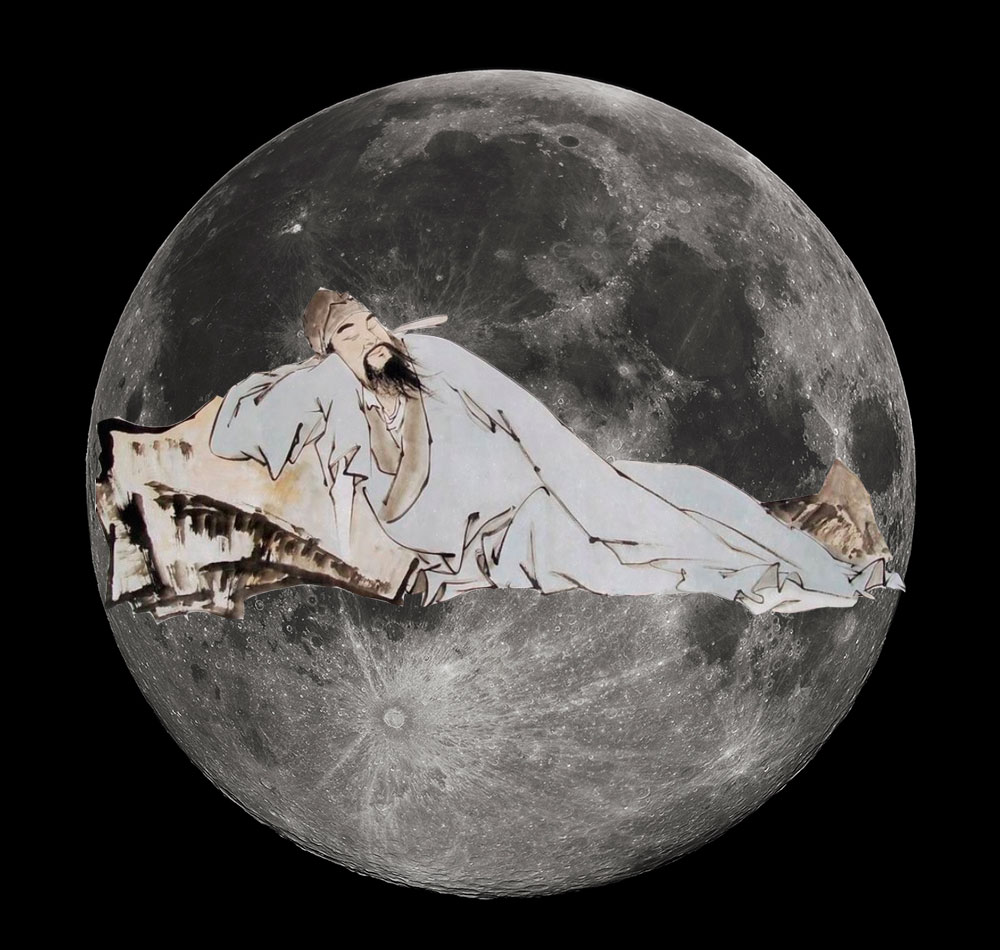
However, such an obscure death was not acceptable to those who cherished his poetry. They began to give different versions of his death, stories spun either to suit the romantic image of his poetic personality or to provide a fitting conclusion to his turbulent life. In one version, he died of alcohol poisoning; this was in keeping with his lifelong indulgence in drink. Another claims that he died of an illness known as chronic thoracic suppuration—pus penetrating his chest and lungs. The first mention of this comes from Pi Rixiu (838–83) in his poem “Seven Loves”: “He was brought down by rotted ribs, / Which sent his drunken soul to the other world.” Although there is no way we can verify this claim, it sounds credible—such a chest problem could have been caused by his abuse of alcohol. In his final years, Li Bai’s drinking and poverty would have aggravated his pulmonary condition. But the third version of his death is far more fantastic: in this version, he drowns while drunkenly chasing the moon’s reflection on a river, jumping from a boat to catch the ever-shifting orb.

Even though this scene smacks of suicide and is perhaps too romantic to be believed, it is the version that has been embraced by the public—in part because Li Bai, as his poetry shows, loved the moon. Even in his early childhood, he was fixated on it. In his poem “Night Trip in Gulang,” he writes:

As a young child, I had no idea what the moon was
And I called it a white jade plate.
Then I wondered if it was a mirror at the Jasper Terrace
That flew away and landed on top of green clouds.

In Chinese poetry, Li Bai was the first to use the image of the moon abundantly, celebrating its loftiness, purity, and constancy. He imagined the moon as a serene landscape with sublime dwellings for xian, or immortals, who are often surrounded by divine fauna and flora and their personal pets. The beliefs of the ancient Chinese did not separate divinity from humanity, and their imagined heavenly space resembled the human world, with similar (but more fantastic) landscapes and architecture and creatures. If cultivated enough, any human being could rise to the order of divinity, becoming a xian—many temples in China worshipped these kinds of local deities. Heaven was inhabited by these beings, who were somewhat like superhumans, powerful and carefree and immortal.

The moon in Li Bai’s poetry is also associated with one’s home or native place, and as a beacon shared by people everywhere, universal and ever reliable—“Raising my head, I see the bright moon, / And lowering it, I think of home” (“Reflection in a Quiet Night”). The legend of his attempt to embrace the moon suggests an ultimate fulfillment of his wish and vision—a reversed spiritual ascent. Some of his contemporaries believed him to have been a star in his previous life, and so by joining the moon in the water, he returned to the heavenly space where he had once dwelled. The brief “Li Bai Biography” in the eleventh-century book New Tang History reads, “When giving birth to Li Bai, his mother dreamed of the star Venus, so he was named Taibai (Venus).”

The poets who came after him have continued to celebrate his moonlit death: even though they know it may not be true, across the centuries they have eulogized the shining moment in their verses. Even today, lovers of Li Bai’s poetry indulge in the myth. One contemporary scholar writes that Li Bai “rode a whale, floating away with the waves, toward the moon.” This heavenward journey is presented from the distraught, drunken poet’s point of view so that Li Bai appears to be returning to his original, divine position. Such romanticization shows the nature of scholarship around Li Bai, which is partly based on legends and myths. Because people want him to have a glorious end, they have been eager to perpetuate the moon-chasing legend.

However, for all the imaginative attempts to glorify him, a single clear voice spoke about his situation presciently when the poet was still alive and in exile. His staunch friend Du Fu laments in his poem “Dreaming of Li Bai”:

冠蓋滿京華 斯人獨憔悴
孰云網恢恢 將老身反累
千秋萬歲名 寂寞身後事

《夢李白》

The capital is full of gorgeous carriages and gowns,
But you are alone gaunt and sallow despite your gift.
Who is to say that the way of heaven is always fair?
At your old age you can’t stay clear of harm.
Your fame that’s to last ten thousand years
Will become a quiet affair after you are gone.


Ha Jin left his native China in 1985 to attend Brandeis University. He is the author of eight novels, four story collections, four volumes of poetry, and a book of essays. He has received the National Book Award (for his novel Waiting), two PEN/Faulkner Awards, the PEN/Hemingway Foundation Award, the Asian American Literary Award, and the Flannery O’Connor Award for Short Fiction. In 2014, he was elected to the American Academy of Arts and Letters. He lives in the Boston area and is a professor in the creative writing program at Boston University.

From the book The Banished Immortal, by Ha Jin. Copyright © 2019 by Ha Jin. Published by arrangement with Pantheon Books, an imprint of the Knopf Doubleday Publishing Group, a division of Penguin Random House LLC.


THE PARIS REVIEW