Monday, January 23, 2023

Li Po / The Poet with Many Names—and Many Deaths


Li Po ( Li Bai)

The Poet with Many Names—and Many Deaths

By 
 

He has many names. In the West, people call him Li Po, as most of his poems translated into English bear that name. Sometimes it is also spelled Li Bo. But in China, he is known as Li Bai. During his lifetime (A.D. 701–62), he had other names—Li Taibai, Green Lotus Scholar, Li Twelve. The last one is a kind of familial term of endearment, as Bai was twelfth among his brothers and male cousins on the paternal side. It was often used by his friends and fellow poets when they addressed him—some even dedicated poems to him titled “For Li Twelve.” By the time of his death, he had become known as a great poet and was called zhexian, or Banished Immortal, by his admirers. Such a moniker implies that he had been sent down to earth as punishment for his misbehavior in heaven. Over the twelve centuries since his death, he has been revered as shixian, Poet Immortal. Because he was an excessive drinker, he was also called jiuxian, Wine Immortal. Today it is still common for devotees of his poetry to trek hundreds of miles, following some of the routes of his wanderings as a kind of pilgrimage. Numerous liquors and wines bear his name. Indeed, his name is a ubiquitous brand, flaunted by hotels, restaurants, temples, and even factories.

In English, in addition to “Li Po,” he once had another pair of names, Li T’ai Po and Rihaku. The first is a phonetic transcription of his original Chinese name, Li Taibai, the name his parents gave him. And Ezra Pound, in his Cathay—his collected translations of classical Chinese poetry—called Li Bai “Rihaku” because Pound had translated those poems from the notes left by the American scholar Ernest Fenollosa, who had originally studied Li Bai’s poetry in Japanese when he was in Japan. Pound’s loose translation of Li Bai’s “The River-Merchant’s Wife: A Letter” has been included in many textbooks and anthologies as a masterpiece of modern poetry. It is also one of Pound’s signature poems—arguably his best known. For the sake of consistency and clarity, let us stay with the name Li Bai.

He also has several deaths ascribed to him. For hundreds of years, some people even maintained that he had never died at all, claiming to encounter him now and then. In truth, we are uncertain about the exact date and cause of his death. In January 764, the newly enthroned emperor Daizong issued a decree summoning Li Bai to serve as a counselor at court. It was a post without actual power, in spite of its high-sounding title. Yet to any man of learning and ambition, such an appointment was a great favor, a demonstration of the emperor’s benevolence and magnanimity—and, in Li Bai’s case, a partial restoration of the high status he had once held in the court. When the royal decree reached Dangtu County, Anhui, where Li Bai was supposed to be located, the local officials were thrown into confusion and could not find him. Soon it was discovered that he had died more than a year before. Of what cause and on what day, no one could tell. So we can say only that Li Bai, despite his renown, passed away in 762 without notice. 

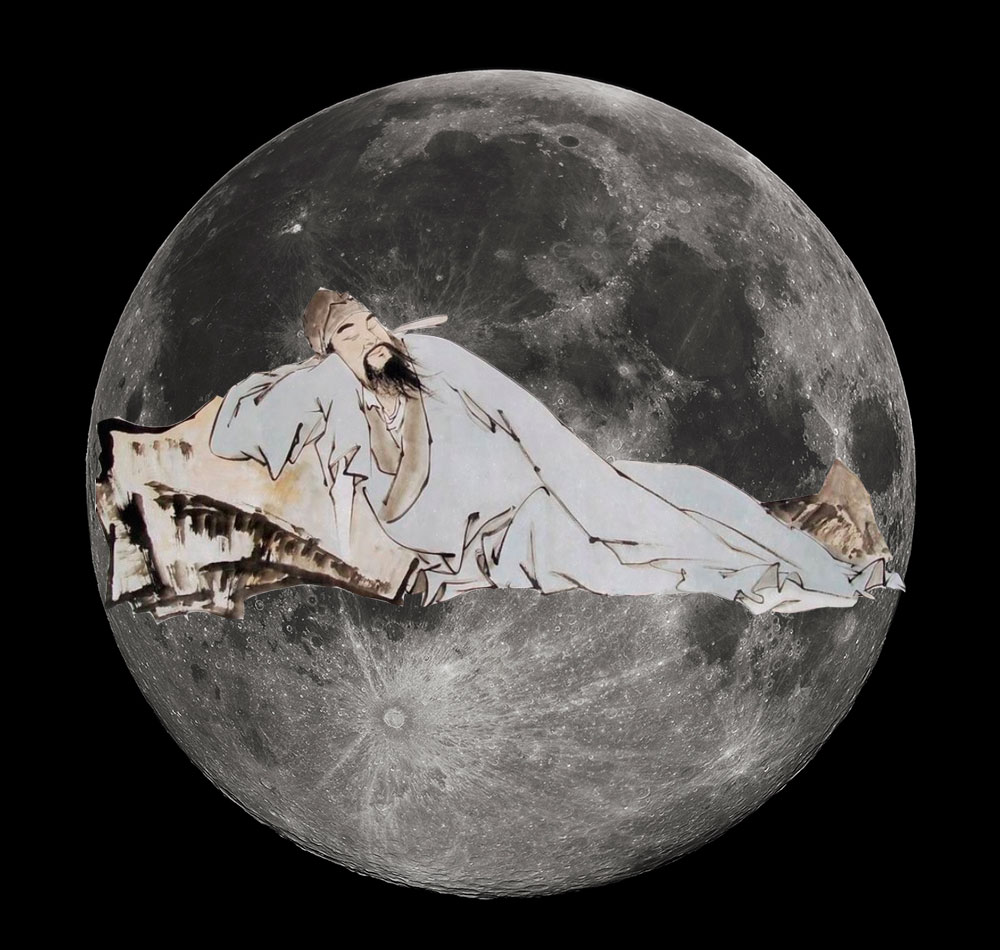
However, such an obscure death was not acceptable to those who cherished his poetry. They began to give different versions of his death, stories spun either to suit the romantic image of his poetic personality or to provide a fitting conclusion to his turbulent life. In one version, he died of alcohol poisoning; this was in keeping with his lifelong indulgence in drink. Another claims that he died of an illness known as chronic thoracic suppuration—pus penetrating his chest and lungs. The first mention of this comes from Pi Rixiu (838–83) in his poem “Seven Loves”: “He was brought down by rotted ribs, / Which sent his drunken soul to the other world.” Although there is no way we can verify this claim, it sounds credible—such a chest problem could have been caused by his abuse of alcohol. In his final years, Li Bai’s drinking and poverty would have aggravated his pulmonary condition. But the third version of his death is far more fantastic: in this version, he drowns while drunkenly chasing the moon’s reflection on a river, jumping from a boat to catch the ever-shifting orb.

Even though this scene smacks of suicide and is perhaps too romantic to be believed, it is the version that has been embraced by the public—in part because Li Bai, as his poetry shows, loved the moon. Even in his early childhood, he was fixated on it. In his poem “Night Trip in Gulang,” he writes:

As a young child, I had no idea what the moon was
And I called it a white jade plate.
Then I wondered if it was a mirror at the Jasper Terrace
That flew away and landed on top of green clouds.

In Chinese poetry, Li Bai was the first to use the image of the moon abundantly, celebrating its loftiness, purity, and constancy. He imagined the moon as a serene landscape with sublime dwellings for xian, or immortals, who are often surrounded by divine fauna and flora and their personal pets. The beliefs of the ancient Chinese did not separate divinity from humanity, and their imagined heavenly space resembled the human world, with similar (but more fantastic) landscapes and architecture and creatures. If cultivated enough, any human being could rise to the order of divinity, becoming a xian—many temples in China worshipped these kinds of local deities. Heaven was inhabited by these beings, who were somewhat like superhumans, powerful and carefree and immortal.

The moon in Li Bai’s poetry is also associated with one’s home or native place, and as a beacon shared by people everywhere, universal and ever reliable—“Raising my head, I see the bright moon, / And lowering it, I think of home” (“Reflection in a Quiet Night”). The legend of his attempt to embrace the moon suggests an ultimate fulfillment of his wish and vision—a reversed spiritual ascent. Some of his contemporaries believed him to have been a star in his previous life, and so by joining the moon in the water, he returned to the heavenly space where he had once dwelled. The brief “Li Bai Biography” in the eleventh-century book New Tang History reads, “When giving birth to Li Bai, his mother dreamed of the star Venus, so he was named Taibai (Venus).”

The poets who came after him have continued to celebrate his moonlit death: even though they know it may not be true, across the centuries they have eulogized the shining moment in their verses. Even today, lovers of Li Bai’s poetry indulge in the myth. One contemporary scholar writes that Li Bai “rode a whale, floating away with the waves, toward the moon.” This heavenward journey is presented from the distraught, drunken poet’s point of view so that Li Bai appears to be returning to his original, divine position. Such romanticization shows the nature of scholarship around Li Bai, which is partly based on legends and myths. Because people want him to have a glorious end, they have been eager to perpetuate the moon-chasing legend.

However, for all the imaginative attempts to glorify him, a single clear voice spoke about his situation presciently when the poet was still alive and in exile. His staunch friend Du Fu laments in his poem “Dreaming of Li Bai”:

冠蓋滿京華 斯人獨憔悴
孰云網恢恢 將老身反累
千秋萬歲名 寂寞身後事

《夢李白》

The capital is full of gorgeous carriages and gowns,
But you are alone gaunt and sallow despite your gift.
Who is to say that the way of heaven is always fair?
At your old age you can’t stay clear of harm.
Your fame that’s to last ten thousand years
Will become a quiet affair after you are gone.


Ha Jin left his native China in 1985 to attend Brandeis University. He is the author of eight novels, four story collections, four volumes of poetry, and a book of essays. He has received the National Book Award (for his novel Waiting), two PEN/Faulkner Awards, the PEN/Hemingway Foundation Award, the Asian American Literary Award, and the Flannery O’Connor Award for Short Fiction. In 2014, he was elected to the American Academy of Arts and Letters. He lives in the Boston area and is a professor in the creative writing program at Boston University.

From the book The Banished Immortal, by Ha Jin. Copyright © 2019 by Ha Jin. Published by arrangement with Pantheon Books, an imprint of the Knopf Doubleday Publishing Group, a division of Penguin Random House LLC.


THE PARIS REVIEW


Thursday, December 29, 2022

For Forest Poem by Grace Nichols


For Forest Poem 
Grace Nichols

Forest could keep secrets

Forest tune in every day
to watersound and birdsound
Forest letting her hair down
to the teeming creeping of her forest-ground

But Forest don't broadcast her business
no Forest cover her business down
from sky and fast-eye sun
and when night come
and darkness wrap her like a gown
Forest is a bad dream woman

Forest dreaming about mountain
and when earth was young
Forest dreaming of the caress of gold
Forest roosting with mysterious eldorado
and when howler monkey
wake her up with howl
Forest just stretch and stir
to a new day of sound

but coming back to secrets
Forest could keep secrets
And we must keep Forest


Wednesday, December 28, 2022

Like a Beacon Poem by Grace Nichols


Like a Beacon Poem
by Grace Nichols

In London
every now and then
I get this craving
for my mother's food
I leave art galleries
in search of plantains
saltfish/sweet potatoes

I need this link

I need this touch
of home
swinging my bag
like a beacon
against the cold


Tuesday, December 27, 2022

Cat-rap Poem by Grace Nichols


Cat-rap Poem
by Grace Nichols

Lying on the sofa
all curled and meek
but in my furry-fuzzy head
there's a rapping beat.
Gonna rap while I'm napping
and looking sweet
gonna rap while I'm padding
on the balls of my feet

Gonna rap on my head
gonna rap on my tail
gonna rap on my
you know where.
So wave your paws in the air
like you just don't care
with nine lives to spare
gimme five right here.

Well, they say that we cats
are killed by curiosity,

but does the moggie mind?
No, I've got suavity.
When I get to heaven
gonna rap with Macavity,
gonna find his hidden paw
and clear up that mystery.

Nap it up
scratch it up
the knack is free
fur it up
purr it up
yes that's me.

The meanest cat-rapper you'll ever see.
Number one of the street-sound galaxy.


Monday, December 26, 2022

Biographies / Grace Nichols


Grace Nichols


Grace Nichols

Grace Nichols is a poet whose work has been central to our understanding of the important cultural Caribbean-British connection for nearly 3 decades. From her first collection, I Is a Long Memoried Woman (1983), to her more recent work such as Picasso, I Want My Face Back (2009), she has uncovered with a disquieting lyricism and humour the various facets of life as a woman and as an immigrant living in the UK.

Nichols was born in Guyana in 1950, and moved to live in the UK in 1977. Her work is influenced by the history and culture of her homeland, in particular the oral story-telling tradition with its fantastic folk tales, the landscape and its rural tasks and the history of enslavement (particularly relating to women). ‘To My Coral Bones’ from Startling the Flying Fish (2006) explores the importance of Nichols’ Caribbean heritage, suggesting she has ‘alwayscarried deepthese islands’.

On arrival in the UK, Nichols’ work began to respond to the contemporary situation. She was one of a number of West-Indian poets, including Linton Kwesi-Johnson and John Agard, whose work also touched on racial tensions at a time when immigration was at the centre of the political debates under Margaret Thatcher’s government. Poems from her 1984 collection The Fat Black Woman’s Poems are an arresting and humourous riposte, presenting the unfettered thoughts of the heroine in the bath or at the shops. A later poem, ‘Hurricane Hits England’, expresses the connection between cultures, when a hurricane reminds her that ‘the earth is the earth is the earth’.

Her poetry is characterized not just by the themes above, but by an acute attention to the language which carries the poems. Her work marries the Creole of her homeland with standard English, creating new possibilities for rhythm and rhyme. As such, while reading her poetry on the page offers fascinating insights to the potential for linguistic hybridity, it is when spoken aloud that her techniques sing most powerfully.

In her reading for the Archive, Nichols’ voice brings the poems to life, giving free reign to the infectious lyrical sweep of her verse. For example, in ‘Praise Song for My Mother’ (which is on the current GCSE syllabus), there is a true harmony in the blend of the vibrant imagery, ‘the fish’s red gill’ and ‘the flame tree’s spread’, the haunting recollection of the past tense ‘You were’, and the forward movement of the repeated stanza structure and end-rhymes.

Her poetry for children is characterized by the same rhythms as her other poetry, although the subjects are designed to appeal to a younger audience. ‘Cat-Rap’, included here, proves that Nichols herself is ‘The meanest cat-rapper you’ll ever seeNumber one of the street-sound galaxy’.


Sunday, December 25, 2022

Hurricane Hits England by Grace Nichols


Hurricane Hits England 

by Grace Nichols


It took a hurricane, to bring her closer
To the landscape.
Half the night she lay awake,
The howling ship of the wind,
Its gathering rage,
Like some dark ancestral spectre.
Fearful and reassuring.

Talk to me Huracan
Talk to me Oya
Talk to me Shango
And Hattie,
My sweeping, back-home cousin.

Tell me why you visit
An English coast?
What is the meaning
Of old tongues
Reaping havoc
In new places?

The blinding illumination,
Even as you short-
Circuit us
Into further darkness?

What is the meaning of trees
Falling heavy as whales
Their crusted roots
Their cratered graves?

O why is my heart unchained?

Tropical Oya of the Weather,
I am aligning myself to you,
I am following the movement of your winds,
I am riding the mystery of your storm.

Ah, sweet mystery,
Come to break the frozen lake in me,
Shaking the foundations of the very trees within me,
Come to let me know
That the earth is the earth is the earth.

Saturday, December 24, 2022

Epitaph on a Hare by William Cowper


Epitaph on a Hare

BY WILLIAM COWPER
Here lies, whom hound did ne’er pursue,
    Nor swifter greyhound follow,
Whose foot ne’er tainted morning dew,
    Nor ear heard huntsman’s hallo’,

Old Tiney, surliest of his kind,
    Who, nursed with tender care,
And to domesticate bounds confined,
    Was still a wild jack-hare.

Though duly from my hand he took
    His pittance every night,
He did it with a jealous look,
    And, when he could, would bite.

His diet was of wheaten bread,
    And milk, and oats, and straw,
Thistles, or lettuces instead,
    With sand to scour his maw.

On twigs of hawthorn he regaled,
    On pippins’ russet peel;
And, when his juicy salads failed,
    Sliced carrot pleased him well.

A Turkey carpet was his lawn,
    Whereon he loved to bound,
To skip and gambol like a fawn,
    And swing his rump around.

His frisking was at evening hours,
    For then he lost his fear;
But most before approaching showers,
    Or when a storm drew near.

Eight years and five round-rolling moons
    He thus saw steal away,
Dozing out all his idle noons,
    And every night at play.

I kept him for his humor’s sake,
    For he would oft beguile
My heart of thoughts that made it ache,
    And force me to a smile.

But now, beneath this walnut-shade
    He finds his long, last home,
And waits in snug concealment laid,
    Till gentler Puss shall come.

He, still more agèd, feels the shocks
    From which no care can save,
And, partner once of Tiney’s box,
    Must soon partake his grave.


Friday, December 23, 2022

Alexander Pope / Epistle to Miss Blount, On Her Leaving the Town, After the Coronation


Epistle to Miss Blount, On Her Leaving the Town, After the Coronation

BY ALEXANDER POPE
As some fond virgin, whom her mother’s care
Drags from the town to wholesome country air,
Just when she learns to roll a melting eye,
And hear a spark, yet think no danger nigh;
From the dear man unwillingly she must sever,
Yet takes one kiss before she parts for ever:
Thus from the world fair Zephalinda flew,
Saw others happy, and with sighs withdrew;
Not that their pleasures caused her discontent,
She sighed not that They stayed, but that She went.
She went, to plain-work, and to purling brooks,
Old-fashioned halls, dull aunts, and croaking rooks,
She went from Opera, park, assembly, play,
To morning walks, and prayers three hours a day;
To pass her time ‘twixt reading and Bohea,
To muse, and spill her solitary tea,
Or o’er cold coffee trifle with the spoon,
Count the slow clock, and dine exact at noon;
Divert her eyes with pictures in the fire,
Hum half a tune, tell stories to the squire;
Up to her godly garret after seven,
There starve and pray, for that’s the way to heaven.
Some Squire, perhaps, you take a delight to rack;
Whose game is Whisk, whose treat a toast in sack,
Who visits with a gun, presents you birds,
Then gives a smacking buss, and cries – No words!
Or with his hound comes hollowing from the stable,
Makes love with nods, and knees beneath a table;
Whose laughs are hearty, tho’ his jests are coarse,
And loves you best of all things – but his horse.
In some fair evening, on your elbow laid,
Your dream of triumphs in the rural shade;
In pensive thought recall the fancied scene,
See Coronations rise on every green;
Before you pass th’ imaginary sights
Of Lords, and Earls, and Dukes, and gartered Knights;
While the spread fan o’ershades your closing eyes;
Then give one flirt, and all the vision flies.
Thus vanish scepters, coronets, and balls,
And leave you in lone woods, or empty walls.
So when your slave, at some dear, idle time,
(Not plagued with headaches, or the want of rhyme)
Stands in the streets, abstracted from the crew,
And while he seems to study, thinks of you:
Just when his fancy points your sprightly eyes,
Or sees the blush of soft Parthenia rise,
Gay pats my shoulder, and you vanish quite;
Streets, chairs, and coxcombs rush upon my sight;
Vexed to be still in town, I knit my brow,
Look sour, and hum a tune – as you may now.


Thursday, December 22, 2022

Heather Christle / People Are a Living Structure Like a Coral Reef


People Are a Living Structure Like a Coral Reef
by Heather Christle


People love to clean their ears and I love people

very much They are everywhere! Every single

thing I love I love for windows only and if

one window reflects another then friends

for me it’s all over And in the windows are trees

and in the windows are people What are they even doing

with their hunger and in their new shirts They are

taking care of themselves and they are taking each other out

for lunch Oh even the rain has to love them People

are just too attractive! and the rain places itself

on the window in order to be closer to the people

the ones who are eating The ones who are

busting out vigor Oh people You have to love

people They are so much like ourselves


Monday, December 19, 2022

To the Woman Crying Uncontrollably in the Next Stall by Kim Addonizio


To the Woman Crying Uncontrollably 

in the Next Stall

BY KIM ADDONIZIO

If you ever woke in your dress at 4am ever
closed your legs to someone you loved opened
them for someone you didn’t moved against
a pillow in the dark stood miserably on a beach
seaweed clinging to your ankles paid
good money for a bad haircut backed away
from a mirror that wanted to kill you bled
into the back seat for lack of a tampon
if you swam across a river under rain sang
using a dildo for a microphone stayed up
to watch the moon eat the sun entire
ripped out the stitches in your heart
because why not if you think nothing &
no one can / listen I love you joy is coming


Thursday, December 15, 2022

The Orange by Wendy Cope


The Orange
by Wendy Cope


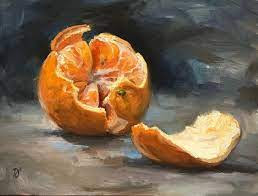
At lunchtime I bought a huge orange –
The size of it made us all laugh.
I peeled it and shared it with Robert and Dave –
They got quarters and I had a half.

And that orange, it made me so happy,
As ordinary things often do
Just lately. The shopping. A walk in the park.
This is peace and contentment. It’s new.

The rest of the day was quite easy.
I did all the jobs on my list
And enjoyed them and had some time over.
I love you. I’m glad I exist.

 From Serious Concerns (Faber) 


Wednesday, December 14, 2022

Quarantine by Béla Markó


Photo by Lina Kivaka from Pexels

Quarantine 

by Béla Markó

Translated from the Hungarian by Anna Bentley

It’s been this way from the beginning.

You can’t swap places with the person

you see in the mirror.

You can’t step out of your body.

Nor out of the sweep of time.

Maybe on occasion, out of looking,

Out of sounds. Out of fragrances.

Out of touching. Out of dreams too.

But out of the whole shebang, no way.

Of course, that’s not what this is about,

This is a story. And some careful arrangements.

We go to Kolozsvár at night in two cars.

Anna drives one, I drive the other.

We get to the airport at three in the morning.

We park. Anna comes over to sit with me.

We leave the other car unlocked, the keys

still in it. Balázs emerges from the terminal.

He’s come from London with an old classmate.

Whether or not you’re ill, it’s still fourteen days

quarantine. We’ve talked the whole thing through

on the phone. They’ll be in Marosszentkirály.

We’ll be in Marosvásárhely. Close contact is

forbidden. They stand just a little way off from us.

Grown-up children. No barrier between us,

No fence, no railing, no police. Nothing at all,

Beyond a sort of invisible awareness.

A realisation. Self-limitation.

We wave to them. No handshakes. No hugs.

No blokey clap on the back or rub of the shoulders.

Like once. Merely an entirely different

closeness. Which is also already a distance.

Unbridgeable. Unfathomable. As we

learn to keep our distance. When we step out of

ourselves, we cease to be. That’s what we’re thinking.

Or not even that, just about the discipline forced

Onto us. We point out where the car is.

They move off towards it. A practice exercise, perhaps,

for something we don’t yet recognise. The barrier hardest

to break down is the one that doesn’t exist.


 Béla Markó, poet, writer, editor and politician, was born in Kézdivásárhely (Târgu Secuiesc, Romania) in 1951. He has published numerous volumes of poetry, collections of essays, children's books and Hungarian school textbooks. He has also translated Romanian poetry and drama. His poetry has been translated into French and Romanian. Poems by Markó have also appeared in English translation in anthologies and literary journals as well as in his own volume, Notes on a Happy Pear Tree (Pont Press, 1999, transl. Sylvia Csiffary).

Anna Bentley is a British translator of Hungarian literature. In 2019, her translation of Ervin Lázár's children's classic, Arnica the Duck Princess was published by Pushkin Children's Press and her translation of Anna Menyhért's study of five forgotten Hungarian women writers, Women's Literary Tradition and Twentieth-Century Hungarian Writers was published by Brill. Several stories by Gabi Csutak have recently appeared in Anna's translation in Trafika Europe's online journal. Her translations of contemporary poets such as Mónika Mesterházi and Zsófia Balla have appeared on Hungarian Literature Online. 

13 January, 2021

HLO HU