Sunday, July 3, 2016

Anna Akhmatova / Our lady of sorrows


Anna Akhma-tova


Our lady of sorrows


Elaine Feinstein tells how poet Anna Akhmatova, whose son was in the Gulag, spoke for millions of Russians of their hell under Stalin in Anna of All The Russians


Neal Ascherson
Sunday 31 July 2005 00.46 BST


Anna of All The Russians: The Life of Anna Akhmatova
by Elaine Feinstein
Weidenfeld & Nicolson £20, pp322

When people remember Anna Akhmatova, they do so extravagantly. Josef Brodsky, one of the circle of young poets who adored her when she was old, said: 'In conversation with her, or simply drinking tea or vodka, you became a Christian, a human being in the Christian sense of the word'.
Anatoly Nauman, another in that circle, remembered that after meeting her he was 'stunned by the fact that I had been in the presence of someone with whom no one on earth had anything in common'. Isaiah Berlin, throwing himself on his hotel bed after spending a day and a night talking to her in Leningrad, exclaimed: 'I am in love, I am in love!'
Elaine Feinstein, author of this biography, calls her 'one of the greatest poets of Russian literature ... she became the voice of a whole people's suffering under Stalin ... an iconic figure for all those whom the Soviet regime repressed ...' This status was confirmed for ever when Andrey Zhdanov, Stalin's cultural rottweiler, excommunicated her in 1946 as 'half nun, half whore, or rather both nun and whore with her petty, narrow private life, her trivial experiences ...'
But icons are difficult to write about critically. How good a poet was she really? To me as a non-Russian, her contemporary Marina Tsvetaeva seems as a writer to be richer and more astonishing. I know Russians who now dismiss Akhamatova as 'a minor poet'. But how do you separate the passionate response to her verse, a response which has itself become part of Russian history, from the quality of that poetry?
Anna Akhmatova was born in Odessa in 1889 (her father was called Gorenko, but she took the more glamorous name of a Tatar ancestor). Brought up in and near St Petersburg, she became one of the young writers and performers who met in the 'Stray Dog' cellar in the years before the First World War. Mayakovsky, Mandelstam and many other men and women who were to be her friends for life went there. Akhmatova - tall, black-haired, with huge grey eyes - read poems about painful love.


Before she was 30, she was famous. The writer Kornei Chukovsky said her first book, Evening, 'accompanied the next two or three generations of Russians whenever they fell in love'.
In 1910, she married the poet and explorer Nikolai Gumilev. By the time of the revolution, seven years later, the marriage had come apart, but Gumilev's arrest and execution in 1920 on fictional charges of anti-Bolshevik conspiracy devastated Akhmatova. By now, she had begun the nomadic, chaotic existence which lasted most of her life. It brought her shabby rooms in old palaces, torn silk dressing gowns, a procession of momentary or semi-permanent lovers, semi-starvation ('a horrible skeleton dressed in rags', as one visitor saw her in 1919), tuberculosis and guilt. 'I brought destruction to those I loved.'
There were several times when both her current lover and her son, Lev Gumilev, were in the Gulag (the son survived; the lover, Nikolay Punin, died in the camps) But Akhmatova never left Russia, or thought of doing so. And, with only a few interruptions, the poetry kept coming.
Caught in the siege of Leningrad in 1941, she was one of the few writers chosen to be flown out. In spite of her political views, Stalin recognised that she was worth saving. But in 1946 Akhmatova was denounced ('harlot and nun') by Zhdanov. She became an 'unperson', dangerous to everyone she met. Lev Gumilev was rearrested and released only in 1956, three years after Stalin's death. Only in 1957 was Akhmatova rehabilitated. But nobody had forgotten the poet who had given them courage in awful times, and the last 10 years of her life were spent in glory, if not exactly in comfort, in a dacha of her own near Leningrad surrounded by friends.


A great deal of Feinstein's biography is taken up with careful attempts to decipher Akhmatova's 'relationships'. These were multiple and often simultaneous. Nobody's love life looks simple under bright light, but the emotional life of Russian intellectuals - then, as now - was as disorderly as a London teenager's floor. Wisely, Feinstein also disentangles Akhmatova's friendships, the human bond which many Russians consider more important and lasting than sexual love. Most of her male intimates let her down, but her women friends stood by her. What society today can produce friends as wonderful as Lydia Chukovskaya?
It was Chukovskaya who stood with her all those days and nights of frost, queuing outside prisons to hand in parcels. Akhmatova had food and clothes for Lev, bound for somewhere beyond the Arctic Circle. Chukovskaya took packages for her husband, not knowing that he had long ago been shot.
In one of those terrible queues, a girl recognised Akhmatova and whispered: 'Can you describe this?' Akhmatova replied: 'I can.' Out of that grew, gradually, her tremendous poem cycle, Requiem. Once, when young, she had written the lines which lovers quoted to one another. Now she provided words which thousands of men and women repeated under their breath, as they suffered, feared and waited.
As Feinstein writes, Akhmatova always considered that she had been 'appointed by God to sing of this suffering'. Even after her brilliant looks had faded, she was vain and - for someone with such good friends - strikingly indifferent to anyone else's problems.
As a conventional wife or mother, she was terrible. Her son, in the labour camps, deluded himself that she did not care how long he stayed there and that she was exploiting his fate to make her own poetry. (The embittered Lev Gumilev grew up to be the ultra-nationalist historian who reintroduced mystic racialism into post-Soviet education.) As a poet, her unambiguous language, like Pushkin's but almost always narration in the first person, does not translate easily into English, and can occasionally seem trite. But we know that for millions across the generations those words in Russian rang true.
Elaine Feinstein's achievement is to show us the life of an extraordinary woman in gleaming fragments, and to demonstrate, through so many witnesses, how she was worshipped.


Saturday, July 2, 2016

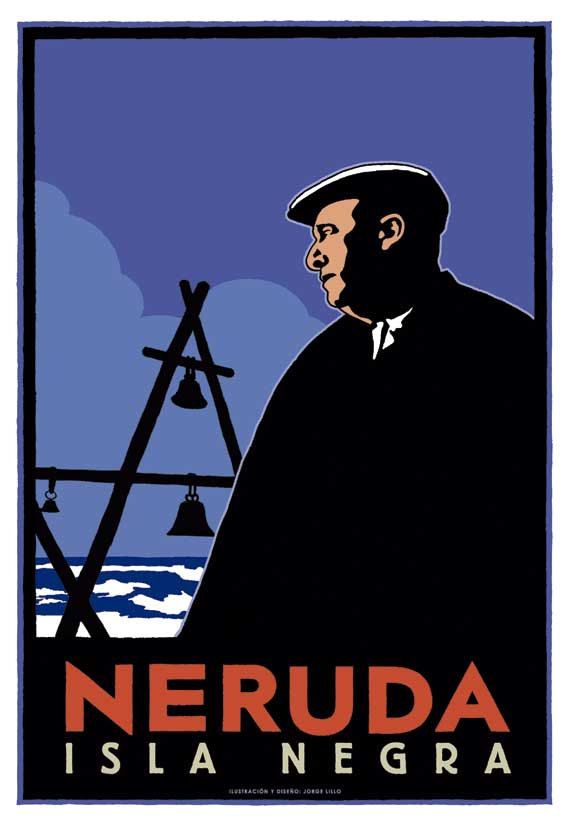
Nabokov, Neruda and Borges revealed as losers of 1965 Nobel prize

Nabokov, Neruda and Borges revealed as losers of 1965 Nobel prize

Nobel archives have been opened to reveal who was nominated for the 1965 prize for literature, a controversial year won by divisive victor Mikhail Sholokhov

Alison Flood
Wednesday 6 January 2016 15.47 GMT


Vladimir Nabokov, Pablo Neruda and Jorge Luis Borges were all in the running for the 1965 Nobel prize for literature, newly opened archives have revealed, but the judges that year went instead for the controversial choice of Mikhail Sholokhov.
The Swedish Academy, the members of which decide annually on the international writer deemed to best fulfil Alfred Nobel’s criteria of “the most outstanding work in an ideal direction”, keeps the list of writers proposed for the prize confidential for 50 years. It has now opened its archives, revealing that as well as Sholokhov, names in contention in 1965 included Nabokov and Borges – neither of whom would ever win the Nobel – as well as Neruda, who would take it in 1971.


Jorge Luis Borges

From the UK, WH Auden, Lawrence Durrell, LP Hartley and W Somerset Maugham were also proposed as potential winners that year, as was Alan Sillitoe: none would win a Nobel. Samuel Beckett, another nomination in 1965, would go on to take the prize in 1969.

Nominators for the Nobel are a mix of former laureates, professors of literature and literary experts. The choice in 1965 of Sholokhov proved divisive: the Soviet author was one of those to have spoken out against the awarding of the Nobel to Boris Pasternak in 1958, causing the author to “voluntarily” reject it. The Nobel was given to Sholokhov seven years later for the “artistic power and integrity” of his epic novel of Cossack life, And Quiet Flows the Don, with which the Nobel committee said “he has given expression to a historic phase in the life of the Russian people”. Alexandr Solzhenitsyn, who would win the Nobel in 1970, was one of a group of writers to later publicly accuse Sholokhov of plagiarising the work from Fyodor Kryukov, an accusation rejected by the author.


Vladimir Nabokov

Swedish newspaper Svenska Dagbladet, whose journalist Kaj Schueler has looked through the Swedish Academy’s documents from 1965, reported that the choice of Sholokhov was unanimous. The series of novels that comprise And Quiet Flows the Don is a “classic masterpiece”, the Nobel committee chairman Anders Österling said at the time, “which retains its shine at every rereading, and this folk epic is still an indisputable base for the award, even if it comes too late”. The books were published between 1928 and 1940.
Schueler also revealed that the committee had discussed sharing the prize in 1965 between the Russian poet Anna Akhmatova, who was excommunicated in 1946 by the Soviet regime, and Sholokhov, a member of the Communist Party’s Central Committee. The idea was rejected by Österling, according to Svenska Dagbladet, who noted that the two writers had nothing but their language in common.
He also rejected the possibility of sharing the prize that year between Miguel Ángel Asturias and Borges, and between Shmuel Joseph Agnon and Nelly Sachs. Agnon and Sachs would go on to share the prize the next year, in 1966, Agnon chosen “for his profoundly characteristic narrative art with motifs from the life of the Jewish people” and Sachs “for her outstanding lyrical and dramatic writing, which interprets Israel’s destiny with touching strength” .
The Guatemalan Asturias would win the Nobel in 1967 “for his vivid literary achievement, deep-rooted in the national traits and traditions of Indian peoples of Latin America”, but Borges would never win. Colm Tóibín writes in the London Review of Books of how Borges’s maid, Epifanía Uveda de Robledo, said the author was “much tortured … by the possibility of winning the Nobel prize. On the day of the announcement journalists would queue outside his door. This would happen year after year. The news each time that he had not won would make him very sad.”
“Not granting me the Nobel prize has become a Scandinavian tradition; since I was born they have not been granting it to me,” said the Argentinian.


Friday, July 1, 2016

Pablo Neruda / Verb


VERB


By Pablo Neruda
BIOGRAPHY

I’m going to wrinkle this word,
I’m going to twist it,
yes,
it is much too flat
it is as if a great dog or great river
had passed its tongue or water over it
during many years.

I want that in the word
the roughness is seen
the iron salt
The de-fanged strength
of the land,
the blood
of those who have spoken and those who have not spoken.

I want to see the thirst
Inside the syllables
I want to touch the fire
in the sound:
I want to feel the darkness
of the cry. I want
words as rough
as virgin rocks.


Wednesday, June 29, 2016

Pablo Neruda / The poet´s Obligation


The poet´s Obligation
by Pablo Neruda
BIOGRAPHY
Translated by Alastair Reid


To whoever is not listening to the sea
this Friday morning, to whoever is cooped up
in house or office, factory or woman
or street or mine or dry prison cell,
to him I come, and without speaking or looking
I arrive and open the door of his prison,
and a vibration starts up, vague and insistent,
a long rumble of thunder adds itself
to the weight of the planet and the foam,
the groaning rivers of the ocean rise,
the star vibrates quickly in its corona
and the sea beats, dies, and goes on beating.

So, drawn on by my destiny,
I ceaselessly must listen to and keep
the sea's lamenting in my consciousness,
I must feel the crash of the hard water
and gather it up in a perpetual cup
so that, wherever those in prison may be,
wherever they suffer the sentence of the autumn,
I may be present with an errant wave,
I may move in and out of windows,
and hearing me, eyes may lift themselves,
asking "How can I reach the sea?"
And I will pass to them, saying nothing,
the starry echoes of the wave,
a breaking up of foam and quicksand,
a rustling of salt withdrawing itself,
the grey cry of seabirds on the coast.

So, through me, freedom and the sea
will call in answer to the shrouded heart.

From Plenos Poderes / Fully Empowered (1962)


Monday, June 27, 2016

Michael Drayton / Three sorts of serpents do resemble thee


Three sorts of serpentes do resemble thee

BY MICHAEL DRAYTON
Biography


Three sorts of serpents do resemble thee: 
That dangerous eye-killing cockatrice, 
The enchanting siren, which doth so entice, 
The weeping crocodile—these vile pernicious three. 
The basilisk his nature takes from thee, 
Who for my life in secret wait dost lie, 
And to my heart sendst poison from thine eye: 
Thus do I feel the pain, the cause, yet cannot see. 
Fair-maid no more, but Mer-maid be thy name, 
Who with thy sweet alluring harmony 
Hast played the thief, and stolen my heart from me, 
And like a tyrant makst my grief thy game: 
   Thou crocodile, who when thou hast me slain, 
   Lamentst my death, with tears of thy disdain.


Saturday, June 25, 2016

Pip Jones / The Invisible Cat / How to write rollicking rhyming stories

How to write rollicking rhyming stories

Squishy McFluff author Pip Jones with the best advice on writing stories that rhyme – and the golden rule is never, ever sacrifice a story for a rhyme!
Pip Jones
Friday 1 July 2016 12.00 BST

On the day started I writing my first children’s book, Squishy McFluff: The Invisible Cat! I didn’t deliberately set out to write it in rhyme. It just happened.
The first line that popped out was: “As Ava played out in the garden one day, when the air was all foggy, the sky rather grey…” I realised straight away that if I split the sentence, I had a perfect rhyming couplet. That set the scene for the rest of the book, and now I’ve written six of them, each one up to 2,000 words, all written in rhyme.
I’ve always loved writing rhymes, even as a little girl. It’s not only fun, you can also get a huge amount of satisfaction from finding the perfect rhyme to tell a joke or move the story along. It’s not always easy though. Sometimes it can take a lot of thinking to get a line just right.
Writing a good rhyming story is a bit like doing a jigsaw. When I begin, I know what the whole story will be (so that’s like the finished picture) and I have to put the pieces (or the words) together in exactly the right way to make everything fit. Just as it would be with a jigsaw, you can’t shove a piece into a place it doesn’t fit because otherwise, in the end, the picture will be wonky.
For some people, writing brilliant rhyme comes naturally – but for other people, practice makes perfect. Here are my top tips for writing a rollicking rhyming story.

1 Read rhyming books

Authors always tell people who want to write that they should read, read, read! But we say it for a reason, because whatever sort of story you want to write, reading other people’s books is like giving your brain a writing work out. Reading will give you lots of ideas, help you instinctively know which words to use, and arm you with the tools you need to create stories that work.
In particular, when you want to write rhyming stories, reading rhyme somehow puts a rhythm in your head which will help you. You know what it’s like if you sit for ages in a room that has a loud, ticking clock? When you leave the room, for a while afterwards, you might still hear that clock in your head. Tick. Tock. Tick. Tock. It’s the same with rhyme, and this is GOOD! This is what you need to prepare your brain for writing rhyme.
You might notice that lots of children’s rhyming books are written in rhyming couplets, or sets of two lines where the last words of each line rhyme with each other. This is a nice simple type of rhyme to begin with.

2 The story should come first

When you’re writing in rhyme, it’s easy to become obsessed with finding the ending words that go together. But if you concentrate on the rhyme more than you do on the plot, you’ll probably end up with a story that doesn’t feel all that satisfying. It might not have a good focus, or make sense, or be as entertaining as it should be. The rule to remember is: the story is just as important as the rhyme.
Here’s a slightly silly example (which I just made up!) showing how you can easily sacrifice the focus of a story for rhyme:
Here’s a dungeon, oh so scary.
Don’t go down there! Please be wary!
You must NOT wander in the dark,
Especially not if you’re a shark!
The first three lines set up a story, which has focus. Oooh! It’s all about a scary dungeon! Too scary to enter! But then… hey, what the lollypop is a shark doing in this rhyme? A shark especially shouldn’t go in a dungeon? Huh? It makes no sense! The only reason the shark shows up in this rhyme is because it goes with ‘dark’. But it makes you think, ‘errrr…’ and by that point, you’ve forgotten all about the scary dungeon! The shark has sacrificed the story for the rhyme. Let’s get rid of it.
You must NOT wander in the gloom
Of that spooky, dingy room!
I used gloom instead of dark. It means the same thing as dark really – AND I could find a rhyme that made sense in the context of the story.
So, before you even think about the rhyming aspect, write down your story in prose, so you know what is going to happen at the beginning, the middle and the end (a prose version about a scary dungeon would be VERY unlikely to have a shark in it!). Once you have that, you can start doing your ‘jigsaw’, finding the perfect words. And when you’ve finished, you rhyming story will have focus and make sense.


3 Perfect or imperfect?

There are lots of definitions to describe different types of rhyme – for example, people talk about half rhyme, slant rhyme, near rhyme, assonance and consonance. But to keep things simple, let’s just talk about perfect and imperfect rhyme – and which of the two you want to use.
Perfect rhyme is harder by nature because it requires the rhyming words to match in both their vowel and consonant sounds. So the combination of eat/sweet matches both the “ee” sound and the “t” sound. Similarly host/most share both the “oh” sound and the “st” sound.
If you were using imperfect rhyme, though, you might choose to only match either the vowel sound, OR the consonant sound. So you could have eat/leaf, which share only the “ee” sound. Or you could have host/last which share only the “st” sound.
Put simply, there are more imperfect rhyme combinations in the English language than there are perfect rhyme combinations – so writing in imperfect rhyme will give you more options. Writing in perfect rhyme is harder and takes more practice, so don’t feel bad about starting out with imperfect rhyme, pop stars use it all the time! Think about some of the lyrics to some of your favourite songs, and I bet you find loads of examples of imperfect rhyme.

4 Master rhythm

Did you know that poems have feet? No? Well if you were to learn about poetry in a formal way, you’d be bombarded by all sort of funny terms which are used to describe the way verse is written, including metric feet, meter and iambs. It can all get very technical, but you don’t necessarily need to know that stuff. All you need to understand is that poems and rhymes normally have rhythm.
If you listen to a rhyming poem being read aloud, you’ll probably be able to detect the rhythm, or a beat, running through it It’s a bit like listening to a tune being played.
But if, when writing rhyme, you somehow miss a beat of your rhythm, it feels awkward. Imagine listening to your favourite pop star singing your favourite song – but they have hiccups. Argh! That’s what it feels like when a rhyme loses its beat.
Being consistent with your rhythm can be tricky and it has a lot to with the emphasis we put on syllables in words and phrases – it is these strong and weak syllables which provide the rhythm. When we speak naturally, we put moreemphasis on some syllables than we do on others. See how I have made the stronger syllables bold?
When you write a line of rhyme, it’s important not to force the reader to put the emphasis on a syllable where it wouldn’t occur in natural speech, just to achieve the rhythm. For example, if you put stress on the last part of the word emphasis, it would sound weird and awkward. So you need to try to write the lines of your rhyming story so all the words can be read in a natural, but rhythmic way.

5 Test your rhyming story

Have you written a brilliant rhyming story? I find a very good way to find out is to ask someone to read your work aloud to you. Listen carefully. Do they stumble on any lines? Do they pause in parts? These clues will let you know if you have some bits and pieces that need fixing.
Perhaps you need to add a syllable to fix your rhythm, or maybe you need to take one away. It might be that you need to swap one word for another, to make sure the syllable emphasis falls in the right place for your rhyme’s beat.
It’s not only me who uses this read aloud method – Julia Donaldson does too, and if that isn’t what you’d call tried and tested, I don’t know what is.
PS. Don’t forget to ask your guinea pig whether they liked the story too!
Pip Jones’ latest Squishy McFluff book, illustrated by Ella Okstad, is Squishy McFluff The Invisible Cat: Seaside Rescue and you can buy it from the Guardian bookshop.


Monday, June 20, 2016

Poetry can heal / It helped me through depression

Photo by Flor Garduño

Poetry can heal – it helped me through depression


After my illness, I walked alone through Spain, with an anthology of verse chosen by friends

"Poetry is medicine"

I
n Dante’s time, books were sold in apothecary shops: literature as medicine. I learned this when I was very ill, during an acute episode of manic depression, and I was struck by the profound metaphor behind this commercial fact. The apothecary of literature can heal, and I would need it desperately.

I had experienced a psyche-fracture, which included hallucinations of wings, seeing my own and others’, these wings a metaphor for thought, the wings of the mind. Although I felt compelled to enact the urges of mania, I had a greater wish to hold very still and see what would happen if I let this madness take a metaphoric route. What happened? Poetry.
I don’t normally write poetry, but in this illness I could write nothing except poetry. I never normally write at night, but I could write only in darkness.
The ancient Greeks thought the gods inspired poets through madness, and in Ion, Plato has Socrates say: “For the poet is a light and winged and holy thing, and there is no invention in him until he has been inspired and is out of his senses.” This furor poeticus was honoured in the Renaissance as the “fine madness” that “should possess a poet’s brain”, in the words of the Elizabethan poet Michael Drayton.
For me, poetry is medicine. The poet Les Murray writes: “I’d disapproved of using poetry as personal therapy, but the Black Dog taught me better. Get sick enough, and you’ll use any remedy you’ve got.” In the 19th century, people in asylums were encouraged to write poetry, while William Cowper (1731-1800) wrote that, in his depressions, “I find writing, especially poetry, my best remedy.” Orpheus was both healer and poet and his lyre could vanquish melancholy.
I was also taking psychiatric medication, but in medicine I saw the science of pain, whereas in poetry I saw pain’s art. Medicine has an anaesthetic relationship to pain – it wants to rid the patient of it. Poetry’s relationship is aesthetic – it wants pain to speak. And the condition that seems to speak more than any other is manic depression. Arguably, it may be the refusal to create one’s art that causes distress in the first place. John Keats, a licensed apothecary, as was Dante, trained unhappily as a doctor and experienced depression accordingly: his brother feared that if John didn’t become a poet he would kill himself. An unanswered calling can take its revenge, and Gwyneth Lewis’s memoir of depression, Sunbathing in the Rain, notes that it was her resistance to writing poetry that made her ill: “If you don’t do what your poetry wants you to, it will be out to get you. Unwritten poems are a force to be feared.”

The first book I could read in “recovery” was Richard Holmes’s biography of Coleridge, and I cried for the poet, born before the modern apothecary of psychiatric medication that could have saved him so much pain. Coleridge, describing Shakespeare’s Mercutio, also describes himself, or indeed many a mercurial writer: “possessing all the elements of a poet: high fancy; rapid thoughts; the whole world was as it were subject to his law of association”. Mercutio is moody then soaring; his mind is in flight with the imagery of wings.
In Shakespeare I feel understood, for he catches the signatures of manic depression in many of his characters, from Cleopatra to Timon, Lear to Antonio inThe Merchant of Venice. Touchstone, merry-mad in motley, suggests mania, while Jaques, melancholy in his black, stands for depression. The most deft description of mania I have ever read – “frantic-mad with evermore unrest” – is Shakespeare’s, while his love for puns and word creation, his tender empathy, his connotative mind, word association and lapidary compression all suggest to me that he either experienced it or understood it intimately in another. If not Shakespeare himself, my money is on the actor Robert Armin, Shakespeare’s clever clown, the probable author of A Pill to Purge Melancholy.


During my long months of convalescence, I walked alone across Spain on the Camino de Santiago. I took with me as little as possible, but the single most essential thing was an anthology of poems created for me by my friends, who had each chosen one that they cherished and that would console, including work byRumi, Rilke, Borges, Yeats, Lorca, Edip Cansever, Alice Oswald, Mary Oliver, EE Cummings, Frank O’Hara and Tomas Tranströmer. Every day, I would read one, learning some of each by heart, not just to understand but to be understood. Poetry heals the reader as well as the writer.
To heal is, etymologically, to make whole, and poetry can heal the connective tissues of the mind, making it whole and reuniting it with the world. In the awful loneliness of depression, poetry is the kindest companion when one is keening to be comprehended. The contemporary practice of bibliotherapy makes this explicit, asking people to read specific texts as medicine, and in Black Rainbow, Rachel Kelly explores the curative power of poetry for her savage depression. Sufi stories have long been used as remedies and in Australia I met an indigenous “story‑doctor” who would diagnose someone’s psychological state and prescribe a particular story for them to cure their situation.
Coming home, I bought all three anthologies Staying Alive, Being Alive and Being Human, so I could read a poem chosen by Neil Astley every day. Astley saves lives, I thought, many times. The subtitle of Staying Alive is “real poems for unreal times”: crisis, grief, love and, yes, madness, that state of unreality or – as I prefer – irreality.
For me, writing poetry at night was an enactment of a metaphoric truth: I could see better in the dark.