

James Schuyler at the door of his apartment in Florence, Italy, May 1948. Photo: Chester Kallmann, courtesy Ridenour family
THE ART OF BIOGRAPHY:JAMES SCHUYLER
The celebrated New York School poet and Pulitzer Prize–winner James Schuyler is the subject of Nathan Kernan’s new biography, A Day Like Any Other: The Life of James Schuyler. Kernan narrates the wild turns in the poet’s life with great skill, from his peripatetic youth, through his years in the influential circle of W. H. Auden, on to his critical friendships with poets and artists such as John Ashbery, Jane Freilicher, Frank O’Hara, and Fairfield Porter. Here Raymond Foye, a friend of Schuyler’s (and the poet’s literary executor), talks with Kernan about the genesis of the project and some of the breakthroughs and challenges he encountered in its construction.
Fall 2025
The celebrated New York School poet and Pulitzer Prize–winner James Schuyler is the subject of Nathan Kernan’s new biography, A Day Like Any Other: The Life of James Schuyler. Kernan narrates the wild turns in the poet’s life with great skill, from his peripatetic youth, through his years in the influential circle of W. H. Auden, on to his critical friendships with poets and artists such as John Ashbery, Jane Freilicher, Frank O’Hara, and Fairfield Porter. Here Raymond Foye, a friend of Schuyler’s (and the poet’s literary executor), talks with Kernan about the genesis of the project and some of the breakthroughs and challenges he encountered in its construction.
Fall 2025
RAYMOND FOYEDid you have a mind to write this biography when Jimmy was alive, and did you mention it to him? Or did it only take shape after he died?
NATHAN KERNANI think I must have had the idea when he was alive, but I certainly didn’t mention it to him, no. It was in the back of my mind, if anywhere. But we did share a love for certain kinds of English literature and maybe that’s what got me thinking about him in these terms, as a person to write about. A year or two after Jimmy died, I mentioned it to his close friend and executor, the painter Darragh Park, as a possibility. Or as a question, really, because at that point I’d just about had enough with working at the Robert Miller Gallery and was seeking a way out of that situation, looking for something new to do. And Darragh said no, it was too soon to think about doing that. But then he very generously offered to let me edit the diaries [The Diary of James Schuyler, Black Sparrow Press, 1997]. So that project started it off.
RFYou say you shared a love of certain kinds of English literature?
NKIt turned out that a lot of the writers that I loved shared a similar sensibility with or were the same ones that Jimmy had been reading in high school: Evelyn Waugh, Somerset Maugham, Ronald Firbank, Harold Nicolson, and others, Logan Pearsall Smith and Julien Green in particular. In return, I think I introduced him to those terribly amusing 1940s diaries of James Lees-Milne, which he loved. I note in my book that most of his favorite writers in his adolescence were English and wrote with a careful attention to their prose style, which tended to be clear and elegant, if sometimes mannered. Jocelyn Brooke, Forrest Reid, and Denton Welch are other wonderful writers in that genre of semiautobiographical novels from the ’30s and ’40s that we both loved. Jimmy had “read everything,” John Ashbery used to say.
RFWhat is it about that kind of writing that appealed to Schuyler? There’s a certain quirkiness there, no?
NKThat’s right. All these writers have a very subjective viewpoint. He loved, as I do, diaries and letters and commonplace books. All of this would find an outlet later in his poems, with their love of the quotidian, the accumulated daily experience that adds up to a life. There’s also something about Englishness that he loved—which is odd, because as far as I know Jimmy never went to England. He might have quietly slipped over there at some point, but I could find no documentary evidence that he ever did.
RFWhat was the biggest challenge for you in writing this biography, aside from finishing it?
NKThat’s a good question. There were many challenges. I felt that I didn’t have enough material from his early life, and I simply had to resign myself to that at a certain point. Each biographer works within a certain set of circumstances and limitations and you have to deal with what you can get. Some biographers have too much material. The poet James Merrill apparently was a fanatical keeper of his own records, so Langdon Hammer I think had the opposite problem from mine, trying to figure out what to leave out. For me the early part of Jimmy’s life was full of lacunae, and I was worried about giving the shape of his childhood and his young adulthood in particular. And then finally I guess the main challenge was to make it really readable, to emulate the biographers that I myself enjoy reading, the classic ones.
RFI often cite Hammer’s biography of James Merrill as a model of literary biography; he did a magnificent job. Who else do you admire in the field of literary biography?
NKWell, it’s gone out of fashion now, but George Painter’s biography of Marcel Proust was formative for me. And I love the biography of E. M. Forster by P. N. Furbank. Of course Leon Edel’s biography of Henry James is classic. Also Edith Wharton: A Biography by R. W. B. Lewis. Those are the main ones that come to mind right away. And I was very much aware of my amazing New York School predecessors: Brad Gooch’s City Poet: The Life and Times of Frank O’Hara and Karin Roffman’s The Songs We Know Best: John Ashbery’s Early Life. I must say that while I usually like to read biographies, as I was writing this one I consciously avoided reading any. I was afraid of being intimidated by other people’s excellence and also I guess I was trying not to be influenced, whatever that means.
I’ll tell you another biography that I loved but that I changed my opinion about as far as its relationship to my work, and that’s Jean Stein’s Edie: American Girl, which of course is a landmark work, a new kind of biography where the author relied entirely on unadulterated quotations from people who knew Edie Sedgwick at various times in her life. That book was compulsively readable and interesting, but I also felt it was cheating somehow. I entered into my project with the idea of doing just the opposite, of creating this sort of authorial figure who would tell you what was true and what was not true, and not have different voices confusing the reader. But as I went on I threw that idea out because I found that I loved the other voices that were coming in from the various interviews, and I wanted to keep them, even if they perhaps contradicted each other. I grew to like that. That was something I didn’t figure out until I was well into the process of writing the book.
RFDo you think knowing Jimmy made it easier for you to write this book? Or how would not knowing him have helped?
NKThat’s a good question too: I don’t know. This may sound pretentious but I always sort of identified with Jimmy in a certain way, and I think that did help. I felt that I had an instinctive understanding of certain things, certain areas of his life, that helped me. But I tried not to put myself in as a character, though I kind of did a little bit at the end. I think ultimately it helped to know him.
RFI was thinking about Jimmy the other day, how he couldn’t really do anything except write a great poem. There are letters and diaries and the occasional art reviews, but the only thing he could really do in life was write a poem. And he relied on all of these wonderful people to more or less take care of him so he could do only that.
NKThat’s partly true, but don’t forget, he was very good at many things when he put his mind to it. I mean, he turned out to be quite a good cook it seems, although I never tasted his cooking; and he was also a very good gardener at one point, although he let that lapse. And he was a fine photographer. All of those are skills that he picked up quickly. He was the kind of person who could pick something up very quickly and master it. But you’re right—of course those aren’t on the same level as the poems.
RFWas he good at his job at MoMA [the Museum of Modern Art, New York]?
NKProbably not. I think he had moments of being good, but it was kind of like he’d been in school: if he was inspired he did well, but most of the time he wouldn’t respond to his teachers in school, and in a similar way I think a lot of the administrative work at MoMA was not so much to his taste. The one show that he was really responsible for was the Joseph Stella drawing show in 1960. Although there was no catalogue, there was a wall text and a checklist, and apparently that was a very successful show. That said, I think he had quite a lot of help with that from other members of the department. The impression I got was that he was a little bit of, I wouldn’t say a slacker, most of the time, but not the most diligent or consistent of workers.
RFSadly, throughout his life, the specter of mental illness is always rearing its head at various times, more or less shattering anything that he’s built or created.
NKThat’s right. It was periodic. It seems like every ten years he went into the hospital, in 1951, 1961, 1971, and then for the last time in 1985.
RFWe were lucky to have known him during a period of stability, because when I read your book, even though I knew him quite well in later years, it was a revelation. I’d heard stories but I really had no idea about the madness, the drugs, the sex, the alcohol. It’s quite a harrowing tale. I think we were lucky to have known him during a period of great productivity and stability.
NKWe sure were. And who knows if it would have continued had he lived longer. I ended the book with a sense that he would have continued to be well, but one doesn’t know.
RFWhat do you think led to this stability toward the end of his life?
NKWell, as I say in the book, Schuyler’s close friend the poet Tom Carey viewed the 1985 breakdown as a watershed moment where everything really changed. Darragh Park attributed this largely to what he called Tom’s allowing himself to be loved by Jimmy without being pressured into a sexual relationship, which Tom absolutely resisted. But by the mid-1980s, Jimmy had stopped feeling those sexual compulsions toward Tom, and their friendship, their love, was platonic. Darragh felt that it was Jimmy’s being able to love Tom in that way that saved him in the end.
RFThere was also Dr. Daniel Newman and some of the new medications that came out, which may have helped a lot.
NKYes, Dr. Newman was a lifesaver, literally, because he was the first physician who really took care of Jimmy as a person. He’d had this long-term psychiatrist, Dr. Hyman Weitzen, but Dr. Weitzen was remote once Jimmy was out of the office; he took a limited interest in him as a fully rounded person. Whereas Dr. Newman truly cared about him and always followed through with the treatment, making him stop drinking and bringing his blood sugar down—that was really key.
RFWhat do you think Jimmy would have thought of this biography? It’s not really a fair question. Would he have liked any biography of himself?
NKI wonder. He did consider himself a worthy subject for a biography. I think he was aware of his importance as a poet, and realized that that was part of what happened when you were an important poet: somebody would write your life. Whether he would have liked this particular take I don’t know. I hope so.

James Schuyler with Truman Capote, Ischia, Italy, 1949. Photo: Charles Heilemann
RFHe didn’t talk a lot about his past but I didn’t get the feeling that there was anything in his past that he would have been particularly embarrassed by. He would have just said, Well, that happened, that’s the way it was. Do you think there were any areas with him that were off-limits?
NKMaybe the Navy. He really did avoid talking about that experience, especially when he deserted. I think it was still traumatic and humiliating for him, the experience of being imprisoned in the brig and then on Hart Island, and the subsequent interactions with psychiatrists and various naval officers.
RFHe basically went out on shore leave and seems to have had a manic episode that also involved a several-day visit to the gay baths.
NKRight. He went AWOL for about a month. He overstayed his leave, got drunk, et cetera. Much later, in the 1980s, he did relate the story to Carey, but as far as I know no one else got a full picture of it. He managed to see a psychiatrist during that time, hoping for a letter excusing his desertion on the grounds of mental illness. The psychiatrist happened to be the Dadaist poet Richard Huelsenbeck, although he’d changed his name when he came to New York and began practicing psychiatry here. Unfortunately his letter turned out to be quite noncommittal, probably due to his homophobia.
RFI think in those days one had to worry about things like electric shock and lobotomy, the whole mental-hospital nightmare.
NKYes, you did. I don’t know if Jimmy was ever subjected to shock therapy; I don’t think he was. There was an indication (which I didn’t put in the book) that Auden or somebody prevented him from being subjected to that in the 1950s. I don’t think electroshock would have been part of the Navy testing, but it could have been used if he’d been incarcerated in a hospital.
RFOne thing that comes through in this book is Schuyler’s wonderful capacity for friendship. In fact everyone in his group seems to have had that great capacity for friendship. They were all so supportive of one another.
NKThat was very much a particular moment in New York City. The Cedar Tavern and the San Remo Cafe, artists and poets, theater people, straight and gay men and women, a wonderful mix. I think Judith Malina’s diary gives a beautiful picture of that world. Diaries and letters written at the time were a huge resource for me in writing this biography, because people’s memories are quite fallible, even mine, or especially mine. You interview people and they tell you things with great confidence—or not. But then you look at the relevant letters from the period and you sometimes get a slightly or entirely different picture. This is especially true for dates, of course: exactly when somebody moved in, when somebody broke up. . .
RFWas there a single repository of materials that helped you more than any other in writing this book?
NKThe main one was Jimmy’s own archives at the University of California, San Diego [UCSD], in La Jolla. That was huge. I was surprised that he was able to keep so many important personal documents, going pretty far back. Especially with all the troubles and movings back-and-forth in his life.
RFHow did he manage that?
NKI don’t know. He must have had them in boxes and trunks. He does mention a trunk that went missing that included an Auden notebook he’d been given, but there was an amazing amount of material that he managed to hold on to. Two other major sources for my research were the Berg Collection at the New York Public Library and the Beinecke Library at Yale. The New York Public Library has the W. H. Auden and Chester Kallman papers, Kenneth Koch’s papers, and the Howard Moss papers, which are very interesting for the early 1950s. And John Button’s papers are there. The Beinecke holds the papers of many New York poets, especially of the second generation, such as Ron Padgett.
RFThe Peter Schjeldahl interview was important, wasn’t it?
NKYes, it was incredibly important. The interview [an excerpt from it, “Not Enough about Frank: An Interview with James Schuyler,” January 1977, was published in the Paris Review no. 249, Fall 2024] was done a few months after Jimmy wrote “The Morning of the Poem,” and it seems he was still a little bit caught in that moment of grace that the poem was written in—of reflection and reminiscence.
RFWas Peter intending to write a biography of Schuyler?
NKNo, he was intending to write a biography of Frank O’Hara. So he interviewed Schuyler in relation to O’Hara. As you know, it’s a wonderful interview, but any time it ventures off the subject, whenever Peter gets curious about Schuyler’s own life, Jimmy would say, “Oh, let’s not talk about that. We want to talk about Frank.” Which was slightly frustrating for me, but still the material in that interview was incredibly valuable. Schjeldahl later remarked that Jimmy was speaking in perfectly formed sentences and paragraphs, every semicolon was there in the conversation, as though he were reading from a teleprompter at the forefront of his brain.
RFYou start off your biography with Schuyler’s famous reading at the Dia Art Foundation, New York, in 1988. He was sixty-five years old and had never given a poetry reading in his life. It was quite a moment: it seemed like the whole New York poetry world was there. Do you think that poetry readings were important to him in later life?
NKVery important, yes. He was terrified to give that first reading, which of course was a sensation. He hadn’t given a reading ever and he was frozen with fear about it. But thanks to you in large part, by having those two private rehearsals to a small invited audience, it turned out he read beautifully. And then he really got into giving readings. He wrote in his diary around that time, “I begin to understand how poets can become a ham reading their own work,” because he was starting to enjoy it so much. I think it really helped him.
RFAt a certain point you couldn’t stop him from reading! He went from somebody who never gave a reading to someone who practically wouldn’t stop. I remember one reading he gave in a gallery space above the old Spring Street Books. I’d gotten home from work and had had a long and exhausting day, and I thought, “Oh, I’m just going to skip this one reading. Jimmy will understand.” And then I thought, “Wait a minute, this is James Schuyler, are you crazy?” So I jumped on the subway and I got down there just in time. As I walked in there was one empty seat in the front row. I sat down and he was already opening the book. He smiled at me and began to read. Suddenly I realized he was reading “The Crystal Lithium.” I’d been bugging him for a long time to read a long poem, because as much as I like the shorter poems I think he’s really at his best in the long form. And of course I didn’t have a tape recorder with me.
NKMost of his readings were of selected works, but a couple of them were of entirely new work. I think it became important for him to expose the new work to an audience when it was just finished, or when it was still being worked on.
RFWhat about Jimmy’s relationship to the art world? His art reviews are often little gems of description and insight.
NKJimmy worked for Thomas Hess at Artnews, which in those days had a policy of reviewing every single show in New York—amazing! Although the reviews were very short, three hundred to four hundred words each, that was still a lot of reviewing. Hess hired poets and artists to do these little reviews and they brought to the task a freshness of language that often hadn’t been seen in art reviews up to that point. A few years later, when John Ashbery started as a reviewer, Jimmy told him, It’s very easy—just describe what you see. It was Fairfield Porter who taught him that “description is the best criticism.” I think he tried to put himself in the mindset of the artist he was looking at. He tried to identify with the artist and judge the work on its own merits through the eyes of the artist, through his understanding of what the artists themselves intended.
RFIt’s inevitable now that your biography is going to be the way people approach and view Schuyler’s work, at least for some time. That’s a big responsibility. It must be a rather frightening one as well?
NKIt is, yes. I tried to approach each poem that I wrote about in a fresh way. The publisher uses the word “definitive,” which I’m a little leery of, because while I suppose the book does define him, I hope it won’t be the final word. I hope it will start a whole new conversation about him. Hopefully other scholars will come along and discover new material that I missed, or new viewpoints. It’s the first biography, but I trust not the last.
RFFrom what you know of his oeuvre, are there areas where possible discoveries might still be made?
NKWell, there are still a number of unpublished poems, even after Other Flowers [2010], which mostly consists of what was unpublished in his archives at UCSD. But there are still a few that they missed, and there are a few from other sources that haven’t been published, either in book form or at all, but there’s not a huge amount of work of that kind. One thing that should be done is a collected plays and stories, because The Home Book that Trevor Winkfield edited in 1977, of miscellaneous poems and stories and plays, is long out of print. The poems from that book were included in the Collected Poems [1993] but the stories and plays have never been reprinted, and there are additional stories and plays that he never published at all or never collected. So that’s a book I think should happen.
RFLately I’ve been thinking that we need another Poets Theatre, like what Bunny Lang or Diane di Prima or Ada Katz used to have.
NKIt would be nice to see a production of his longest play, Presenting Jane [1952], which had been lost when Trevor Winkfield was compiling The Home Book. But I found it in the New York Public Library, so now it should be performed and published. It’s a wonderful, surreal, crazy text.
RFWere there any professional or ethical issues for you in your very frank discussions of Schuyler’s periods of mental illness?
NKI don’t think so. I ran into resistance from his psychiatrist, Dr. Weitzen, who did however agree to be interviewed. He talked informatively about Jimmy and his condition but he wouldn’t give me any details, nor would he open his records to me. I went so far to send him Diane Middlebrook’s book about Anne Sexton, which includes material from the recordings Sexton made of her sessions with her psychiatrist. I said, You know, Jimmy’s dead. He has no direct descendants. His closest relative is a half-brother. I mostly just wanted to be accurate about his diagnosis and treatment. But he wouldn’t do it.
RFSchuyler’s manic phases would be full of energy and inspiration, but then inevitably the crash would come. Do you think the periods of madness gave him anything that he was able to put into his poetry, any useful insights?
NKYes, I do. I mean, he said that himself. For example, the story “The Infant Jesus of Prague” [1952] was his attempt to describe a mental breakdown. It’s a beautiful story full of strange wonders that obviously come directly from his recollection of that experience. Then there’s another text called “Life, Death and Other Dreams” [1971–72]. It’s quite crazy and disturbing, really violent and sexy and lyrical. But most of his work is so quintessentially sane. My sense is that he used his poetry as a bulwark against mental illness. Eileen Myles in an interview described Schuyler writing when he was having troubles of that kind: his face was all red and he looked like he was about to explode as he was furiously writing away. But then the poem he was writing was full of what Eileen described as these quiet wonders, very domestic kinds of tranquil beauties.
RFIt may not seem very radical today, but one of the things that struck me when I first started reading Schuyler was the beauty of his love poems and his openness about his homosexuality. The poems were very “out.” Frankly it always annoyed me that John Ashbery was officially in the closet all those years—all those indefinite pronouns. Kenneth Koch once said that the quintessential John Ashbery line is “It wants to go to bed with us.” I remember when Jimmy sold his archives to UCSD, John was very upset that all of his letters from Paris were available for people to read, because there were so many descriptions of cruising. He actually asked Jimmy to seal them, which Jimmy refused to do.
NKJimmy was pretty much open about his sexuality all his life. He was amused when he was outed on the dust jacket of The Crystal Lithium [1972], which described his love poems to Bob Jordan. Keep in mind John was teaching all those years, when homosexuality was illegal in some places and you could lose your job, especially during the McCarthy era. So it was a big deal.
RFSchuyler’s work has had quite a fortunate afterlife. So many young poets read him today, admire him, and write about him. It’s so interesting to see how reputations change after a writer or artist dies. Robert Motherwell once said to me, The devastating thing about art is that the truth always comes out. That’s quite true. The generational shift is real, and once the person is no longer around and the social network and personal charisma fade, suddenly the work has to stand on its own.
NKWell, he’s very readable. One reads him for pleasure, you pick him up and you want to read something for your own enjoyment, never out of a sense of just being dutiful, or whatever.
RFIn literature I think the most overlooked quality is readability. It’s so ironic.
NKYes, it’s funny, isn’t it?
Nathan Kernan, A Day Like Any Other: The Life of James Schuyler (Farrar, Straus and Giroux, 2025)
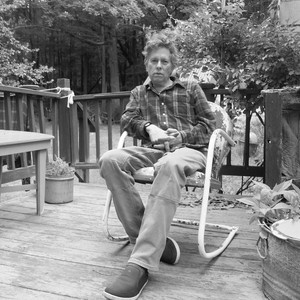
Raymond Foye is a contributing editor to the Brooklyn Rail. His most recent publication is Harry Smith: The Naropa Lectures 1989–1991(2023). Photo: Amy Grantham


No comments:
Post a Comment