On March 8 2020, Molly Brodak committed suicide. She was an award-winning poet, memoirist, local entrepreneur and the wife of novelist Blake Butler. But she was also much more than that. Molly was complex, wounded and filled with venomous contradictions that were both hurtful to her and others, like many human beings are. She lived public and secret lives and carried public and secret burdens that weighed so heavy on her shoulders, they eventually got the best of her.
Megan Fernandes’s third collection of poems, I Do Everything I’m Told, injects new life into the love poem. The book skates thrillingly between desire and race and sexuality, her writing smart without ever lecturing. “Letter to a Young Poet,” for instance, feels like taking a meandering walk with one of your most brilliant and curious friends. “To want the same things as you age is not always a failure of growth,” Fernandes writes, delivering a clear stab of wisdom, before dropping into a pair of arresting claims: “A good city will not parent you. Every poet has a love affair with a bridge.” But the collection is at its most confident and vulnerable when Fernandes writes about heartache and desire. In “Drive,” the speaker grasps through the aftermath of a breakup and the cliches it inspires but eventually stumbles upon a profound sense of acceptance: “Contradictions are a sign we are from god. We fall. We don’t always get to ask why.” Fernandes’s poems are aching and sly. They capture everything beautiful and insufferable and enormous about falling in love. —Isle McElroy
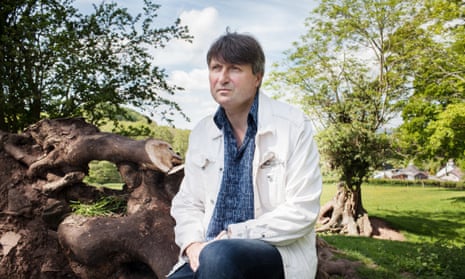
Simon Armitage.Photograph: Gareth Phillips for the Guardian
THE LONG READ
Simon Armitage: Making poetry pay
In a culture that has consigned poetry to the margins, Armitage has become something very rare: a genuinely popular British poet.Aida Edemariamhits the road with the busiest man in verse
Aida Edemarian
Tuesday 26 May 2015
One Indian summer evening last September, off a busy slip road not far from the Tower of London, Simon Armitage took to the stage of the world’s oldest surviving music hall and, after a short introduction from the broadcaster Melvyn Bragg, started to read. “It begins with a house, an end terrace / in this case …” The hall was full, generous with silence and later with laughter: young couples in careful retro outfits, men in suits dropping by after work, students, and older women; audience and performers held beneath a glowing tent of wobbly fairy lights that rose from the balconies to a bright apex in the roof. “But it will not stop there. Soon it is / an avenue / which cambers arrogantly past the Mechanics’ Institute …” Armitage’s reading voice is light; not exactly monotonal, but strung on a more delicate, questioning skein than his conversational voice. The poem, Zoom!, the title piece in his very first collection, in 1989, turns left at the main road, leads to a town, “city, nation, hemisphere, universe, … [is] bulleted into a neighbouring galaxy”, before finally coming to rest in the checkout queue at the local supermarket.
...To see again and no more The black northern pond, Its autumn spent, Its eye burning with crippled cedar wings And four black feet deep with Summer's rotting rooks,
Like Thomas Hood’s and my time’s Unlamented, spring less, passed.
...And I do praise the force that falls With loosened stones and plunging force Of clear ghost-rivers in dried beds. And besides this watchful course Of hours and currents, watersheds Of welcome, do I praise the eye That finds me welcome, needing no reply.
Poet Safiya Sinclair: ‘As a girl I felt small within Rastafari’
The Jamaican poet on her new memoir chronicling life with an authoritarian father, reconfiguring the postcard image of her homeland and her love of Marvel comic books
Hephzibah Anderson Saturday 7 October 2023
A
ward-winning poet Safiya Sinclair, 39, teaches creative writing at Arizona State University, but she was raised in a strict Rastafari home in Jamaica, where her reggae musician father used faith and control to keep her from absorbing outside influences. Smart and bookish thanks to her mother’s love of literature, she soon began thirsting for independence and a voice of her own, eventually escaping to college in the US. She chronicles her embattled becoming in How to Say Babylon, an electrifying memoir that embraces not only the role of women within Rastafari culture, but also what it means to grow up poor in a “paradise” scarred by slavery and colonialism.
How did you know you were ready to write this book?
I felt called to it a little bit over a decade ago now, but there were a lot of wounds that were still fresh, and I didn’t want to write from a place of hurt or vengeance. In 2018, I went back to Jamaica to do a reading and my father came to hear me for the first time. I read a poem that I had written for him, and when I got off the stage, after years of feeling I’d been diminished and never heard by him, he whispered in my ear: “I’m listening and I hear you.” In that moment, I just felt this catharsis – a literal, physical release of burdens from my body – and I said: “OK, I think I can actually begin this book because I know where it ends.”
What were the most challenging sections?
The sections where I am an adolescent were just punishing. It’s such a turbulent age but throw in being ostracised at school for being Rastafari, and then going home and feeling like I didn’t belong inside its strictures – it was a hard and heavy place to return to. Some of the later chapters, when I talk about the decision to finally cut my dreadlocks and leave, and my father’s hurt and anger and violence – those were really hard to write as well. I was typing and weeping.
You write near the end that you’re slowly trying to forgive your father. Has writing the book helped with that?
It was a gift that in writing it, I had to talk to my father about his own childhood and how he came to Rastafari, and then sit in his head and express his feelings, humanising him in a way that he’d never allowed me to do because he’d just loomed so large as an authority figure. The big revelation has been my capacity for forgiveness because before, I would not have said I was a particularly forgiving person.
The book’s dialogue is so vivid.
In Jamaica, we have a patois and then the Rastafari also have their own vernacular, some of which I tried to capture. It stems from this anticolonial linguistic rebellion – they’ll say “overstand” instead of understand, “apprecilove” instead of appreciate. It’s what I will be writing about in my next poetry collection, thinking through what I’m calling Rasta poetics. This anticolonial lyric frame was also something that inspired my own sense of linguistics and my personal poetics.
There’s some strikingly beautiful nature writing on these pages but it’s not without tension.
I really wanted to renarrativise this postcard idea of Jamaica. It is a strange thing, having all this beauty and natural wonder but not being able to access it and pay the price of living in, quote unquote, “paradise”. The beaches in Jamaica are owned by the hotels, they’re private – Jamaicans have to save up to go.
What’s your relationship with Rastafari like these days?
I don’t really now have any deep connection beyond my father and brother being deeply devoted Rasta bredren. As a girl, I felt small within Rastafari, I had no voice. Obedience and silence and being compliant were seen as the highest virtues a woman could have, and I’ve never been obedient or silent or compliant.
Have any of its teachings stayed with you?
The most positive thing was this very deep and affirming Black pride. My siblings and I would learn the speeches of [political activist] Marcus Garvey and we were always entrenched in this idea of Black upliftment. I’ve always walked tall and proud in my Blackness.
Your father made a living playing reggae in hotels. Was it a musical home?
Every day, pretty much, we’d wake up and hear guitar strumming. Our mum encouraged us to write and perform our own songs, and we even had a little family band once, travelling around Jamaica performing these songs about saving the environment.
Tell me about the role of literature in your childhood.
For me, poetry was survival, a crucial, life-saving place of order in a household that was ruled by uncertainty and chaos. My mother always had us reciting and memorising poems and reading books. Because of that, the world felt expansive to us, and writing was a big help expanding the possibilities of my own life. I can’t talk glibly about literature and poetry because it’s an actual fact that it changed the trajectory of my life.
The poems you recited were by the likes of William Blake, John Keats, Percy Bysshe Shelley, and it wasn’t until you were much older that you discovered West Indian poets such as Derek Walcott. Do those first literary loves still hold meaning for you?
I will never lose a love of any book, any writer, any poem that was a guiding light to me on my journey of being a poet and finding my voice. It began in Jamaica with the dead white men, and it’s to me crucial and critical that I know them – and where they live so I can burn their houses!
What book are you reading?
I’m reading a novel called Chain-Gang All Starsby Nana Kwame Adjei-Brenyah. He’s thinking about this dystopian future where prisoners are forced to fight each other for sport, televised, and it’s rooted in the history of racialised violence in America, and also this fascination with televised violence. It’s fantastic and I encourage everyone to read it.
Are there any books we’d be surprised to find on your shelves?
My siblings and I loved Marvel comic books growing up. Even now we have a group chat where we’re talking about all that. I also really love video games so I have books about Final Fantasyand The Legend of Zelda.
Is there a text that you regularly reread?
I reread Audre Lorde’s Sister Outsider several times a year. Lorde, for me, is a very foundational writer and crucial to my own thinking as a poet and a womanist. I also reread Song of Solomon by Toni Morrison as often as I can. Those are my two touchpoints.
What do you plan on reading next?
Jesmyn Ward’s Let Us Descend. She’s my favourite living writer. There’s a sumptuous feast of language there for me as a poet, which I don’t always find with a lot of novels. I come away feeling deeply inspired to push myself and the possibilities of language on the page.
Do you have another prose project on the go?
I have a multigenerational novel about Jamaican history, told over 600 years, beginning with the arrival of Columbus and the decimation of the native Taino people, and ending in the near future, thinking about the oncoming climate collapse. It’s told through six women and it’s called If We Must Die, from a really intense Claude McKay poem about colonialism and slavery.
Safiya Sinclair will be in conversation with Ayanna Lloyd Banwo about her book on 18 October in south London.
How to Say Babylon: A Jamaican Memoir by Safiya Sinclair is published by HarperCollins (£16.99).
Thinking Anew: Philip Larkin in his `Wondering what to look for’ speaks for many today
It is a reminder that most of us seek a deeper and richer understanding of the meaning and purpose of life
Gordon Linney Saturday 28 October 2023
In his poem Church Going, Philip Larkin describes leaving an empty and underused church building that he had wandered into: “Back at the door I sign the book/ donate an Irish sixpence/ Reflect the place was not worth stopping for.” But then he continues: “Yet stop I did: in fact I often do/ And always end much at a loss like this/ Wondering what to look for/ wondering too/ When churches fall completely out of use/ What we shall turn them into…”
At one level, he is addressing the fact that churches in the West as we have known them are struggling with falling attendances and ageing congregations. This is both sad and challenging for those still committed, especially clergy who are being asked to do more and more with less and less while, at a leadership level, there is a lack of a credible vision to share with the wider world. There seems to be an inability to articulate a message that addresses the felt needs of people today. Instead, we get bogged down in endless discussions about issues that divide and exclude people, such as the role of women in the church and gender identity.
Philip Larkin: in Church Going, he describes leaving an empty and underused church building that he had wandered into. Photograph: Barry Wilkinson
Exclusivism has little appeal to more widely travelled younger generations that have a greater appreciation of the human diversity that was known to and understood by Jesus. The church he founded was intended to reach out to the margins of society, to welcome the least of our brothers and sisters, and even our enemies. As Fr Richard Rohr put it: “When any church defines itself by exclusion of anybody, it is always wrong. It is avoiding its only vocation, which is to be Christ. The only groups that Jesus critiques are those who include themselves and exclude others from the always-given grace of God.”
Larkin in his “Wondering what to look for…” speaks for many today. It is a reminder that most of us, religious and so-called non-religious alike, seek a deeper and richer understanding of the meaning and purpose of life.
In his book Broken Signposts, former bishop of Durham Tom Wright says that we need relationships at every level in order to be human, especially in “today’s rootless society”. He writes: “We sense that something is amiss with the way things are. We want to find, as we say, ‘true love’ not just in the often-trivial sense of the ideal romance, but something that is solid, lasting, utterly reliable, and constantly life giving. That is why, even in today’s cynical world, most people love to celebrate a wedding. It appears to be raising a flag of hope in the midst of a world of broken dreams. It points to something much, much more than itself. There is an important paradox there: the deep love that has brought these two particular individuals together into this challenging and demanding commitment and relationship is not, after all, just about them. It is about all of us. About the world. About (as St John would say) God and the world. About Jesus.”
In tomorrow’s gospel, Jesus tells his followers what is key to a meaningful life: “You shall love the Lord your God with all your heart, and with all your soul, and with all your mind ... You shall love your neighbour as yourself.” This is not just about doing; it is about being – being in love with God and each other, the God who the First Epistle of St John insists is love. In every moment of love shared, a kiss, a hug, a generous deed, God is real and present, recognised or not.
“Yet stop I did: in fact I often do,” wrote Larkin the agnostic about his church visit and goes on to explain: “It pleases me to stand in silence here; A serious house on serious earth it is… /And that much never can be obsolete /Since someone will forever be surprising /A hunger in himself to be more serious /And gravitating with it to this ground…”
I could also say it frightened me: the reverse asymmetry of your face in the mirror was disturbing, a certainty turned inside out, I looked away – I’d seen the reverse of it, as if I was greeting the wrong twin: I didn’t want it seems, to accept such precariousness.
Mónika Mesterházi is a poet, essayist, literary translator. She graduated from the ELTE Hungarian-English Faculty of Humanities in 1990. In 2002, she received her PhD in contemporary Northern Irish poetry. The first volumes of her poems, Visszahagyó táblák were published by the Cserépfalvi Publishing House in 1992, and her second volume of poems Hol nem volt in 1995. In 1997 she participated in the translation and editing of Selected Verses of Irish Poet Seamus Heaney. Her third volume of poems, Nem hittem volna was published in 1999 and her fourth book Sors bona was published by Osiris in 2007. She works as a freelance translator since 1997; since 2006 she has been a member of the board of the Association of Hungarian Translators.
Important translations: Katherine Mansfield: Logs, letters, Novels by Alice Munro, Novels by A.L. Kennedy, Lawrence Norfolk, Joseph O'Connor and others.
Anna Bentley was born and educated in Britain. She studied English Language and Literature at Edinburgh University, before training to be a secondary school teacher of English at Oxford. During that year she met her Hungarian husband and, consequently, the Hungarian language. After teaching English in a secondary school in the north of England, she taught English as a foreign language in New York City and Kecskemét before moving to Budapest where she has lived since 2000. Her interest in translating Hungarian literature began in 2014, when she could not find an English translation of any of István Fekete’s works to share with family in Britain. Her translation of Ervin Lázár's children's classic Arnica, the Duck Princess was published by Pushkin Children's Press in February this year. Anna has also translated Women's Literary Tradition and Twentieth-Century Hungarian Women Writers, a book about five forgotten (or misrepresented) Hungarian women writers by Anna Menyhért, which will be published by Brill in December. A short story in Anna's translation from Gabi Csutak's award-winning collection Csendélet sárkányyal (Still Life with a Dragon) appeared in the online journal Asymptote's blog in April this year. She is currently working on Zoltán Halasi's book Út az üres éghez (The Road to the Empty Sky).






:quality(70)/cloudfront-eu-central-1.images.arcpublishing.com/irishtimes/QUBGXJE4FNDCLHS4WY3GLLZUOE.jpg)


