Showing posts with label Nobel Prize in literature. Show all posts

Saturday, October 22, 2016

Bob Dylan is not the first songwriter to win the Nobel prize for literature

Bob Dylan


Bob Dylan is not the first songwriter to win the Nobel prize for literature


Amit Chaudhuri
Friday 21 October 2016 11.00 BST


The 1913 Nobel prize for literature was awarded to the Indian poet Rabindranath Tagore. His work, like Dylan’s, recreates tradition and crosses genres


A
mid the raucous cheering, disbelieving emojis and graceless carping that accompanied the awarding of the latest Nobel prize for literature, an unexamined claim was made several times: that this was the first time the prize had gone to a songwriter. A couple of newsreaders used the word “musician”, others the historical and more precise “singer-songwriter”; but mainly they stuck to “songwriter”. It struck me that the claim was wrong. The first (and the only other) songwriter the prize went to was the Indian poet Rabindranath Tagore, in 1913. It was given to him “because”, according to the citation, “of his profoundly sensitive, fresh and beautiful verse, by which, with consummate skill, he has made his poetic thought, expressed in his own English words, a part of the literature of the west”. The citation for Bob Dylan, which acknowledges him for “having created new poetic expressions within the great American song tradition”, is different from but oddly reminiscent of the one from 1913, when honouring an Indian – someone located in the world of gurus and séances – must have seemed as puzzling as giving a “serious” prize to a pop musician. Little was known outside Bengal about Tagore, just as little, really, is known about Dylan. The citation from 1913 is already engaged in invention, making no mention of the fact that the “verse” is actually songs, or that they’re translations from Bengali. But Tagore translated the title of the book that got him the prize, Gitanjali, almost literally, as “Song Offerings” and it’s a compendium of lyrics turned by him into strange English prose poems, selected from three slim Bengali collections of songs – songs that are not only performed today day in Bengal, but performed ad nauseam.

Saturday, July 2, 2016

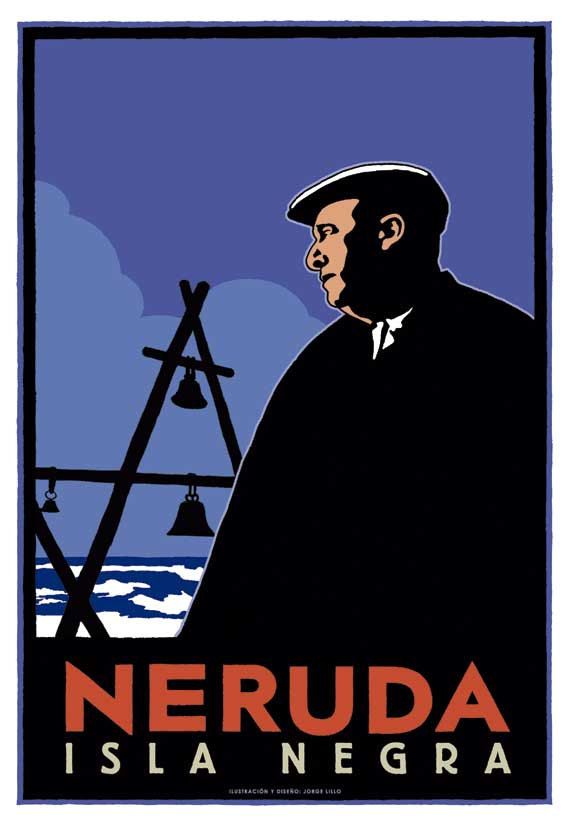
Nabokov, Neruda and Borges revealed as losers of 1965 Nobel prize

Nabokov, Neruda and Borges revealed as losers of 1965 Nobel prize

Nobel archives have been opened to reveal who was nominated for the 1965 prize for literature, a controversial year won by divisive victor Mikhail Sholokhov

Alison Flood
Wednesday 6 January 2016 15.47 GMT


Vladimir Nabokov, Pablo Neruda and Jorge Luis Borges were all in the running for the 1965 Nobel prize for literature, newly opened archives have revealed, but the judges that year went instead for the controversial choice of Mikhail Sholokhov.
The Swedish Academy, the members of which decide annually on the international writer deemed to best fulfil Alfred Nobel’s criteria of “the most outstanding work in an ideal direction”, keeps the list of writers proposed for the prize confidential for 50 years. It has now opened its archives, revealing that as well as Sholokhov, names in contention in 1965 included Nabokov and Borges – neither of whom would ever win the Nobel – as well as Neruda, who would take it in 1971.


Jorge Luis Borges

From the UK, WH Auden, Lawrence Durrell, LP Hartley and W Somerset Maugham were also proposed as potential winners that year, as was Alan Sillitoe: none would win a Nobel. Samuel Beckett, another nomination in 1965, would go on to take the prize in 1969.

Nominators for the Nobel are a mix of former laureates, professors of literature and literary experts. The choice in 1965 of Sholokhov proved divisive: the Soviet author was one of those to have spoken out against the awarding of the Nobel to Boris Pasternak in 1958, causing the author to “voluntarily” reject it. The Nobel was given to Sholokhov seven years later for the “artistic power and integrity” of his epic novel of Cossack life, And Quiet Flows the Don, with which the Nobel committee said “he has given expression to a historic phase in the life of the Russian people”. Alexandr Solzhenitsyn, who would win the Nobel in 1970, was one of a group of writers to later publicly accuse Sholokhov of plagiarising the work from Fyodor Kryukov, an accusation rejected by the author.


Vladimir Nabokov

Swedish newspaper Svenska Dagbladet, whose journalist Kaj Schueler has looked through the Swedish Academy’s documents from 1965, reported that the choice of Sholokhov was unanimous. The series of novels that comprise And Quiet Flows the Don is a “classic masterpiece”, the Nobel committee chairman Anders Österling said at the time, “which retains its shine at every rereading, and this folk epic is still an indisputable base for the award, even if it comes too late”. The books were published between 1928 and 1940.
Schueler also revealed that the committee had discussed sharing the prize in 1965 between the Russian poet Anna Akhmatova, who was excommunicated in 1946 by the Soviet regime, and Sholokhov, a member of the Communist Party’s Central Committee. The idea was rejected by Österling, according to Svenska Dagbladet, who noted that the two writers had nothing but their language in common.
He also rejected the possibility of sharing the prize that year between Miguel Ángel Asturias and Borges, and between Shmuel Joseph Agnon and Nelly Sachs. Agnon and Sachs would go on to share the prize the next year, in 1966, Agnon chosen “for his profoundly characteristic narrative art with motifs from the life of the Jewish people” and Sachs “for her outstanding lyrical and dramatic writing, which interprets Israel’s destiny with touching strength” .
The Guatemalan Asturias would win the Nobel in 1967 “for his vivid literary achievement, deep-rooted in the national traits and traditions of Indian peoples of Latin America”, but Borges would never win. Colm Tóibín writes in the London Review of Books of how Borges’s maid, Epifanía Uveda de Robledo, said the author was “much tortured … by the possibility of winning the Nobel prize. On the day of the announcement journalists would queue outside his door. This would happen year after year. The news each time that he had not won would make him very sad.”
“Not granting me the Nobel prize has become a Scandinavian tradition; since I was born they have not been granting it to me,” said the Argentinian.


Saturday, November 15, 2014

Tomas Tranströmer / Six Winters

Poem of the week: Six Winters by Tomas Tranströmer

BIOGRAPHY OF TOMAS TRASTRÖMER

This brief sequence of poems is a vivid illustration of the Nobel prize winner's singular gifts


    • The Guardian, 
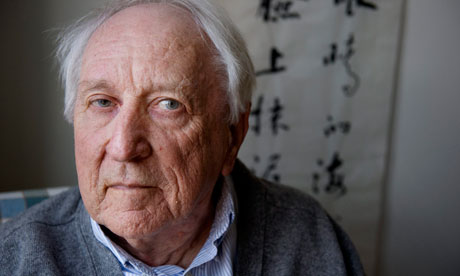
Tomas TranstömerTomas Transtömer. Photograph: Jessica Gow/AFP/Getty Images
Tomas Tranströmer, the 80-year-old Swedish poet deservedly honoured last October with the Nobel prize for literature, is the author of this week's poem-sequence, Six Winters, translated by Robin Fulton. It comes from his 1989 collection, För Levande och Döda (For Living and Dead) and is included in a highly recommended New Collected Poems, published recently in an expanded edition by Bloodaxe Books.
These six short imagist poems are rather like extended haiku, a form in which the poet has always excelled. They may centre on a single image, or use surreal combinations of imagery, as does the first, with its haunting triad of black hotel, sleeping child and dice. In this poem, even the proportions of the objects seem altered. The dice, having eyes, are larger and more menacing than real dice, for all that "wide-eyed", in English, has connotations of innocence. Perhaps these dice are being rolled by a vast, unseen, malevolent hand? The atmosphere is that of the child's nightmare, transposed into the winter night beyond the hotel's walls. Terse syntax heightens the strangeness, with the colon in the middle line acting as a kind of portal, similar in dramatic effect to the haiku's traditional "cutting word".
In the second poem, we're deep in the Kingdom of Winter. The concept of an "elite of the dead" is ironical and appalling. It prefigures the subsequent reference to wartime. That this is an elite of conquerors is reinforced by the entrance of the armoured wind. The dead may be reduced to emblems of grim and silent stone, but the wind from icy Svalbard "shakes" in its armour, suggesting not fear or even cold, but vigorous movement, the brandishing of noisy weapons, fresh savagery.
There's a more anecdotal tone to the next poem. "Neighbour and harpoon" are kept separate, but the imagination adds them up to the cartoonish figure of a harpoon-wielding neighbour. Perhaps the child had a half-delirious notion of the icicle as a whale, and the neighbour as a local Ahab. The poet sets these images squarely before us, not trying to make sense of them. They are simple there, elements of "unexplained memory".
The image of icicle as animal is pursued further in the next tercet. Here again we get a haunting juxtaposition – the architectural "upside-down Gothic" and the weird cow whose udders are made of icicles and resemble glass.
The fifth takes us farther beyond the window-frame. Trains are usually comforting sights, belonging to the pleasures of childhood. This one has become a wild beast, though a heraldic one, holding "the journey in its claws". As in the first terect, we sense that events have been set uncontrollably in motion. The shape of the child's unlived life is already decided by forces that cannot be checked or altered.
Of course, there is no obligation to imagine we are still in the child's world at this point. The six winters are not necessarily consecutive. They may have been picked at random from the poet's memory: some may have simply been assembled with no autobiographical intent. They could also be read as the entire life-story, moving swiftly on at the rate of one winter per decade. They might be the omniscient narrator's different views of a single winter. It's up to the reader to decide the chronology, if it exists.
An obvious reading of the sixth poem, nevertheless, would suggest a post-childhood, post-war setting, that of adolescence and first love, or even maturity and marriage. The "snow-haze" and "moonlight" are romantic images, contrasting with the earlier surreal nightmare and Gothic humour. But a characteristic flick of the wrist produces the unexpected jellyfish. "Jellyfish moonlight" packs two nouns together: although "moonlight" is a noun that may do duty as a modifier, the substantive adds more force to the image. Having seen large white jellyfish stranded on the sands at Portmeirion last summer, I find the metaphor of hazy, mis-shapen moonlight a brilliantly accurate one.
The menace of future journeys has now been left behind, and, for the first time, there is the collective pronoun, "our", providing reassurance. The isolating dread has diminished in the pleasure of a new and shared perspective. What lies ahead is only an avenue, a slender element in the journey, but a promising one. The word "bewitched" might have been ominous, but instead it seems to imply a benign and beautiful enchantment effected by snow, moonlight and companionship.
Dreams and the transitions between different levels of consciousness are suggested by the poet's very name. They are Tranströmer's territory. He worked as a psychologist for many years, and his poems seem to me to be extraordinarily honest elucidations of the "secret ministry" of the mind. From the fascinating childhood memoirs included in the Bloodaxe collection, one might guess that Tranströmer, like a number of poets, could suffer from Asperger's (see, particularly, "Museums"). How impressive it is that he has never compromised on his singular perceptions, and that the resulting poetry is so luminous, and has yielded so much meaning to his readers.

Six Winters
1
In the black hotel a child is asleep.
And outside: the winter night
where the wide-eyed dice roll.
2
An élite of the dead became stone
in Katarina Churchyard
where the wind shakes in its armour from Svalbard.
3
One wartime winter when I lay sick
a huge icicle grew outside the window.
Neighbour and harpoon, unexplained memory.
4
Ice hangs down from the roof edge.
Icicles: the upside-down Gothic.
Abstract cattle, udders of glass.
5
On a side-track, an empty railway-carriage.
Still. Heraldic.
With the journeys in its claws.
6
Tonight snow-haze, moonlight. The moonlight jellyfish itself
is floating before us. Our smiles
on the way home. Bewitched avenue.