Showing posts with label Louise Glück. Show all posts

Wednesday, November 5, 2025

The best recent poetry – review roundup


Simon Armitsge

Review

The best recent poetry – review roundup

This article is more than 4 years old

The Owl and the Nightingale, translated by Simon Armitage; Winter Recipes from the Collective by Louise Glück; Deep Wheel Orcadia by Harry Josephine Giles; Five Books by Ana Blandiana; The sea is spread and cleaved and furled by Ahren Warner


Fiona Sampson
Fri 1 Oct 2021 12.00 BST


The Owl and the Nightingale

The Owl and the Nightingale translated by Simon Armitage (Faber, £14.99)
This new work follows Simon Armitage’s earlier versions of Pearl and Sir Gawain and the Green Knight in making the creative case for the readability of long Middle English poems. The Owl and the Nightingale is a comic disputation in 900 rhyming couplets: the joke – that the different orders of bird lack mutual respect, just like humans from different communities – has plenty of time to wear thin, especially as this translation has to work with the poem’s rural setting, which could appear to contemporary perspectives to lack edge. That we want to keep reading is thanks largely to Armitage’s way with language. Plain-speaking and laconic, it retains the metre and rhyme scheme of the original, while making it sound easy: it is not. This thoroughly poetic feat, rather than Faber’s somewhat twee illustrations or the arch self-references, ensures this graceful, elegant translation is a success.

Winter Recipes from the Collective

Winter Recipes from the Collective by Louise Glück (Carcanet, £12.99)
A slim volume of just 15 pieces, but like all the Nobel laureate’s work, it punches above its apparent weight. Glück has always been a fastidiously exact truth-teller; her lucid poems pretend to a plainness that’s really the simplicity of something more fully worked out than the rest of us can manage. It is a hallmark of late, great writing, as is the courage to go into the dark: “Downward and downward and downward and downward / is where the wind is taking us.” This new collection once again examines close relationships without the sweetener of correct sentiment, recording the universal stages of human life through a woman’s experience. We’re back in the stylised, half-dreamed Glück landscapes that are rural equivalents of an Edward Hopper painting, and back with her astonishing poetry, as “the world goes by, / All the worlds, each more beautiful than the last”.

Deep Wheel Orcadia

Deep Wheel Orcadia by Harry Josephine Giles (Picador, £10.99)
Deep Wheel Orcadia is a book of astonishments. The first is that this is a verse novel: a kind of storytelling that mainstream poetry for adults often resists. What such resistances overlook is just how much the form can contain, given poetry’s capacity to say many things at once. It threads together questions of identity and belonging, alongside examinations of deep space and Orkney, in a single concisely yet scintillatingly told tale. Giles also makes language shift like the stormy Orcadian seas. Every page of this bilingual book contains both conventional stanzaic verse in “a poetic register of the Orkney tongue”, and a prose-poem version where the same material is retold in an idiomatic English that packs in, and unpacks, the many meanings of the Orcadian. When, for example, “stoor” becomes “stormstrifestrainspeeddust”, or “Øyvind birls a pod in his lang / fingers an waatches the ship link” is rendered as “Øyvind whirlrushdancespins a pod in his long fingers and watches the ship glidetorestconnect”, English itself is returned to the reader as “something strange and rich”.

Five Books by Ana Blandiana

Five Books by Ana Blandiana, translated by Paul Scott Derrick and Viorica Patea (Bloodaxe, £14.99)
The Romanian Ana Blandiana is one of Europe’s greatest living poets, and she’s well served by this substantial volume containing five previously untranslated collections. Ranging across her writing life, they create a layered portrait of a complex yet consistent poetic identity. The collection opens with poems of resistance to the Ceausescu regime’s tyranny, which in 1984 electrified Romanian society and became its first samizdat literature. There are also two collections written under Ceausescu, in which women’s embodied experiences become overlaid with and symbolise national experience. The Architecture of Waves, published in 1990 when Blandiana was 48, was her first book to appear uncensored. Also included here are two collections from the past five years, one a book-length exequy for her husband. Its title, Variations on a Given Theme, economically encapsulates the repetitive nature of mourning: and economy and focus are the hallmarks of this unflinching work of witness, to realities both intimate and international.

The Sea is Spread and Cleaved and Furled by Ahren Warner.

The sea is spread and cleaved and furled by Ahren Warner (Prototype, £12)
The brilliant writer and artist Ahren Warner makes a welcome return with this verse sequence with photographs. Warner’s fiercely intelligent earlier collections were often “furled” tight indeed, as if clenched against the forces of idiocy or blandness. Now, as he reports on a wild odyssey through the club scene of southeast Europe and beyond, his writing expands with conversation and self-talk, incident and image. Decadent but full of self-disclosure, it’s at once sexy, intellectual and self-aware. “She’s not here, i say. i know, i say, but the tears streaking my face are real, i say //and so is the way my neurons are shaking with something i have, in the past, called, love.” This story of an affair is a messy, disturbing triumph in the traditions of Arthur Rimbaud and John Berryman: how Le bateau ivre or The Dream Songs would read if they’d been written today. It too could be the anthem of a generation.


THE GUARDIAN


Saturday, October 28, 2023

Marigold and Rose by Louise Glück review – the babies’ tale

Louise Glück


Review

Marigold and Rose by Louise Glück review – the babies’ tale

The Nobel prize-winning poet’s first novel is a subversive, sophisticated vision of the first year in the lives of twin girls

Louise Glück, Nobel prize-winning poet, dies at 80

Fiona Sampson
Friday 25 November 2022

When the American poet Louise Glück was awarded the Nobel prize for literature in 2020, the Swedish Academy commended her “voice that with austere beauty makes individual existence universal”. They might have added that she makes the individual female experience universal, joining it to the canon of male mythology in ways even her titles make clear. The Seven Ages, from 2001 – a stunning reflection on human destiny – was preceded by both The Triumph of Achilles (1985) and Ararat (1990), for example, and followed by Averno (2005), named after the traditional site of the entrance to hell. While her earlier work explores family psychodrama, these books portray the emotional violence of mid-life. In 13 poetry collections and two volumes of essays, Glück’s emotional intelligence never surrenders to cosy consolation, yet the writing remains exquisitely beautiful.

Monday, October 23, 2023

Louise Glück / A poet who never shied away from silence, pain or fear


Louise Glück.

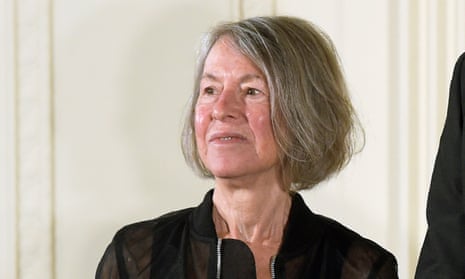
‘At the end of my suffering / there was a door’ … Louise Glück. Photograph: Susan Walsh


Louise Glück: a poet who never shied away from silence, pain or fear

Her work included long periods in which she wrote nothing – and when she did write, she had little sense that it was hers

 Louise Glück, Nobel prize-winning poet, dies at 80


Colm Tóibín

Tuesday 17 October 2023


L

ouise Glück was reticent, careful about what she said. She could be distant. There was always a sense that her real life was lived in dreams and memories, in her imagination, in her time alone. With students, sometimes she suggested that they try silence, not working at all. That, she believed, might be best for someone who was writing the wrong poems or producing too much.

Sunday, October 15, 2023

First fiction work by Nobel prize-winning poet Louise Glück to be published in UK

Louise Glück


First fiction work by Nobel prize-winning poet Louise Glück to be published in UK

This article is more than 1 year old

The 64-page ‘prose narrative’ Marigold and Rose: A Fiction – about twins in the first year of life – will be published in October


Sarah Shaffi
Thursday 25 August 2022

The first work of fiction by American poet and Nobel laureate Louise Glück is to be published in the UK later this year.

Louise Glück, poet and Nobel laureate, dies at 80


Louise Glück


Louise Glück, poet and Nobel laureate, dies at 80

Acclaimed American poet and Nobel laureate in literature Louise Glück has died at the age of 80.

She received a Nobel in 2020, becoming the first American poet to win the honour since TS Eliot more than 70 years earlier.

Saturday, October 14, 2023

Louise Glück, Nobel prize-winning poet, dies at 80


Louise Glück


Louise Glück, Nobel prize-winning poet, dies at 80

Pulitzer prize winner and former US poet laureate was known for her sharp, austere lyrical work


Adrian Horton

Friday 13 October 2023


Louise Glück, the Nobel prize-winning author and a former poet laureate of the United States, has died at the age of 80.

Tuesday, December 21, 2021

Louise Glück / Colm Tóibín on a brave and truthful Nobel winner

Louise Glück


Louise Glück: Colm Tóibín on a brave and truthful Nobel winner

Her brilliantly controlled poems offer a picture of the world as a struggle between ordeal and wonder


Colm Tóibín
Fri 9 Oct 2020 06.00 BST

I

n Stanford in 2008, the Irish poet Eavan Boland told me how much she admired the work of Louise Glück. She took down some volumes of her poetry from the shelf in her office and gave them to me.

That night I read the opening lines of a poem:

I sleep so you will be alive,
it is that simple.
The dreams themselves are nothing.
They are the sickness you control,
nothing more.

It was called A Dream of Mourning. I was amazed by its chiselled, hurt tone, the mixture of what was deeply private and oddly heightened and mythical.

In an essay about Emily Dickinson, Glück wrote: “It is hard to think of a body of work that so manages, without renouncing personal authority, to so invest in the single reader.” Of TS Eliot’s poetry, Glück has observed: “And I suppose that, among sensitive readers, there must be many who do not share my taste for outcry.” And writing about the poet George Oppen, Glück called him “a master of white space; of restraint, juxtaposition, nuance”.

All of which could be said about her own work. Her poems are controlled and highly charged, restrained but also exposed, unafraid of and perhaps also terrified by outcry. Glück has described “harnessing the power of the unfinished”, to create a whole that does not lose the dynamic presence of what remains incomplete: “I dislike poems that feel too complete, the seal too tight; I dislike being herded into certainty.”

They open up a stark space. The sounds in her poems emerge tentatively and then bravely, and sometimes fiercely, from within their rhythms. Glück knows what a tone needs when it seeks to be truthful. She has a knowledge, both baleful and enabling, of how little can be said that is true, and how much dark energy that is then released in the effort to speak. In her poems, tone itself is both held in and released. Her work is filled with voice, often hushed and whispering, as though she is exploring a difficult aftermath or the shape of the soul.

If there is one poem by her that gives us a sense of her great talent and the bravery of her voice, it is the opening poem in her collection The Wild Iris, which begins:

At the end of my suffering
there was a door.

I have heard her say that this image was with her for years before she found a place for it. In the sequence of poems in the book, Glück follows nature with a distilled diction, the tone filled with pity and wonder, but also a sense of effort and striving. In all her poetry, we get a picture of the world as a struggle between ordeal and wonder. There is always a sense that the poems themselves are the result, too, of a struggle within Glück’s own imagination for words that are precise but also suggestive, for phrases that are sonorous but hard-edged, too.

It is difficult to think of another living poet whose voice contains so much electrifying undercurrent, whose rhythms are under such control, but whose work is also so exposed and urgent.

THE GUARDIAN