Showing posts with label Biographies. Show all posts

Saturday, August 16, 2025

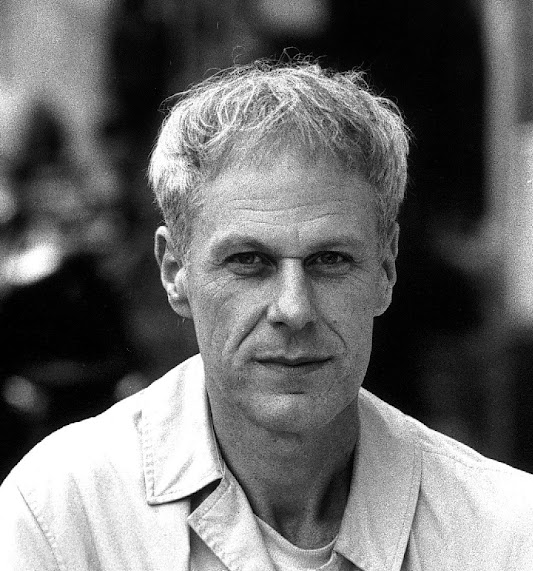
Biographies / Roddy Lumsden


Roddy Lumsden

Roddy Lumsden

1966–2020


Roddy Lumsden was born in St. Andrews, Scotland. He described his upbringing as small-town and working-class. His earliest exposure to literature came from his mother and older brother, who read aloud to him when he was a child. Later, when he attended school, his writing was influenced by the works of W.S. GrahamPhilip LarkinThom GunnT.S. Eliot, and Sylvia Plath, and by song lyrics.

Roddy Lumsden’s poetry collections include So Glad I'm Me (2017), Melt and Solve (2015), Not All Honey (2014), Terrific Melancholy (2011), Third Wish Wasted (2009); Vitamin Q (2005), Mischief Night: New and Selected Poems (2004), Roddy Lumsden Is Dead (2003), The Book of Love (2000), and Yeah, Yeah, Yeah (1997). His work is marked by an attention to formal traditions and a voice both streetwise and regretful. Matthew Smith, reviewing Mischief Night: New and Selected Poems (2004), noted that “the ongoing affair between hedonism and mortality in Lumsden’s poetry is as much context as a subject for his work.” He also observed his “flair for formal roguery” and commented that “although the verse is hopping with linguistic antics, the foci of the language are music and rhetoric.” His last book, So Glad I'm Me (2017), was shortlisted for the T.S. Eliot Prize.

Lumsden received an Eric Gregory Award and was Writing Fellow for the City of Aberdeen. Lumsden worked as a freelance writer, editor, teacher, and writer of puzzles and quizzes for newspapers. He edited Identity Parade (2010), an anthology of recent UK / Irish poetry. In 1999 he cowrote The Message, a book on poetry and music. He also composed a poem, “Bloom,” on the set of “Flowers for Kate”—a photo shoot of the model Kate Moss for V magazine. From 2010 to 2013 he served as poetry editor of Salt Publishing, for whom he was also the Series Editor of The Best British Poetry anthologies.

Lumsden lived in London, where he taught at The Poetry School and and served as organiser and host of the monthly reading series BroadCast. He died in early 2020.


POETRY FOUNDATION


Saturday, August 3, 2024

Biographies / Li Po


Li Bai

Li Po
701–762

A Chinese poet of the Tang Dynasty, Li Bai (also known as Li Po, Li Pai, Li T’ai-po, and Li T’ai-pai) was probably born in central Asia and grew up in Sichuan Province. He left home in 725 to wander through the Yangtze River Valley and write poetry. In 742 he was appointed to the Hanlin Academy by Emperor Xuanzong, though he was eventually expelled from court. He then served the Prince of Yun, who led a revolt after the An Lushan Rebellion of 755. Li Bai was arrested for treason; after he was pardoned, he again wandered the Yangtze Valley. He was married four times and was friends with the poet Du Fu.
 
Li Bai wrote occasional verse and poems about his own life. His poetry is known for its clear imagery and conversational tone. His work influenced a number of 20th-century poets, including Ezra Pound and James Wright.


POETRY FOUNDATION


Sunday, February 18, 2024

Mary Oliver (1935 -2019)

Mary Oliver


Mary Oliver
(1935 - 2019)


Mary Oliver was an “indefatigable guide to the natural world,” wrote Maxine Kumin in the Women’s Review of Books, “particularly to its lesser-known aspects.” Oliver’s poetry focused on the quiet of occurrences of nature: industrious hummingbirds, egrets, motionless ponds, “lean owls / hunkering with their lamp-eyes.” Kumin also noted that Oliver “stands quite comfortably on the margins of things, on the line between earth and sky, the thin membrane that separates human from what we loosely call animal.” Oliver’s poetry won numerous awards, including the Pulitzer Prize, the National Book Award and a Lannan Literary Award for lifetime achievement. Reviewing Dream Work (1986) for the Nation, critic Alicia Ostriker numbered Oliver among America’s finest poets, as “visionary as [Ralph Waldo] Emerson.”

Mary Oliver was born and raised in Maple Hills Heights, a suburb of Cleveland, Ohio. She would retreat from a difficult home to the nearby woods, where she would build huts of sticks and grass and write poems. She attended both Ohio State University and Vassar College, but did not receive a degree from either institution. As a young poet, Oliver was deeply influenced by Edna St. Vincent Millay and briefly lived in Millay’s home, helping Norma Millay organize her sister’s papers. Oliver is notoriously reticent about her private life, but it was during this period that she met her long-time partner, Molly Malone Cook. The couple moved to Provincetown, Massachusetts, and the surrounding Cape Cod landscape has had a marked influence on Oliver’s work. Known for its clear and poignant observations and evocative use of the natural world, Oliver’s poetry is firmly rooted in place and the Romantic nature tradition. Her work received early critical attention; American Primitive (1983)her fifth book, won the Pulitzer Prize. According to Bruce Bennetin the New York Times Book ReviewAmerican Primitive,“insists on the primacy of the physical.” Bennet commended Oliver’s “distinctive voice and vision” and asserted that the “collection contains a number of powerful, substantial works.” Holly Prado of the Los Angeles Times Book Review also applauded Oliver’s original voice, writing that American Primitive “touches a vitality in the familiar that invests it with a fresh intensity.”

Dream Work (1986) continues Oliver’s search to “understand both the wonder and pain of nature” according to Prado in a later review for the Los Angeles Times Book Review. Ostriker considered Oliver “among the few American poets who can describe and transmit ecstasy, while retaining a practical awareness of the world as one of predators and prey.” For Ostriker, Dream Work is ultimately a volume in which Oliver moves “from the natural world and its desires, the ‘heaven of appetite’ ... into the world of historical and personal suffering. ... She confronts as well, steadily,” Ostriker continued, “what she cannot change.”

The transition from engaging the natural world to engaging more personal realms was also evident in New and Selected Poems (1992), which won the National Book Award. The volume contains poems from eight of Oliver’s previous volumes as well as previously unpublished, newer work. Susan Salter Reynolds, in the Los Angeles Times Book Review, noticed that Oliver’s earliest poems were almost always oriented toward nature, but they seldom examined the self and were almost never personal. In contrast, Oliver appeared constantly in her later works. But as Reynolds noted “this self-consciousness is a rich and graceful addition.” Just as the contributor for Publishers Weekly called particular attention to the pervasive tone of amazement with regard to things seen in Oliver’s work, Reynolds found Oliver’s writings to have a “Blake-eyed revelatory quality.” Oliver summed up her desire for amazement in her poem “When Death Comes” from New and Selected Poems: “When it’s over, I want to say: all my life / I was a bride married to amazement. / I was the bridegroom, taking the world into my arms.”

Oliver continued her celebration of the natural world in her next collections, including Winter Hours: Prose, Prose Poems, and Poems (1999), Why I Wake Early (2004), New and Selected Poems, Volume 2 (2004), and Swan: Poems and Prose Poems (2010). Critics have compared Oliver to other great American lyric poets and celebrators of nature, including Marianne MooreElizabeth BishopEdna St. Vincent Millay, and Walt Whitman. “Oliver’s poetry,” wrote Poetry magazine contributor Richard Tillinghast in a review of White Pine (1994) “floats above and around the schools and controversies of contemporary American poetry. Her familiarity with the natural world has an uncomplicated, nineteenth-century feeling.” 

A prolific writer of both poetry and prose, Oliver routinely published a new book every year or two. Her main themes continue to be the intersection between the human and the natural world, as well as the limits of human consciousness and language in articulating such a meeting. Jeanette McNew in Contemporary Literature described “Oliver’s visionary goal,” as “constructing a subjectivity that does not depend on separation from a world of objects. Instead, she respectfully conferred subjecthood on nature, thereby modeling a kind of identity that does not depend on opposition for definition. … At its most intense, her poetry aims to peer beneath the constructions of culture and reason that burden us with an alienated consciousness to celebrate the primitive, mystical visions that reveal ‘a mossy darkness – / a dream that would never breathe air / and was hinged to your wildest joy / like a shadow.’” Her last books included A Thousand Mornings (2012), Dog Songs (2013), Blue Horses (2014), Felicity (2015), Upstream: Selected Essays (2016), and Devotions: The Selected Poems of Mary Oliver (2017).

Mary Oliver held the Catharine Osgood Foster Chair for Distinguished Teaching at Bennington College until 2001. In addition to such major awards as the Pulitzer and National Book Award, Oliver  received fellowships from the Guggenheim Foundation and the National Endowment for the Arts. She also won the American Academy of Arts & Letters Award, the Poetry Society of America’s Shelley Memorial Prize and Alice Fay di Castagnola Award.

Oliver lived in Provincetown, Massachusetts, and Hobe Sound, Florida, until her death in early 2019. She was 83.


POETRY FOUNDATION

Monday, December 26, 2022

Biographies / Grace Nichols


Grace Nichols


Grace Nichols

Grace Nichols is a poet whose work has been central to our understanding of the important cultural Caribbean-British connection for nearly 3 decades. From her first collection, I Is a Long Memoried Woman (1983), to her more recent work such as Picasso, I Want My Face Back (2009), she has uncovered with a disquieting lyricism and humour the various facets of life as a woman and as an immigrant living in the UK.

Nichols was born in Guyana in 1950, and moved to live in the UK in 1977. Her work is influenced by the history and culture of her homeland, in particular the oral story-telling tradition with its fantastic folk tales, the landscape and its rural tasks and the history of enslavement (particularly relating to women). ‘To My Coral Bones’ from Startling the Flying Fish (2006) explores the importance of Nichols’ Caribbean heritage, suggesting she has ‘alwayscarried deepthese islands’.

On arrival in the UK, Nichols’ work began to respond to the contemporary situation. She was one of a number of West-Indian poets, including Linton Kwesi-Johnson and John Agard, whose work also touched on racial tensions at a time when immigration was at the centre of the political debates under Margaret Thatcher’s government. Poems from her 1984 collection The Fat Black Woman’s Poems are an arresting and humourous riposte, presenting the unfettered thoughts of the heroine in the bath or at the shops. A later poem, ‘Hurricane Hits England’, expresses the connection between cultures, when a hurricane reminds her that ‘the earth is the earth is the earth’.

Her poetry is characterized not just by the themes above, but by an acute attention to the language which carries the poems. Her work marries the Creole of her homeland with standard English, creating new possibilities for rhythm and rhyme. As such, while reading her poetry on the page offers fascinating insights to the potential for linguistic hybridity, it is when spoken aloud that her techniques sing most powerfully.

In her reading for the Archive, Nichols’ voice brings the poems to life, giving free reign to the infectious lyrical sweep of her verse. For example, in ‘Praise Song for My Mother’ (which is on the current GCSE syllabus), there is a true harmony in the blend of the vibrant imagery, ‘the fish’s red gill’ and ‘the flame tree’s spread’, the haunting recollection of the past tense ‘You were’, and the forward movement of the repeated stanza structure and end-rhymes.

Her poetry for children is characterized by the same rhythms as her other poetry, although the subjects are designed to appeal to a younger audience. ‘Cat-Rap’, included here, proves that Nichols herself is ‘The meanest cat-rapper you’ll ever seeNumber one of the street-sound galaxy’.


Wednesday, December 7, 2022

Biographies / Ada Limón

Ada Limón

Ada Limón


b. 1976


Ada Limón became the 24th Poet Laureate of the United States in July of 2022. Limón is the author of the poetry collections The Hurting Kind (2022, Milkweed Editions); The Carrying (2018, Milkweed Editions), which won the National Book Critics Circle Award for Poetry; Bright Dead Things (2015, Milkweed Editions), a finalist for the National Book Award, the National Books Critics Circle Award, and the Kingsley Tufts Poetry Award; Sharks in the Rivers (2010, Milkweed Editions); Lucky Wreck (2005, Autumn House Press, reissued 2021); and This Big Fake World (2005, Pearl Editions).

Limón earned an MFA from New York University and is the recipient of fellowships from the Guggenheim Foundation, the New York Foundation for the Arts, the Provincetown Fine Arts Work Center, and the Kentucky Foundation for Women. Her work has appeared in numerous publications including the New YorkerHarvard ReviewPleiades, and Barrow Street.

Limón is the host of the acclaimed podcast The Slowdown and lives in Lexington, Kentucky.


POETRY FOUNDATION


Sunday, October 16, 2022

Biographies / Valzhyna Mort


Valzhyna Mort

Born in Minsk, Belarus (part of the former Soviet Union), in 1981, Valzhyna Mort has been praised as “[a] risen star of the international poetry world” by the Irish Times. When she moved to the United States in 2005, she had already published her first book, I’m as Thin as Your Eyelashes, and was known across the world as an electrifying reader of her poems. Her debut collection in America, Factory of Tears (2008), received acclaim: the New Yorker writes, “Mort strives to be an envoy for her native country, writing with almost alarming vociferousness about the struggle to establish a clear identity for Belarus and its language.” She composes her poems in Belarusian as attempts are being made to revitalize the traditional language, which lends her work both conventional and groundbreaking tones. Mort reads in both Belarusian and English, and so the poem “New York” provides an ideal context for her poetry, as readers are presented with a young foreign poet’s impressions of the infamous city.

Mort is also the author of the poetry collection Collected Body (2011) and co-editor, with Ilya Kaminsky and Katie Ferris, of Gossip and Metaphysics: Russian Modernist Poems and Prose (2014). Mort's poetry collection, Music for the Dead and Resurrected (2020), was named one of the best poetry books of 2020 by the New York Times and was the winner of the International Griffin Poetry Prize.

Mort received the Crystal of Vilenica award in Slovenia in 2005 and the Burda Poetry Prize in Germany in 2008. She teaches at Cornell University and lives in Ithaca, New York.


POETRY FOUNDATION


Thursday, October 28, 2021

Biographies / Dennis Cooper


Dennis Cooper


Dennis Cooper

(1953)

"It’s a stylized version of a really boring world where nothing ever happens. There’s no momentum in the book at all except for the meeting of these different people. Just like a drift … like drifting. The characters are in school. I have them in school because it’s a set pattern of school-home, school-home, and sleep. A kind of mechanical going back and forth. The characters are always trying to overcome the banality and terror of the world they live in by constructing some sort of mental world, the main character, George especially. Disneyland is his idea of what perfection is, a place where everything, every emotion is stylized in order to be entertaining. Nothing really hurts, nothing’s really scary, and everything’s fed into you. The drugs he takes function in the same way. It’s as though these characters—even the murderers—are each trying to transcend a life in which nothing happens. All of them are trying to discover some kind of sensation. They’re attempting to find it in all these different ways; they link together because they see in each other the opportunity to feel something. I tried to construct the book so that it had a blankness, like you said, but there is also a … compression. The characters are trying to force something into their lives by doing these extreme things … criminal and perverse. And the way I made the book, in a kind of overly rigorous structure, for example, in stanzaic paragraphs that are always the same length, is an attempt to force some sort of beauty and rigor into their world."

Dennis Cooper on Closer


Dennis Cooper, 1989
Photo by James Hamilton


Poet, novelist, and short story writer Dennis Cooper was born in Pasadena, California. He grew up in Southern California and was educated at Pasadena City College and Pitzer College. Cooper’s early influences include French avant-garde poetry and novels and the films of Robert Bresson. In his work, he engages the limits of the body, and of speech, in response to the pressure of desire. In a 2011 Paris Review interview with Ira Silverberg, Cooper stated, “I’m as interested by what sex can’t give you as by what it can. I don’t see lust as a dumbing-down process. Most people fear confusion, but I think confusion is the truth and I seek it out. … My goal is to try to articulate what my characters wish to express during sex but can’t and to depict the way language is compromised by sex, as realistically as I can.”


https://www.youtube.com/watch?v=nQBqHJiEgQQ
Dennis Cooper - Interview for Hilda Magazine


His poetry collections include The Dream Police: Selected Poems 1969-1993 (1995) and The Weaklings (2008). He is the author of numerous books of prose, including the novels Frisk (1991, one of five novels making up the George Miles Cycle), The Sluts (2005), and The Marbled Swarm (2011); the short story collections Wrong (1992) and Ugly Man (2009); the nonfiction volumes All Ears: Criticism, Essays, and Obituaries (1999) and Smothered in Hugs: Essays, Interviews, Feedback, and Obituaries (2010); and the collaborative projects Dennis: Story-Song (2006, with Don Waters and various artists) and Jerk/Through Their Tears (2011, with Gisele Vienne, Peter Rehberg, and Jonathan Capdevielle).


https://www.youtube.com/watch?v=Cw_1nbO8LWw

Dennis Cooper Interviewed in Paris (American Suburb X exclusive)
 
In 1976, Cooper founded Little Caesar Magazine and in 1978, Little Caesar Press. From 1979 to 1983, he served as director of programming for the Beyond Baroque Literary Arts Center in Venice Beach, California. He has served as the editor of the Little House on the Bowery series for Akashic Books.
 
Cooper was the first American writer to be awarded France’s Prix Sade. He lives in Los Angeles and Paris.

POETRY FOUNDATION

DE OTROS MUNDOS
Dennis Cooper / Chaperos / Sadomasoquismo internauta
Dennis Cooper / Todos los males, el mal
Dennis Cooper / El creep entre nosotros
Dennis Cooper / “Si pudiese sintetizar lo que hago en un Tweet, no seguiría escribiendo novelas”
Chaperos
Dennis Cooper / Chaperos / Prólogo de Juan Bonilla
Dennis Cooper / El ‘escritor más peligroso de los EE UU’ publica una novela con gifs animados
Google rapta la nueva novela de Dennis Cooper
Dennis Cooper / Lo peor

MESTER DE BREVERÍA
Dennis Cooper / El muerto
Dennis Cooper / Niña
Dennis Cooper / Hacha
Dennis Cooper / El cerdo